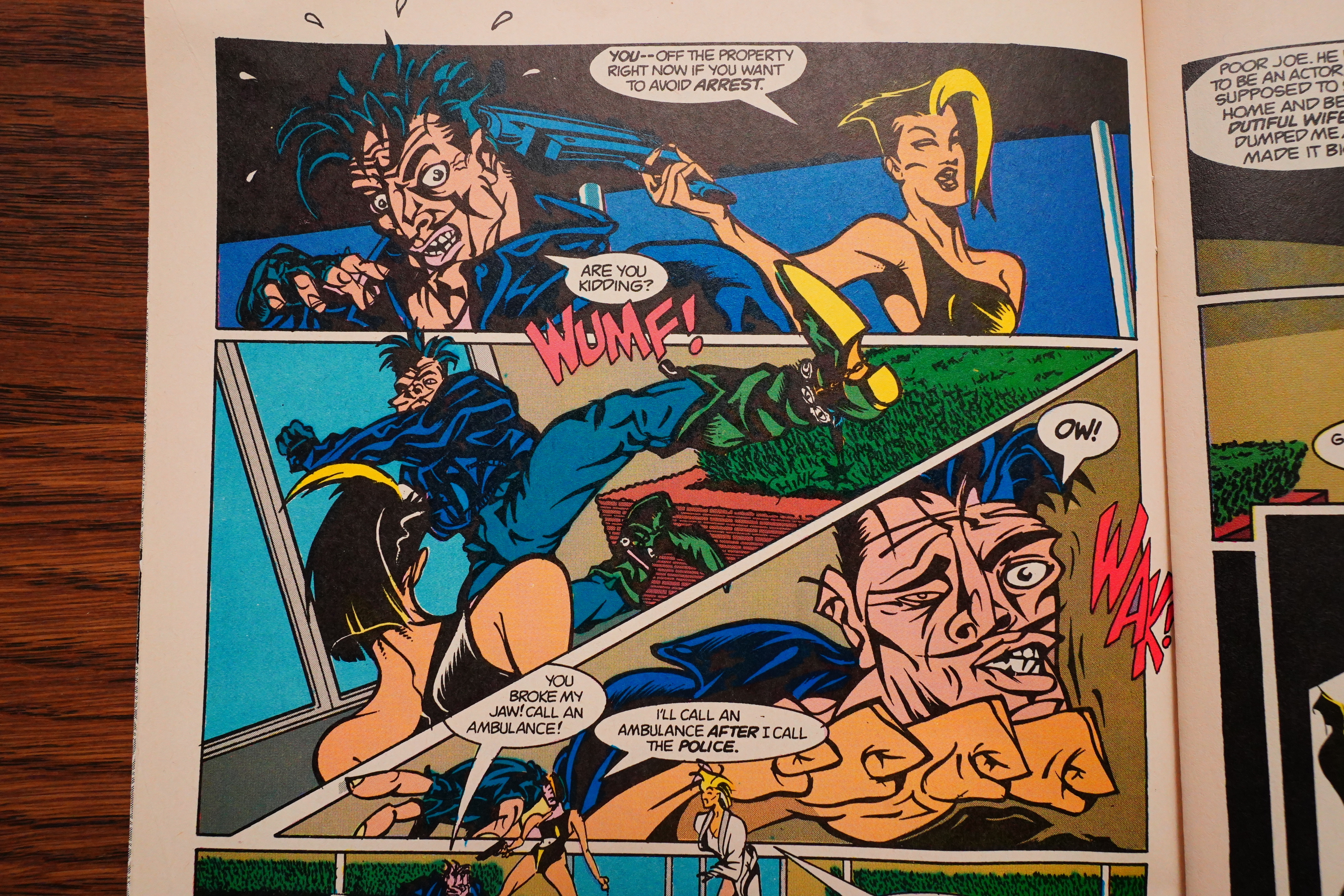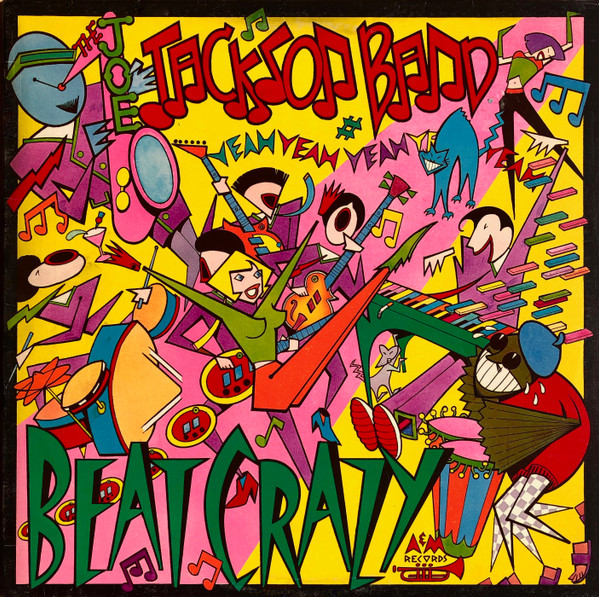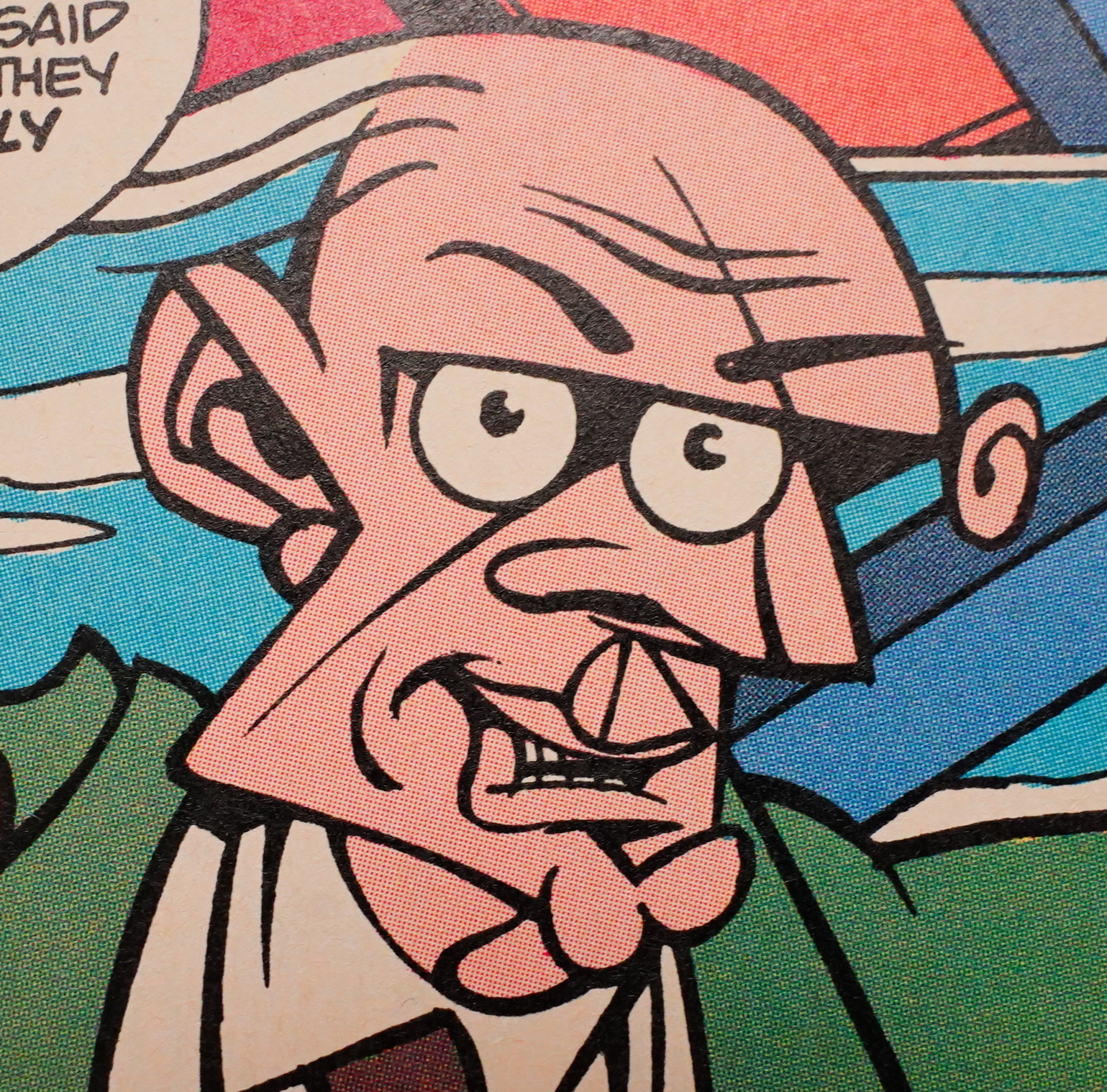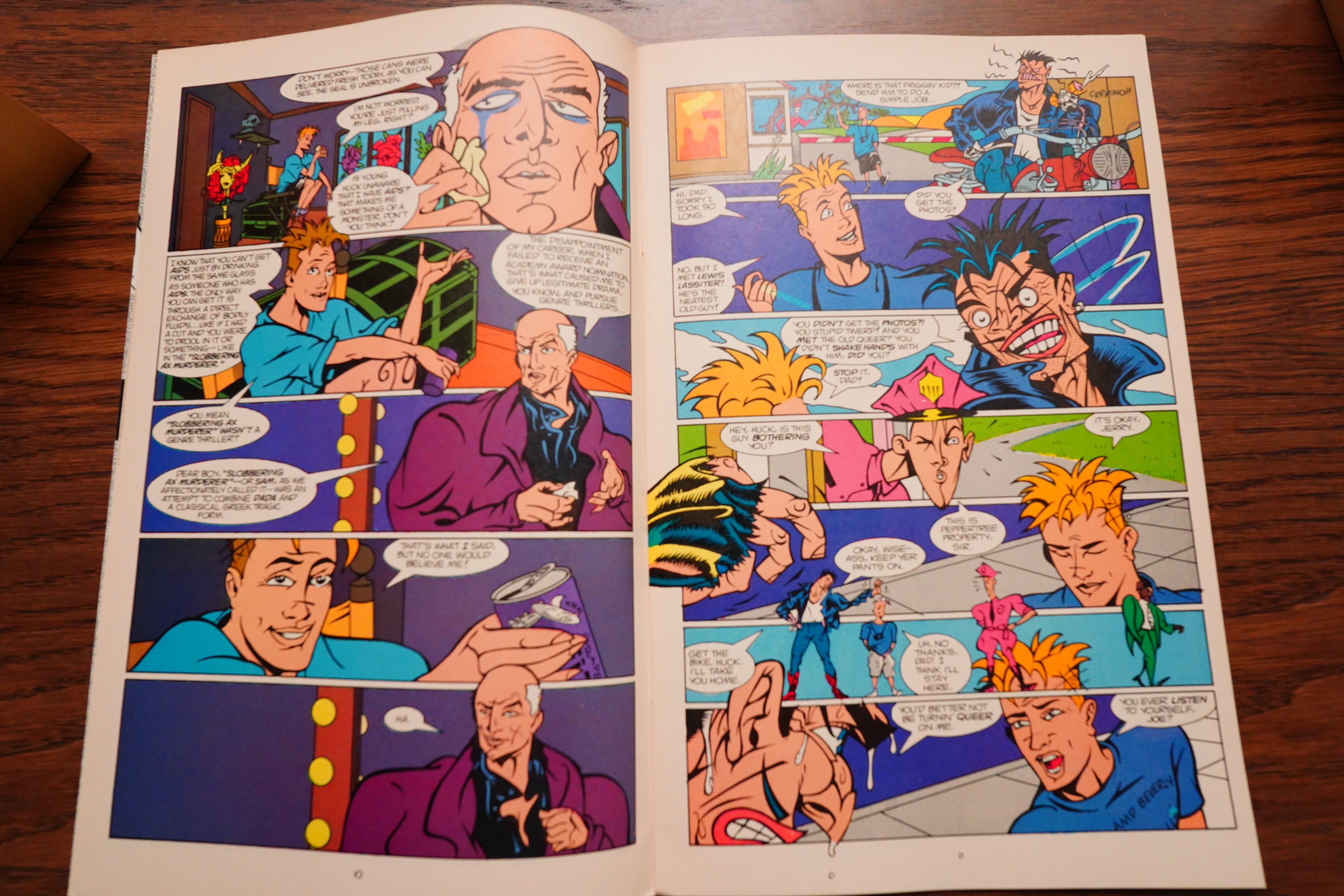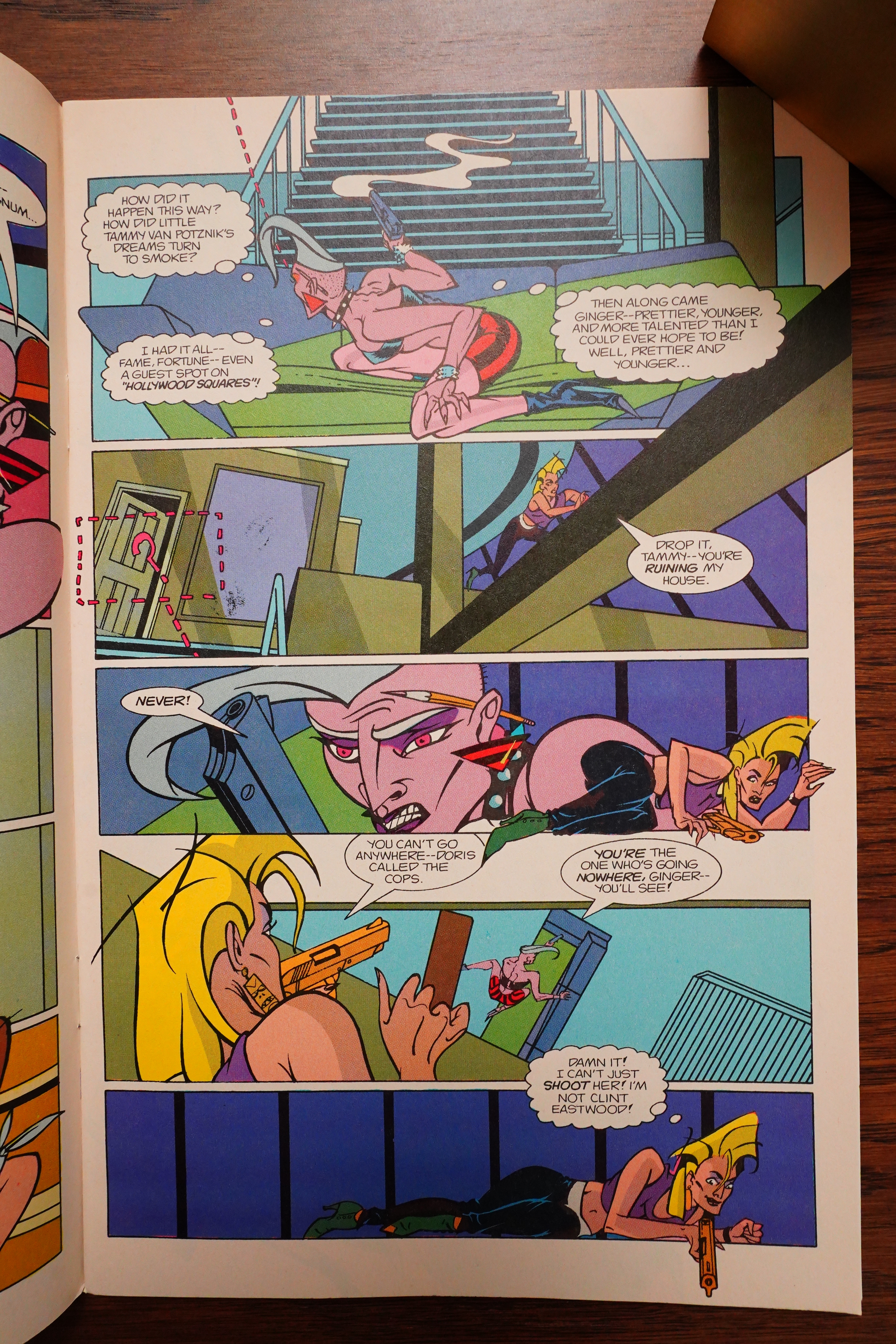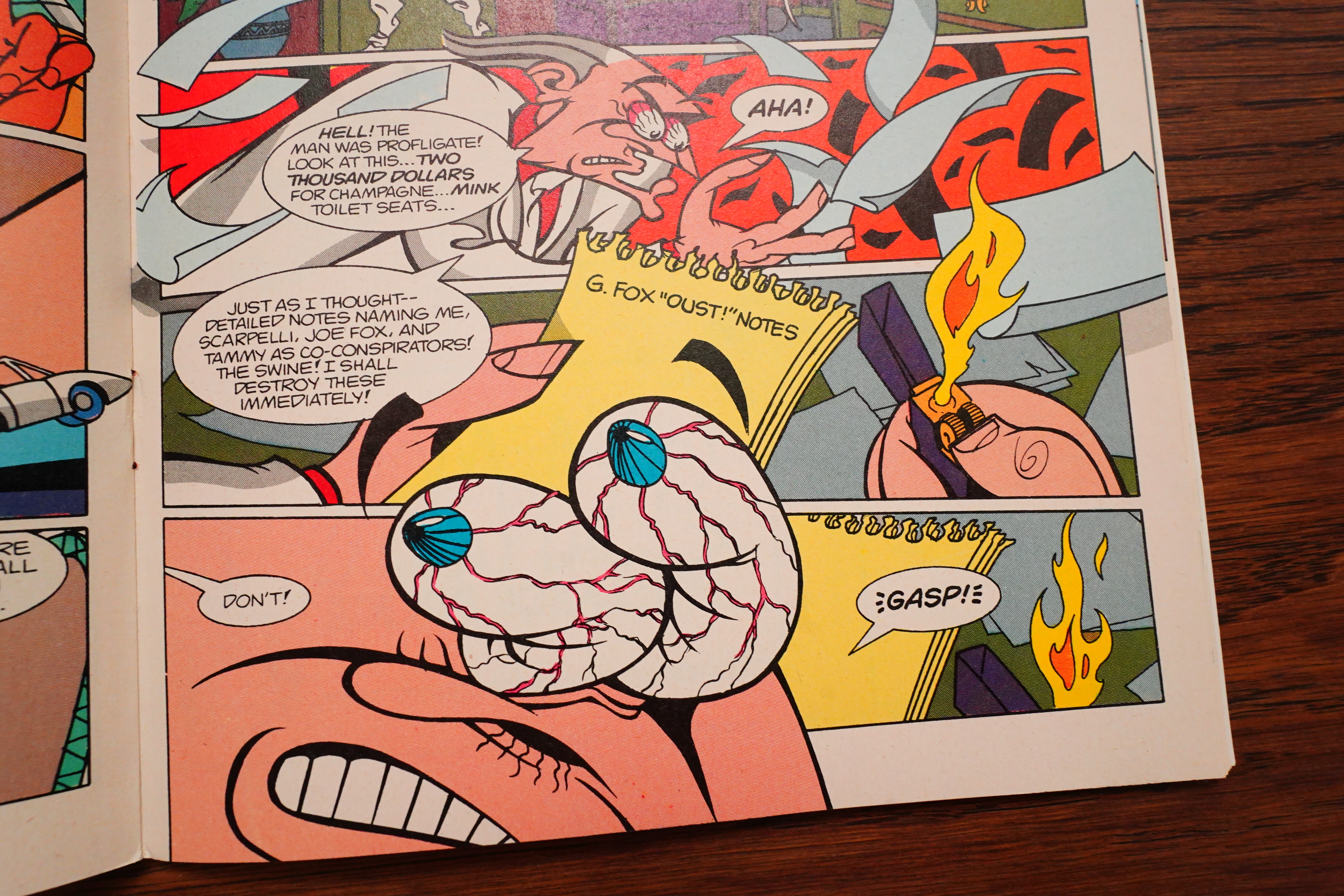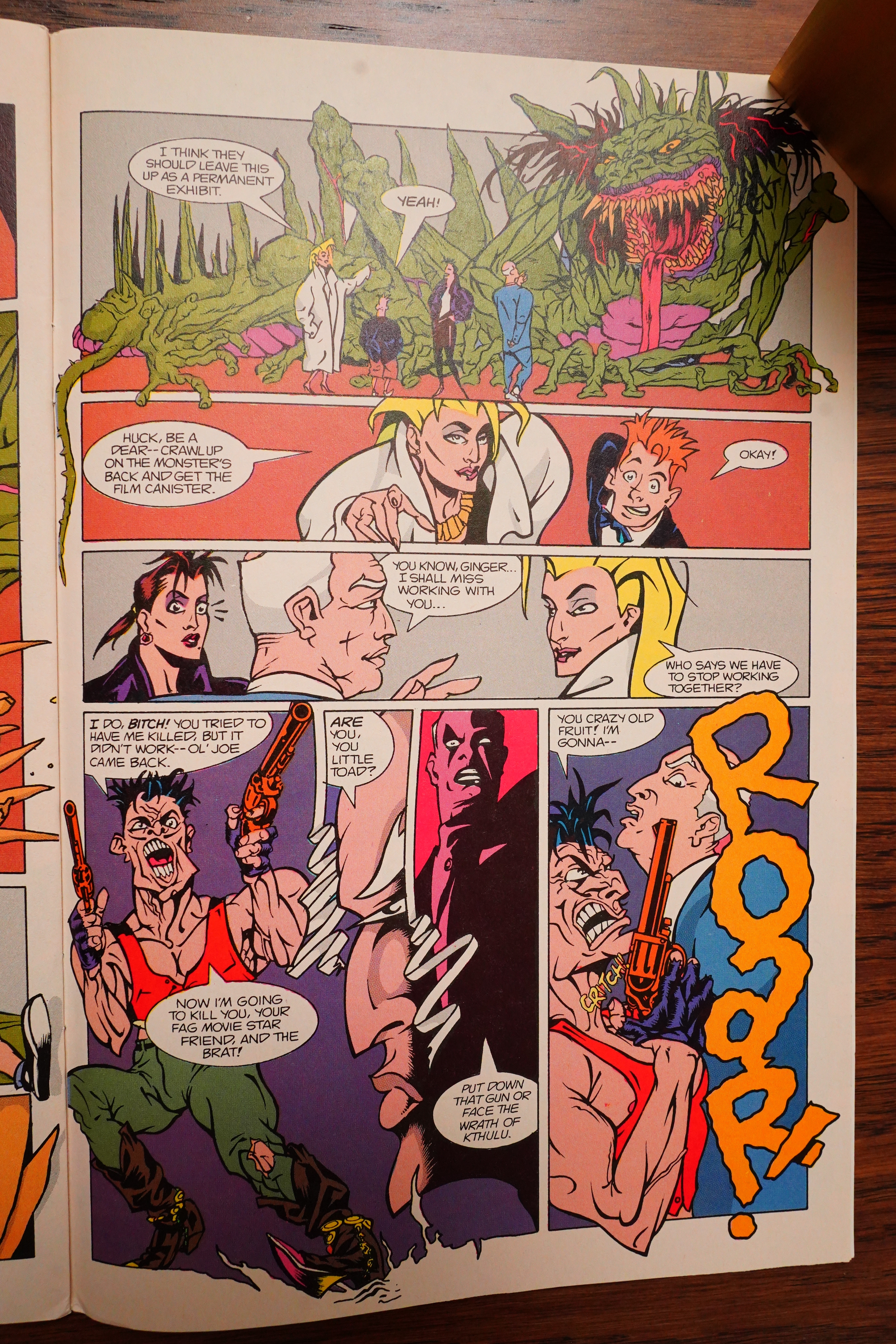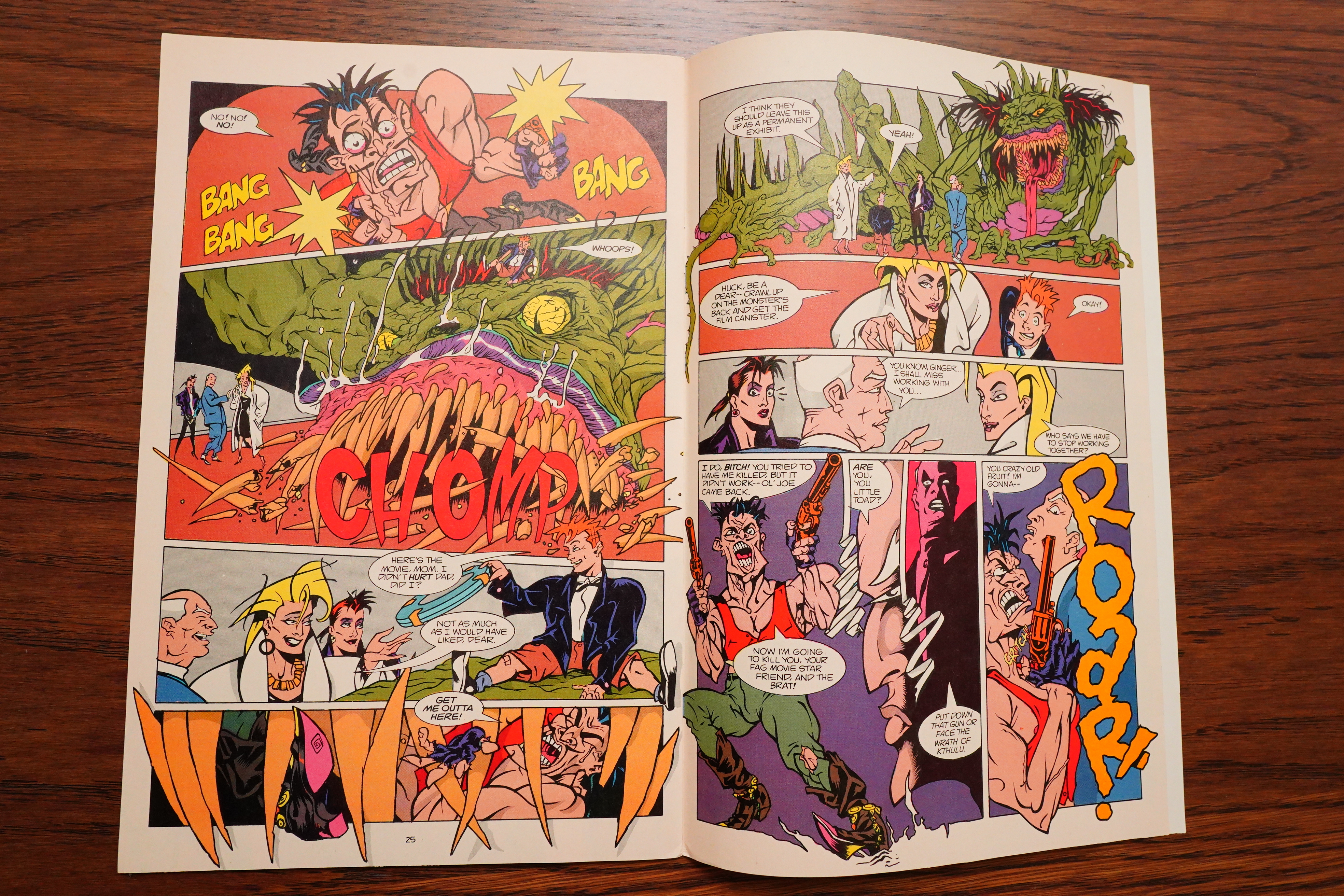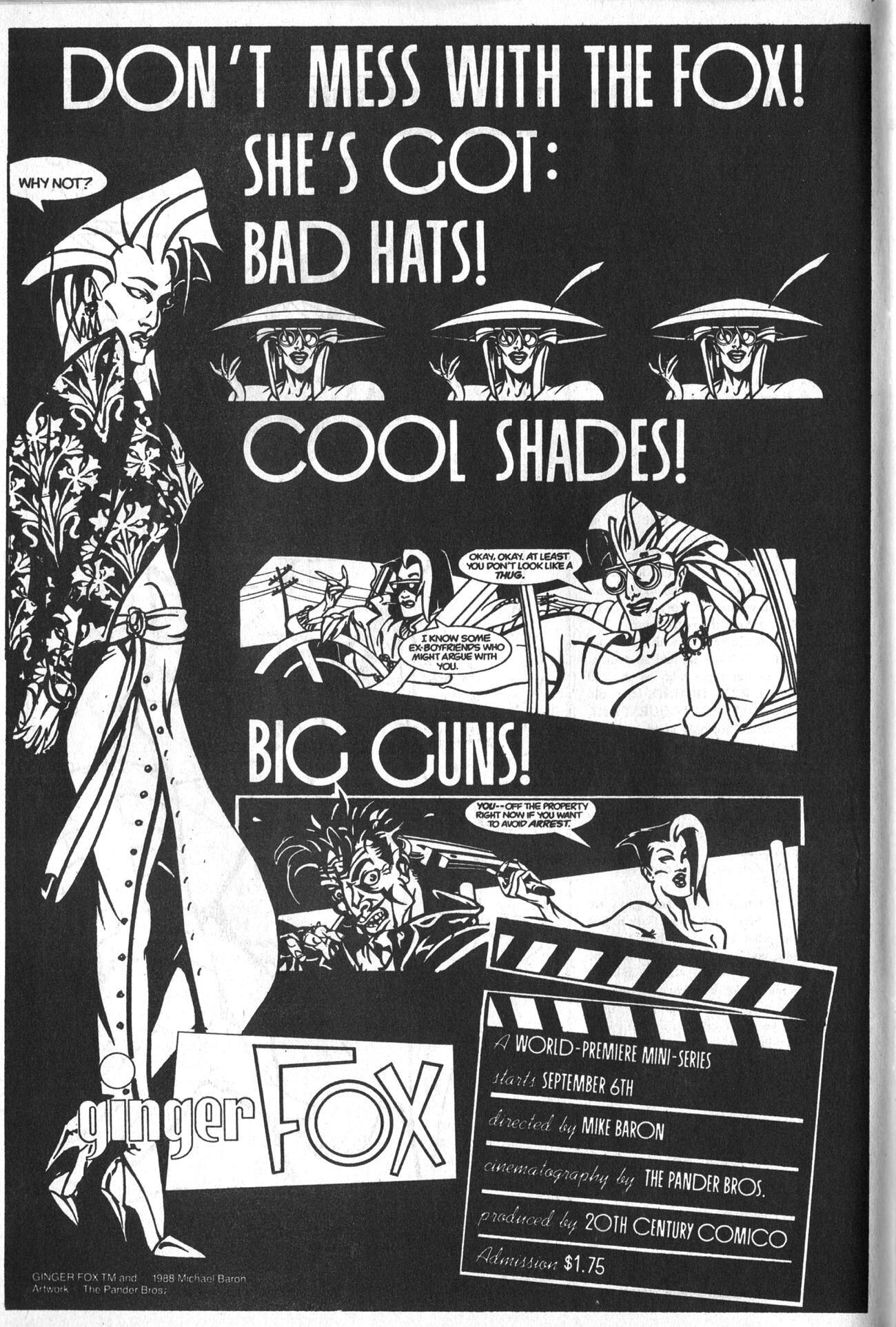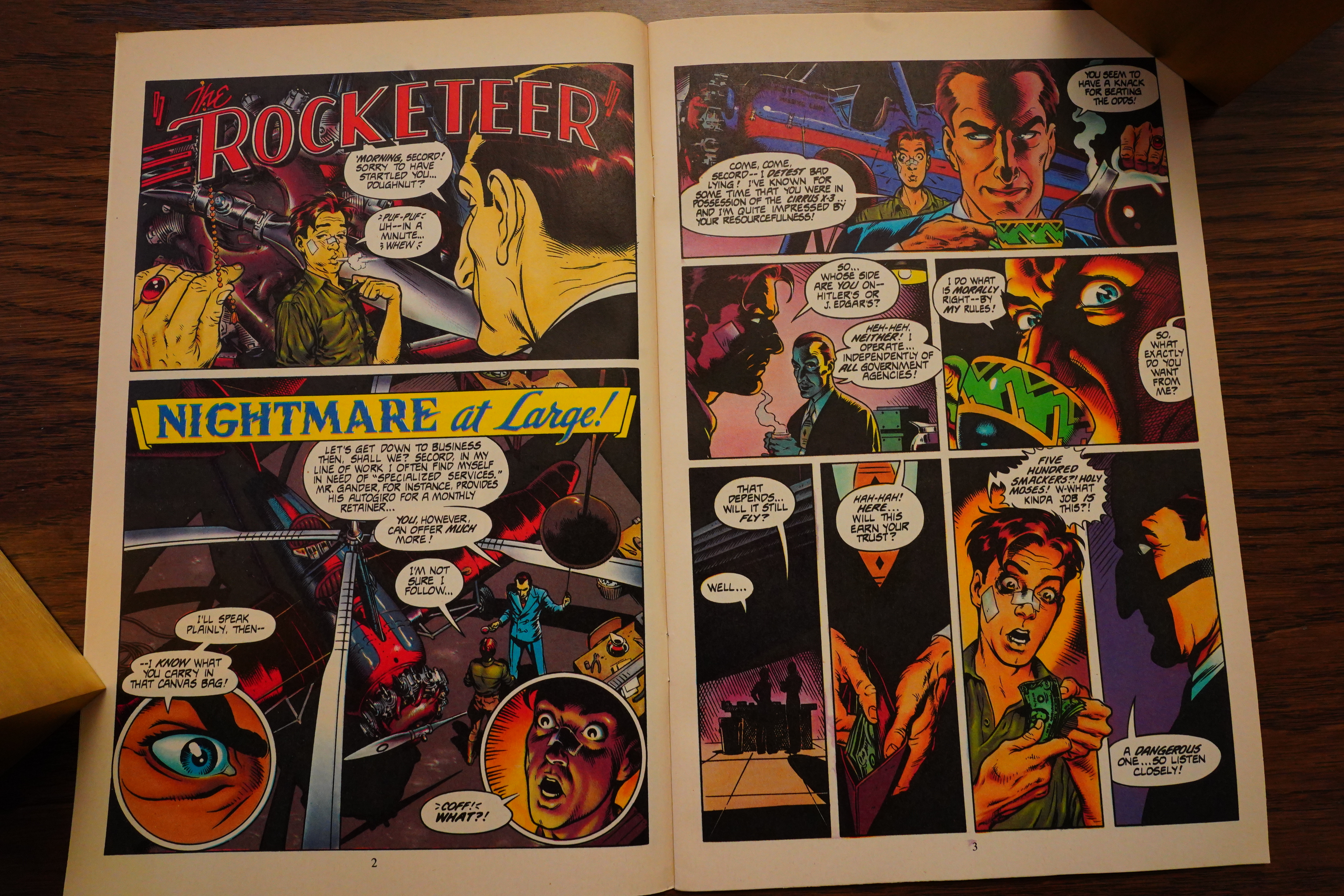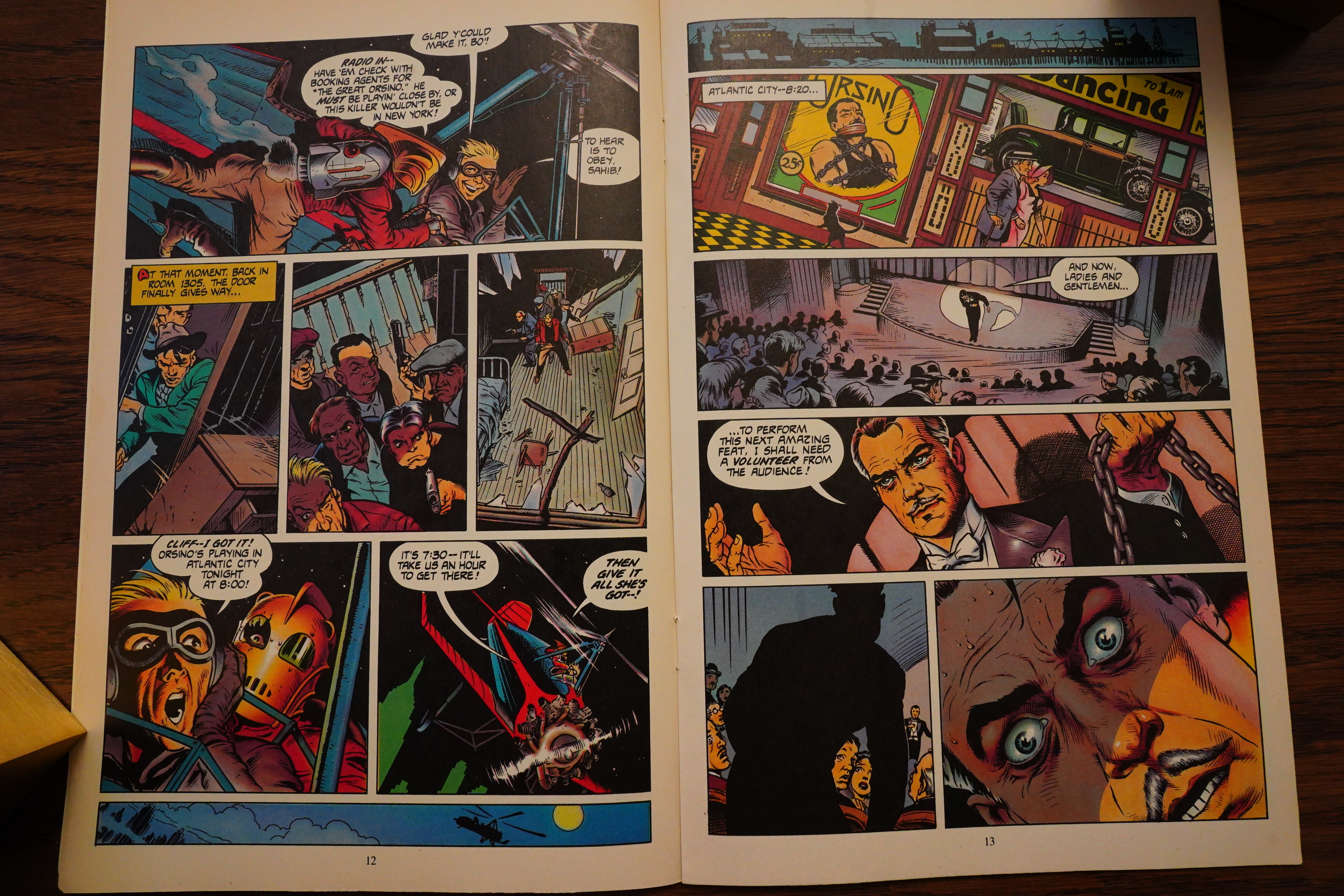
1986: Elementals Special

Elementals Special (1986) #1-2 by Bill Willingham et al

Hm… two issues? But I only have one issue here!!! WTF! There were so many Elements Specials that I’ve apparently missed buying the first Elementals Specials #2! Sorry! I guess I have to get it and then update this blog post…

Hm… should I get the $38 copy (minus 70% off) from Mile High Comics…

… or the $2.65 copy from Mycomicshop? Decisions, decisions.

OK, buy I can do the first issue now, anyway.

The book looks pretty stylish — I mean, physically speaking. Well, the covers are cardboard, and that’s as far as they got when classing this up, because as this introduction indicates: This Is Serious Stuff. So here we have an editorial by Tommy Czuchra about how he was sexually abused when he was a child, for instance.

Except that Tommy isn’t a real person — he’s one of the super-heroes in the Elementals troupe.

And the story isn’t about sexual abuse at all! I mean, I’m not complaining, but that’s a weird way to introduce a story about a serial killer that kills children with an awl.

Oh, and it’s not written by Bill Willingham? The credits on Elementals were pretty… idiosyncratic… for much of its run: Willingham was often credited with “story” whether he wrote it or not, and other people were variously credited as “writer” or “dialogue”. I don’t know what “story” means here, but I guess it might mean that Herman wrote this?

Note to all psychologists: Don’t take on super-hero patients without insurance.

So the serial killer kills a couple more kids… and then the kid comes back to life!? And has a kick-ass fight with the heroies? And they kill the kid? I don’t know.

And then it turns out that the serial killer was the ghost of a kid who’d been killed! Or something! The page above is the final page, and I then spent a couple minutes trying to figure out if I missed anything, but nope: That’s the story.

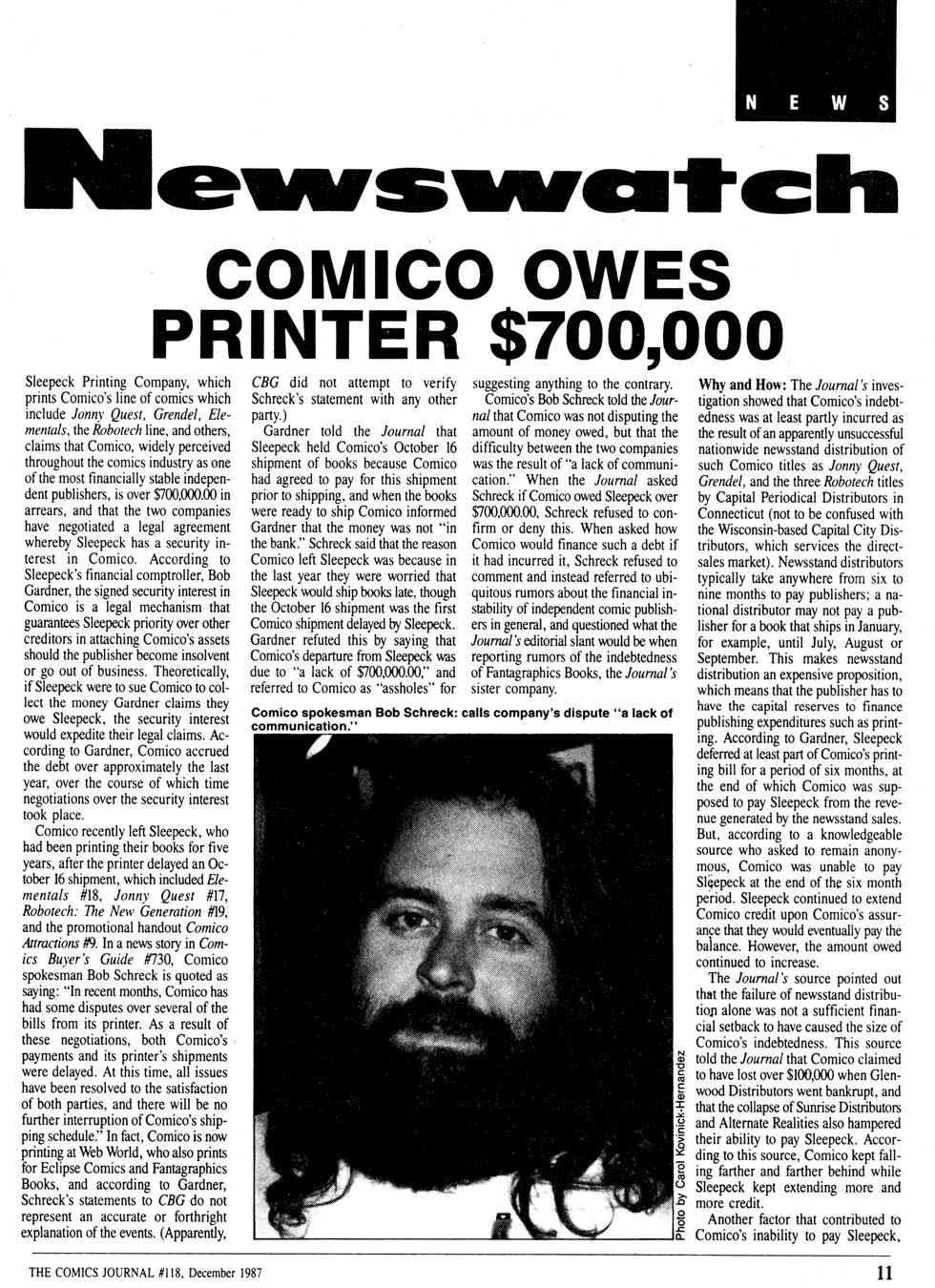
What a strange book! It’s basically just a vignette, and there’s no reason why it couldn’t have been a normal Elementals issue. But perhaps this really embarassing page they published explains what on Earth Comico were thinking:

They sent the script to an organisation that deals with abused children, and the spokesperson told them to fuck right the fuck out of here with this shit. (I’m paraphrasing slightly.) And then Willingham has the nerve to answer (in the published issue, of course) with a self-righteous rant about “Tragedy is never pretty, Ms. Cohn” and so on.

It’s the most pathetic thing I’ve seen, and I’ve read Az.

So that was presumably the reason for doing this as a classy “special”: They were going to get press for doing a Serious Comic Book About Child Abuse. But then they screwed it up so badly — they just did a bog-standard stupid super-hero book instead that doesn’t really touch on the presumed subject at all — that they were told to go fuck themselves.

Man.

Amazing Heroes #87, page #9:

In March, Comico will publish the
Elementals Special #1. The book will feature
Monolith in a look at child abuse and its effect on
the victims. There will also be a page of text
integrated with art by creator/artist BILL
WILLINGHAM that will offer an address and
phone number for people who wish further
information on the subject.

Yeah, they didn’t get that phone number.

Fantasy Advertiser #98, page #15:

Elementals Special 1
“Episodes” by Jack Herman, Bill Willingham and Rich
Rankin, Comico.
Lois Lane 1
“When it Rains, God is Crying” by Mindy Newell and
Gray Morrow, DC.
These two comics both deal with the thormy and emo-
tive subject of child abuse. They serve very neatly
as text-book examples of how to and how not to tackle
delicate issues in comics.
The Elementals book is a heavy-handed, cretinously
insensitive exercise in Grand Guignol; it graphically
depicts and thus cynically exploits the very acts it
purports to deplore, reducing the horrific murders
of children to just another “funnybook plot device”.
The crowning idiocy, for my money, comes in the letter-
column; apparently Comico, hoping for some sort of
kudos for public service, sent a pre-publication copy
of this rag to America’s National Committee for the
Prevention of Child Abuse, but when Anne Cohn, an offi-
cer of that organization, responded with a polite and
reasoned letter detailing some misgivings with the
presentation of the subject, the Comico staff have
the temerity to accuse her of being reluctant to face
reality, an accusation which, for sheer borrishness,
must take some kind of prize.
The Lois Lane story, on the other hand, is one of
the best comics of 1986 – and I say that without having
seen the second and concluding issue of this ‘micro-
series’. The worrying thing is, it’s so easy for most
people to overlook this title; after all, a series
about Superman’s Girl Friend would not be at the head
of many people’s buying lists, I suspect. I personally
only picked it up because I heard Gray Morrow would
be doing the art.
But I’m so glad I bought it.
Firstly, and least importantly, Gray Morrow turns
out his finest work for a decade; he’s always, in my
opinion, drawn the most realistically beautiful women
in comics – unlike most funnybook mannequins, you can
actually believe these women could exist in the real
world – and his gritty, grim, atmospheric art does
great service to the tension and drama of the story.
And tension and drama there is plenty of. Mindy
Newell, a writer I had previously cordially disliked,
puts her heart and soul into this story. No deus ex
machina superheroes flying to the rescue here; just
very human pain and tragedy. Unlike the corpse-strewn
Elementals Special, this comic makes do with only one
child’s murder; but that one weighs heavily on the
reader’s mind.
Not only a good ‘relevant’ story, but a damn good
Lois Lane story, too; the Lois presented here isn’t
a particularly likeable or sympathetic character, but
for the first time ever I can actually believe she’s
a top reporter.
I’ve no doubt the Elementals book will sell better
of the two; it’s a special edition of a ‘hot’ book
by a ‘hot’ artist, after all. But personally, I’d urge
you all to swallow your prejudices and pick up the
Lois Lane title.

Wow, they picked up on exactly the same thing I did…

Amazing Heroes #90, page #56:

THE FATHER’S SIN

As Monolith, he is a being of im-
mense power, the power of the earth
itself. But underneath that primal
facade, he is really a 15-year-old
named Tommy Czuchra. Tommy is
being haunted by recurring night-
mares—hideous dreams of small
children being lured away by a
faceless stranger who then brutally
murders them.
The nightmares don’t end when he
awakens, however, for in each case
his dreams come true. Tommy shares
a psychic link with the killer, and he
uses that link to track down the mur-
derer. In a Seattle park, they meet
face-to-face-and the connection
between the two is frighteningly
clear.
Child abuse is a current cause
celebre with the various media. I
have little doubt that, like other prob-
lems before it, this one will be driven
into the ground and then just as
quickly be ignored, as the ever-
hungry newsmakers move on to a
subject they have not yet milked to
death. This is turn creates the illusion
that the former problem no longer
exists. (Wife-beating? Hey, we”cured”
that didn’t we? After all-I never read
about it any more).
Morever, the media often drive
home the wrong point. The focus of
many child abuse stories is that you
should not let strĂ¥ngers take liberties
with your body-thus ignoring the
fact that most sexual assaults on
children are perpetrated by people
they know and trust.
And what are mom and dad do-
ing? Too often, they are happily
allowing mechanical media to
assume the parental guidance they
lack the responsibiity to give of
themselves. They give their kids
teddy bears that spew out pre-
recorded warnings against fondling!
Where are the parents while little
Jimmy and Jane are learning to relate
to an inanimate object? Probably sit-
ting on their ever-broadening asses,
watching a prime time soap opera.
Morever, some psychiatrists and
psychologists are now warning that
we are creating a whole new prob-
lem. While it is prudent to teach a
child caution, we are instilling in our
young a suspicion, even a hatred, for
all who are strange to them; all who
are different. The imagined fear can
sometime be as damaging as the
actual menace.
How do the stern warnings that
children protect themselves at all
times relate to the Elementals story
at hand? To my surprise and gratitude
…not at all.
There is an obvious, and super-
ficial, difference of course, in that this
story doesn’t deal with sexual abuse
but rather with the outright murder
of children. The larger distinction is
not so easily discerned, especially
early on.
I was somewhat shocked and
horrified when I turned to page 19
and was greeted by the sight of the
faceless stranger savagely plunging
an icepick into a small boy’s throat.
I felt a sense of exploitation when,
three pages later, the child’s corpse
is animated into some sort of male-
volent, power-blasting zombie, one
able to smile as a bullet burrows
completely through his head.
“My god!” I thought, with disgust.
“There’s no way in hell a little kid
should be exposed to these sorts of
images.”
And that’s just the point. This story
isn’t meant for children; its message
is not directed at them. Its target is
me and you, as becomes evident
only when we reach the climax of
the tale.
In a floating netherworld between
life and un-life, the faceless stranger
reverts to his true form-that of a
child who was beaten to death by his
own parents. This puts the earlier
scene in a different perspective. That
child, the victim of horrible violence,
returns to mete out equal violence
to others.
This is one area in which, to a very
real degree, the sins of the father are
visited on the son. Many men who
beat their wives saw their fathers beat
their mothers. Many adults who
abuse children were themselves
abused when they were young. We
create our own monsters.
That’s the message of this story.
The danger to our children doesn’t
come from faceless strangers-it
comes from us. The solution to the
problem lies not in stronger locks on
our doors, but in a greater respect for
life; an abolition of the mindless
violence that makes humans the
beastliest creatures to ever roam this
planet.
Scripter Jack Herman, along with
series creator and artist Bill Will-
ingham, is to be commended for his
effort here. It aptly demonstrates the
power that the comic book medium
can display, even under the guise of
superheroics. We have seen scores
of costumed champions save the
world scores of times; we have
become jaded to its import. But the
salvation of a single soul, as
presented here, can still touch us to
the core; can make us understand
true heroism. It is to be recom-
mended.
And if a single mother or father
can read it and then look at their own
son or daughter with new insight and
appreciation-then it is a treasure
beyond price.

That’s from R. A. Jones, so *rolls eyes*.

I can’t find any reviews of this book on the internet, but it’s difficult to google for, so… But my guess is that it didn’t make much of an impression.

When I get #2, I’ll blather on about it here:

[…]

Next up in this blog series is Grendel, which I’m looking forward to reading. It’s forty issues, though, so it might take a few days…

1985: Robotech: The New Generation

Robotech: The New Generation (1985) #1-25 by too many people to list

To recap the Robotech lore once again (hey, perhaps there’s new readers? you never know): The US Robotech TV series was made by concatenating three non-related animated Japanese TV serials. The first one, Macross, survived more or less unscathed (except for editing out some nude scenes). The second one, Southern Cross, suffered a lot — not only did it have to be altered to refer to Macross concepts, but it also had to work as a bridge to the third serial, Mospeada.

And the comics adaptation of Southern Cross/Robotech: Masters was even worse, because they couldn’t even refer to things that had happened in Robotech: The Macross Saga because they didn’t want to spoil any plot developments. So the Robotech: Masters comic series was… junk. I think that’s a fair summation?

Which brings us to the last of the three serials:

Well, the artwork’s not terrible…

And the first issue is written by Carl Macek, who was responsible for editing together the US Robotech TV series.

The New Generation is set far in the future, which helps with a lot of the problems Masters had: While they make some references to Macross and Masters, they don’t have to mention it a lot — just change some words here and there, and that’s that, basically. What a relief!

The action in this issue is a lot better depicted than in the other two series, really — they had some real problems in depicting the drama in the fight scenes, but this is pretty good.
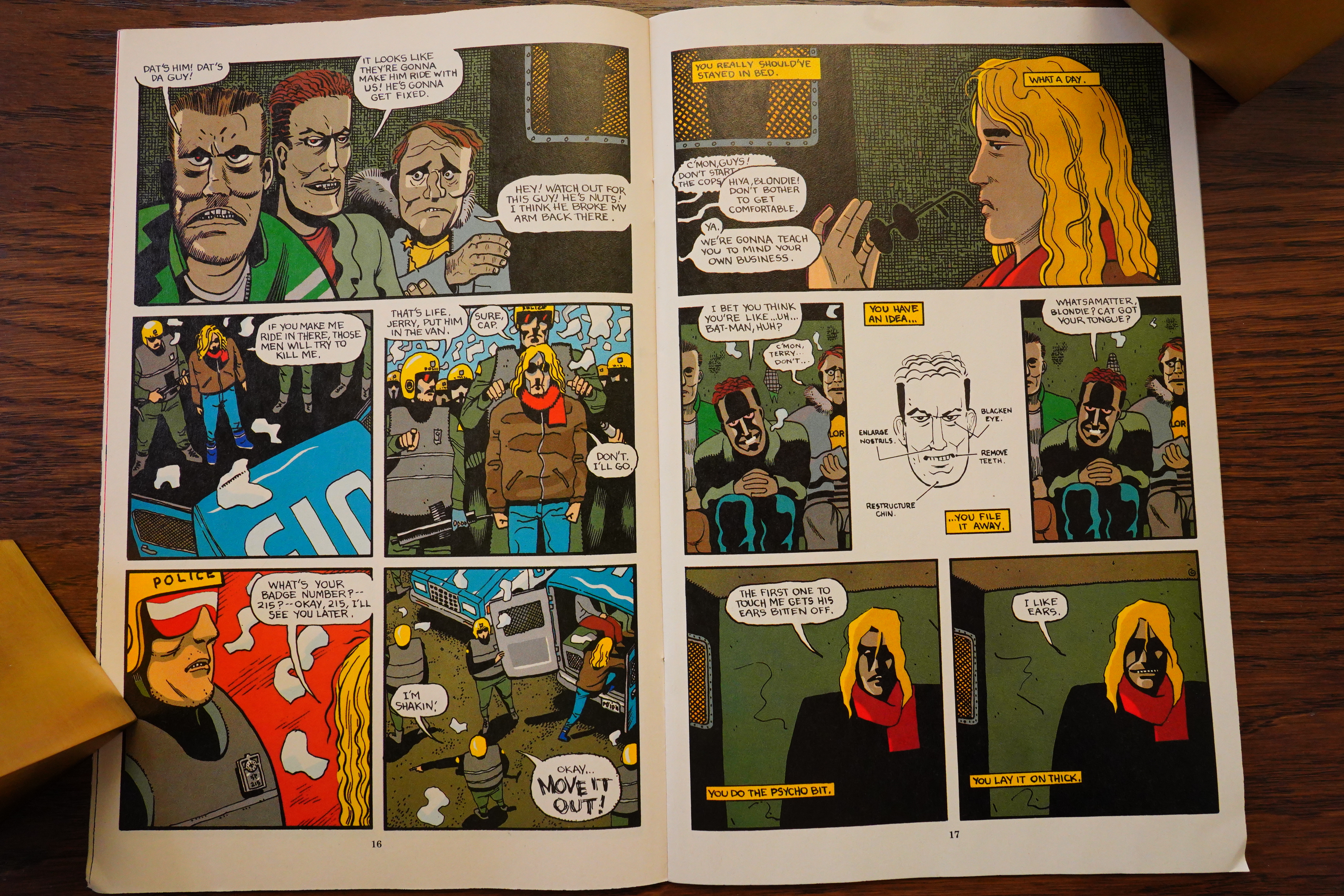
See?

OK, this first issue felt a bit overloaded, but it works.

So of course Macek drops out, and Jack Herman takes over.

And this penciller really attempts to do Japanese style stuff, but… er… is it successful? Not really.

Huh, they relettered “Robotech” there? Perhaps they hadn’t quite decided on terminology yet…

This isn’t bad, really — they’re setting up a proper Scooby Gang, with a cool one, a brawny one, a comedy sidekick child… Very different from the other two serials.

And more kickass women!

But not all women…

… are what they seem! SHOCK AND AWE!!!

Heh, cool.

I guess it’s a very direct adaptation — the humour is pretty… isn’t very funny, is what I’m saying, and I’m guessing that’s from the original Mospaeda series?

The art team changes every issue apparently. Here Sam Kieth does the inks, and… it doesn’t look very Kieth-ish?

In Macross, “protoculture” was this mysterious McGuffin the aliens were trying to capture, and the humans didn’t know what was. It was never really resolved, I think? So it remained a pure McGuffin.

In Masters, it was this substance the aliens needed to keep their species alive — they needed it for cloning and stuff, and it was still this mystical thing.

In The New Generation, it’s basically gas. They produce it, and then pour it into their kick-ass mecha motorcycles. But I guess that in Mospaeda it was just a fuel of some kind, and they just renamed it… and that’s enough of a reference to keep things tied together, even though it doesn’t make much sense.

Mospaeda is very different from the first two serials. The first two serials had lots of space battles and stuff, and they both were basically one long plot line (each). The New Generation is quite episodic — every issue they come to a new village, or military installation, and then they have an adventure with the people there, and then they move on to the next.

The artwork keeps on deteriorating — it’s like they told Reggie Byers to make the eyes bigger to look more Japanese-ey, and then he ended up with these… monsters.

One thing this serial has in common with the previous ones is that there’s tension between pacifists and militants. (Oh, I forgot to mention what the setup is: The Earth has been invaded by the Invid. Human resistance groups have formed that fight against the occupation. Oh, and in Mospaeda originally, it wasn’t the Earth but a different planet.)

Somebody writes in to complain about the artwork, but we’re assured (!?) that Reggie Byers is going to do all the artwork from now.

So of course next issue is by somebody else.

Somebody much better.

*gasp* Dastardly traitorous humans!

For two issues, Mark Burbey takes over the scripting, and he’s much better at it — his issues have a much better flow, and make more sense. The previous issues suffer from introducing a bunch of new characters all the time and then not really making it clear who they are and whether they’re just background characters or whether they have some relation to the main plotline or not.

Mark Burbey makes things more readable.

We get some well-deserved backlash to the artwork, and as he notes, Reggie Byers started out pretty well, but the artwork gets worse with every issue. So perhaps the problem is just a time crunch? He doesn’t have time to do the layouts/pencils for each issue in 42 days?

Because it starts looking like something from the utter dregs of the Black & White Boom as the series goes along.

[time passes]

I wrote the stuff above more than half a week ago, because things happened and I was distracted. But now I’m back! The only problem is that I don’t really recall much of what happened in the first half of the series now…

As usual, the creators keep rotating.

So are these artists any good? No, not really. The colouring’s pretty nice, though.

The artwork’s really wooden, and the storytelling isn’t on point.

And the story keeps on being a lot of fake drama — there’s more pages spent on the people on our team bickering than on them fighting the aliens, it seems like. But it’s not like this even establishes character or anything — it feels like they’re just marking time.

Yet another reader writes in to say how much they dislike the artwork. It can’t have been fun for the artist(s) involved. I can’t ever recall anybody carrying this much negative feedback on the letters pages.

“What is friend?” Oh yeah, I forgot to mention the plot? Or did I? Anyway, the aliens create human-looking people, who naturally fall in love with our heroes.

Man, the artwork from Byers… His line (or that of the inker) does improve, but his faces tend towards the grotesque.

I guess this is a fill-in issue — Tenney would become the new regular penciller, so perhaps it’s a “try-out issue”. And… hey! John Workman! He’s a good letterer.

That’s how you prove you’re not an alien!

Lawrence Schick did not return, and that’s probably for the best — the storytelling in this issue is perhaps the worst of any of the issues, and that’s saying a lot.

Comico starts printing stills from the animated series on the back… which may not be a good idea, because it’d just remind everybody how much better the source material was. They stop after a handful of issues.

Did I mention that this series is very much patterned like a drama TV series? That is, every issue is basically a separate story: The overall story is that our band of heroes are travelling towards the aliens’ headquarters, but every week, I mean issue, they encounter a new group of people, and solve a problem they have. Or more often than not — watch that group of people die.

So for one issue they encounter a theatre group who are staging a show. Because why not?

If you’ve survived the electrician’s strike, you can survive an alien invasion. Snap out of it, musical director man!

Finally we get to the epic conclusion — while the series has been very episodic, there’s been an over-arching plot of the aliens plotting and stuff, and Admiral Rick Hunter is coming back from space to fight the aliens!

Then they mention in a panel that his ship got lost, so he’s not coming after all. And of course he’s not: They had no way of editing Rick Hunter into this animated series!

Instead we get the Alien Boss explaining everything to our merry band. With a letterer that writes abnormally big, so the pages look like the above.

Hey, nice suits.

And then: The end. The aliens just take off and leave, because they’ve been convinced that humans are just too ornery. But Rick Hunter is still missing, and he has the Protoculture, so, er, one of our band leaves Earth to find him.

THE END.

Man, what a sucky ending. But it had that in common with all three series, so I wasn’t surprised this time around.

So… I mean, this is a comic book for children. So the question I’m asking myself: Would I have liked this when I was ten? The Macross Saga, sure. Robotech Masters? No way — that’s really, really bad. The New Generation, then? Hm… I think not, but possibly? The episodic form is kinda charming, but the artwork is mostly horrible, and the storytelling is bad. So probably not.

Protoculture Addicts #3, page #18:

The three last episodes of the New
Generation were done by Markalan Joplin and
Thomas A. Tenney. As I said before, I was
very pleased with Thomas Tenney’s work on the
pencils and found that he improved the New
Generation quality for its last issues. So
those three last adaptations were quite all
right and the New Generation series comes to
an end in a nice fashion.
Whatever was said about the Masters and
New Generation adaptations, it still is sad
that all is over for them because now those
series will only live in our memories. Let us
keep them alive in our heart.

Amazing Heroes Preview Special #2, page #101:

The third Robotech title is a more
episodic series than the other two. Scott
Bernard and his ragtag freedom fighters
continue their slow journey across the
continent to Reflex point to confront the
alien Invid, conquerers of Earth. Each
issues relates a separate adventure that
they have along their way.
In issue #5, “Curtain Call,” the singer
Yellow Dancer puts on a rock concert
in a town that is collaborating with the
enemy, while Scott and the others raid
the town’s protoculture supply for fuel
for their Alpha and Cyclone motorcycle-
fighters. Issues #6, “Hard Time,” and #7,
“Paper Hero,” give Scott (and the
readers) a glimpse into the personal
histories of two of his band. “Hard
Time” tells of Rook Bartley’s past as a
gang member, while in “Paper Hero,”
Lunk tries to make up for his desertion
from the Army. In issue #8, “Eulogy,”
Scott is thrilled to meet one of Earth’s
most famous fighters against the Invid,
until he learns what a lifetime of
hopeless struggling has done to the
morale of the once-unbeatable hero.

Amazing Heroes #75, page #29:

We’ve changed the stories for the
better, too. A lot of fans think that
Japanese animation is really great,
but when you know what the char-
acters are really saying, you find out
that the writing isn’t any better than
in our comic books. For instance, in
the original version of Robotech: the
New Generation, the hero is a Mar-
tian colonist who’s fighting to free
the Earth which was conquered by
the aliens a whole generation ago.
We had to change that a bit to fit it
into the overall Robotech story line;
but anyhow, our hero is the only
human survivor of a space battle,
and his space fighter crashes in the
Amazon jungle. This is the first time
that he’s been to Earth, and he has
to travel to North America, looking
for members of the Earth Resistance
Movement, so he can complete his
mission and destroy the invaders’
main base. In every episode he gets
a little closer and he picks up some
new companion to join the
resistance. Well, if you’re travelling
from the Amazon up to North
America, you’ve got to go through
Colombia and Central America and
Mexico. One of the first things that
happens, before he’s had time to
leave the Amazone area, is that he
runs into a grizzly bear. In the
Amazon, right? He also keeps hav-
ing trouble with biker gangs who
have sort of taken over the small
towns since the invaders destroyed
the Earth governments. The story is
set in the 21st-century, but the biker
gangs look like your typical late
20th-century North American biker
gangs. In one episode the town that
he’s passing through is holding a
rock concert, with an audience of
10,000 or more screaming teen-
agers. Anyhow, as I’ve rewritten it,
he crashes in an area that’s
unspecified, and the towns and
people he meets all have standard
North American names. I’d rather
have a tiny number of Japanese car-
toon purists complain that I’ve
changed the Amazon to the North
Woods than have everybody in
America write in to say that there
aren’t any grizzlies in South
America, and that the towns and
people don’t look Latin American at
all.

Oh yeah, it sounds like he improved things so much! Soooo much.

Reading the above, I’m almost interested in watching the original Japanese series before they were butchered…

Robotech: The New Generation has apparently never been reprinted, but if you want to read them, you can usually pick them up on the cheap. For instance:

And with that, I’m finally done with Robotech! Well, except for a few specials, but that’s not for a few weeks.

This blog series should be less gruelling work for me from now on — sure, there’s a couple more long series to cover (Grendel, Jonny Quest, etc), but I’m rather looking forward to reading those.

1985: Robotech Masters

Robotech Masters (1985) #1-23 by Mike Baron, Neil D. Vokes et al

To recap: The US TV series “Robotech” was put together by appending two unrelated mecha series to the Macross series (because they needed 85 episodes to do syndication). This is the first of these “appended” series, and was originally called Southern Cross. Which was, in itself, the third section of a different series.

Confusing? Sure. How on Earth are they gonna pull this off? I mean, how do they make a satisfying series within these constraints? Let’s find out.

This series has Mike Baron as the writer. In later issues he’s credited with “script”, and then “words”, so I assume that this series was made in the same way the Macross series was made: I.e., the penciller looks at the VHS, breaks it down into comic book form, and it’s then inked, and then the writer comes by to write the words. So while Mike Baron was pretty well-known by this point, it’s not like the writer has much of an influence on a series made this way.

(I’m not actually a Mike Baron fan, anyway — like everybody else, I liked Nexus just fine, but I discovered some years back (while reading the complete Nexus reprint) that I had no interest in reading any issues where Steve Rude didn’t do the artwork. So Rude’s artwork and storytelling was the main attraction there, and not Baron’s writing…)

This is supposed to take place about 20 years after the first series, and the main character here (Dana) was a baby in that series. No other characters cross over, which makes things easier.

Macross was, at heart, a romance with some mecha fights occurring with some regularity. This is very different — it’s mostly fights, and there’s little romance.

I haven’t seen the episodes this is based on, but from the letters pages, it seems like this is very faithful to the TV series.

Which, of course, means that they haven’t really tried to make it more Macross-like.

The second issue has tons of these lettering quirks — I guess they’ve changed the dialogue after the letterer was done?

Perhaps they changed their minds about some terminology — “attack ships” is consistently relettered, for instance.

The artwork doesn’t really look very much like Japanese animation — some of it looks a bit Archie like, but then there’s panels (like the above) that look more like Matt Howarth.

As cobbled-together messes go, this isn’t very convincing. When Macross ended, we left Earth as a pretty highly developed place (even if it had been devastated). In this series, even getting out into outer space is like a big deal.

Macross was pretty charming in many ways, but this is just a collection of clichés, including The Feisty Rulebreaker, etc.

Oh, I didn’t think about that — in this adaptation of the TV series, they can’t even refer back much to what happened in Macross, because that would be spoiling the ending of Robotech: The Macross Saga! Yowza…

So what are they left with here? I mean, they can’t refer to what background the had in the original Southern Cross series. And they can’t refer much back to the background of Macross, even if this has been retrofitted to be a sequel to Macross. What’s left?

Nothing! They have to do this series in an almost complete vacuum: They can’t do any world building, because it’s either been edited out, or is forbidden to refer to. That’s an impossible situation to be in — they can’t build on anything or go anywhere. No mysteries to hint at or ways of giving the aliens a deeper background. Just fights and squabbles.

Sure, sure… they’re electromagnetic.

I hate it when that happens.

Since there’s no world building possible, you can do scenes from other, better things instead — this is one of several Star Wars rip off scenes.

As with Macross, there’s tension between characters that want to try to negotiate a peace, and the military that’s very very stubborn.

A reader asks why they dropped the wraparound covers… and doesn’t really get a response, but I guess it’s because they went to newsstand distribution, and that means that they can charge serious money for back cover ads?

Then! Suddenly! They get help from Macross! How are they going to weave this into the series, then?

They aren’t — they only last for a couple of scenes, and then it’s “oh well, couldn’t do anything”. Which of course they couldn’t — they’re from a different animated series.

As opposed to on the Macross series, the art team is more consistent on this series, but they still get some guest artists. Sam Kieth did the pencil finishes here, and…

Yes, indeed, this looks quite a lot like Sam Kieth.

I’m now halfway through this series, and it’s really a chore to get through it. It’s so boring. Macross could almost make you believe that it was a huge, epic story in a real world, but this series has nothing — and that’s not really a surprise, because this series is nothing: They took a different series, changed the dialogue here and there to refer to “Protoculture” instead of whatever McGuffin they originally had, and then called it a day.

I had low expectations for this series, but boy — it’s just so much worse. There’s no charm, no interesting characters or plot lines, no depth. It’s just hard to not start zoning out while reading this, because it’s just so boring.

The artwork fluctuates a bit — even if it’s mostly the same penciller, the inkers vary… And things seem to become less and less Japanese-looking as the series progresses, really?

Schwing!

Is that a Mike Baron contribution, or did the Robotech editors put that in when cobbling the animated series together?

“What is ‘friend’?”

The computer says no — as valid an excuse in this reality as in that.

I can’t really adequately express how befuddling it is to read these issues — The Macross Saga was totally fine in that way, and I saw some letters expressing appreciation for how the writers on the Comico version added material to have things make more sense. The only thing letter writers commend Mike Baron for is how precisely the adaptation mirrors the series.

So I’m going to go ahead and guess that the Robotech animation editors messed up a lot of stuff while trying to fit Southern Cross into the Macross storyline, and then neither Baron nor the editors gave a flying fuck.

Schwing!

Did that mecha really look like that in the animated series?

I can’t really find any screenshots — I just see a gazillion illustrations. Hm… Oh, perhaps this one? Yeah, my suspicions seem to be correct.

And… Invid Fighter Bioroid? Er… the Invid are the aliens from the third (and final) unrelated series, right? So what was this originally, then?

Perhaps there was something in the air

Hm, I think somebody should have invested in a couple more poses.

The last half of the series is mostly drama — several people fall in love with each other, and have the usual misunderstandings etc.

Neil D. Voke’s artwork keeps on regressing. Or perhaps he was just getting burned out, because his last issues look pretty awful.

Aha! Pen pals.

OK, the Invid Flower of Live must not be allowed to bloom, so they have to retrieve the Protoculture from Earth. They keep saying that… like… issue after issue…

Oh yeah, Vokes quit, and we have a new art team. So suddenly the artwork looks a whole lot more Japanese-ey, but is it good? Nope.

So… they have to recapture the Protoculture… Didn’t you just say that? I know that Japanese animated series can be pretty repetetive, but it’s just ridiculous propagating this into the comic book. Phoning it in, I guess.

So finally we get to the end, and as with Macross — the final fight sorta fizzles out…

… and we get a non-ending, because we’re being led into Robotech: The Next Generation. I mean New.

Wow. That was painful to get through. The artwork started off weak, and then got worse and worse. The writing was slapdash — the plot was wildly inconsistent, subsequent scenes seeming to contradict each other. There were attempts at humour, but they were not frequent, and they were not successful.

Protoculture Addicts #1, page #28:

The Robotech Masters series
began publication in July 1985. There
are 23 comic books released in this
series. Dana’s story was not released
at the beginning but was featured in a
special 40-page issue in May 1988.
Mike Baron has done all the scripts by
following very closely and without
major improvement the original
scenario. Moreover, there are no major
problems that I can recall.
Neil D. Vokes has done the
drawing for the first 19 printings. Let us
say that #1 to 3 were excellent. Issues
#4 to 13 are of generally fair quality.
With #14 to 19 there is a general
improvement of the quality; it is more
and more pleasing to watch. Issues #20
to 23, pencilled by Harrison Fong, were
quite good. Characters are good-looking
(though Zor is less alike) and the art in
general is very charming.

The Comics Buyer’s Guide #612, page #26:

The newest title from Comico
The Comic Company, Robotech
Masters #1, sold out its 64,000-
copy print run one day after
printing was completed, said
Sales Director Mark Hamlin.

Amazing Heroes #78, page #57:

ROBO TRASH

There’s a new secret to success in
comics today: If you can tie your
book in with an animated cartoon
series, you increase your chances of
producing a winner. That formula
seems to have worked with Trans-
formers and G.I. Joe. Comico appar-
ently hopes to triple the odds in their
favor by publishing three separate
series based on a syndicated cartoon.
Moreover, this is a Japanese cartoon,
of the sort that is enjoying a great
deal of popularity in this country at
the moment. Will this guarantee the
success of Comico’s line of “Robo-
tech” comics? The jury is still out.
After a lull of some 20 years, the
hostile aliens called the Zentraedi are
once again preparing to make war
against Earth. They launch their
assault by destroying a lunar outpost,
and then carry the fight planetside.
Earth is not completely defense-
less, having improved its war capa-
bilities in the intervening two
decades. One of its lines of defense
is formed by the men and women of
the 15th Squadron. The fighter group
is led by Lt. Sterling, a young woman
who starts the story by being thrown
into the brig for “disturbing the
peace, malicious mischief, insubor-
dination, and criminal damage to
property.” By the end of the issue, she
receives a promotion and a commen-
dation.
I wish the same could be said for
the story; but, alas, it’s a frightful
mess. To call the characterization a
bit shallow is like calling the Sahara
a bit dry. The main focus in on Lt.
Sterling, who is presented as being
an airheaded, unreliable Valley Girl
-not exactly the stuff of which
heroines are made. The other char-
acters are dealt with too briefly to
form any definite impression.
The emphasis here is on action,
most of which takes place between
roboid machines, while the people
behind them are more or less
forgotten.
What is worse, an entire plot ele-
ment appears to have been mis-
placed. In the middle of the book,
we are introduced to a Capt. Sean
Phillips, who is Lt. Sterling’s superior
officer, and who plays some role in
getting her released from the brig.
Following this three-panel appear-
ance, he disappears until the end of
the story. At this point we are sud-
denly informed that he missed the
big battle because he was in the
brig-presumably as a prisoner,
though we are never told why. On
top of that, when Sterling receives
her promotion, Capt. Phillips is
simultaneously de-moted, all the way
down to Private First Class! He must
have been guily of some monstrous
infraction, though you’ll find no clue.
as to what it might be from reading
the book.
The dialogue supplied for many of
the characters would seem more
appropriate in an Archie comic. I
don’t think this can be justified by
claiming that the books is aimed at
a younger audience either. The
Japanese cartoons I’ve seen have
managed to appeal to kids while
presenting stories and dialogue on
a reasonably sophisticated level, so
there’s no reason it shouldn’t be done
in the comics as well.
When I finished reading this story,
I had to go back and re-check the
credits. I found it hard to believe that
Mike Baron, who can lay claimcto
two of the best written comics
around (Nexus and Badger) was also
responsible for this horror show. He
must have written it during the com-
mercial breaks while watching the
cartoons.
It is rather hard for me to pass a
firm judgment on the art in this and
the other “Robotech” books. The
various artists involved have done
their best to emulate the style
employed in the cartoons, and for the
most part they have succeeded. I’m
just not sure whether that’s good or
bad.
One does not mind the simplicity
of the art in the cartoons so much,
because it is amply compensated for
by what is (by today’s rather limited
standards) fairly fluid animation.
They move. In the static medium of
comics, the simple art is not nearly
so attractive, though it is certainly
acceptable if it is accompanied by an
adequate script. The color in the
Japanese cartoons is also more
vibrant than that achieved here.
My nearest comic shop dealer tells
me that at this point the “Robotech”
books are selling quite nicely, and no
doubt they will do even better in
cities where the syndicated TV series
is being show. I honestly hope so, for
it seems to me that Comico has
placed a good many of its eggs in a
single basket. If the “Robotech” series
fail, it would deal a severe blow to
the company. And, while I would
have preferred they had hung on to
the Elementals and Evangeline rather
than cartoon robots, I would hate to
see Comico go down the drain.
There is also, of course, every
possibility that Robotech Masters
will get much better in time-espe-
cially with Mike Baron scripting.
After all, the third and fourth issues
of The Macross Saga showed a great
deal of improvement over that book’s
initial offering.
I will certainly keep an eye on this
title, and report on any such improve-
ment, but on the basis of this very
weak first issues, I cannot recom-
mend Robotech Masters.

– R A Jones

Here’s a review:

If you’re this far into reading these books, or at least considering it, you probably know what to expect. This is the first collection for Robotech: The Masters (of two that were planned, though the other never materialized, despite a release date and a cover advertised). This is my least favorite generation, so I picked it up as a completist, and as part of a planned re-read of every single Robotech comic (sadly, now I’m stuck tracking down floppies). Macross is iconic, New Gen is my personal favorite, Sentinels has sentimental value, and this one is a thing that also exists.

Heh heh heh. Good one.

So Titan reprinted the first half of Robotech Masters, but not the second half? I mean, I’m not surprised that nobody bought Volume 1, really, but…

As for the general story, it’s ok. Despite Mike Baron writing it (which I had much higher hopes for), it’s just ok. It can be a bit disjointed, and feels phoned in. It was a paycheck for Baron, it seems pretty clear.
I will give Baron points for, perhaps more than any of the other Comico series, seeming to do his own dialogue and scenes based upon the animation, as opposed to just rehashing it, but that doesn’t actually always end up being a good thing. A lot of it is just not good, and he seems to forget what he’s doing sometimes (for example, issue 10 has Carpenter return from the Expeditionary mission, but then issue 11 says he’s coming from Moon Base Alice, which is a silly gripe, but it was kind of the entire point of that issue). This is not Baron’s creator-owned writing by any stretch.

OK, so I wasn’t the only person who found Robotech Masters to be incoherent. But read this review in full, it’s very good.
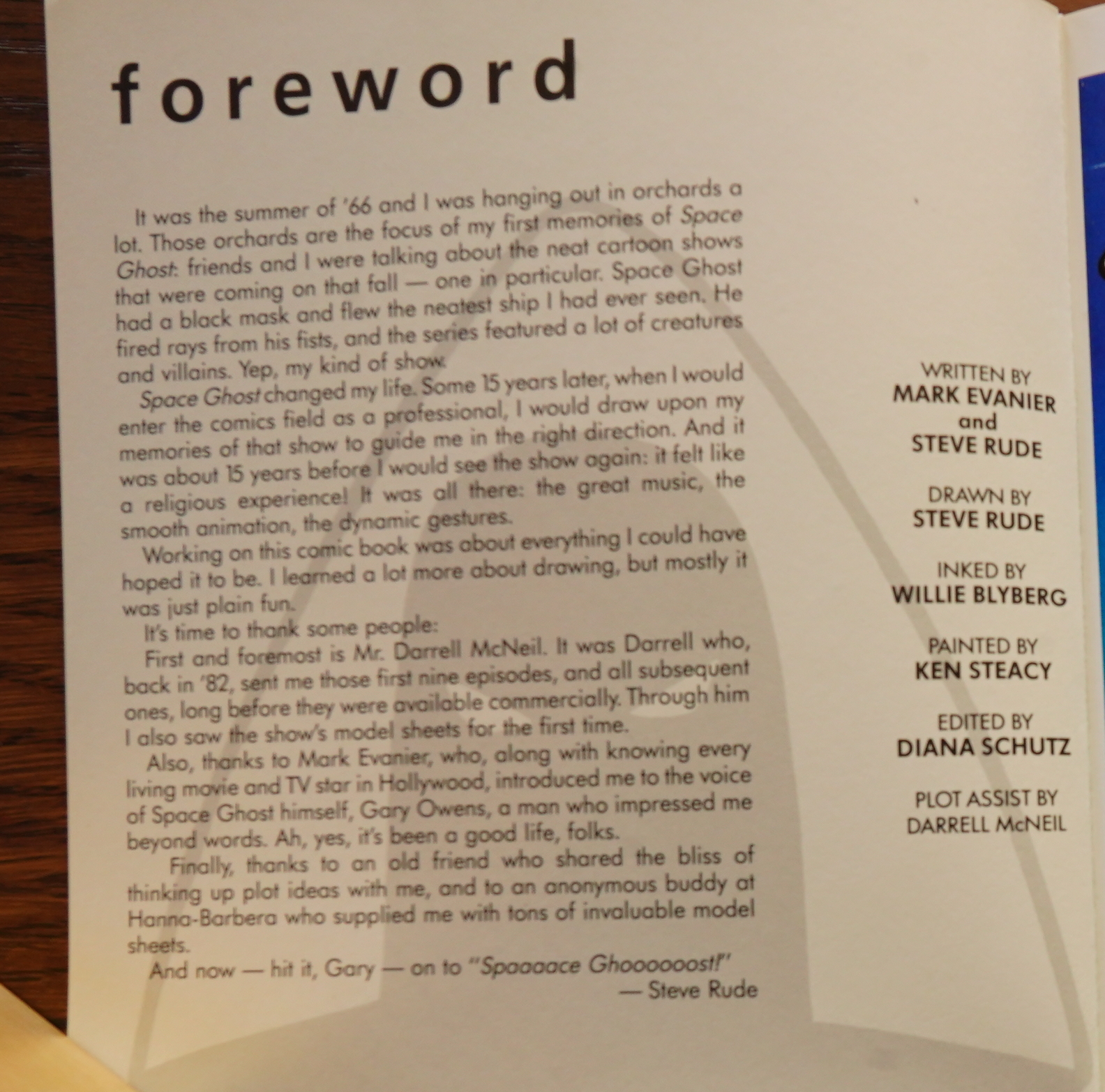
This is the only other review I was able to find:

Well at least the art is charming; so charming, in fact, that it’s the only reason this book got any stars. The plot was kinda all over the place, you’d get some conversation going on between characters but then the next page would cut to some other random seemingly inconsequential conversation followed by another followed by another, repeat ad nauseum. A lot of the dialogue was really simple too, and felt unnatural and robotic coming from these soldiers. I didn’t really care about any of the characters either, no one in particular stood out.

Next up is Robotech: The New Generation. After reading Robotech Masters, I’m rather dreading that. But according to the person on Goodreads up there, it’s a favourite, so perhaps it won’t be so bad.

*dunn* *dunn* *dunn*

1985: Next Man

Next Man (1985) #1-5 by Roger McKenzie, Vince Argondezzi et al

Hm… Roger McKenzie… Oh, he wrote Sun Runners, which wasn’t very good. And it was creepy. But he’s mostly known for his work at Marvel in the early 80s, I think. Yup. And he left comics a couple years after this series.
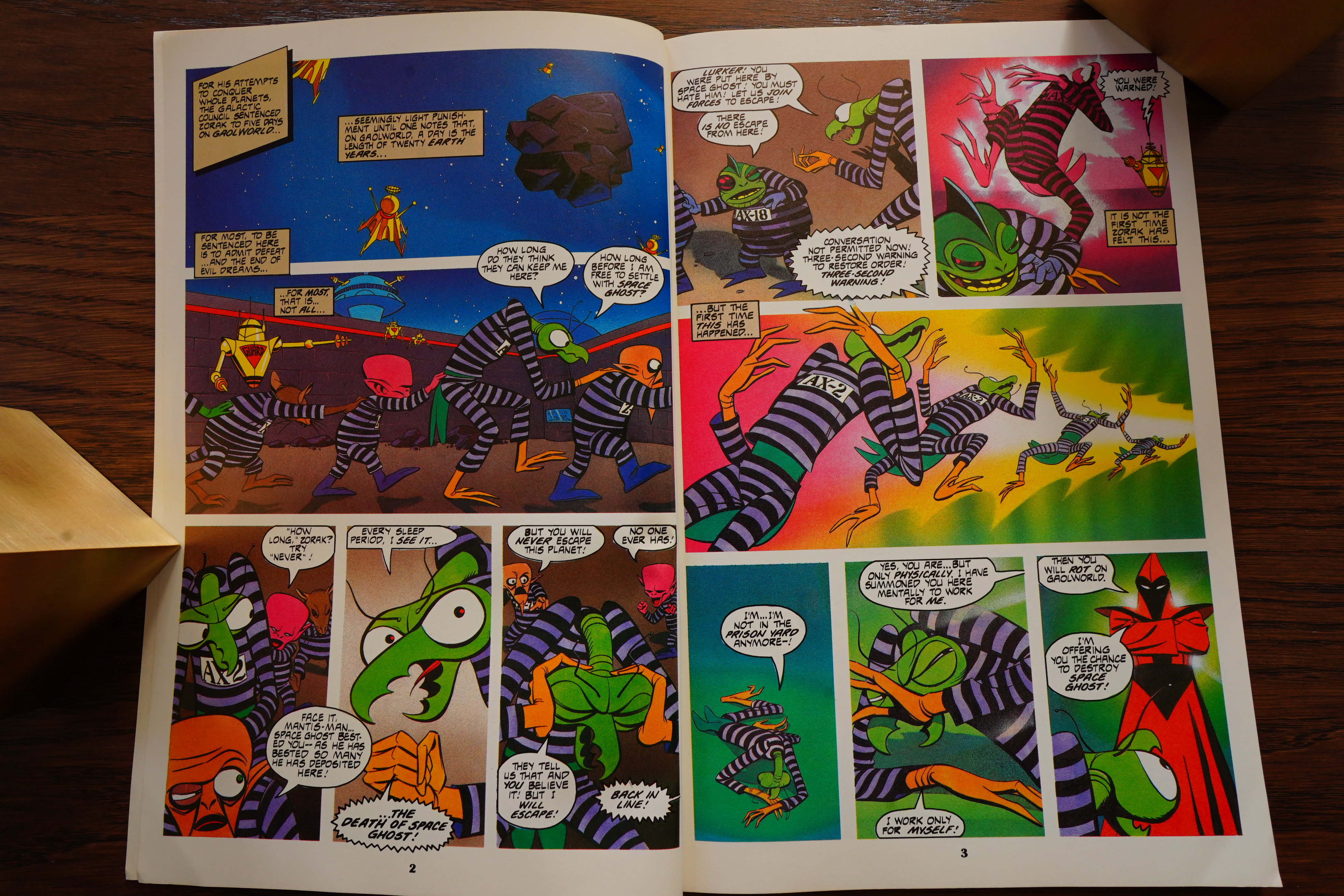
And when I saw “Next Man”, I thought of John Byrne’s Next Men, but that was apparently done after this series?

Oh, there’s apparently some story to be told of how he was booted from Marvel? I mean left.

Well, OK, this seems extremely standard — some dastardly military organisation took a soldier semi-killed in Vietnam and made him into a super soldier. And Argondezzi seems like he’s a mega Kirby fan — I mean, at least as far as inking male faces go. It looks like he’s concentrated on copying that, and then just ignored things like “learn how to draw”.

Well, OK, that’s original — there’s an… er… alien running the agency?

Oops! The dastardly organisation shouldn’t have used a camera that goes WHRRR whenever soldier/super guy is going SCHWING, I guess. I mean, is getting into a romantic mood! Live and learn! Use WHRRR-less cameras, dudes!

OK, they’re sending him to space? Makes sense.

But the dastardly organisation is going to destroy the Earth first?! Because of reasons. And the science woman/love interest gets up in her feelings when confronted. Next Man is rude. No consideration.
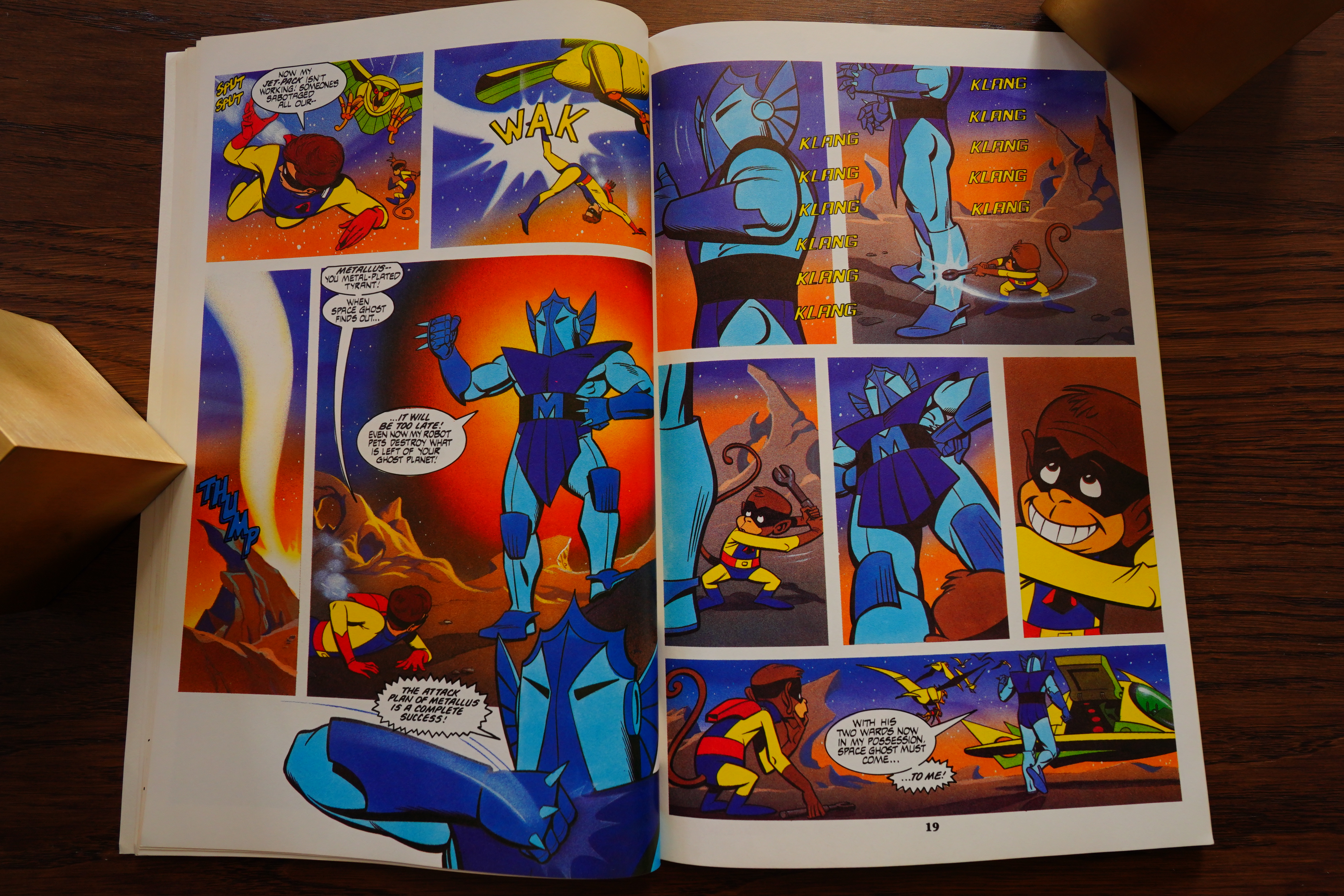
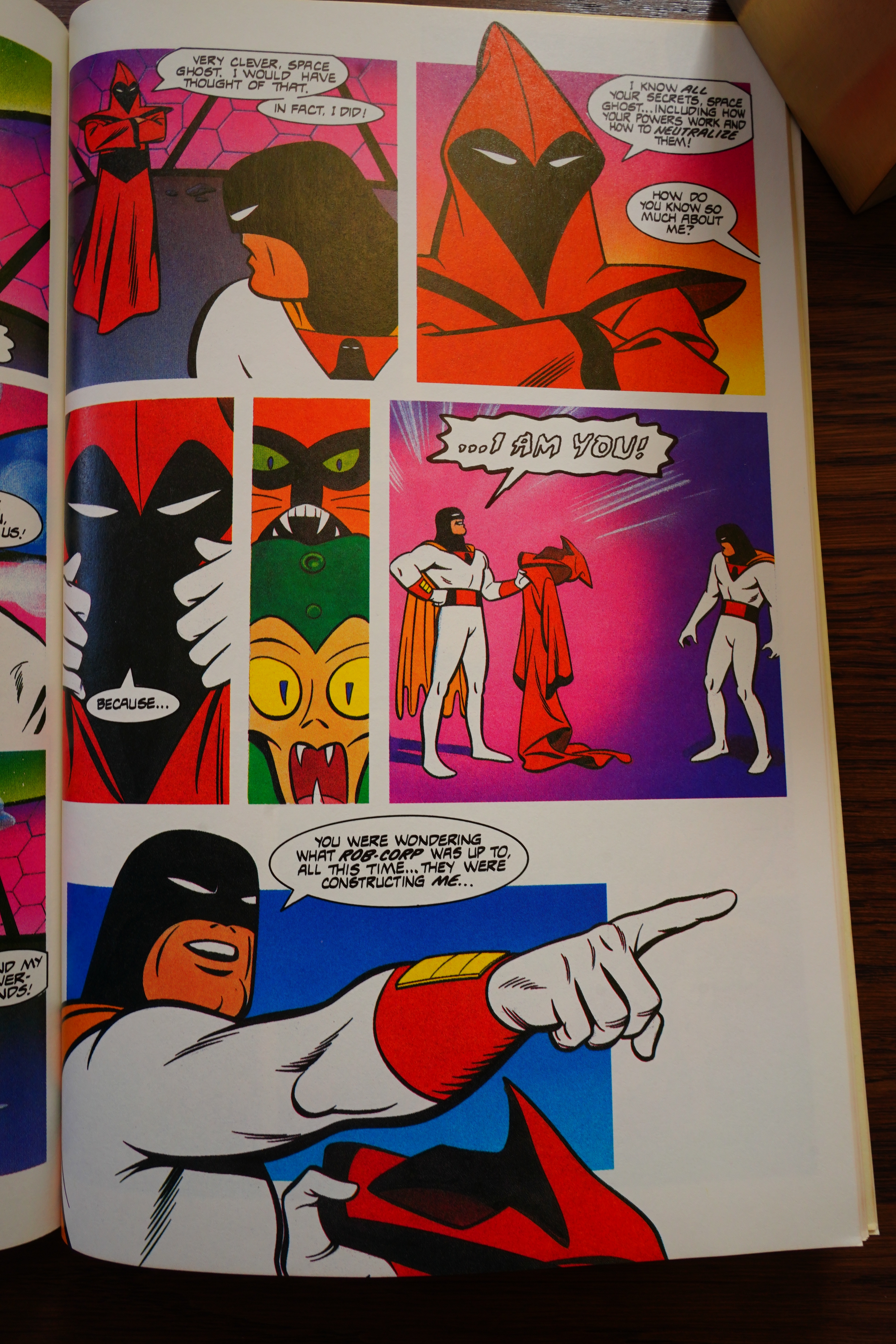
Fortunately there’s a comedy sidekick — a green floating computer cube.

These issues are quick reads — I guess these days we’d call it “decompressed storytelling”, so McKenzie was ahead of the curve on that point. It’s just that these scenes lean so heavily on familiar scenes from movies that they read like if they’re parodies, really. A scene like this, where you take a beat for the hard-as-nails general to give a callous order, works in movies because you can enjoy the actor playing the general chewing up the scenery while lighting that cigar, but the artwork here is so basic that there’s basically nothing for the reader here to do but go “oh, I recognise the scene they’re trying to do; OK”.

There’s page after page of… “thrilling action”… but the storytelling is inept, and the artwork takes some scrutiny to try to find out what’s supposed to be going on.

And, as with Sun Runners, it’s pretty creepy to boot.

Hey, that’s a good Kirby pose. I assume that it’s been copied directly from some New Gods splash page?

Scenes like this feel like they should work, but instead it reads like an oddly humour-less parody.

T. M. Maple writes in to note that the setup seems really familiar.

Beat beat beat.

Well, OK — this page works, I think?

Hey! I’m not the only one that felt like the book seemed really off. “If the idea isn’t new, then the execution should be. Is Next Man a Kirby parody? Where’s the humour?”

McKenzie says that the vignette feeling is intentional.

Next Man is apparently dead, so his friends take the change to get romantic.

And then the series ends in the traditional way for indie comics: A panel saying “Next”. Man.

So… I’m not surprised that this book was cancelled, because it’s really bad, man. The artwork was getting better over the course of the run, but I see that Argondezzi left comics a few years later. I appreciate what they were trying to do, storytelling wise, but it just didn’t work: The decompressed style, along with material that was so familiar that it felt like a parody, made it hard to pay attention while reading these books. I’m surprised it lasted for five issues.

The Comics Journal #103, page #12:

The Next Man, one
of Comico’s newer books, will go
homeless with the publication of
the fifth issue. According to
Giovinco, the reason was poor
sales. “It was selling lower than
our other books, and it was
losing money,” he said. “If it had
been breaking even, we would
have stayed behind it.”
According to writer Roger
McKenzie, The Next Man did
have an erratic sales history. He
cited his royalty statement from
Comico, which said the first issue
sold 43,375, the second issue sold
18,480, the third issue sold 21,050,
and the fourth issue sold 20,860.
While McKenzie didn’t deny that
sales were low, he said he was
surprised at Comico’s decision,
because it came out of the blue.
We seemed to be going along
quite well,” he said. “They had
just commissioned Vince (Argon-
dezzi, the book’s artist) to do a
poster, and we never heard that
they were even thinking about
cancelling it.”
Both Argondezzi and McKenzie
were dissatisfied with the
promotion and publicity that the
book received. “They really
didn’t care about the book,
McKenzie said. He said that
Comico sent him and Argondezzi
to the 1985 Dallas Fantasy Fair,
but armed them with posters and
other promotional material for all
the books in Comico’s line except
for The Next Man. “They
shouldn’t have signed us if they
weren’t going to get behind us,
Argondezzi said. “If they had
told us the book was in danger of
cancellation, we could have tried
something to save it-but they
didn’t say anything to us until
they had made up their minds to
cancel it.” Giovinco disputed this,
though, saying that he had talked
with the creators about various
ways of pumping up sales, such
as changing the book’s frequency
from bi-monthly to monthly.
‘When we got the final cost-
analysis in for the book, though,
we decided it wasn’t worth it to
try to save the book,” he said. “It
was losing too much money for
us.” Giovinco declined to divulge
the amount Comico was losing on
the book
Both McKenzie and Argon-
dezzi, as well as Giovinco, said
that the creators wre originally
signed up to do 18 issues of The
Next Man. However, the creators
said they wouldn’t try to hold
Comico to the contract and the
remaining 13 issues. Even if they
did try to hold Comico to the
contract, Giovinco said it would
be futile. “Any publisher is smart
enough to leave himself an
“escape valve” if he gets stuck
with a complete dog,” he said.
However, Giovinco refused to
discuss the actual “escape valve’
he said the contract contained.
Argondezzi said that while he
wasn’t aware of a loophole
Comico could slip through, he
said it didn’t matter if there is
one. “We’re not going to try to
stay at Comico, that’s for sure,”
he said.
Although the final issue of The
Next Man will be issue #5, the
plotlines won’t be tied together
until the sixth issue. McKenzie
and Argondezzi are talking with
new publishers, but neither would
discuss possible new homes for
the book.

This didn’t happen, I think? But a weirder thing happened:

In 1993, Comic Company A released a special that reprinted issue #5! And then added some illustrations and an interview. Very odd.

The series has never been reprinted.

The Telegraph Wire #20, page #13:

On the other hand, NEXT MAN marks Vince
Argondezzi’s first regular comics series, but
the young artist has already begun to display
the kind of professionalism required by the
field. Heavily influenced by the “King of
Comics, ” Argondezzi brings a definite Kirby-
esque flair to the adventures of the Next Man.
This interview took place in December ’84
at the Comico offices in Norristown, Pennsyl-
vania. It was transcribed by Eric Yarber,
copy-edited by Roger McKenzie and Vince
Argondezzi, with final edits by yours truly.
Special thanks are due to Vince and to
Gerry Giovinco and Phil Lasorda of Comico
for all their help in coordinating the Next
Man cover for this issue of THE TELEGRAPH
WIRE.

DIANA SCHUTZ: The first thing I’m interested in is
why you chose to bring NEXT MAN to Comico.
ROGER McKENZIE: Easy. Because nobody else would give
us the time of day. No, not really. I had originally
approached Pacific with this idea and they said, “Fine,
we like it, let’s do it.” A year and a half went by,
and we never did it.
VINCE ARGONDEZZI: At the time, I was just starting
to get a little foot into Pacific by doing two or
three VANGUARD stories for Dave Scroggy and I sent
Roger a sample page for NEXT MAN and he said, “Let’s
get together and do it.”
DIANA: When Pacific suspended operations, why did you
move specifically to Comico?
VINCE: We’d talked to other companies, but they were
dragging their feet. Comico was there and they really
wanted it.
ROGER: And I was ready to go with it, having waited
a year and a half already and having had this idea
originally back in high school–and we won’t even go
into how long that’s been!
VINCE: I think Comico has the best attitude. They
have the smarts to let the creators do what the crea-
tors want to do. What seems to be wrong with comics,
at least in the mainstream, is that the mainstream
companies keep the same feel to all their products.
And some of the other alternate publishers are good,
but they don’t have enough commercial sense. So, on
the one hand you’ve got really crass commercial stuff,
and on the other hand you’ve got nice material with
the alternatives, but it’s so far out that the com-
panies can’t survive because they’re too creative.
Comico’s right in the middle. They’ve got beautiful
commercial stuff like ELEMENTALS, they’ve got really
sharp creative stuff like MAGE, and they’ve got work
like NEXT MAN that’s kind of in the middle. Plus
they’re branching out into stuff like MACROSS and all.

[…]

DIANA: So, what makes NEXT MAN different from all
the other superhero books that are already out on
the market?
ROGER: I think what makes it different is the way
we’re treating the concepts. We haven’t yet said,
“Here’s a superhero.” We haven’t yet said, “Here’s
a big bad villain who’s out to beat up the superhero
for no reason in the world.”
VINCE: That comes in issue #3! [Laughter]
ROGER: Yeah!
VINCE: The good thing about NEXT MAN is there’s so
much potential in the character. Basically you have
a guy who does not fit in. He has no real identity.
His father’s dead. He’s alienated.
ROGER: But he’s got so much going on that he won’t
realize it for several issues, although 1980s cul-
ture shock will start hitting him soon. But he has
found out more or less what’s going on, and he says,
“No way will I help you destroy the world.” As a
matter of fact, he destroys his creators at the end
of the first issue, or so he thinks.

[…]

DIANA: What about the fact that there are words in
comic books, and fewer and fewer people are reading
at all these days?
ROGER: What I’ve tended to do to solve that situation
is not to write any words at all.

Diana Schutz did the interview here (for The Telegraph Wire), but she’d go on to work for Comico a couple months later, which is kinda interesting.

Amazing Heroes #73, page #55:

This newest title from Comico
(“the Comic Company”) has a lot
of rough edges…but I think it
shows a lot of potential as well.
One of the best things it has going
for is its scripter, Roger McKenzie.
McKenzie did an excellent job on
Daredevil several years ago, and
his Sunrunners is an enjoyable
book (whenever it appears).
He seems to have come up with
a fairly solid formula here, a com-
bination of science fiction and
super-hero fantasy. There are
weaknesses in this first issue, at
least partly due to the unavoidable
restrictions of an origin story. We
aren’t shown much of David
Boyd’s personality-the inner man.
This is ony a minor complaint, as
this will no doubt be fully explored
as the series progresses. The Next
Man should prove to be a strong
character, and in Dr. Cross he has a
worthy arch-rival comething every
hero needs.
1 think most of the gripes that this
first issue will elicit will focus on
the art, and not without some justi-
fication. One can point to ex-
amples of stiff figures, fuzzy im-
ages, simplistic layouts. But I’m not
going to give it a blanket condem-
nation.
Many will probably dismiss the
artwork as nothing more than a bad
imitation of Jack Kirby. Experience
has taught me to be cautious of
this; after all, such outstanding art-
ists as Barry Windsor-Smith and Jim
Steranko started out doing bad
Kirby. Also, I have an advantage
over some of you in that I have had
the chance to see more of Vince
Argondezzi’s pencils 4they are real-
ly quite good, and show every sign
of improving.
I think part of the problem here
has to do with the inking. That’s not
a rap against Bill Anderson; he’s a
good inker. It’s just that his style
doesn’t seem to be completely
compatible with that of Argondez-
zi. Thus, I don’t think the art seen
here is representational of what we
can expect from Vince. Future
issues should show a major up-
swing.
Comico itself has taken large
strides in improving its product.
While I personally don’t have
much interest in their upcoming
robot series, their other titles seem
to be growing stronger every issue.
If they can only solve the problem
facing every alternative publish-
er-that of getting their books out
on time every issue-Comico
could well join First and Eclipse in
the forefront of “downstream”
comics (no derogation in that
term-just coined to differentiate
them from the so-called “main-
stream” comics).
Next Man #1 shows enough
potential that I certainly intend to
give it a few issues to prove itself.
loin me.
– R. A. Jones

The Comics Journal #105, page #26:

The newest advertising campaign
by Lodestone Publishing has
raised the ire of three creators, all
of whom deny they are working
for Lodestone, despite the claims
of the ad, published in the
Comics Buyer’s Guide.
Co-owned: The ad claimed that
The Next Man, recently cancelled
by Comico, is surfacing at Lode-
stone. However, The Next Man is
copyrighted by both Roger
McKenzie and Vince Argondezzi,
respectively the writer and artist,
while the ad said the property
was copyrighted only by
McKenzie. Further, the text in the
ad said, “… we will boggle your
mind with the name of our super-
star artist who will be handling
the series with Roger.’
McKenzie said that while he
did discuss taking The Next Man
to Lodestone, one reason he
didn’t do it is Lodestone
Publisher Dave Singer’s resistance
to Agondezzi being the book’s
artist. “Way before Comico ever
saw the product, I showed it to
Dave, and he liked it very much,”
McKenzie said. “But Dave was
considering a new artist, and
that’s one of the problems I
had with him.” Eventually, though,
the legal problems that Singer
encountered with his T.H.U.N.-
D.E.R. Agents book at Deluxe
Comics (Lodestone’s sister
company) caused McKenzie and
Argondezzi to look for another
home for The Next Man.

The Encyclopedia of Superheroes, page #242:

Alter Ego: David Boyd.
First Appearance: 1985, The Next Man #1, Comico.
Occupation: None.
Costume: Purple bodysuit; silver helmet, gloves,
boots, trunks, bands on his wrist, legs, neck, and
shoulder.
Tools and Weapons: The Next Man’s belt is equipped
with a hose known as PAL (Pulse Activated
Laser), which is fired by mental commands; he is
frequently advised by a talking green cube known
as Cubit, a vastly superior computer.
Biography: Serving as a medic in Vietnam, Lt. Boyd
is caught in an explosion in the village of Lon
Pen. Airlifted to a hospital in Saigon, Boyd is near
death. Instead of putting him on life-support sys-
tems, the doctors ship the 25-year-old to Wash-
ington, where his is cryogenically frozen. Then,
in 1984, after being transferred to a facility in
California, he becomes a part of Project Stepping
Stone. Placed in a “heated silicon gene pool” and
subjected to “helix sculpting,” he is genetically
rebuilt and given super strength and reflexes.
Becoming a superhero, he turns on his creators
who, he learns, had planned to take over the world.
Quote: “You’re a madman, Cross. But the madness
ends here and now.”
Comment: This uninspired character is another of
the rebuilt-human school of superheroes pi-
oneered by Captain America.

Miaow!

Ah, so McKenzie had planned on bringing Next Man back in THUNDARR A.G.E.N.T.S., but I don’t think that happened…

The Slings and Arrows Comic Guide #2, page #470:

NEXT MAN
Comico: 4 issues 1985
Comic Company A: 1 issue 1993
A Vietnam soldier preserved after a near-fatal explosion is
revived twenty years later, having been genetically altered.
Minimalist plotting and artwork. The Comic Company A
issue was to have been Comico’s fifth issue.~FP

Some confusion here…

There’s little written about Next Man on the intertubes. Here’s something:

Next Man was not a “hit” for Comico but it was still a good book. Though the art was a bit raw it had a very Jack Kirby feel to it, which I would have liked to seen grow with the series.

They published an ebook version of… the fifth issue:

Comic Company A was the only successful publishing and media house to survive from Comico to be carried officially by the worlds major comics distributors, with sellouts like the Next Man Collectors Edition series, and well as the studio’s award winning work in the realm of Health Care and Commercial art…making these new first steps now in to the environment of online media is fitting, and the first volly in what will be a wholesale emphasis for development towards the future of this now reinvigorated medium.

The nowadays commonplace subjects like Euthinasia, and the aftermath of the Vietnam war were not talked about too much in the mid eighties in comics.

Er, OK.

You can pick up copies of the book at cover price still.