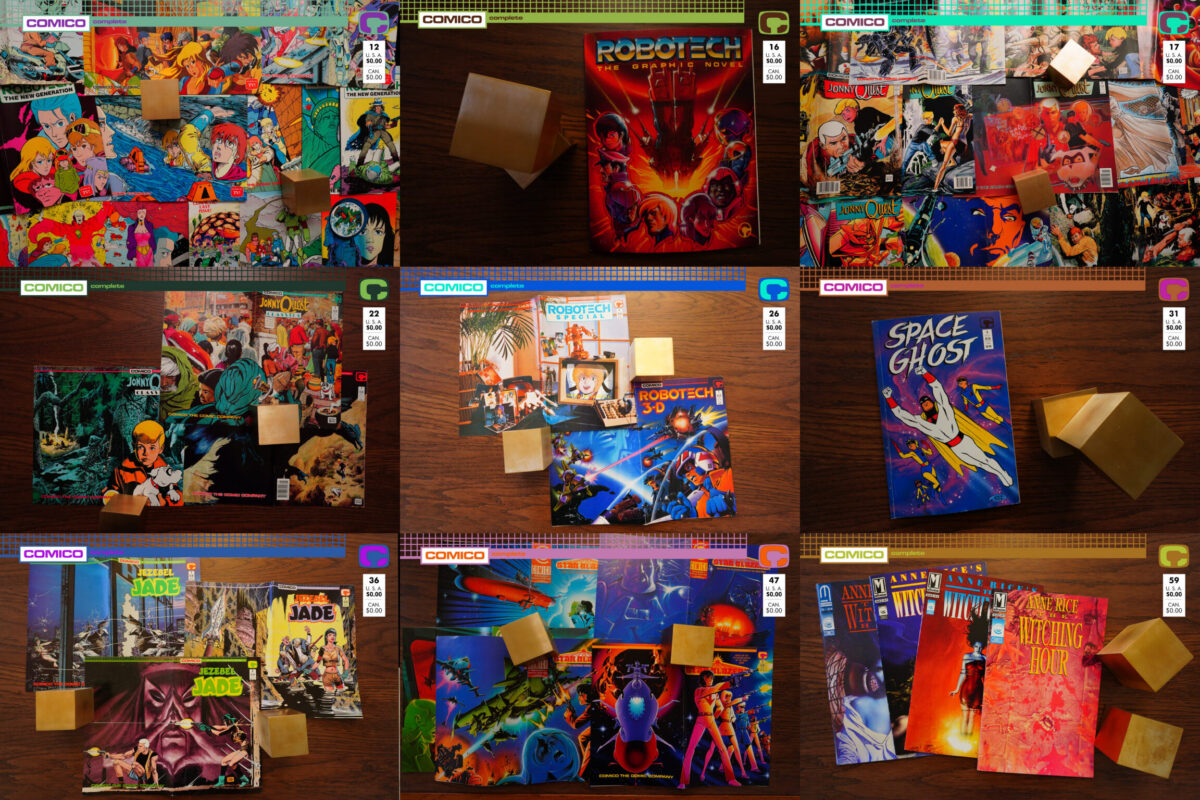
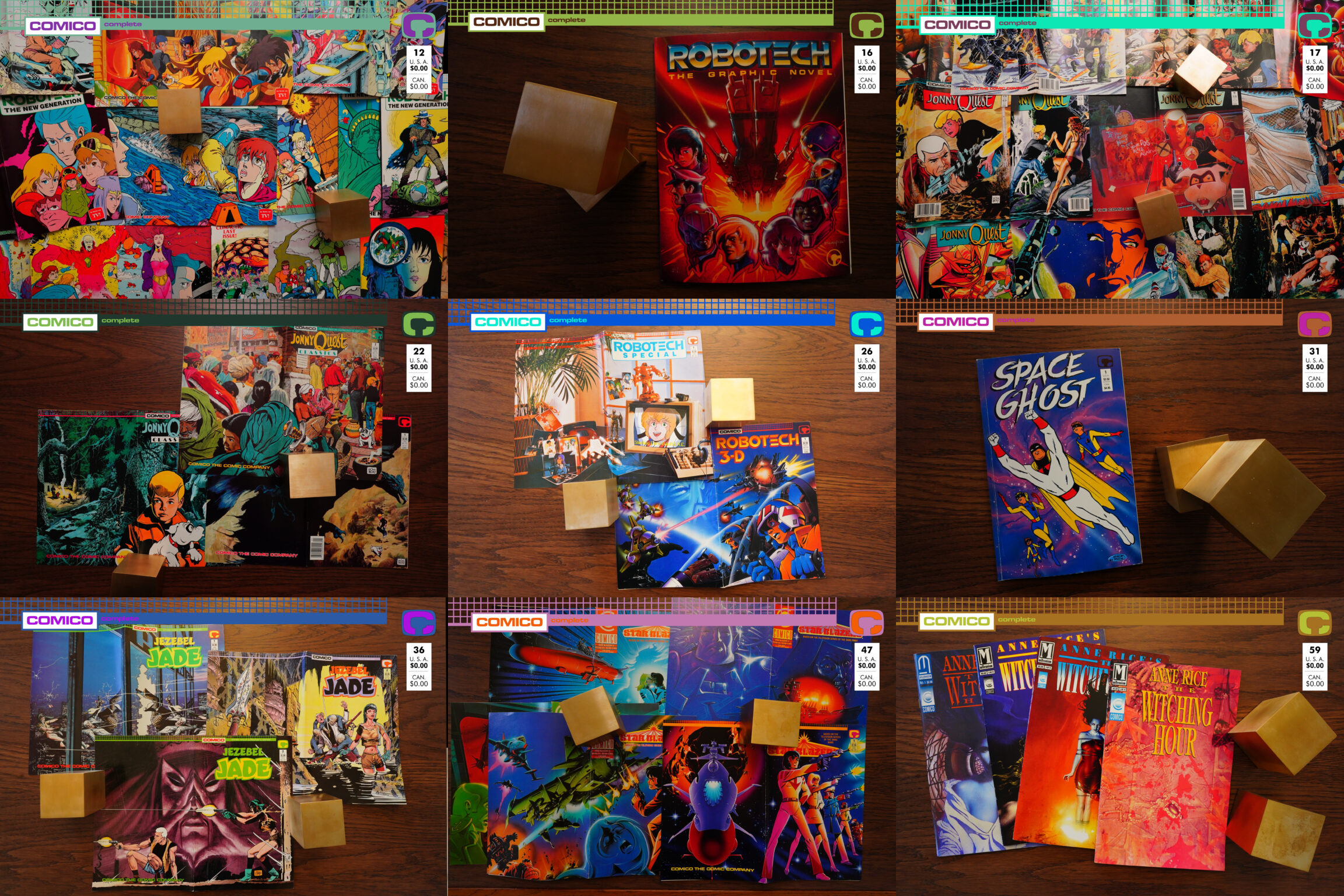
About a third of the issues Comico published were based on licensed properties. That’s an unusually high percentage for a comics publisher.
There’s more cost involved with doing licensed books, but there’s potential greater rewards because of the name recognition factor. But as licensed comics go, Comico’s choices are a bit odd: When a publisher is doing one of these books, they often try to find creators that have some sort of enthusiasm for the properties in question. This was usually not the case with Comico.
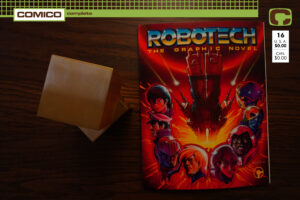
The Robotech books were done by people without particular interest in Robotech or Japanese animation — at least until Markalan Joplin came aboard. Some of the people (like Mike Baron) seem positively disinterested.
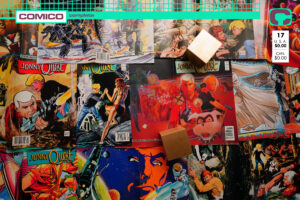
Jonny Quest had a writer — William Messner Loebs — who had no interest in Jonny Quest, and wrote stories that seemed designed to annoy people who are fans. (But on the other hand, for the first ten issues, Jonny Quest had a bunch of guest artists who were indeed very enthusiastic, so that helped.)
Even the Gumby books had a creator that was roped into doing it by the editor! And that’s a character you’d think there wouldn’t be much difficulty in finding people who had some nostalgia for the character.
To take a counter example from a different publisher who was working around the same time — Airboy from Eclipse Comics. They found writers and artists that were really into doing that revival, and you ended up with a series that was extremely readable and fun.
Very few of the Comico licensed properties are worth reading, really, and that’s just such a bizarre result. Was the problem that the Comico people had a really limited rolodex? While the Eclipse people knew everybody, the Comico people didn’t?
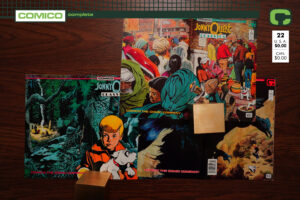
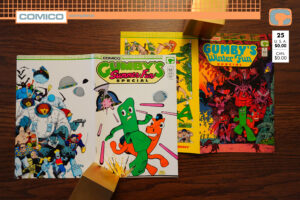
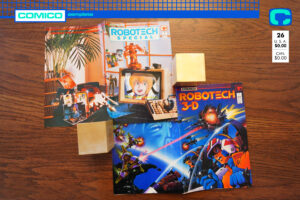
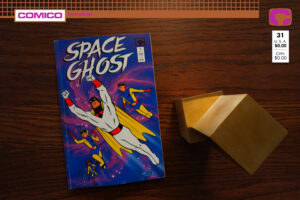
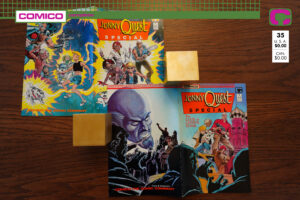
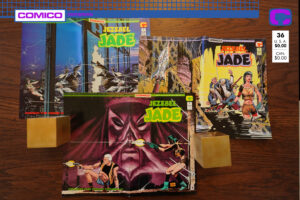
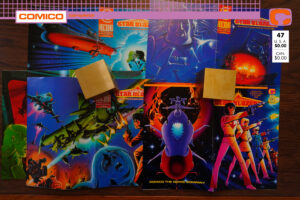
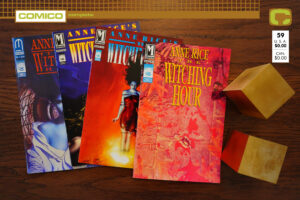
I can’t speak to the Robotech books or The Witching Hour but I’m a fan of the other properties and enjoyed Comico’s takes on them. I remember you mentioning not being familiar with some of them- maybe it helps to already be an established fan.
Also (I’m not sure if there’s going to be another good place to say it), but I’ve been following the blog and enjoyed it very much. I hadn’t realized how much of a story there was when I suggested Comico back then- I just knew they had a lot of comics that interested me.
I enjoyed Messner-Loebs’ Jonny Quest, for instance — but judging from the letters pages, many Jonny Quest fans didn’t. And Comico tried to pivot at the end by having them do adaptations of actual shows, but…