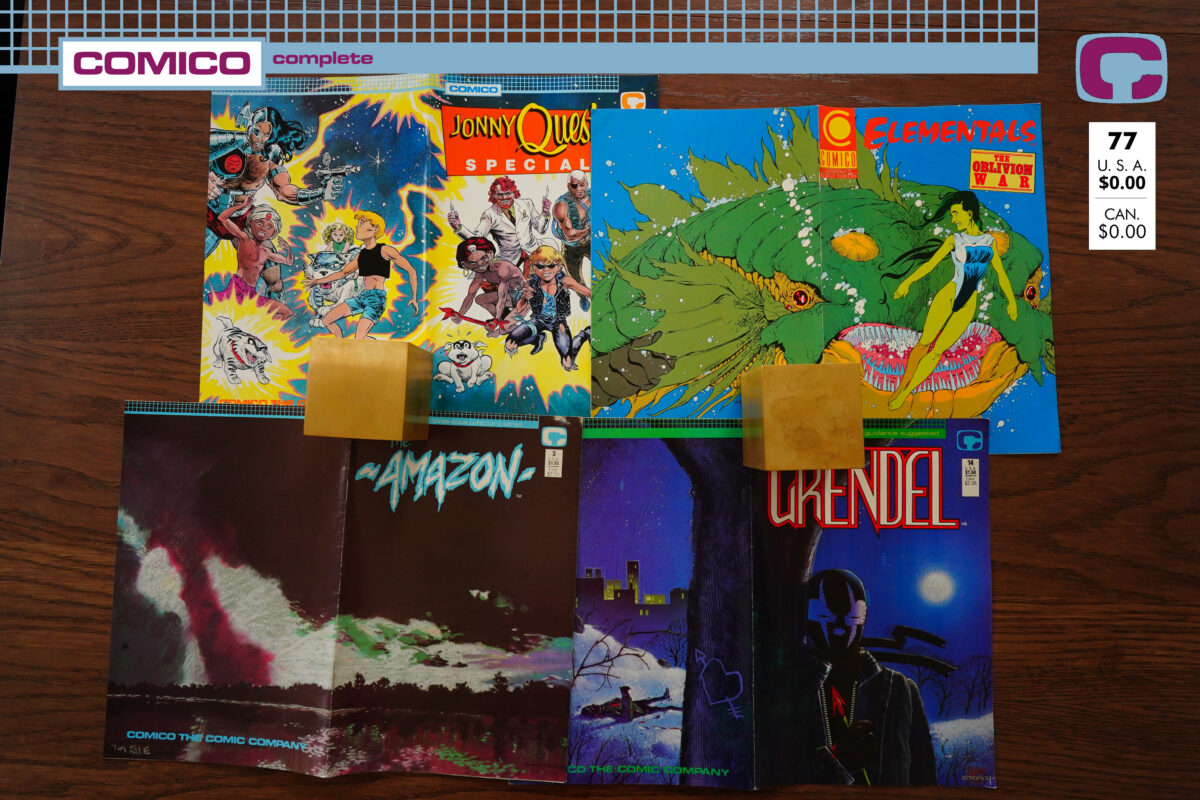
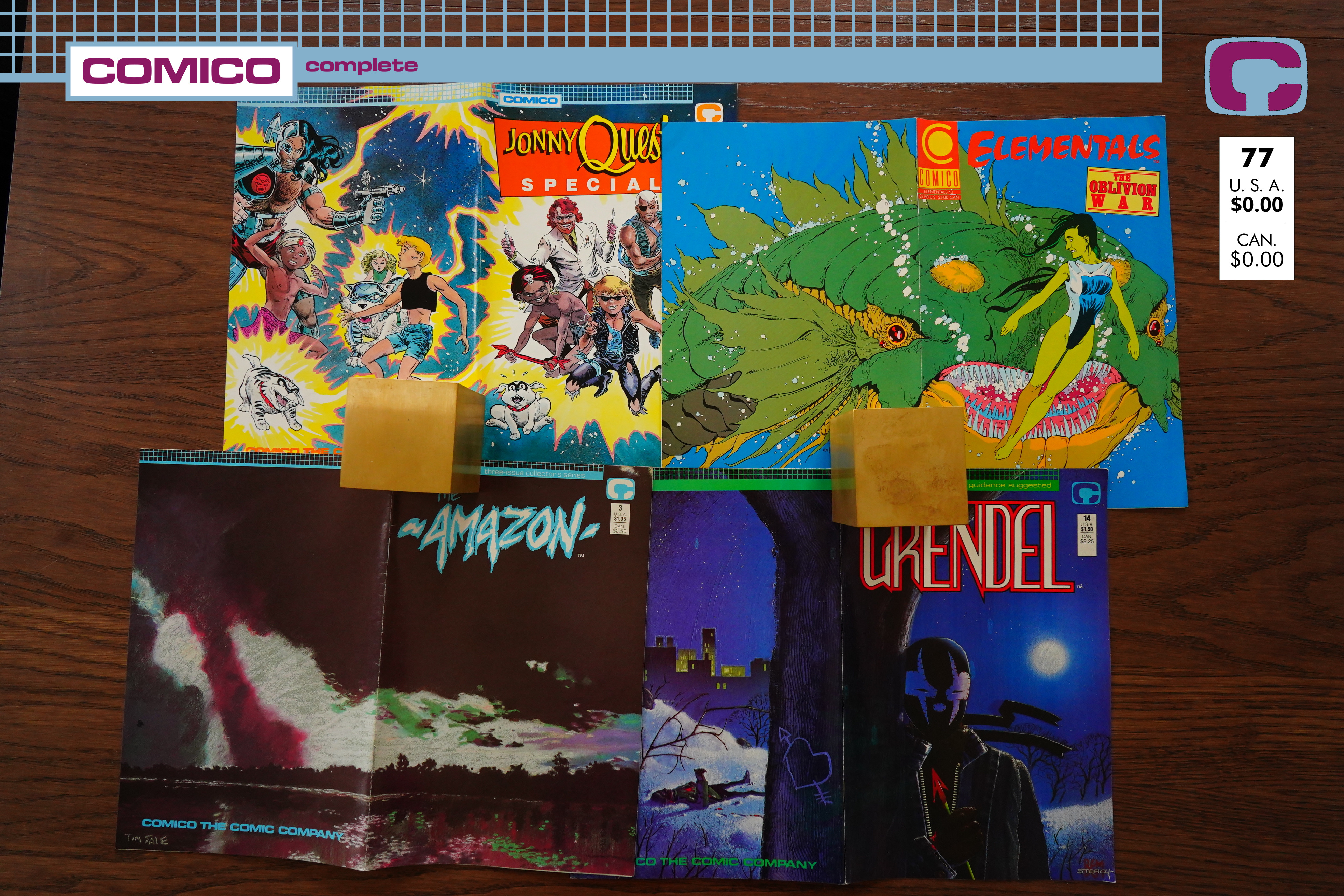
Comico was a pretty odd comic book company from the get go. And then it got stranger.
Comics publishers generally fall into two camps: Either people who are really, really into comics (say, Fantagraphics or Drawn & Quarterly) or people who see themselves more as a business (Pacific Comics or Vortex). Being in the latter group doesn’t mean that you publish bad stuff — if you happen to hire some brilliant editors and art staff and happen to be in a city with some fantastic comics creators, you end up with Vortex’ output (i.e., brilliant), even if you’re kinda mercenary.
But one thing most comics publishers have in common is that they’re incredibly under financed and basically survive from month to month. The Comics Journal published their Cadaver Derby in 1985 giving an overview of all the independent publishers and rated their chances for survival. (Verdict: Not Good.)
I haven’t interviewed any people for this blog series, and I’m just going on what I’ve learned from reading all these comics, and from reading articles about Comico and reading interviews with all the people, but Comico had some distinct phases. I’ll be giving an overview of the phases below, as well as a historical overview. I’ll also be publishing a series of “indices” where I’ll be talking a bit more about each of the categories of things they published (licensed, transfers, etc) later.
Self Publishers
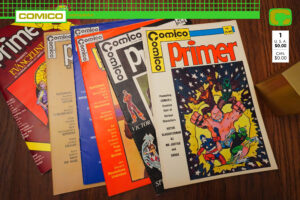
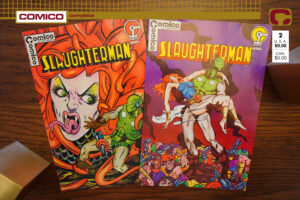
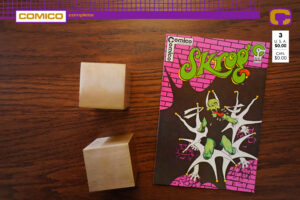
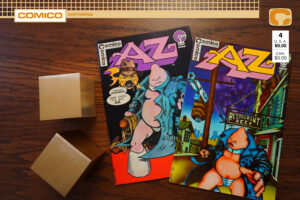
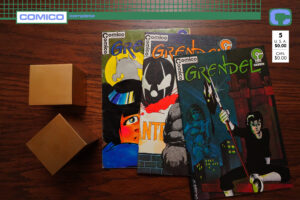
Three friends, Gerry Giovinco, Bill Cucinotta and Phil LaSorda started Comico to publish their own comics (in black and white). The first issue of each series sold very well, but let’s quote from the Cadaver Derby:
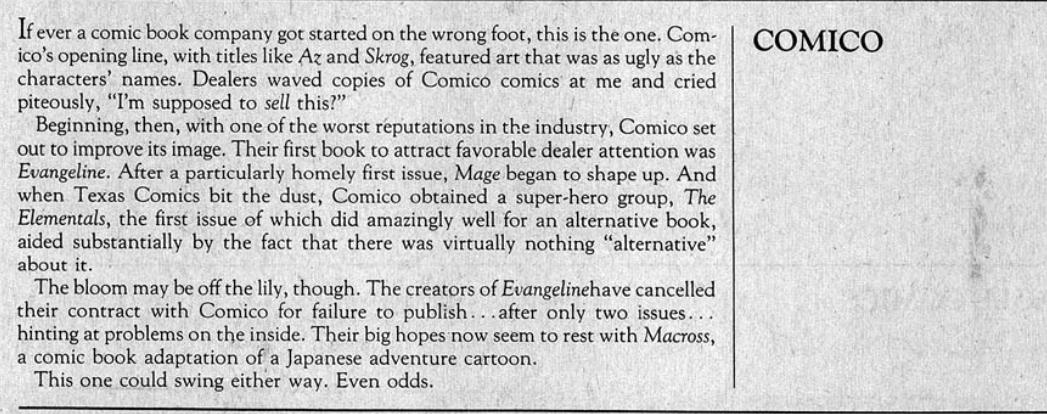
I remember reading back issue catalogues in those days and happening upon those comics names: Az. Skrog. Slaughterman. I was reading Mage, and these were published by the same people? With those strange and ugly names? I was very curious as to what were in those books, but I never succumbed to temptation. I’m glad now, because being a poor teenager I would have been pretty annoyed at wasting my money on them. Because they were bad. Very bad.
Real Publishers
So they pivoted completely, and stopped creating comics themselves. And this is where the strange part of Comico’s history starts, because the first bit was pretty normal. They somehow got money enough (from what they say themselves, through the aforementioned ugly comics, and from what other have said in interviews, by having Phil LaSorda’s physical therapist brother (Dennis) give them a lot of money) to start publishing a pretty big line of colour comics.
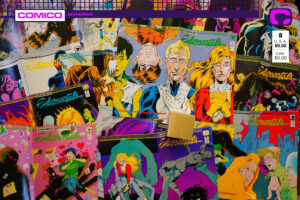
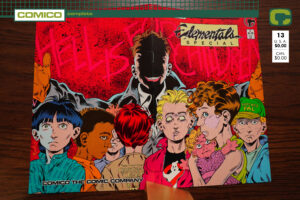
Bill Cucinotta left (he didn’t want to be a business guy) and Dennis LaSorda stepped in as co-publisher, and they got Bill Willingham aboard with his Elementals super-hero series (previously published by Texas Comics, among others) and they were off.
As you can see from this article series by Giovinco, they were totally into this new role, apparently pioneering systems for colour separation and stuff.
Pivoting this way is certainly not unheard of in comics publishing — for instance, Kitchen Sink Press started so that Denis Kitchen could publish his own comics, but then all these other people immediately sent him their comics to publish. So he no longer had time to do as much artwork as before, so that’s a parallel to the Comico situation. But Kitchen continued to create comics, at an extremely slow rate. The Comico guys did some inking and colouring, but otherwise abandoned comics making altogether, as far as I can tell.
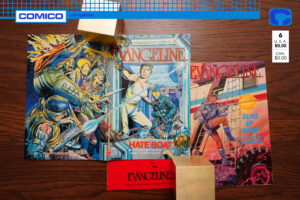
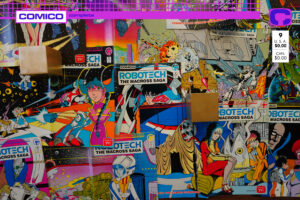
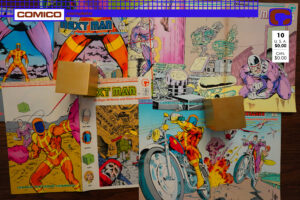
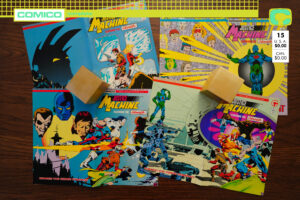
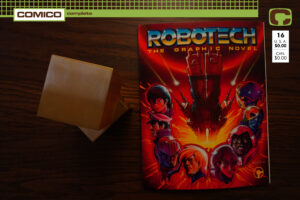
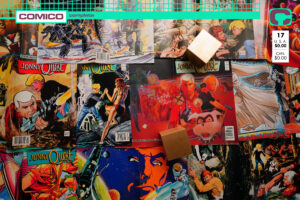
This version of Comico also had some hitches — both the Evangeline and Next Man series ended when their creators left in a huff, and I wonder whether that led them to go so heavily into licensed properties like Macross and Jonny Quest.
They hired Diana Schutz as editor and Bob Schreck as “administrative director”, which I take to mean that he was the actual publisher. So you then had a company with three publishers, and addition to the pair above you had designers and publicists hired, so it’s getting to be a pretty substantial company. In addition, they had a policy of having many months of issues in hand before they solicited a book, so the period between when artists were paid and when Comico got money back could take a year — a major cash flow problem that no other independent publisher would have been able to afford.
As if all that wasn’t enough, many of their books were licensed, so they had more overhead than usual.
And on top of all that, they decided going into newsstand distribution, which is a high stakes game, because those books are returnable, so there’s so much less profit per copy than with direct distribution.
And still, the bankruptcy came as a complete shock to the comics world — when whispers of problems started to appear, everybody was all “but not Comico! they seemed to be doing so well!”
It turned out that they hadn’t been paying the printer for a year.
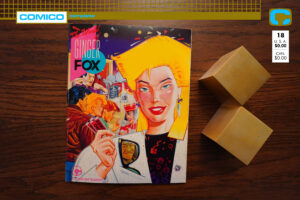
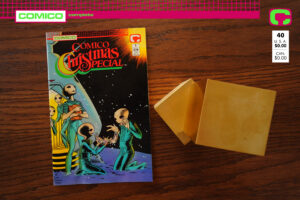
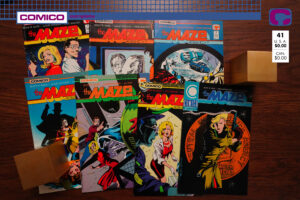
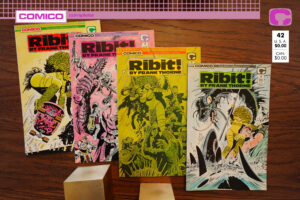
Which is sad, because the comics that Comico was publishing were getting better and better. Editor Diana Schutz had managed to attract some better talent, so not only did you have Matt Wagner holding down the fort, but you also got books like Ginger Fox, The Maze Agency and Ribit! — books that I quite enjoyed reading. Reading all the Comico books, it really seemed like they were on an upward trajectory in 1988… but then they had to cut drastically back.
Because DC Comics took over “distribution” for Comico. I think this means that DC paid the printer and collected money from the distributors, took a cut, and gave any remaining money to Comico. This was a pretty desperate move by Comico, but perhaps they just couldn’t get any printers to print their comics otherwise.
But what I’ve never seen explained is what was in this for DC Comics. Sure, it bumped their place in the sales statistics a bit (they could count Comico’s books as “theirs”), and perhaps there was a guy at DC that had a KPI on that? But it just seems very odd.
Anyway, my take on all of this is that the physical therapist brother had gotten tired of shovelling money down a black hole and said “enough’s enough”. But that’s just my guess.
Giovinco was fired, in any case, but they kept his name on the masthead for a year after that. Schutz and Schreck were also let go, and Comico staggered on through a Chapter 11 with a skeleton crew.
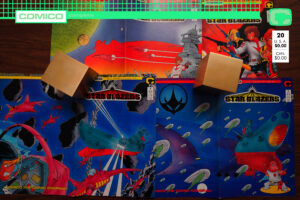
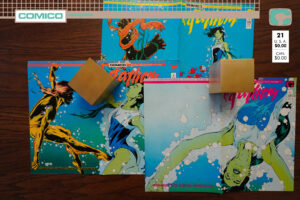
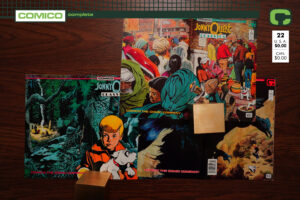
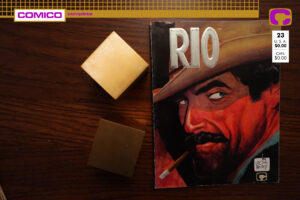
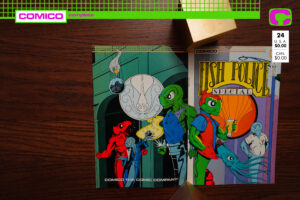
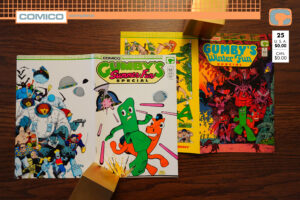
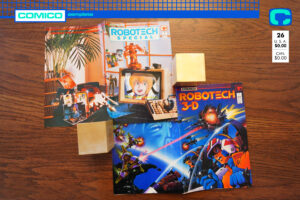
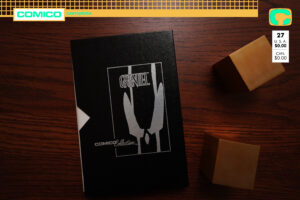
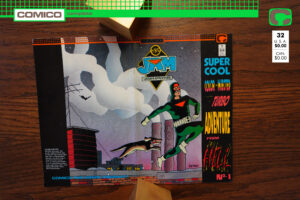
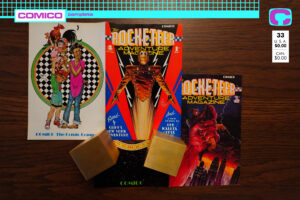
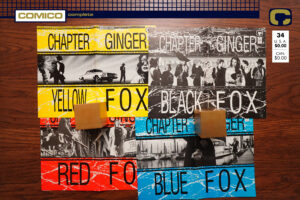
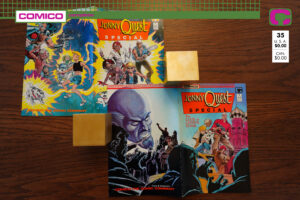
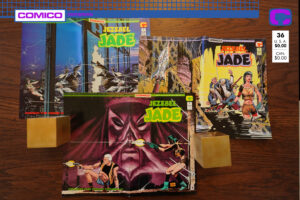
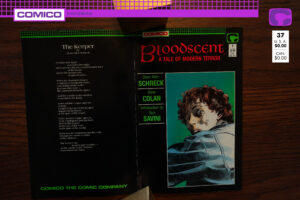
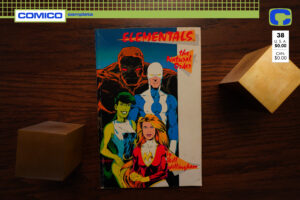
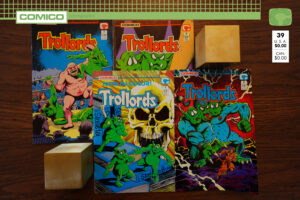
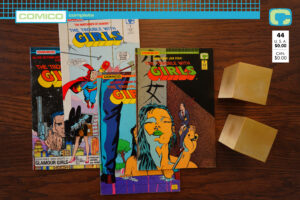
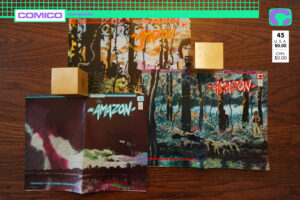
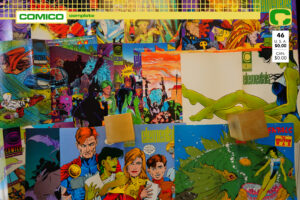
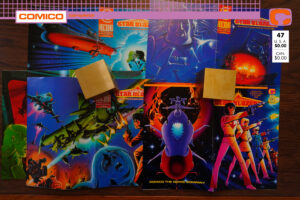
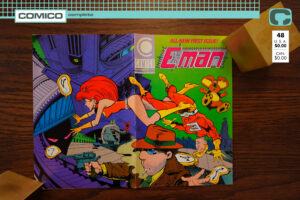
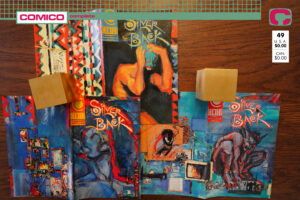
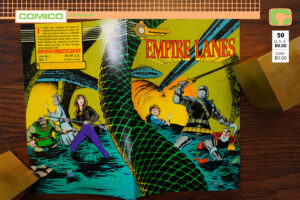
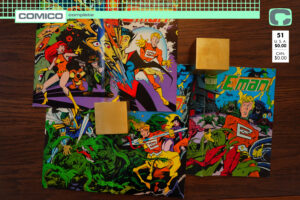
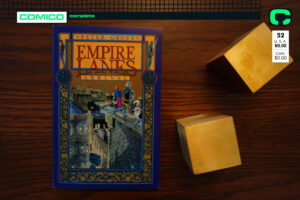
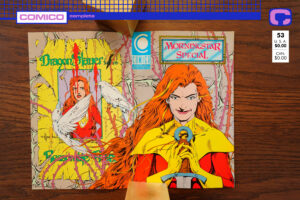
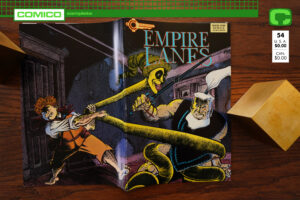
RevComico
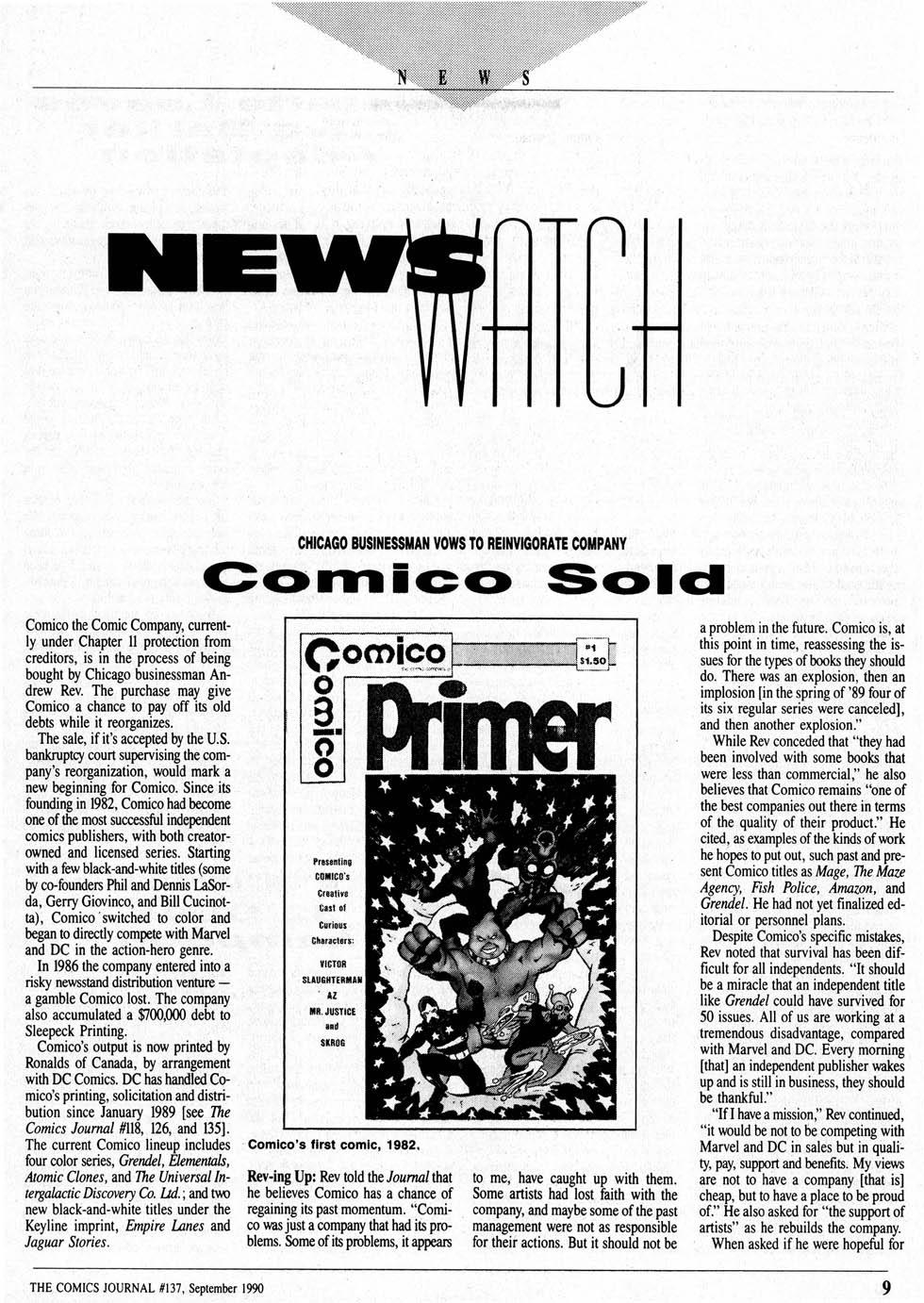
But Comico went into Chapter Seven, and Andrew Rev, a very business oriented guy came aboard. You get the impression from reading interviews where people talk about him that he was a bit of a character — endlessly enthusiastic, and with tons of plans. I haven’t seen anybody explain how he came up with the money — not only for Comico, but for his other ventures under the Arpad Publishing umbrella. On the other hand:
Back Issue #24, page #85:
Soon, checks to Leeke began coming late and bouncing. The artist tried
to settle the situation with Trais, who was powerless to solve the problem.
At this point, Leeke began dealing with Rev directly, holding art pages virtual
hostages. “I would draw the pages up, then make Xerox copies of them, only
with white Xs going across the entire page so [Rev] couldn’t reproduce the
artwork.” Leeke then waited for the checks to clear before sending in the originals.
“That went on for several months until he got used to the idea that he was
never going to get any artwork out of me unless he pre-paid for it. Every month,
for a while there, I would get the check in advance and then I would start
working on the pages.”
Perhaps he didn’t really have the money to run Comico…
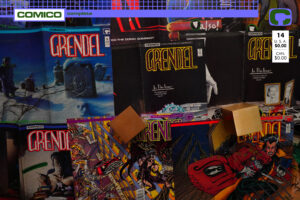
In any case, what happened during the Chapter 7 and then the subsequent takeover is that almost everybody involved successfully extricated themselves. The most valuable book was probably Matt Wagner’s Grendel, which was under contract to Comico — but:
The Comics Journal #165, page #66:
PINKHAM: How much was DC involved with getting the
Batman/Grendel work out of the mire?
WAGNER: That’s what was the most frustrating about it.
Eventually, Andrew made a few technical errors which
enabled me to break my contract with him for Grendel and
bring it to Dark Horse. I probably just should have done it
earlier anyway, just been a little ballsier about it, because
I don’t think he ever would have chased me. So I had
broken my Grendel contract with him legally, but the only
existing contract for Batman/Grendel was between DC
and Comico, and for the longest time DC tried to work
things out with him. He was very antagonistic, apparently,
and they didn’t want to be aggressive about it because it
was during a particularly sensitive, political time with a lot
of companies folding. DC didn’t care to appear as the big,
bad corporation, so Batman/Grendel just lay in limbo for
a long time. Comico didn’t seem to have much of a
successful publishing history after Rev took over, so I
think eventually the deal worked itself out – because
everybody needed to make money. So it finally came
through, and everybody got paid.
The story is similar from other people who didn’t want to remain at Comico — Rev blustered, but when they just took their comics to other publishers, Rev didn’t follow through with any threats, but just (in effect) let them leave, and break their contracts.
The single exception was Bill Willingham and his Elementals. To hear him talk about it, he’s proud of having played 4D Chess with Rev:
The Comics Journal #278, page #81:
I thought, “Well, I bet he won’t try to hold
me to a contract if he can keep the rights.” So
I sold him the rights to The Elementals. The
original Comico people were being pretty
cagey about what the buyout deal was. The
impression they gave me was that Andrew
Rev was just going to be a new partner, like
the Lasordas and the other original partners,
and this was a way I thought that I could leave
him in good faith with not taking my toys with
me. Saying, “Look, you can have The Elemen-
tals. I’ll get a little money out of it. We’ll leave
on good terms. No harm, no foul.”
So he sold the rights to Elementals to Rev on the condition that Rev would let him stop working for them. Considering that everybody else were able to extricate both themselves and their properties from Comico without much problems, it sounds like Willingham played himself.
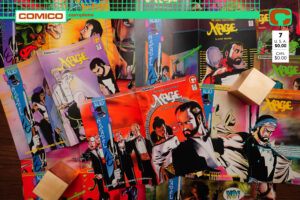
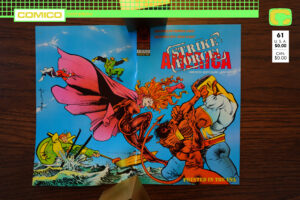
In any case, that left Rev with a single thing to publish: Elementals. And boy, would he lean into that.
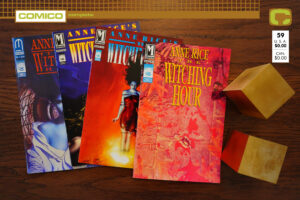
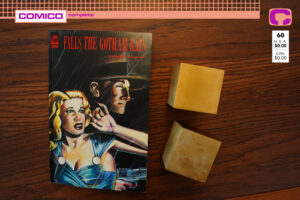
But, ironically enough (I think there’s a verse about this in that song you know), this Comico iteration published what may have been the best comics Comico ever published: Anne Rice’s The Witching Hour and Falls the Gotham Rain. Two really original and fascinating books.
The old Comico had a level of taste and professionalism that made it pretty OK, but it’s like that same company character also made it impossible for them to publish anything out of the ordinary. Now that Rev’s the boss, there’s no taste level at all, and that also lets surprising brilliance slip through.
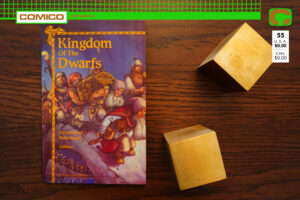
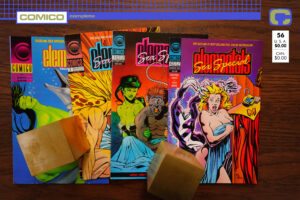
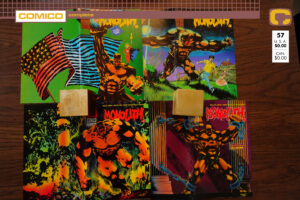
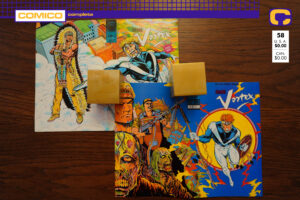
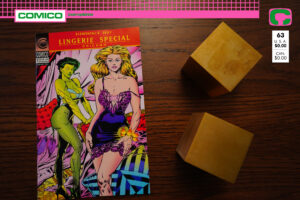
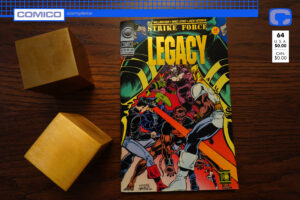
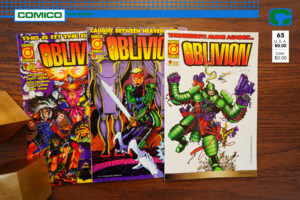
COMICO 95
After running Comico for a year and a half, Rev abruptly shut down operations. But Comico wasn’t over yet: In 1995, he launched COMICO 95, the comics company everybody was talking about! (At least that’s what the editorials in the books said.)
But those editorials did have a point, in a way: For the relaunch, Comico had allied itself with two new comics magazines: Overstreet’s FAN and Hero Illustrated. Both of these were trying to position themselves as the new Wizard Magazine, and like COMICO 95, they both went under pretty quickly. But these magazines carried previews of the books, and “exclusive content” and all that stuff.
So — not a totally inept relaunch in that way.
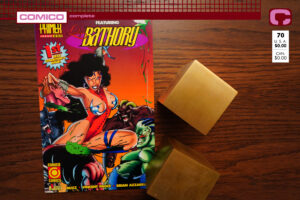
They also had one other unexpected ace up their sleeve: Tony Daniel. During the hiatus, Comico had continued to get comics produced, planning for the relaunch. Almost all these comics were drawn by Tony Daniel, who sent off his pages and got checks in return, and then nothing published — which must have been a pretty odd situation for a young artist. But before COMICO 95 was relaunched, he landed a job at Image, and then suddenly became kinda famous for doing a version of Spawn.
So of course, Comico would slather all the covers with texts like “BY TONY ‘SPAWN’ DANIEL” (only sometimes misspelling his name “DANIELS”), which I bet helped a bit… However, Daniel’s art style had changed quite a bit over the years, and Daniel in interviews dismissed these books as not being up to scratch, which I guess didn’t help.
It also didn’t help that all these books were horrible! Just awful stuff. Not the artwork — that was often pretty OK, but the writing was just horrendous. Some of the most boring comics I’ve had the misfortune of having to read.
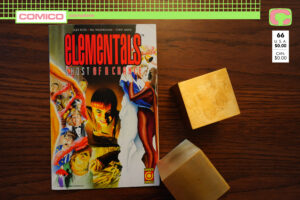
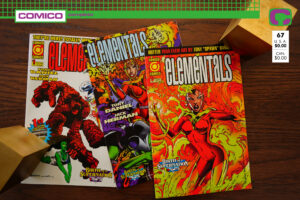
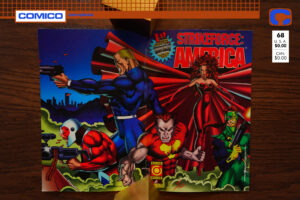
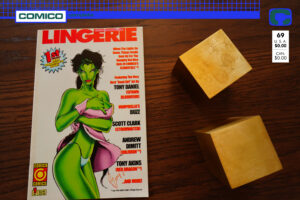
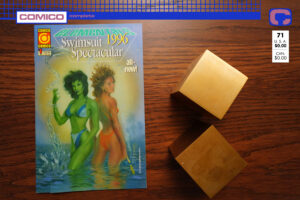
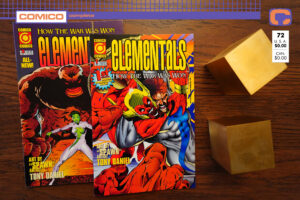
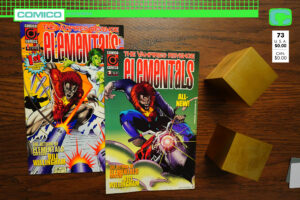
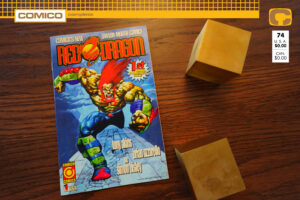
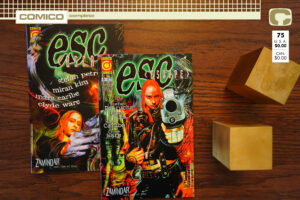
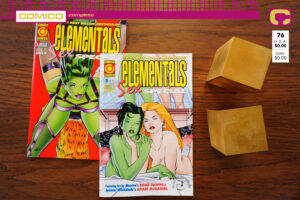
And that’s how Comico died — not with a whimper, but with an Elementals Sex Special.