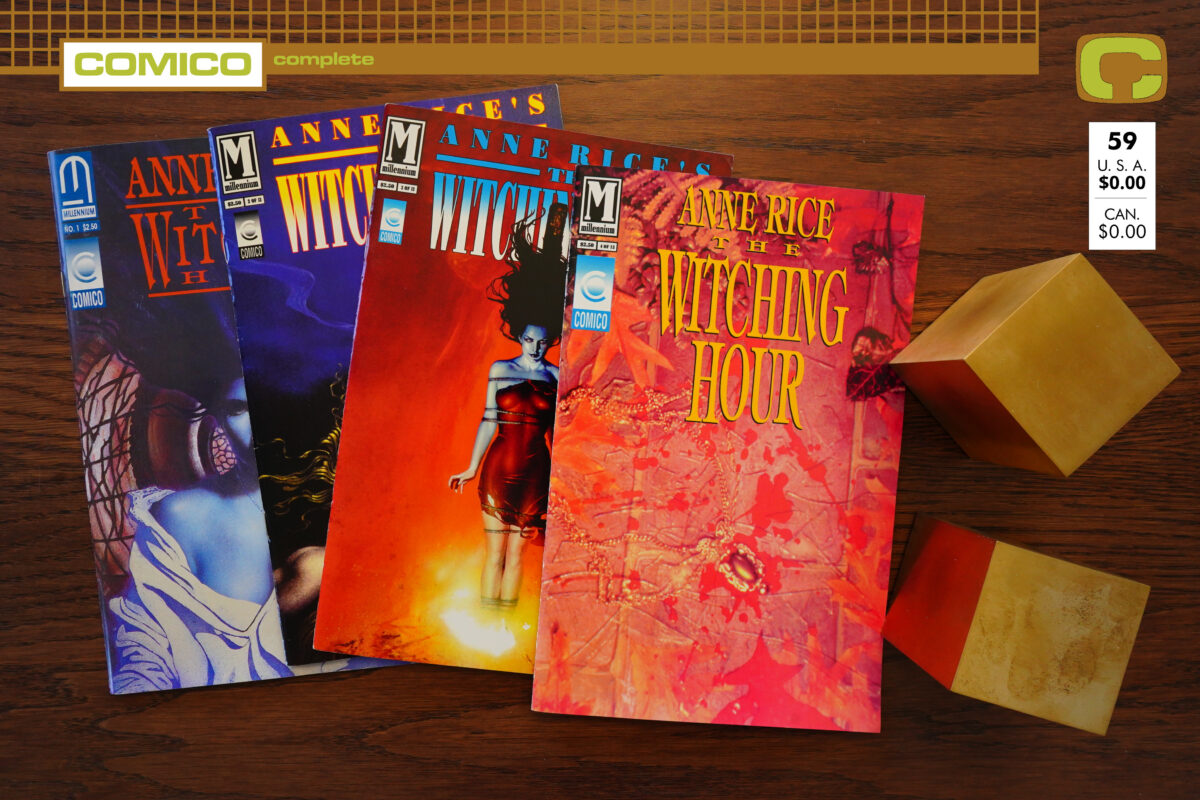
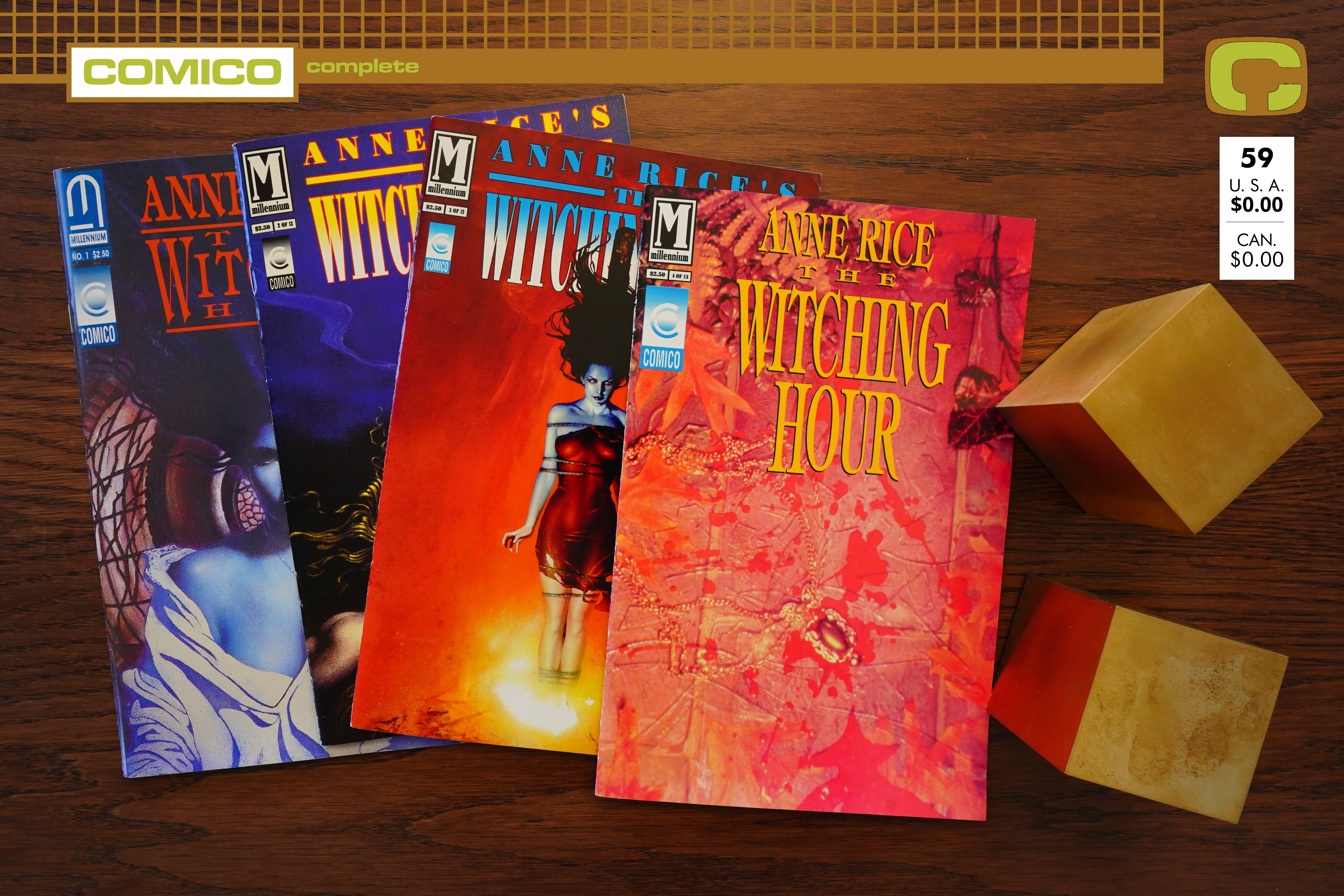
Anne Rice’s The Witching Hour (1992) #1-4 by Duncan Eagleson and Terry Collins
What’s this then? “Millennium”? Both the Millennium and Comico logos are on the cover of this book, but Comico isn’t mentioned in the indicia at all. So was Comico acting as the distributor? Was Millennium yet another comics company owned by Andrew Rev (he had so many). In any case, this was the only book published by this combo, but Millennium published a bunch of other things.
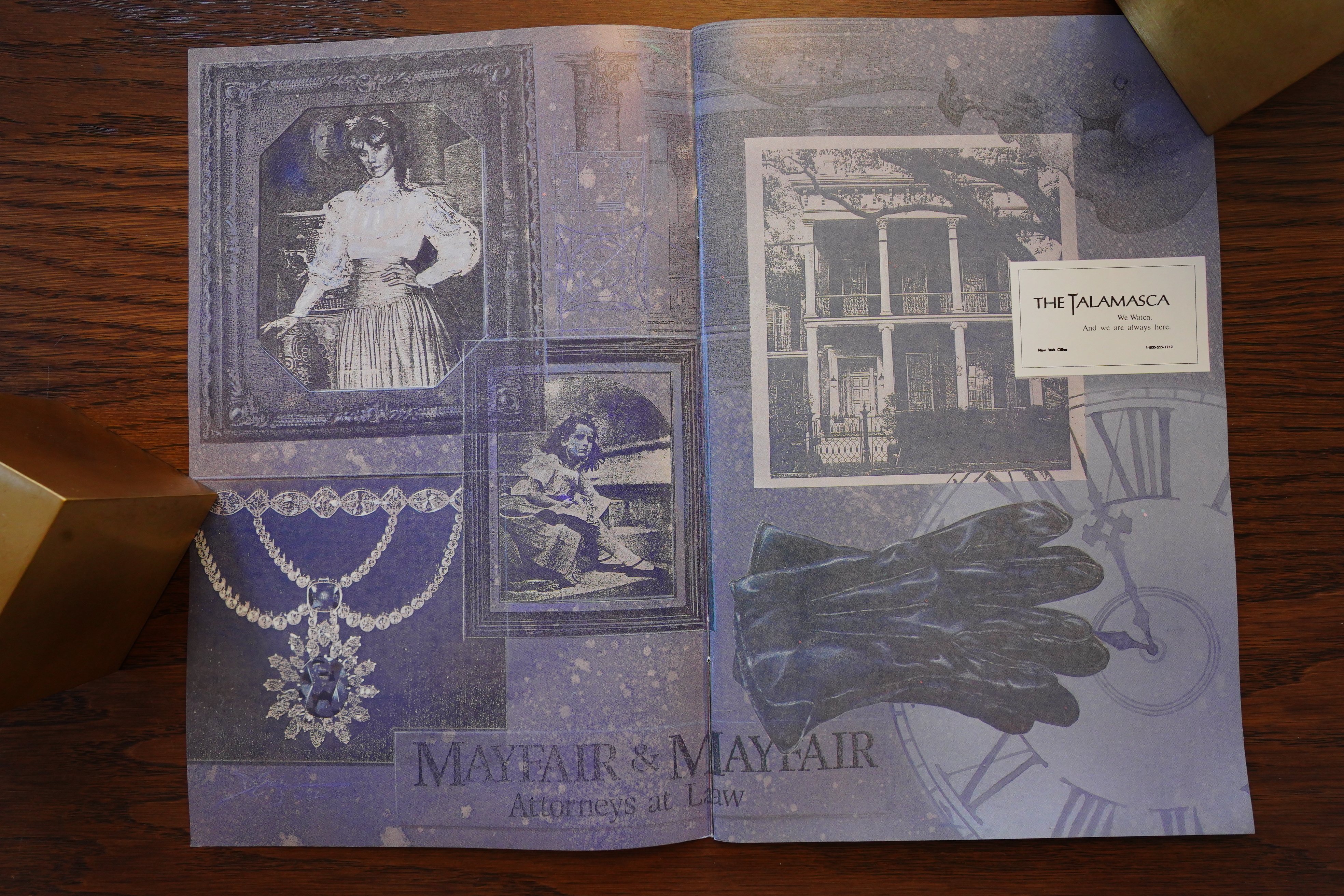
Anyway, this is a lot classier than usual NewComico matter — it’s on shiny paper, has a thick cover, and endpapers.
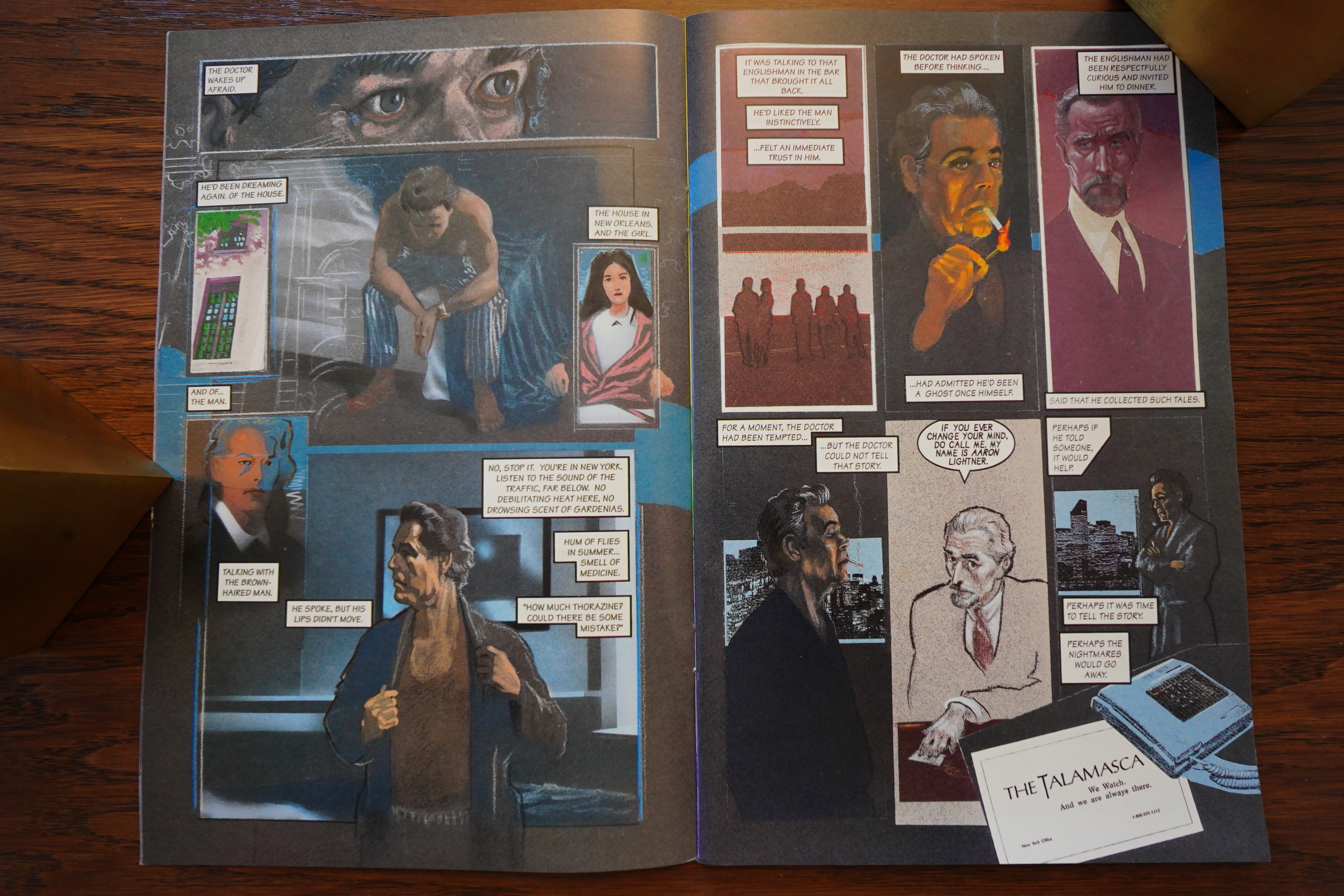
And is painted. This adapts an Anne Rice novel which I haven’t read — I’ve only read a couple of her books, and I’m not really a fan.
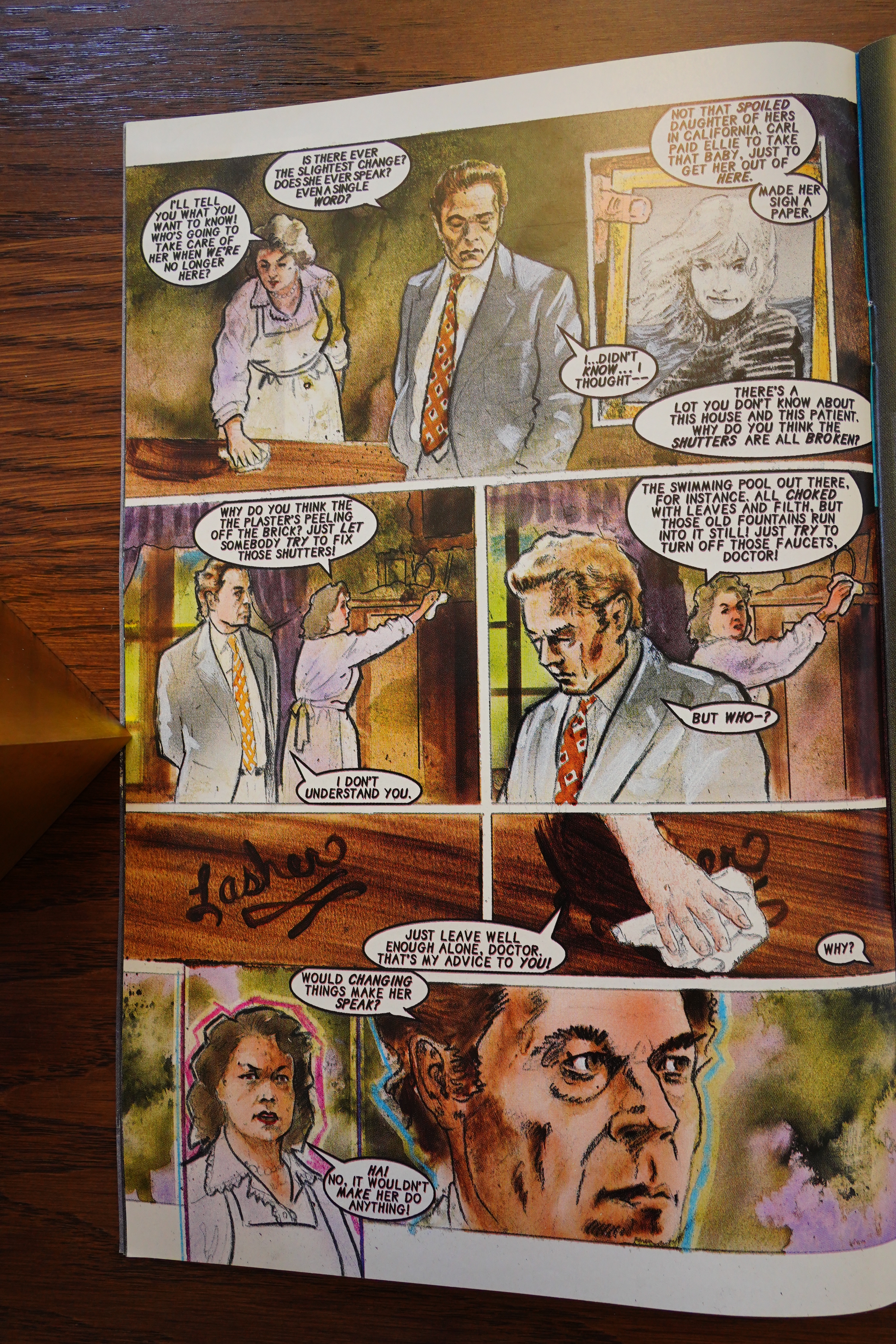
The artist, Duncan Eagleson, seems to be having a lot of fun doing the adaptation, at least. Many different approaches.
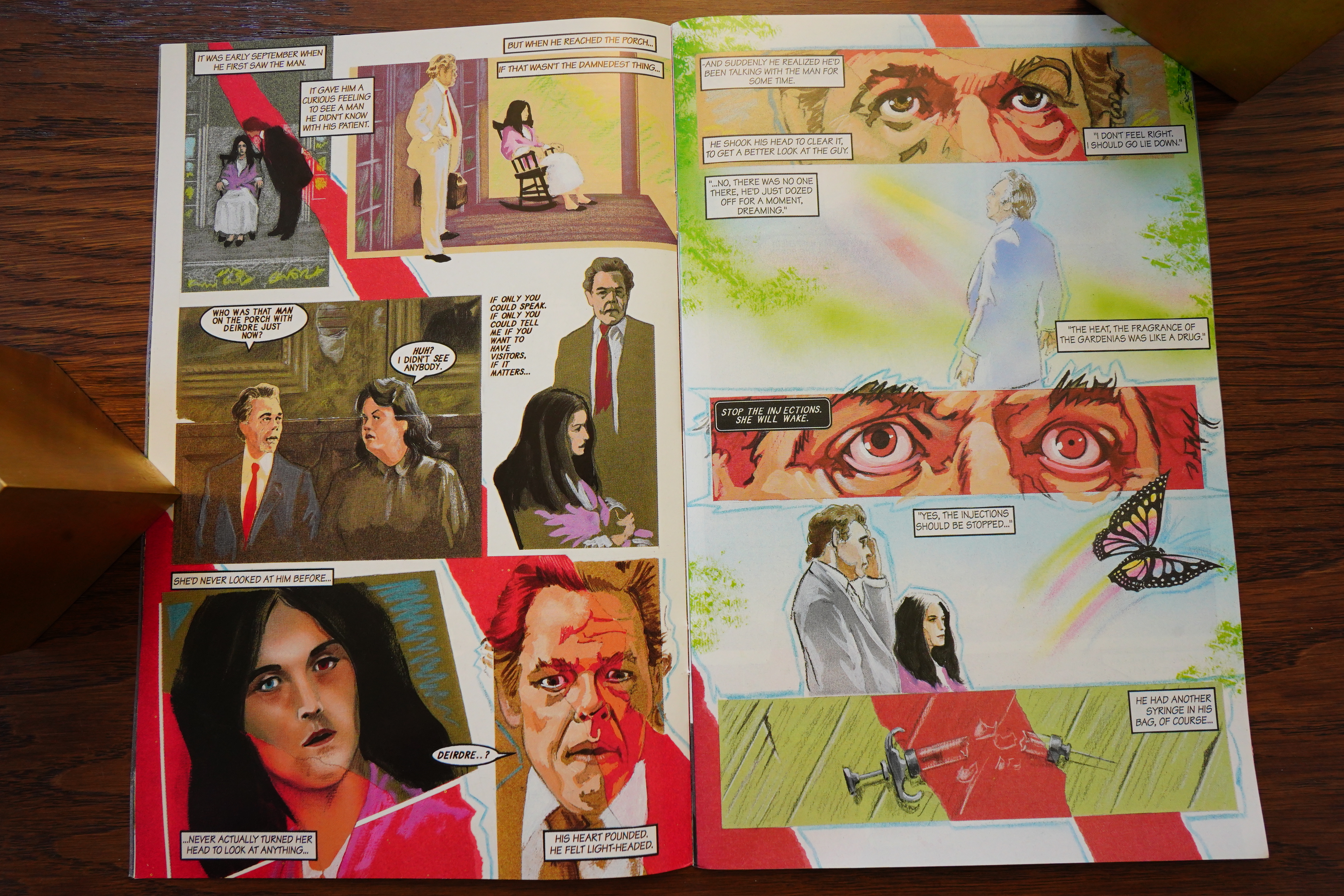
But it does feel a bit clumsy. What happens is often pretty vague — but that might be a conscious decision: The book is about mysterious things happening mysteriously, with confused people being confused. So that this is reflected in how the book reads would be logical.
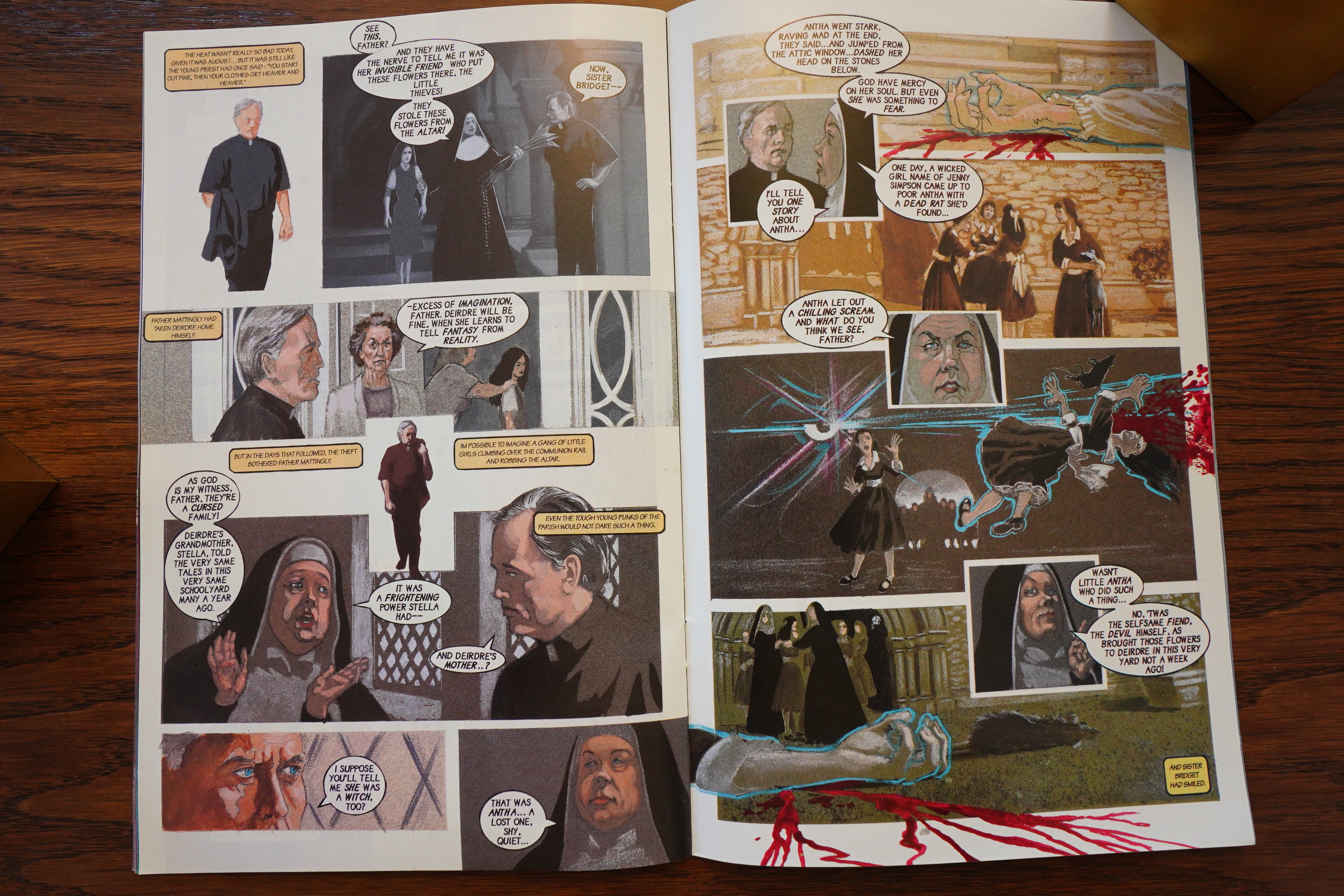
On the other hand, perhaps Eagleson is just new to the comics business?
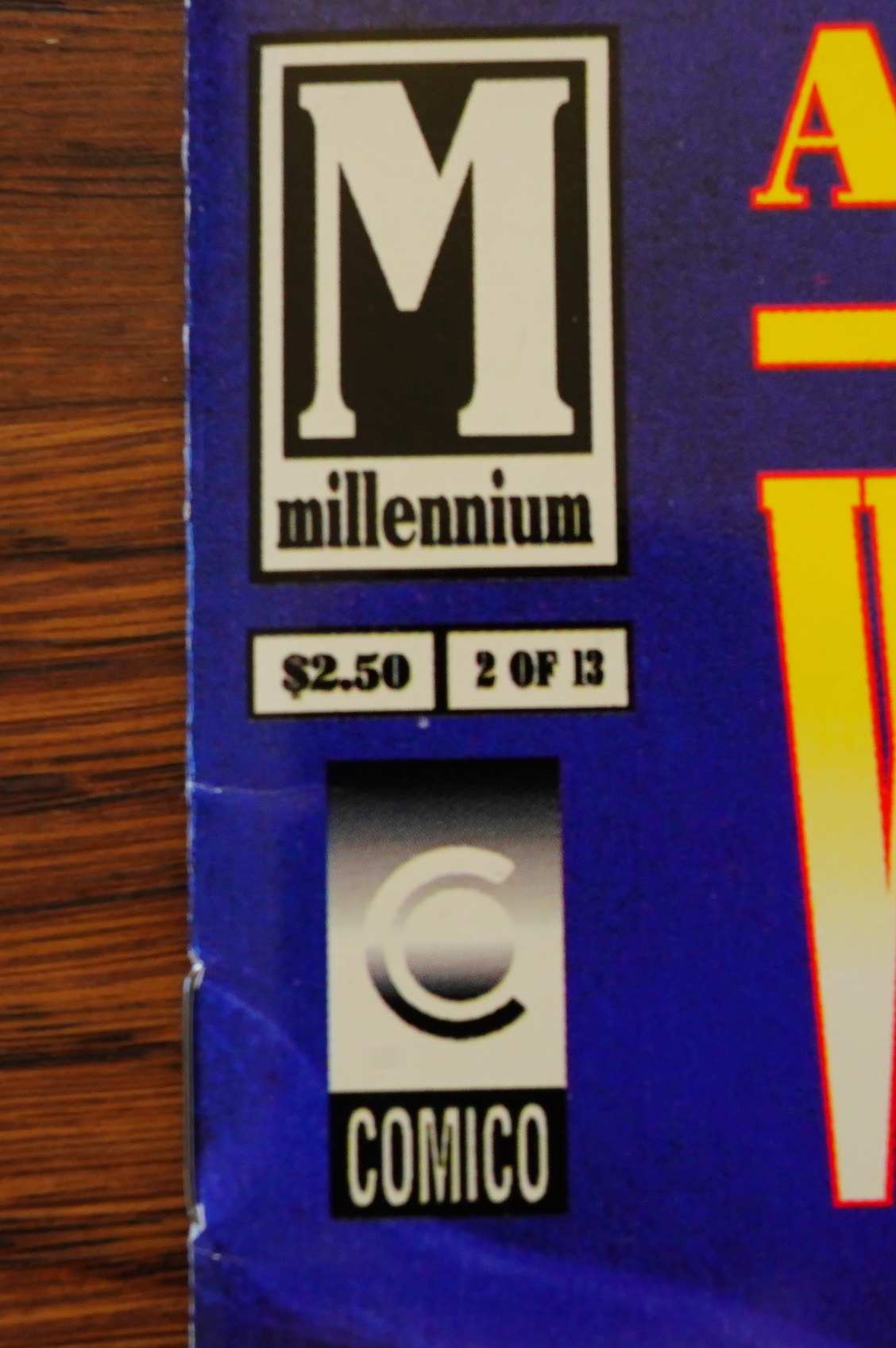
With the second issue, the cover announces that this is a thirteen part series.
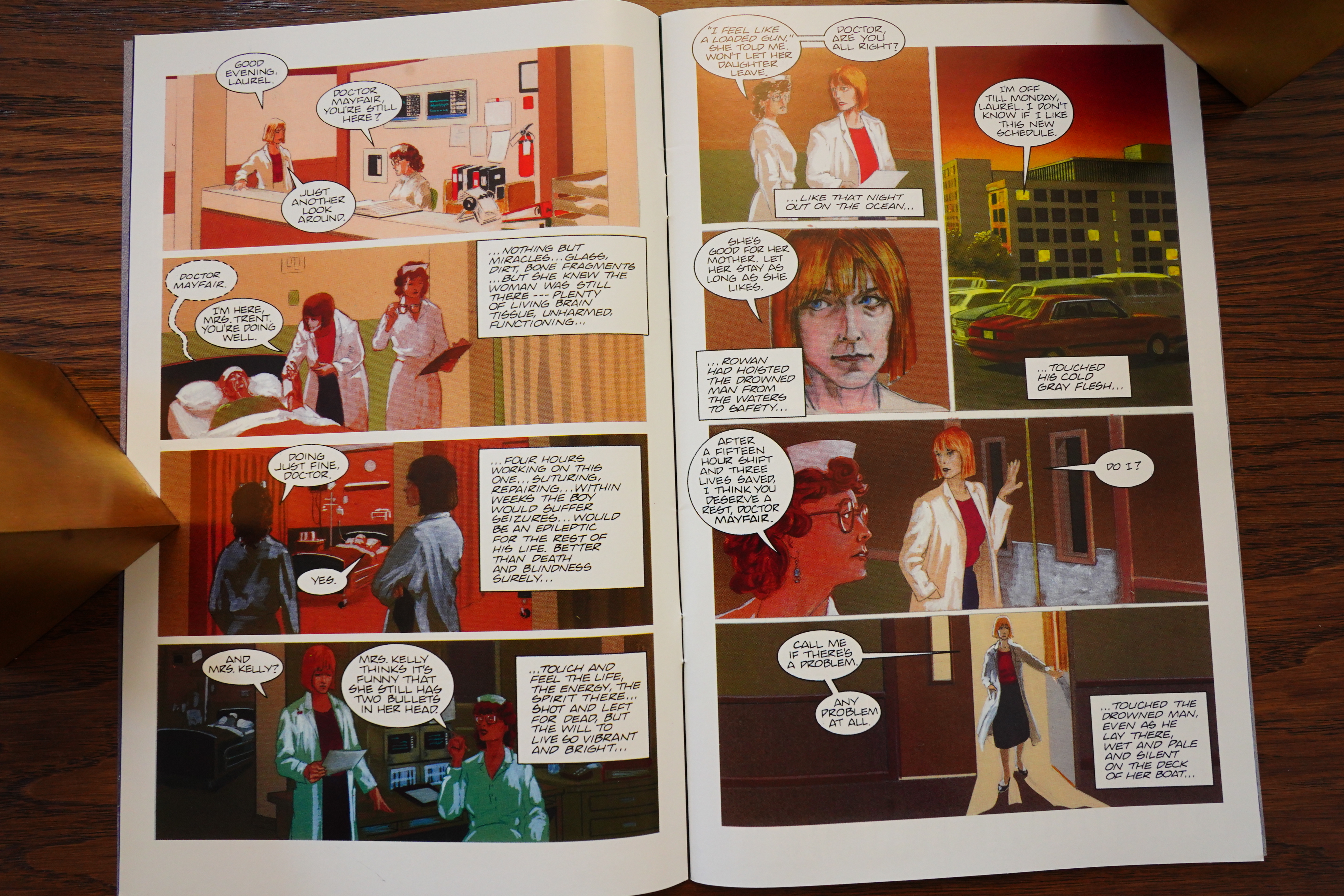
And I wonder whether a lot of time passed between making the first issue and the second, because it reads quite differently. Terry Collins is now credited with “script”, so I guess he’s writing the words, and may perhaps be clarifying things more?
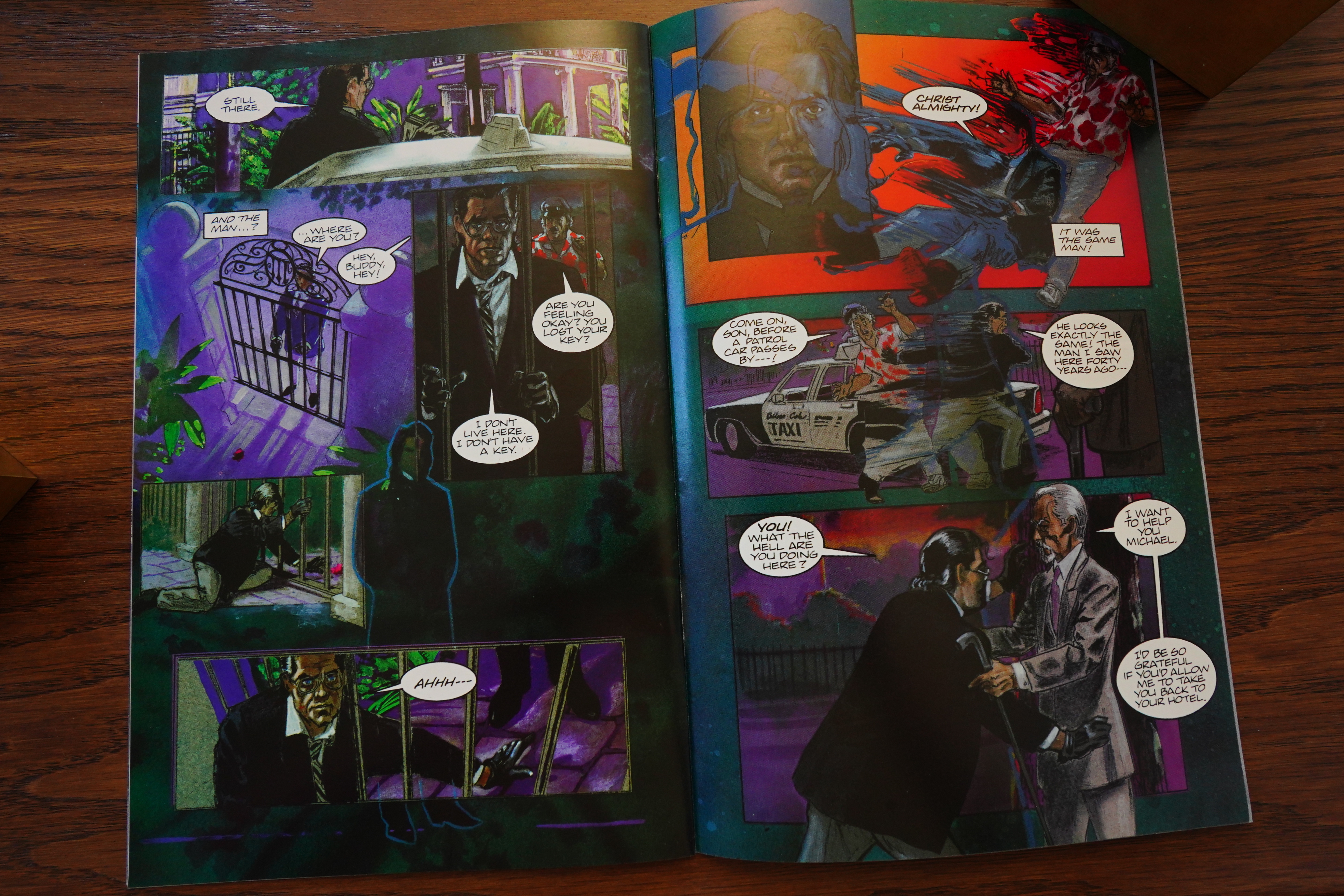
In any case, it feels much more assured now, and I have to say that I was quite getting into it while reading this now: It works very well, as sneaking horror books go.
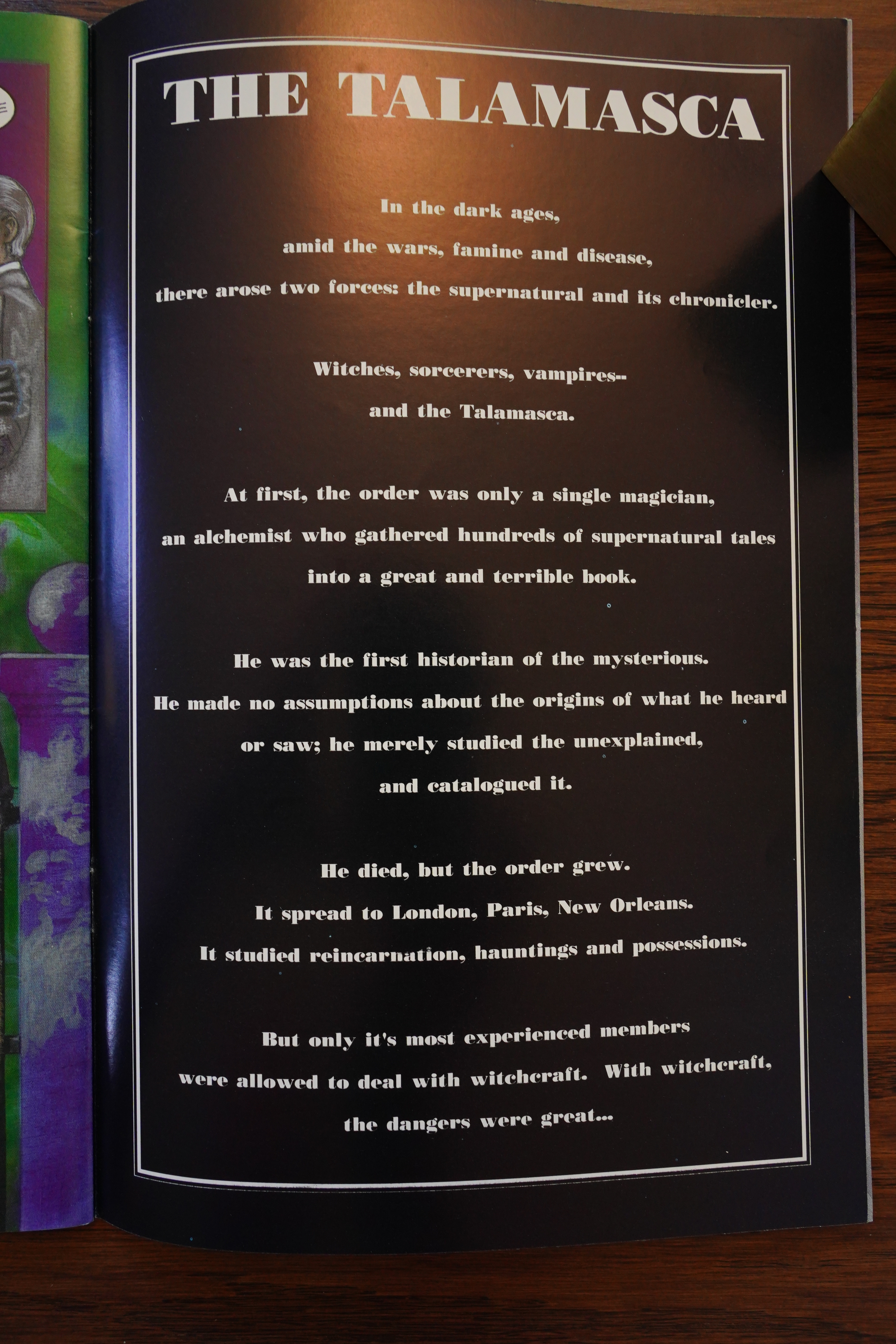
Hey! Spoilers!
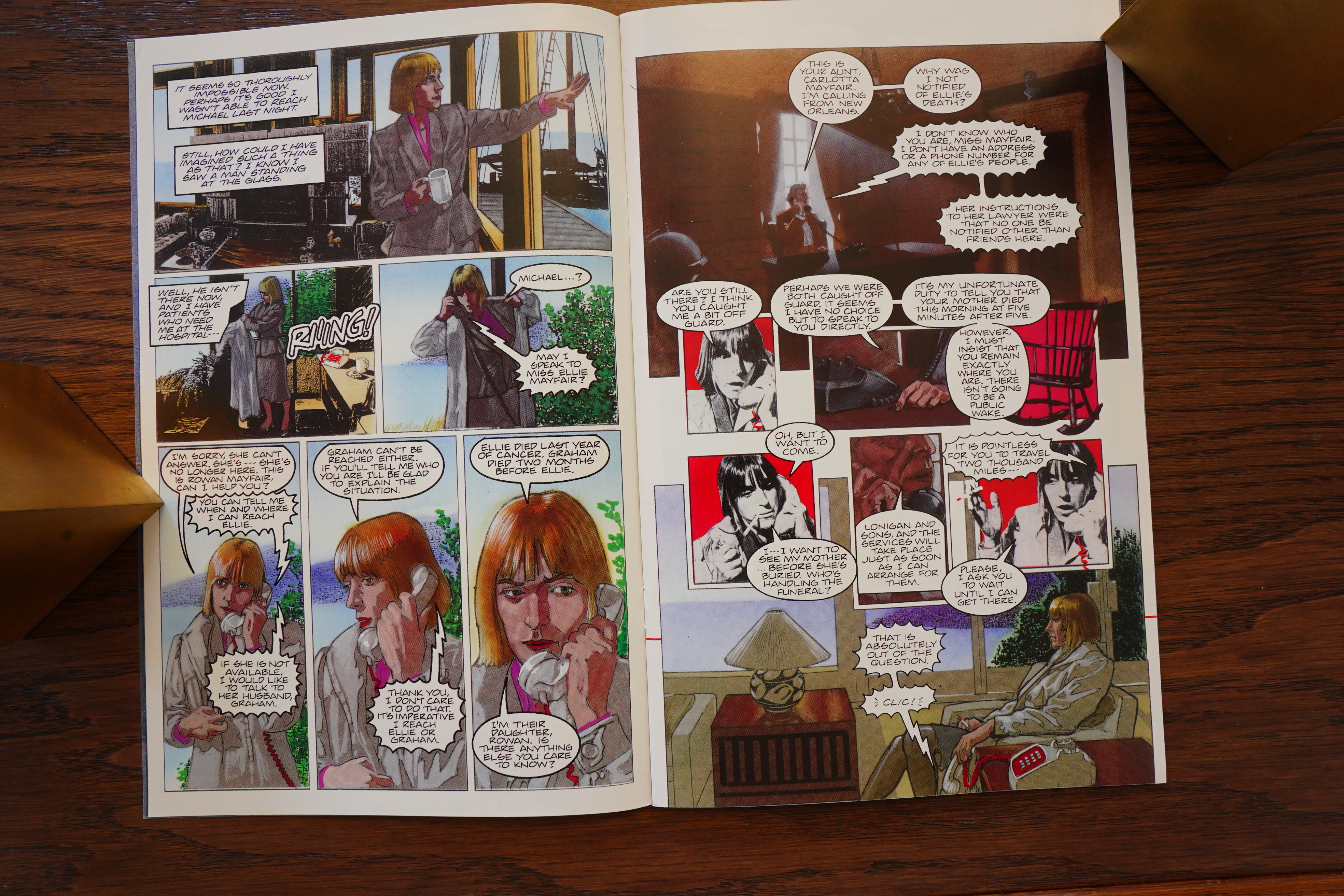
I was going to say that the artwork looks extremely photo referenced, sometimes tending towards being fumetti-like… and then Eagleson drops in some panels that are just straight up photos. Well played!
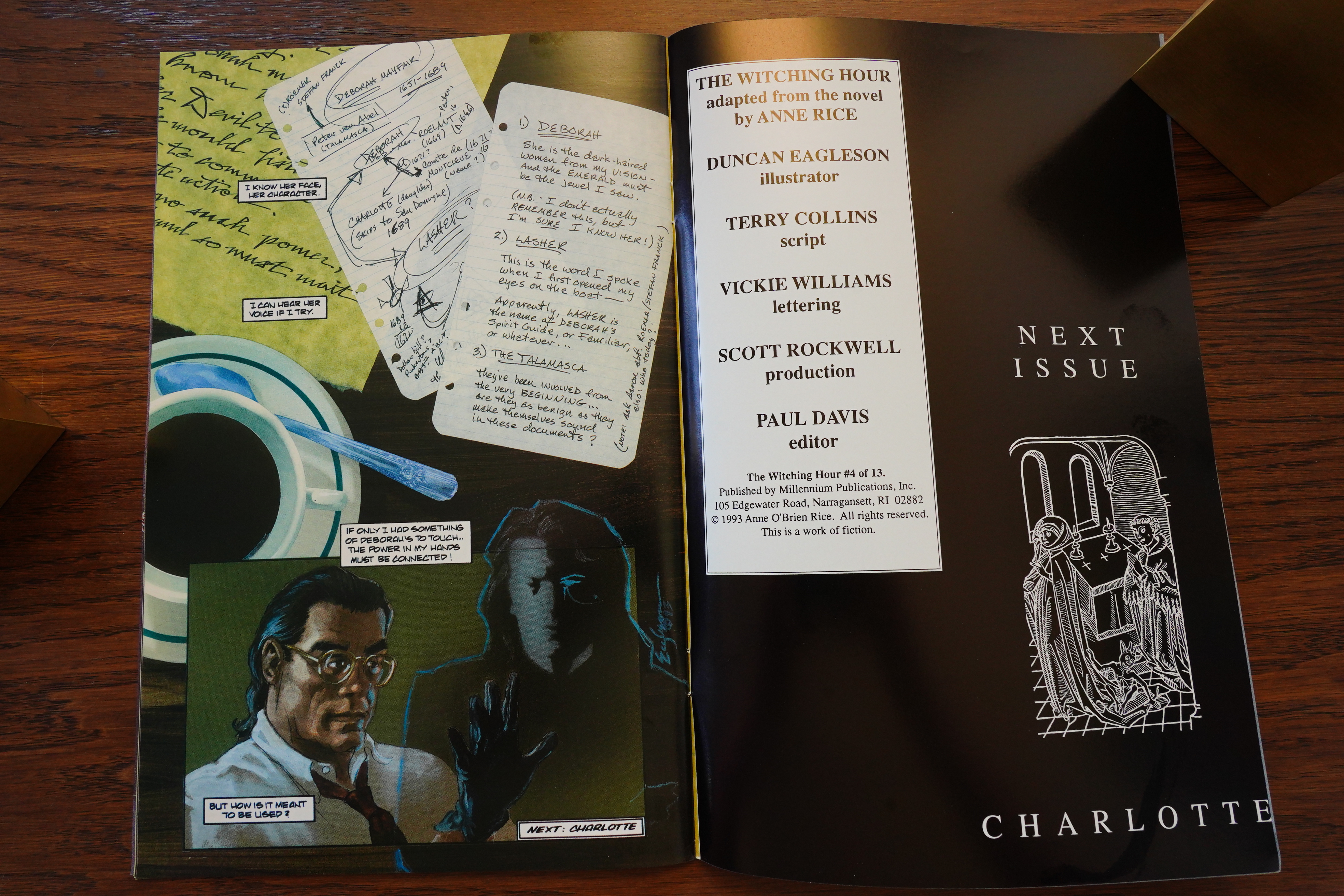
The fourth (and final issue from Comico) gives us a lot of backstory, but even that works well.
Millennium published one more issue on their own, and then they apparently shut down. Unfortunately, it was never completed:
Originally scheduled as a 13-issue series, by the solicitation of the 7th issue it had been reduced to a 10-issue series, and only 5 issues were actually released.
That’s a real shame — this is a really good adaptation. It flows well, and (after the first issue), it doesn’t read like somebody’s tried to cram a long novel into comics format.
Eagleson is a painter and illustrator, and he hasn’t done all that many comics, apparently.
I could find no contemporary reviews of this series. Or any reviews on the internet, either, but here’s an interview:
2) Around the same time you did Sandman you also worked wrote and did art for several issues of Anne Rice’s The Witching Hour comic book series. What was this experience like?
(DUNCAN:) That was a bit of a mixed bag, especially toward the end. It started out looking great − they came to me at first for the art, and they didn’t have a writer. I had just recently read The Witching Hour, and I was wanting to start building a name as a writer, so I convinced them to let me script as well.
Between scripting and illustrating, I had no time to get involved in the marketing, but I probably should have tried. They were marketing the book to comics venues, treating it as if it were a superhero book, which wasn’t the best choice. The Anne Rice audience was huge − but they’re not your typical superhero comics audience. As it was, I think we got some respect from folks in the industry − the one time I met Kelly Jones, he was kind enough to say he thought The Witching Hour was the best full painted book on the market at the time − but the sales of the first couple of issues were disappointing.
To be fair to Millennium, novel adaptations are always a hard sell in comics, and traditionally don’t do very well. And although I think The Witching Hour might eventually have found its audience, they just didn’t have the kind of funding to hold the line until that happened, they needed to make money off the book right now. And that wasn’t happening. So the book got cancelled, and shortly thereafter, the company went belly-up.
As an artist & storyteller, however, I had a great time doing it. I unleashed everything I had learned about drawing and painting and visual storytelling on that series.
[…]
This was in the days before the use of Photoshop had become common, and I was doing a lot with Xeroxing drawings and photos onto colored paper, and painting over them with gouache, acrylics, airbrush, and pastel pencils. At one point, my editor, Jordan Bojar, called me up and said “I don’t know how you created this, what kind of techniques you’re using, but whatever they are, don’t ever reveal them to anyone.” Of course, I said “Why not?” I’m always happy to share whatever I’ve learned with someone who wants to know. “Because this is unique, these techniques are a gold mine,” he said. I thought he was nuts. Far as I’m concerned, anyone who wants to try out these techniques, knock yourself out. If you’re a mediocre artist looking for a gimmick, you’ll produce a cheap knockoff. If you’ve got imagination, and are good at what you do already, you’ll do something else with it, use it to develop your own unique creation. Why would I feel threatened by either possibility? A cheap knockoff will almost always be seen for what it is, and an imaginative, unique creation deserves to succeed, and be cheered on.