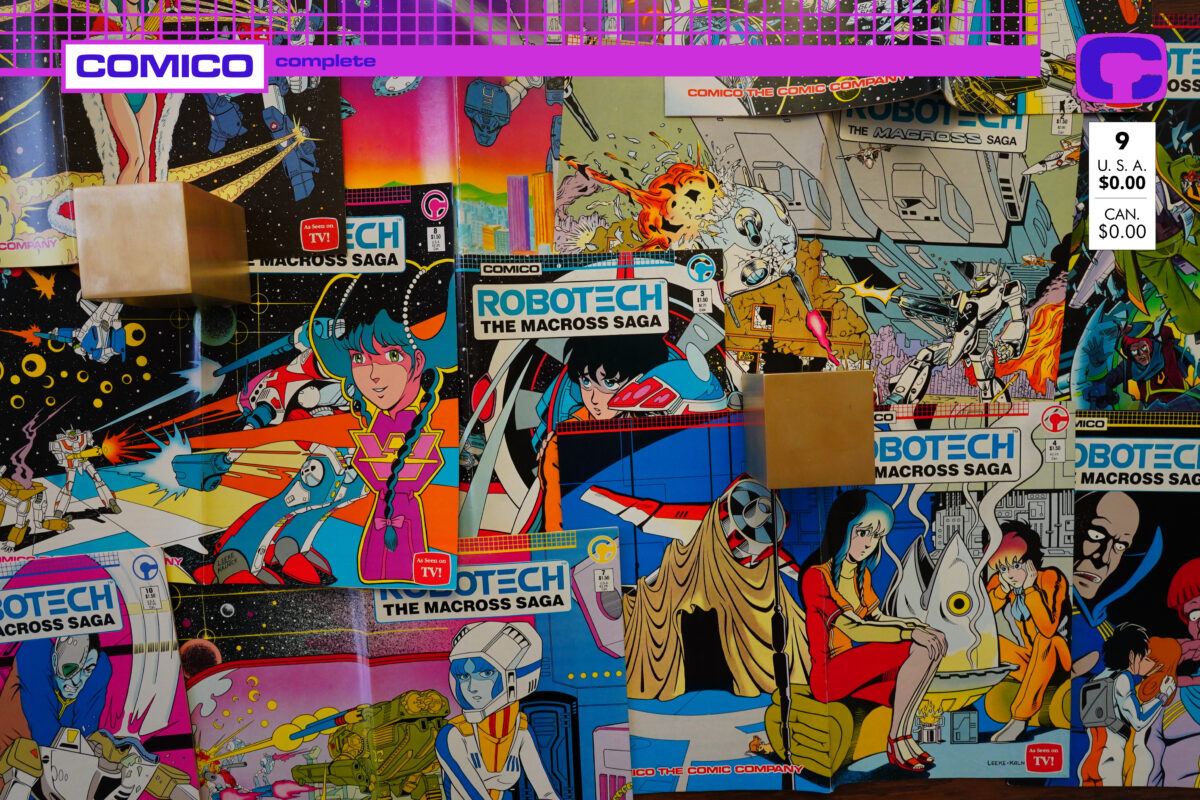
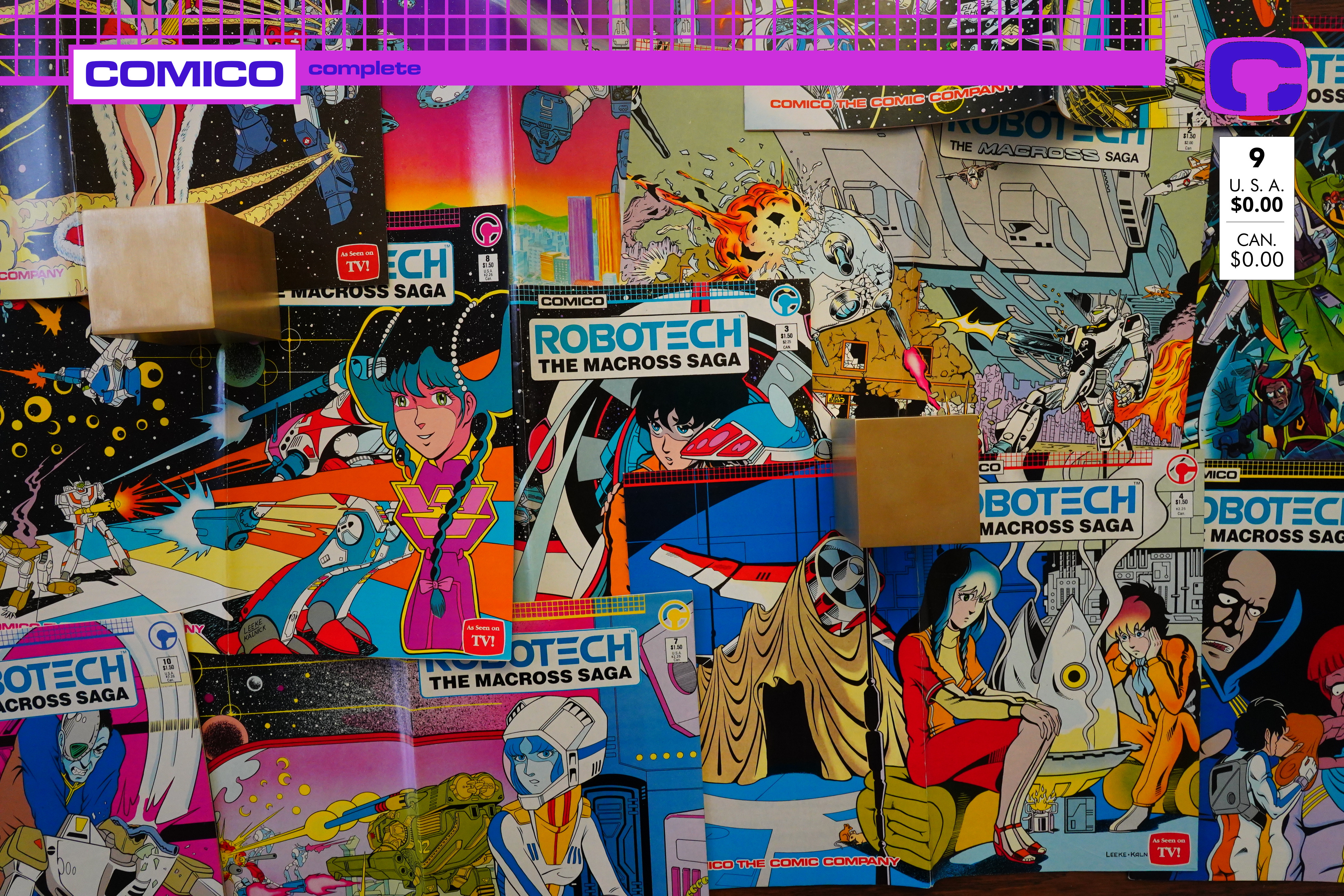
Macross (1984) #1,
Robotech: The Macross Saga (1985) #2-36 by Jack Herman, Mike Leeke and Chris Kalnick, plus Too Many People To List
I was curious to read this series (well, the three Robotech series — I guess I’ll do one post per series) because I have dim but pretty positive memories of watching random episodes of this on TV way back then. If I understand correctly, they edited together three different animated series into one, and then that was shown as “Robotech”? Since Comico is publishing three series, I’m guessing this means that they’ve gone back to the original Japanese series division?
I guess we’ll find out.
The edits probably didn’t make the series less mysterious, but since I saw only, like, every third episode, my impression of the plot was very, er, impressionistic. The only thing I can say with certainty is that one third of the dialogue was “Rick! Minmei! Rick! Minmei!”
At least that’s what I remember.
OK, now I can start reading Robotech: The Macross Saga.
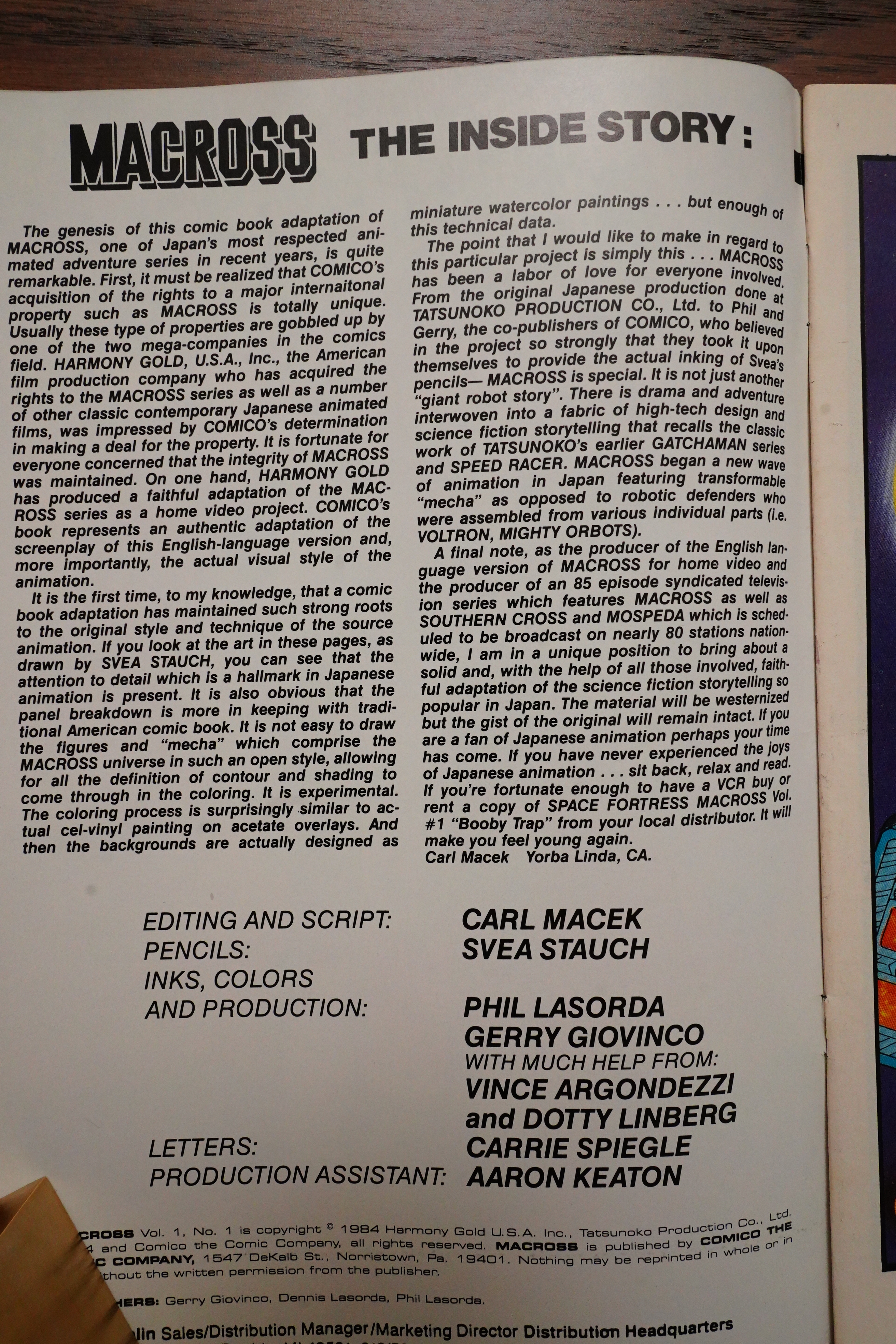
The first issue is called just “Macross” — I guess the Robotech thing hadn’t been established yet? Yup:
At the same time, Harmony Gold licensed the Macross TV series for direct-to-video distribution in 1984, but their merchandising plans were compromised by Revell’s prior distribution of the Macross kits. In the end, both parties signed a co-licensing agreement and the Robotech name was adopted for the TV syndication of Macross combined with Super Dimension Cavalry Southern Cross (1984) and Genesis Climber MOSPEADA (1983).
One slightly confusing thing about that editorial is that it’s framed as a coup for Comico — but at this point, no major US companies had done adaptations of Japanese animated series yet, had they? So you wouldn’t think there would be much of a bidding war… On the other hand, Comico had a tradition of going rather hyperbolic in their editorials.
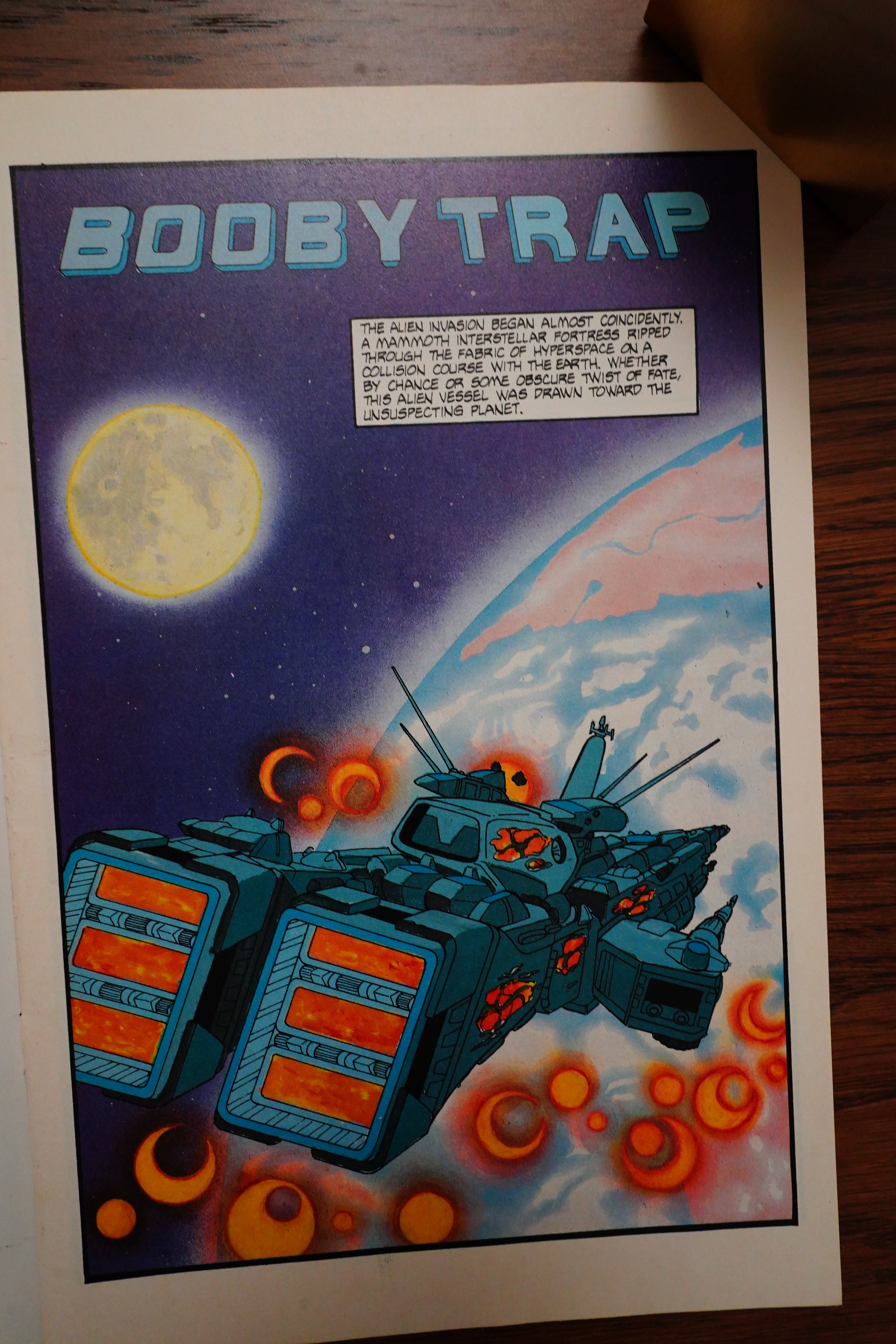
Well, that looks pretty good?
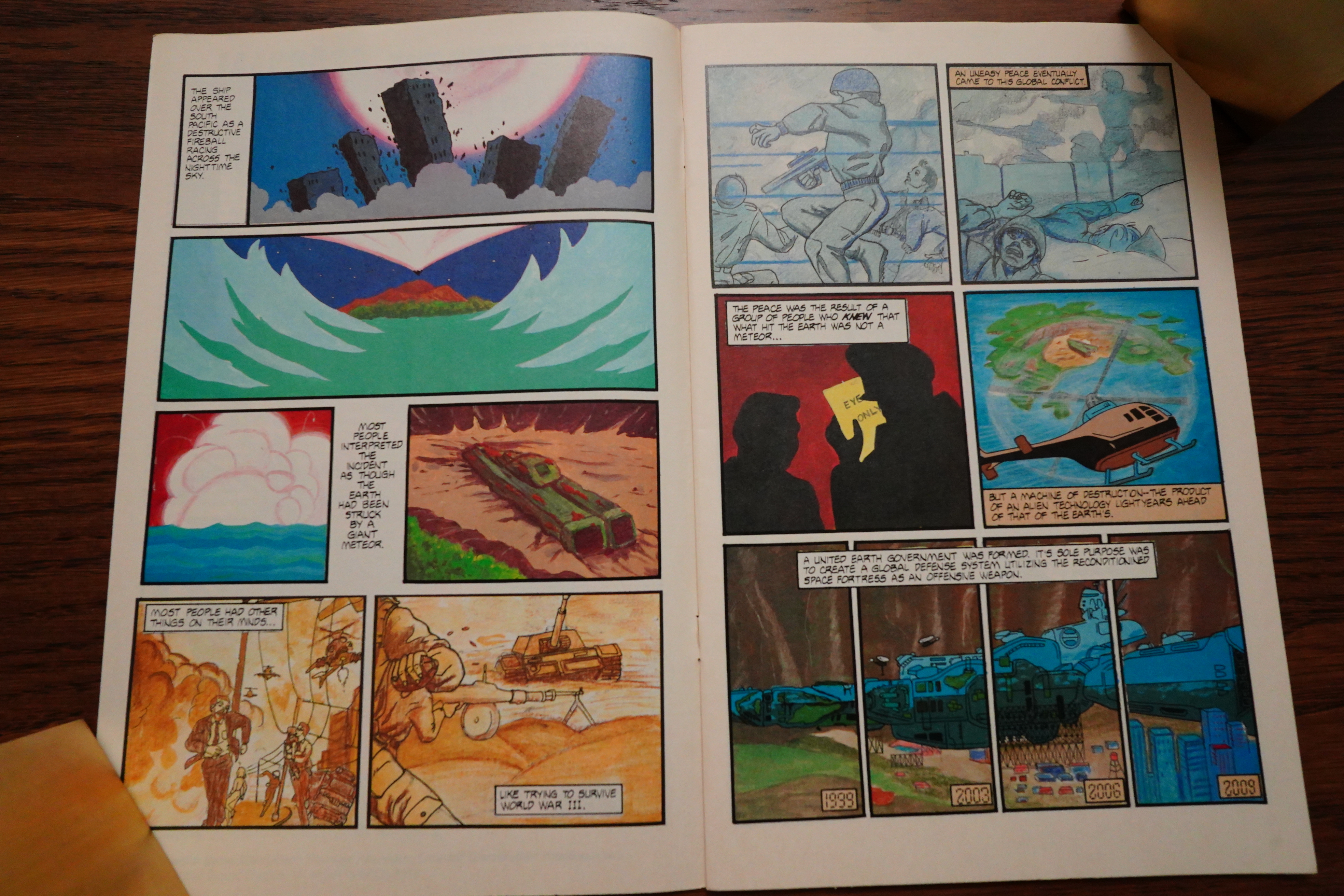
Hm… well, this looks very labour intensive. But the publisher explains:
Our vision was to produce the pages using images taken from the actual video. When this proved to be an impossible option we decided that we would create the pages using a technique similar to that of genuine animation cels.
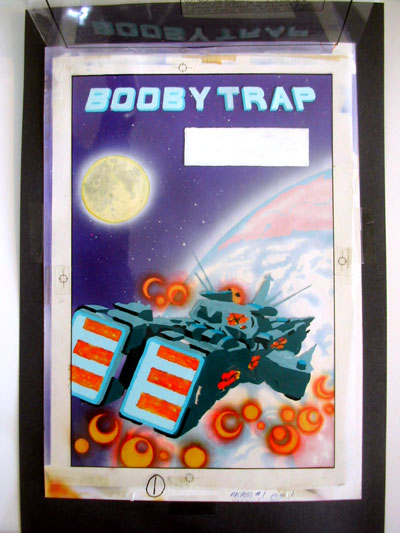
Yeah, that’s labour intensive.
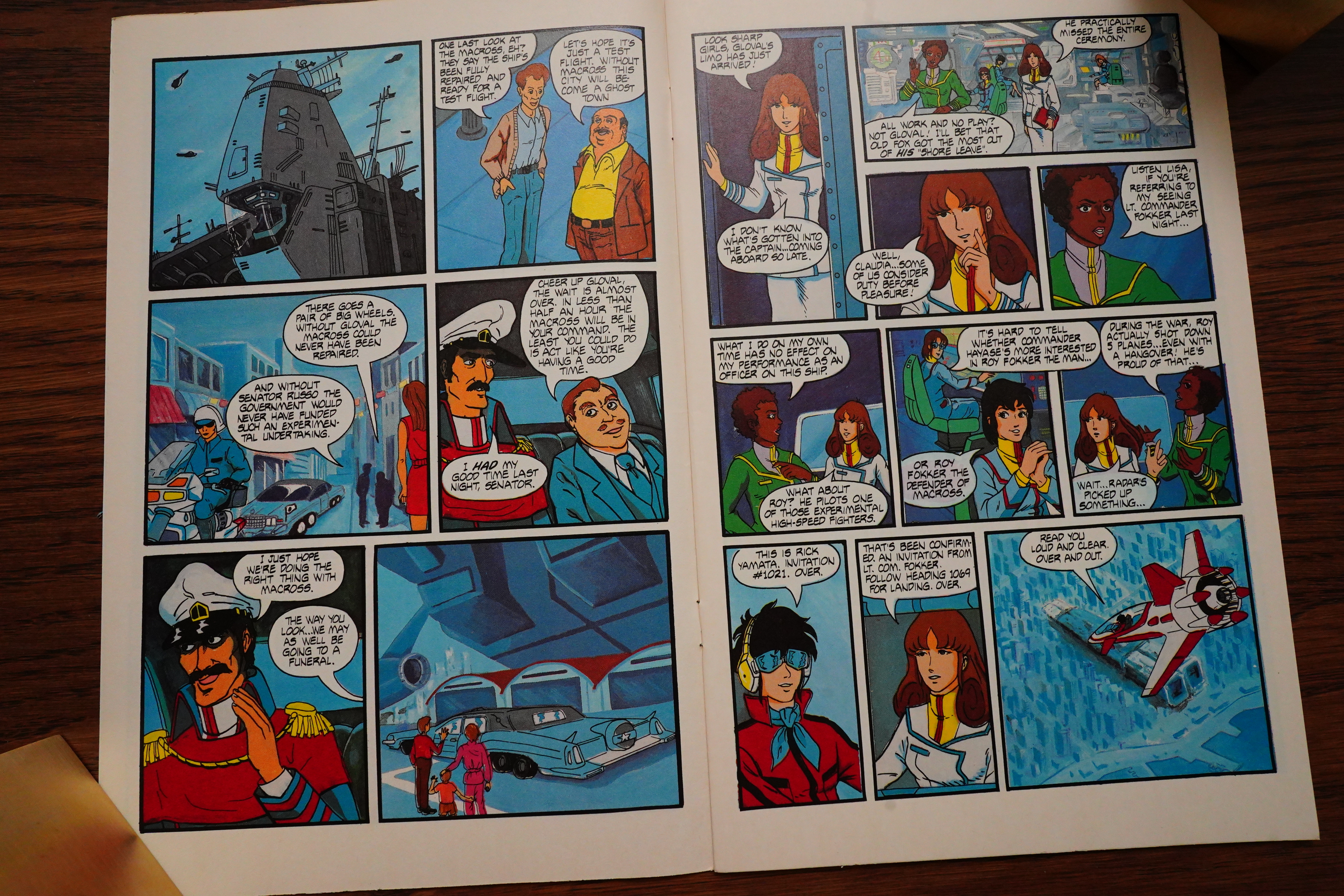
Unfortunately, the artwork is kinda wonky:
Carl Macek’s wife Svea Stauch provided the pencils. Phil LaSorda and I inked all of the main characters which included all of the aircraft, spaceships and robots. The inks were done on a separate overlay that was later lettered then photographed as a positive transparency.
I’m no expert in Japanese animation — or animation at all, really. I mean, I watched all the standards, but I’ve seen few of the TV series. And there’s (presumably) a billion sites out there devoted to Robotech analysis, so you should go read those instead if you want insightful analysis, but what struck me back when I watched this (and again now) is how fun the setup here is.
The captain has a Russian name, and everybody in his command structure is a woman. And while Japanese cartoons and comics have a tendency to draw presumably-Japanese characters as European (like we see with that long-haired female officer), the Black one sure isn’t. So it’s got a very international cast, and with a somewhat unusual gender division. Except that all the jet pilots are (of course) men.
But perhaps this was a standard setup at the time? I know naaathing.
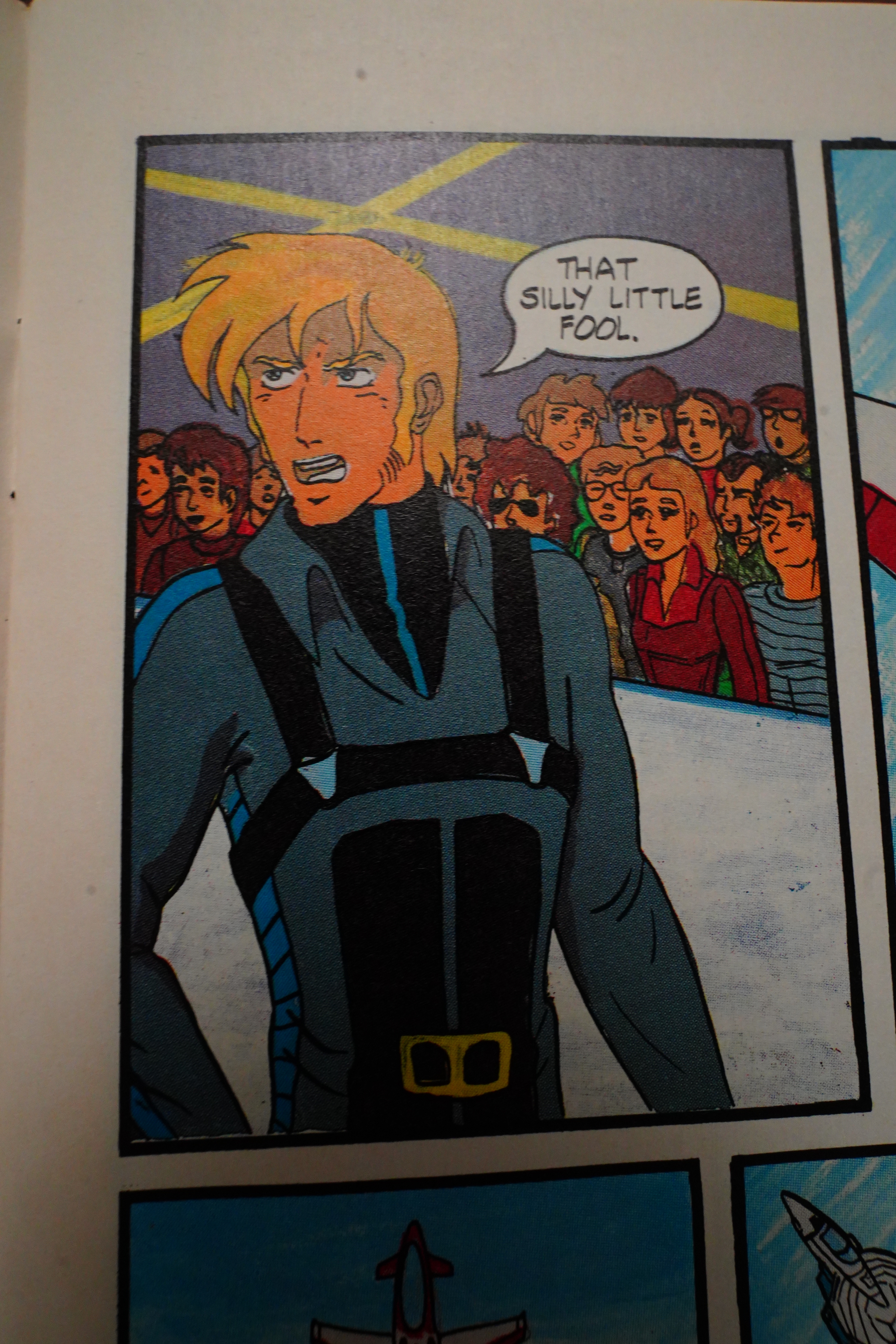
Some of the artwork’s pretty good (like the guy in the foreground there), but it doesn’t really look much like Japanese animation, does it? And the people in the background there… eep.
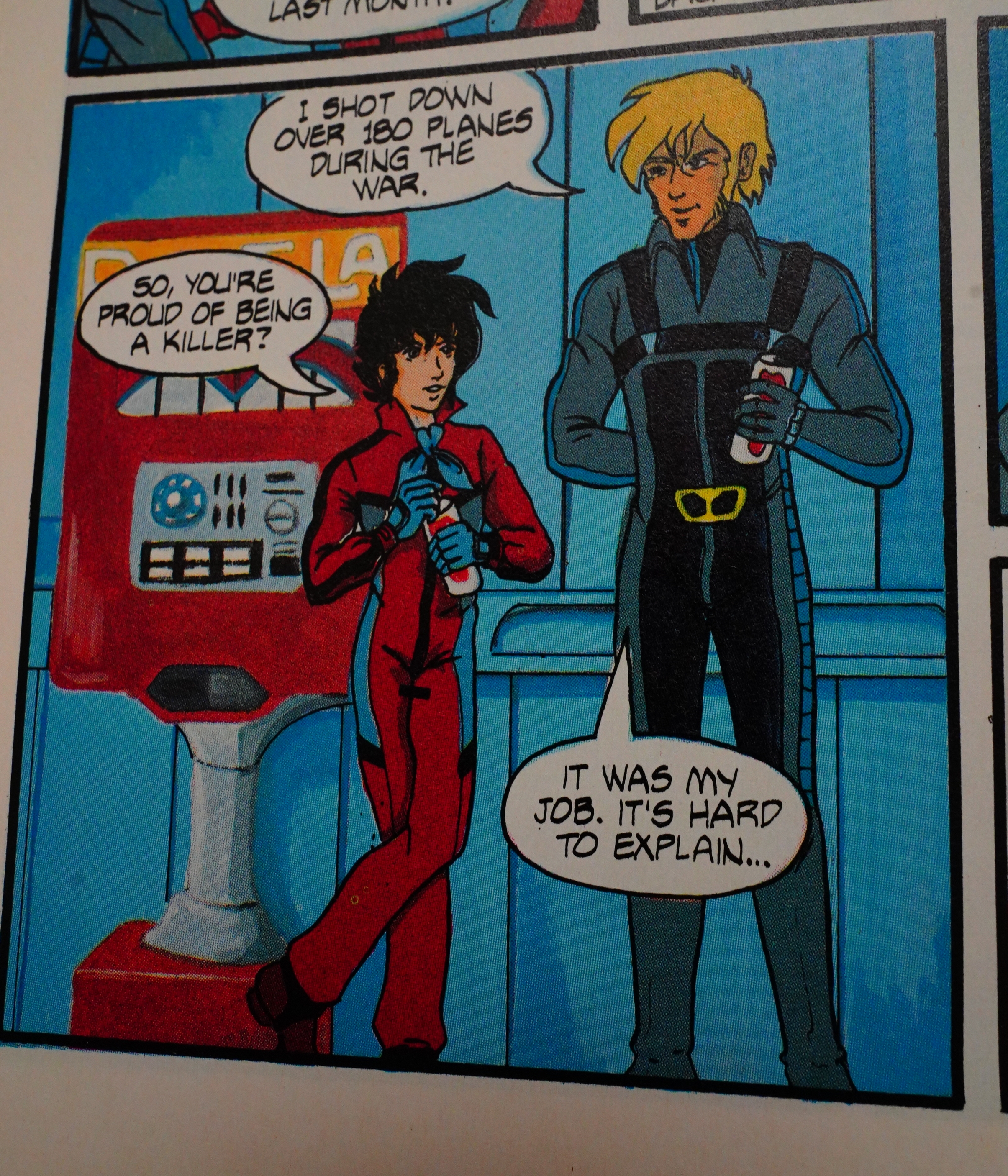
It does have a certain charm — it just looks so odd! I like it.
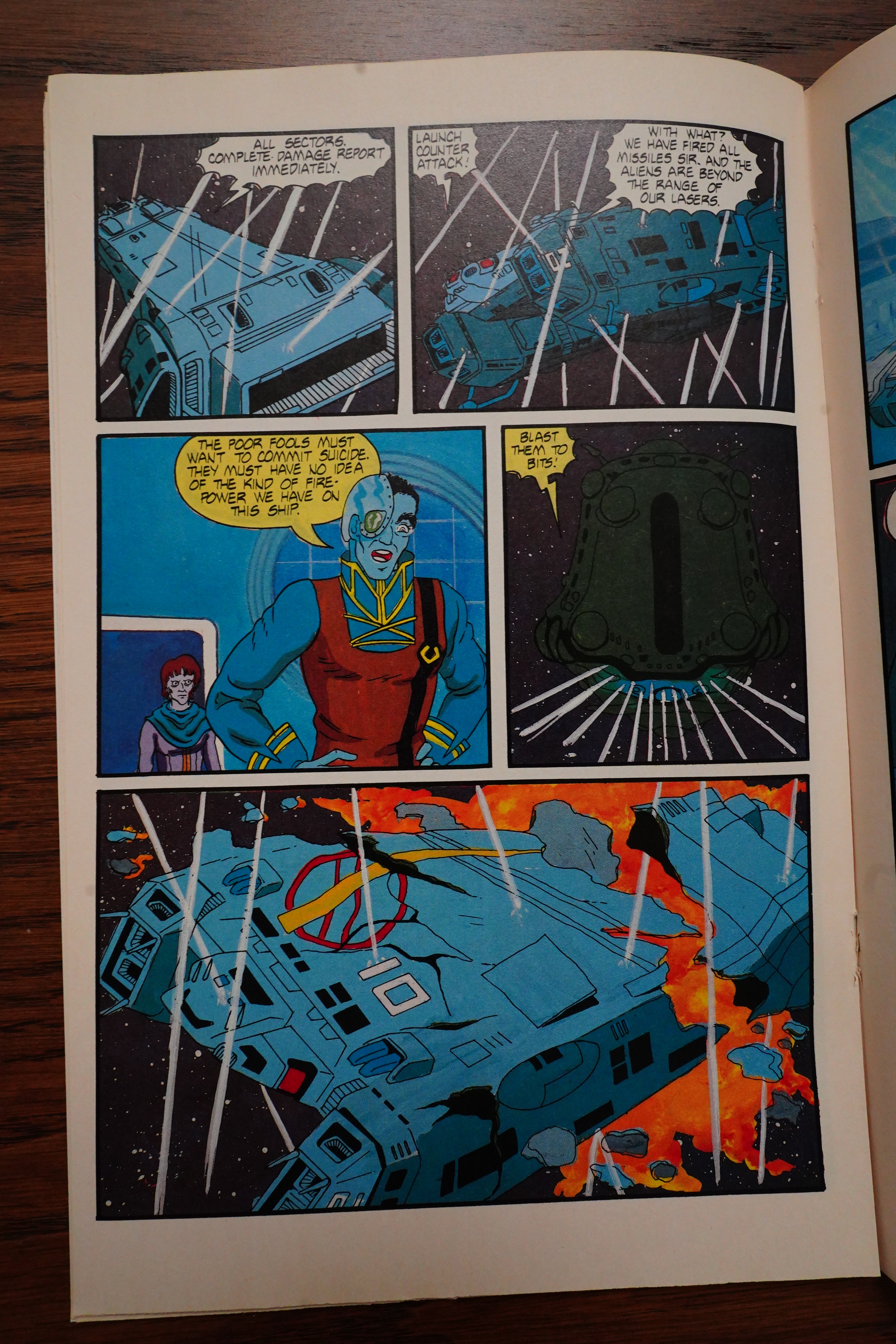
I’ve read many a comics adaptation, and a major problem (especially in later years) is that they seem to be published more as souvenirs than actual comic books. That is, they illustrate a few of the major scenes that somebody who’s seen the original movie would want to see again, and then just basically don’t tell the rest: They’re meant for people who’ve already seen the original movie/tv series/whatever.
But this is pretty readable — I’m amazed at how much I recognise from watching those episodes in the 90s, and I think there’d be no problem following the plot even if you’ve never heard of this thing before.
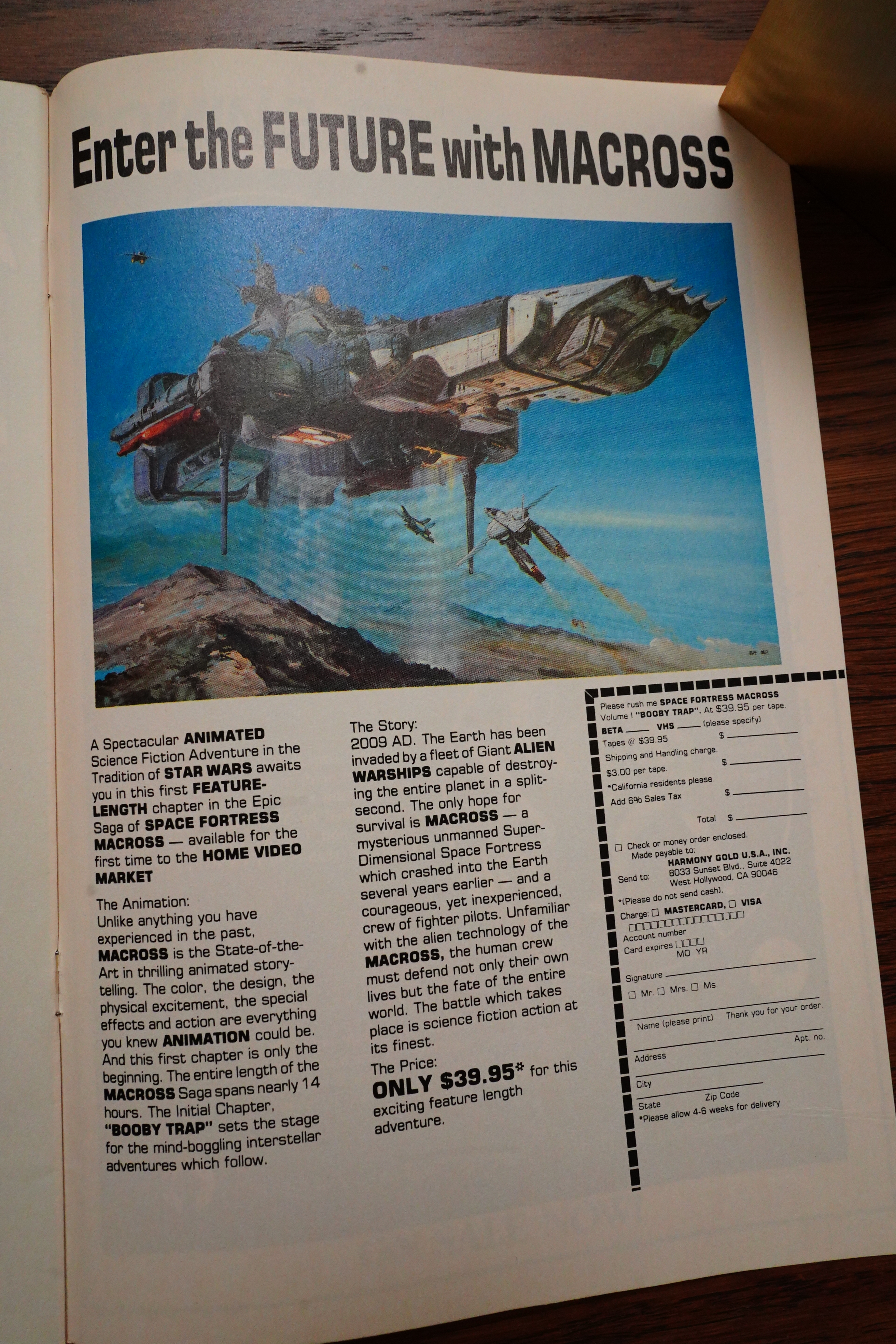
Wow, $40 for a VHS (or Beta) tape? That’s outrageous.
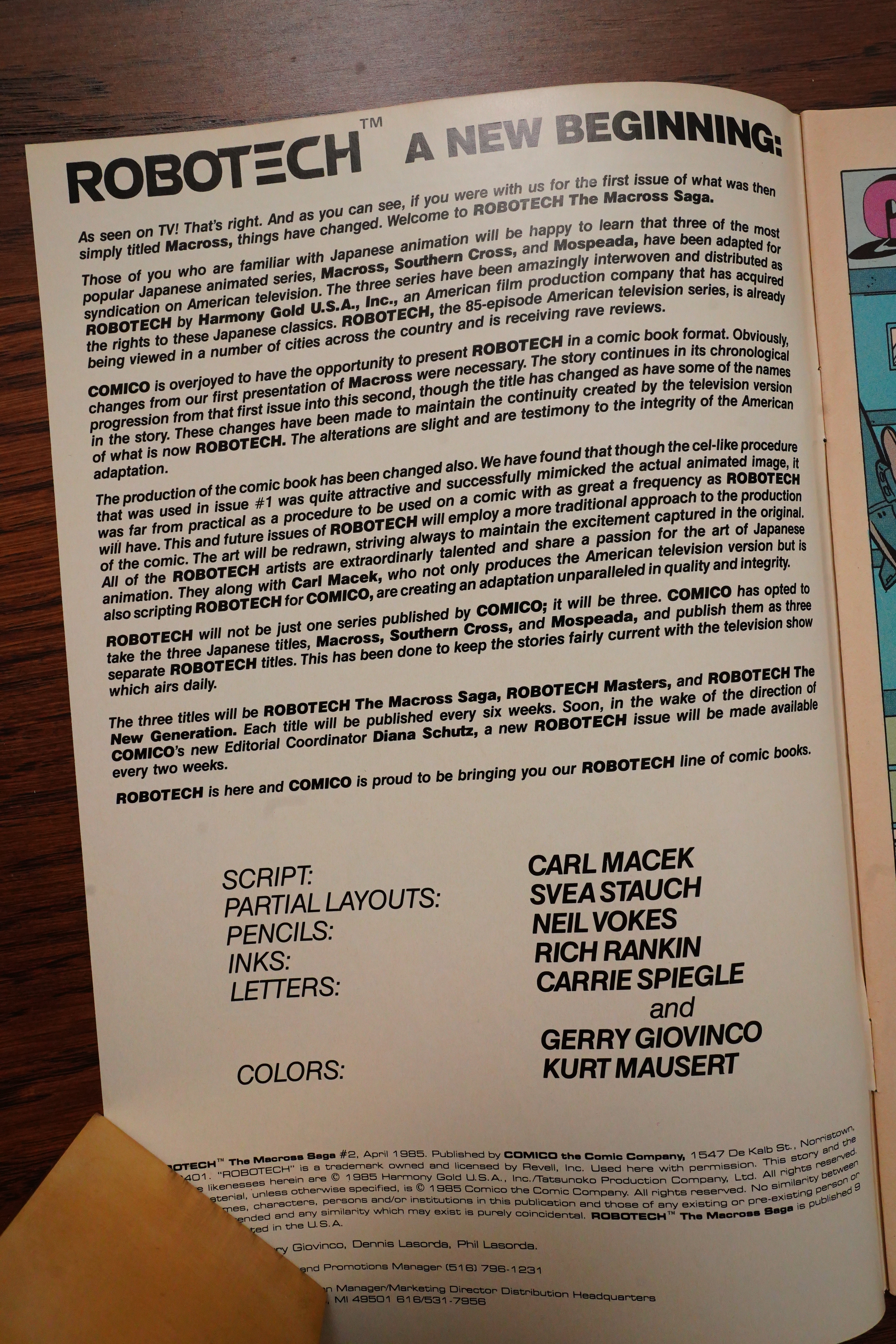
With the second issue, the series is renamed to Robotech: The Macross Saga, and there’s also an announcement of two companion series (which will cover the other two series that were spliced together with Macross for the US TV market). And each series will be released on a 90 day schedule, meaning fans would get a new book every two weeks.
Seems like a pretty good plan to me.
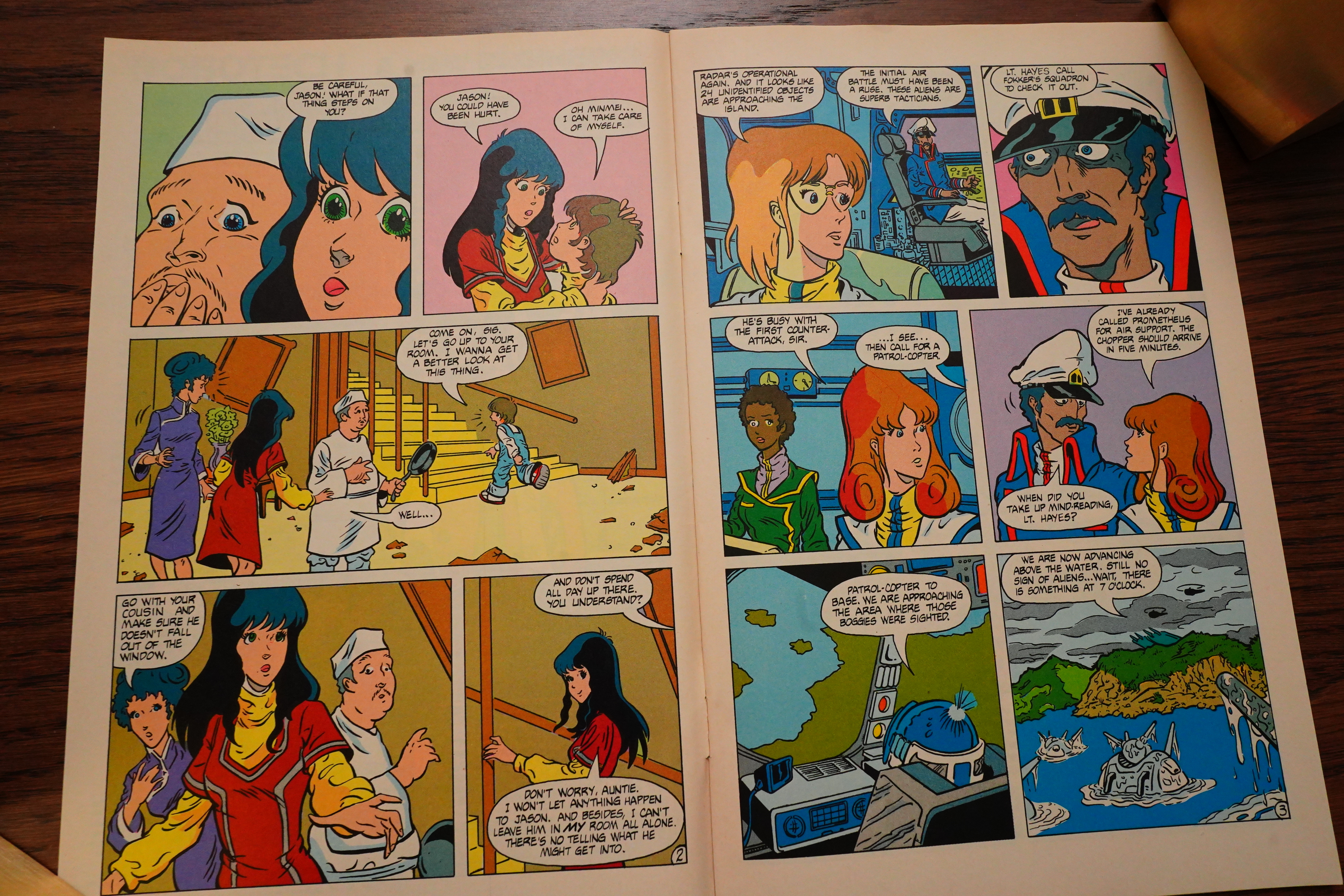
But the way they created the first issue was obviously untenable, so they move to normal flat colours in the second issue.
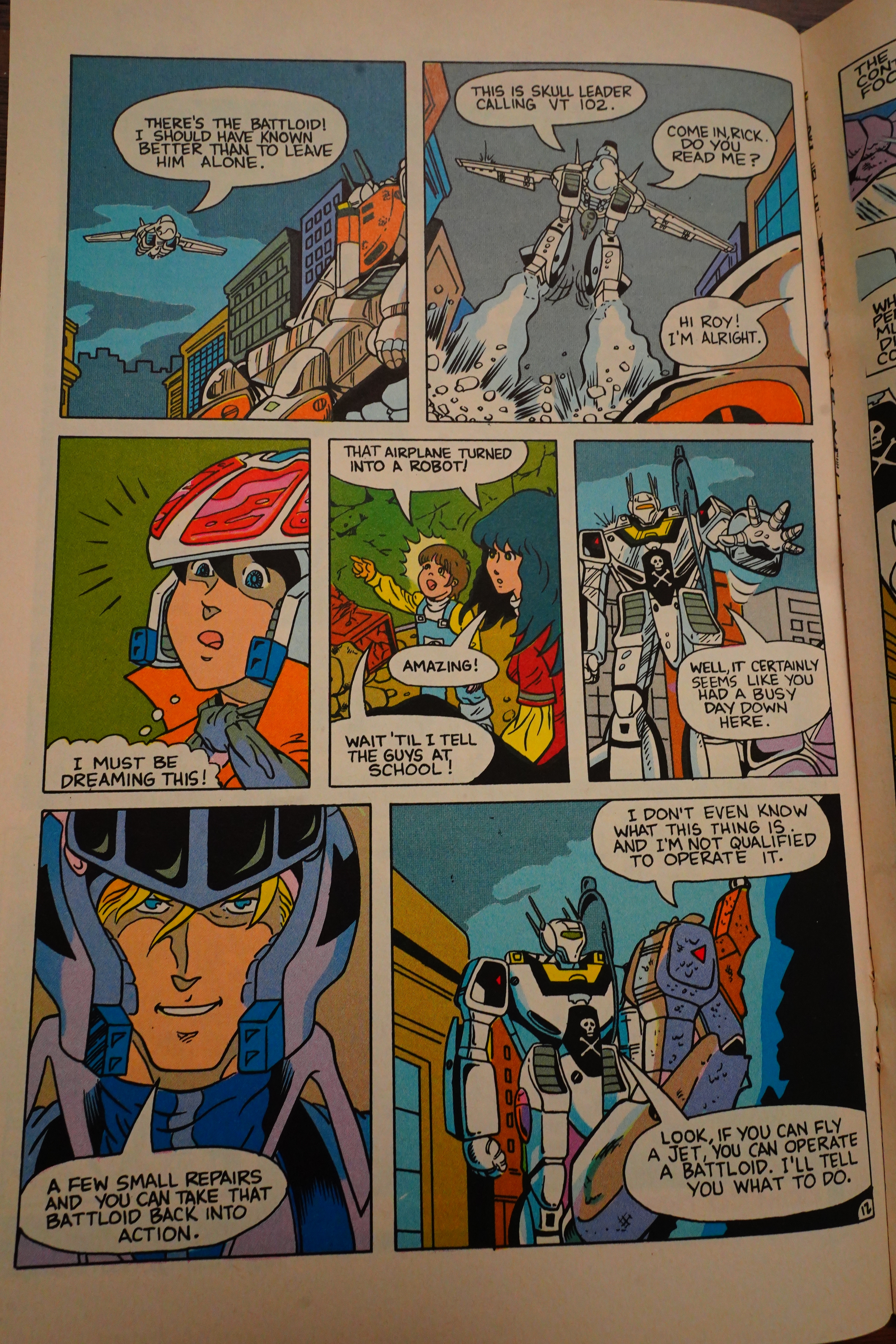
And the artwork gets a bit more Japanese-looking.
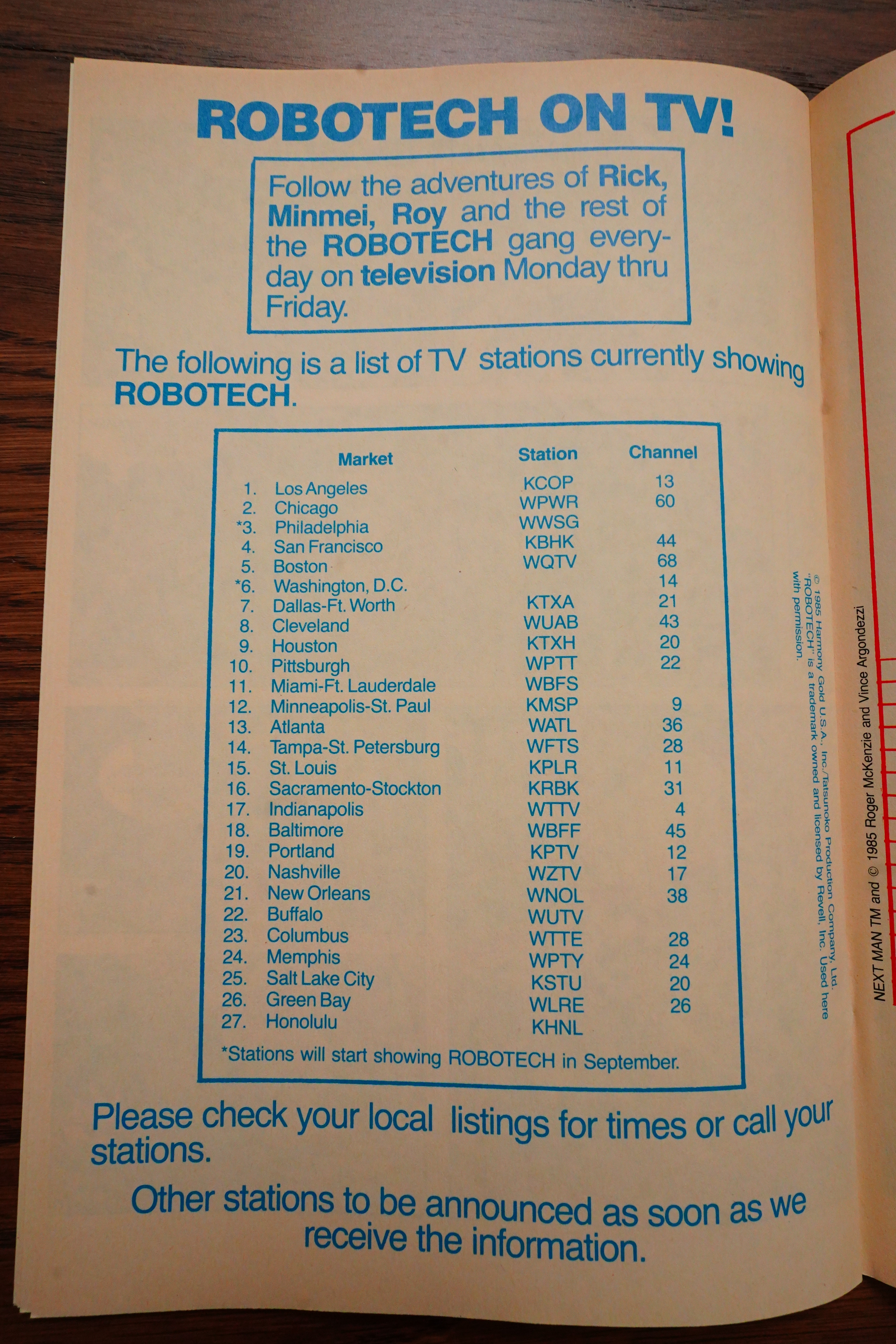
Heh. Important information indeed.
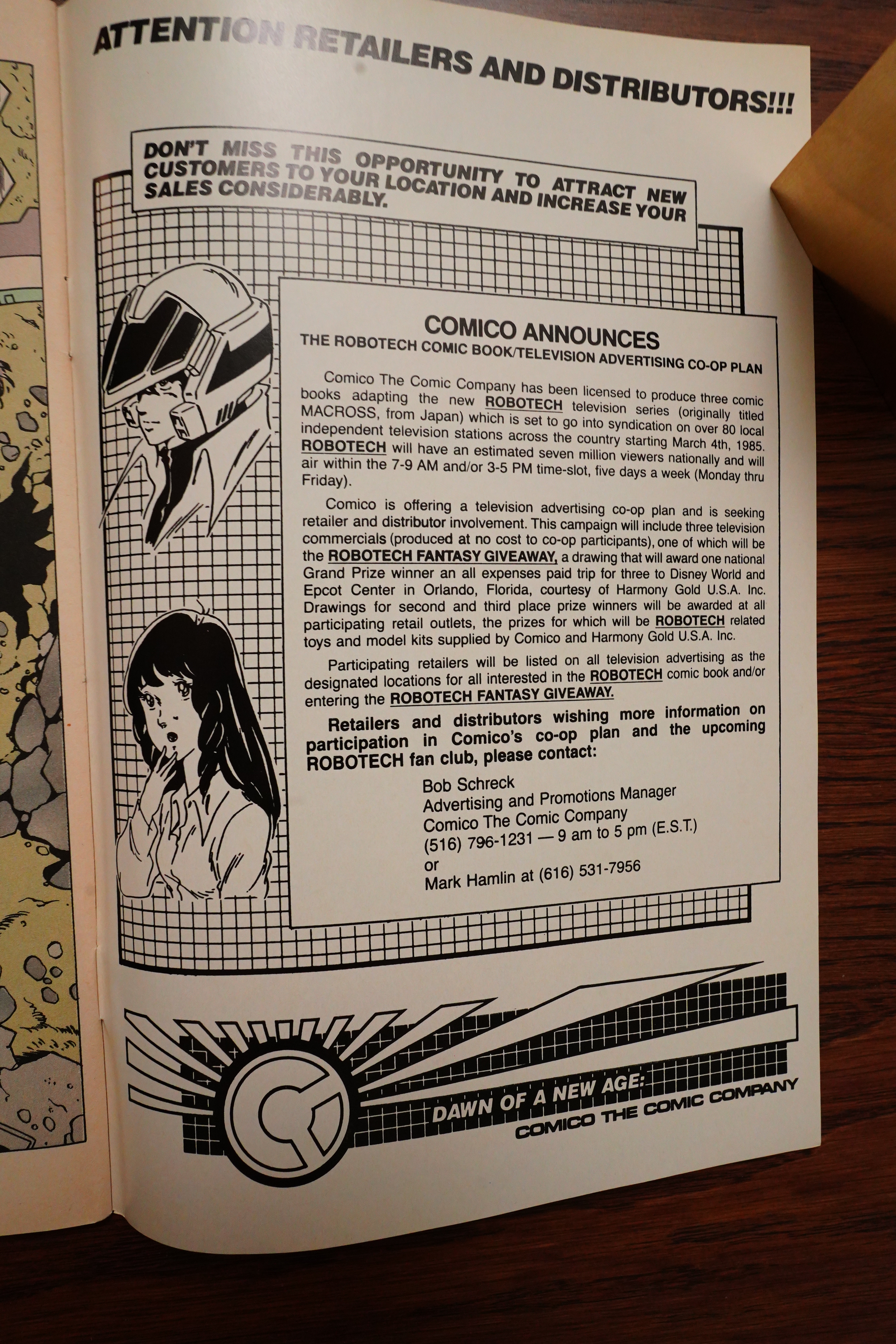
And there were also ads for the Comico comics shown on TV?
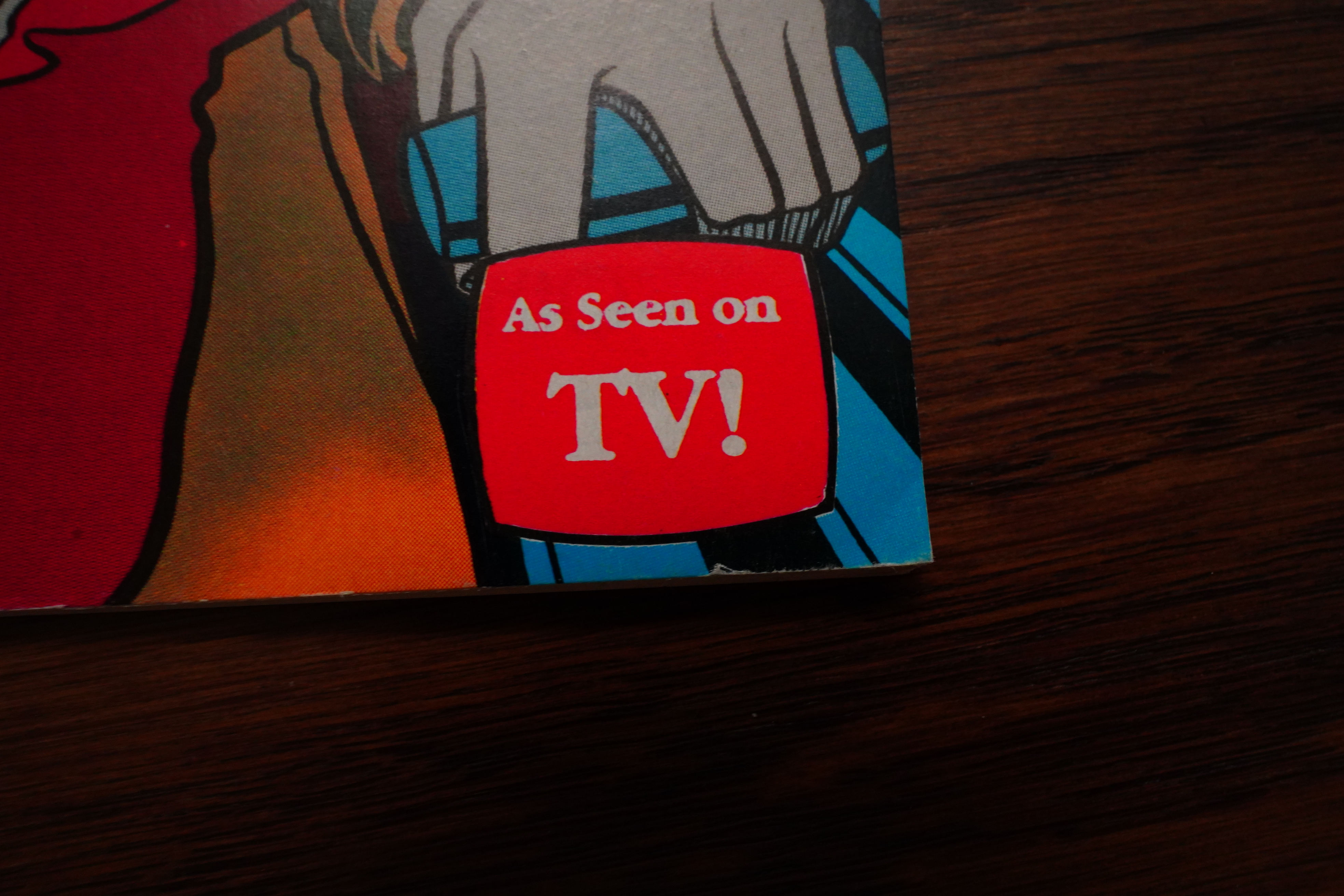
Heh. Classic.
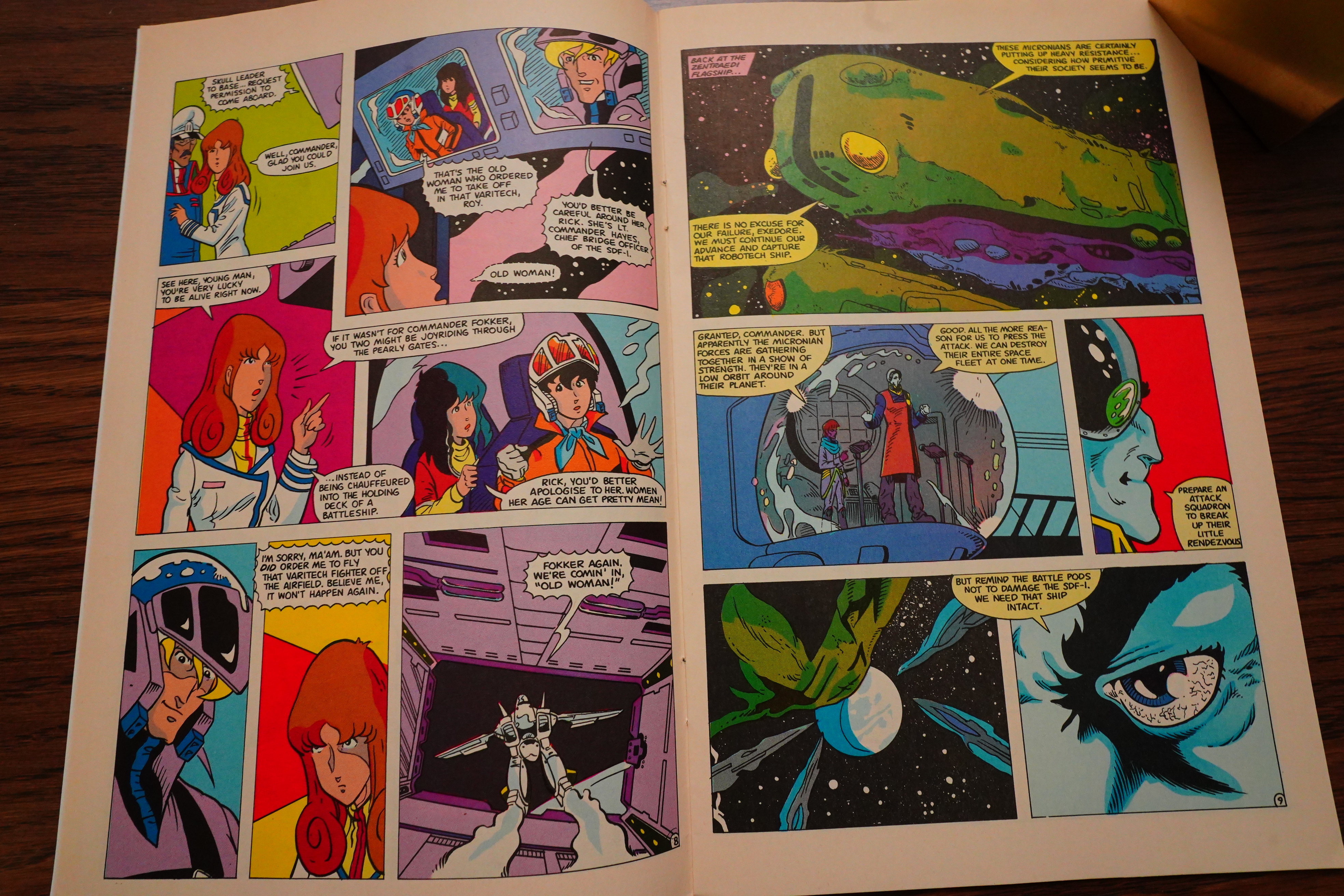
Oh, the plot — an alien ship (called SDF-1) has crashed on Earth, and other aliens want it back. Lots of shooting ensues.
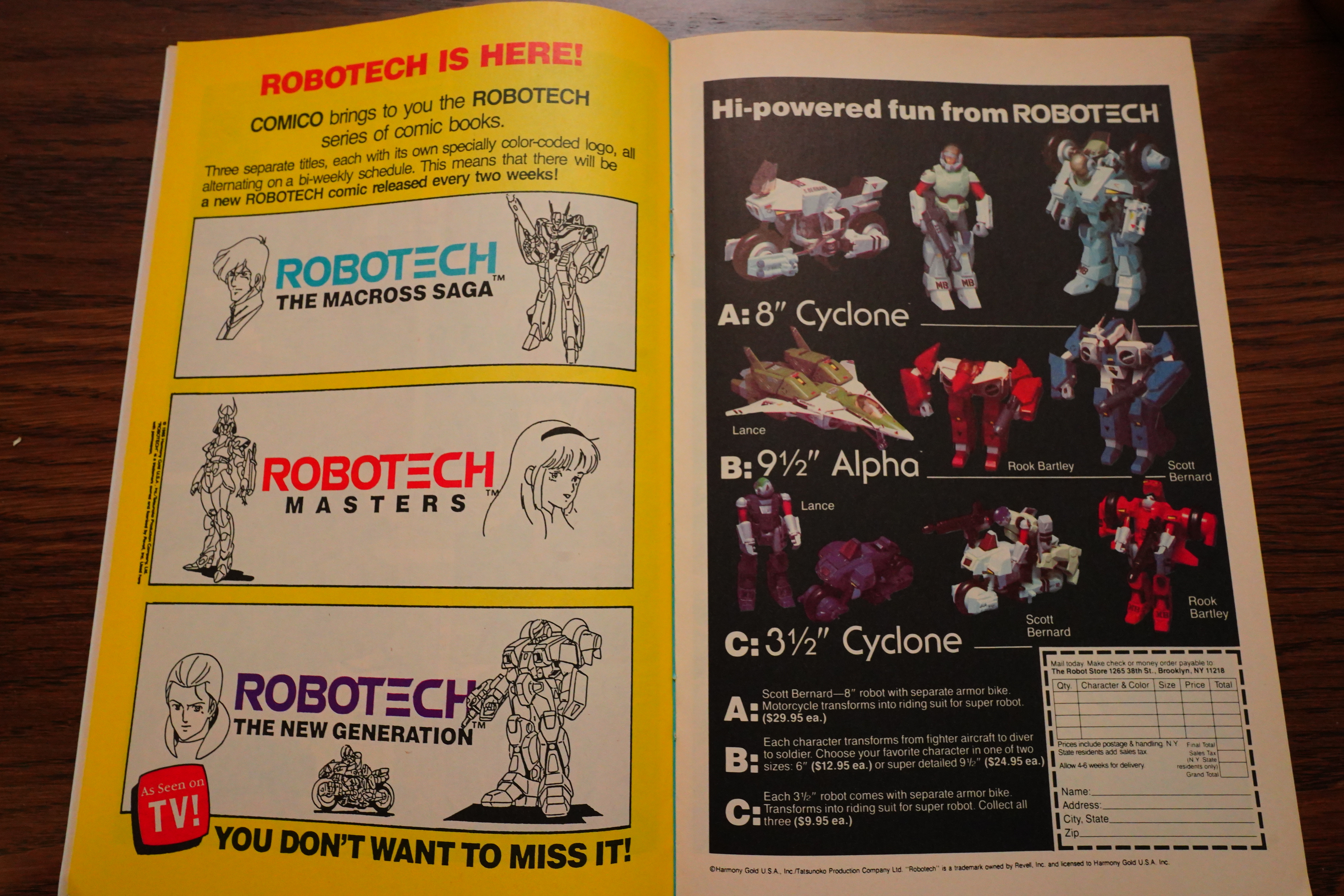
Many American cartoons around this time started off as toys, and the cartoons were there mainly to sell the toys. I don’t think that was the case with Macross? But there were lots of toys, anyway.
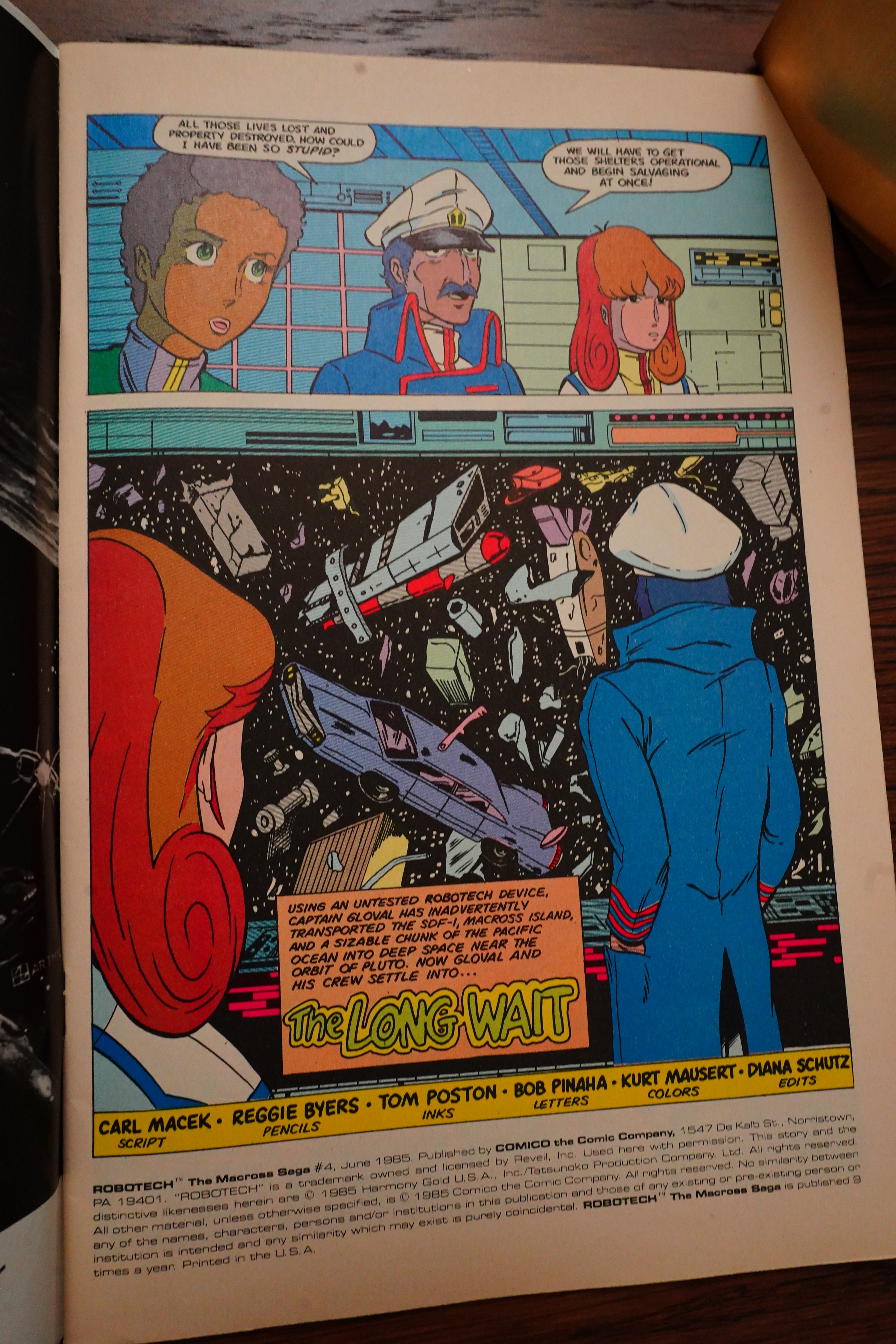
I think each of the four first issues has different art teams. With a 90 day production schedule, you’d think they’d be able to keep people aboard, but I guess it might take some time to shake things out. They had to scramble to find art teams for three series at once…
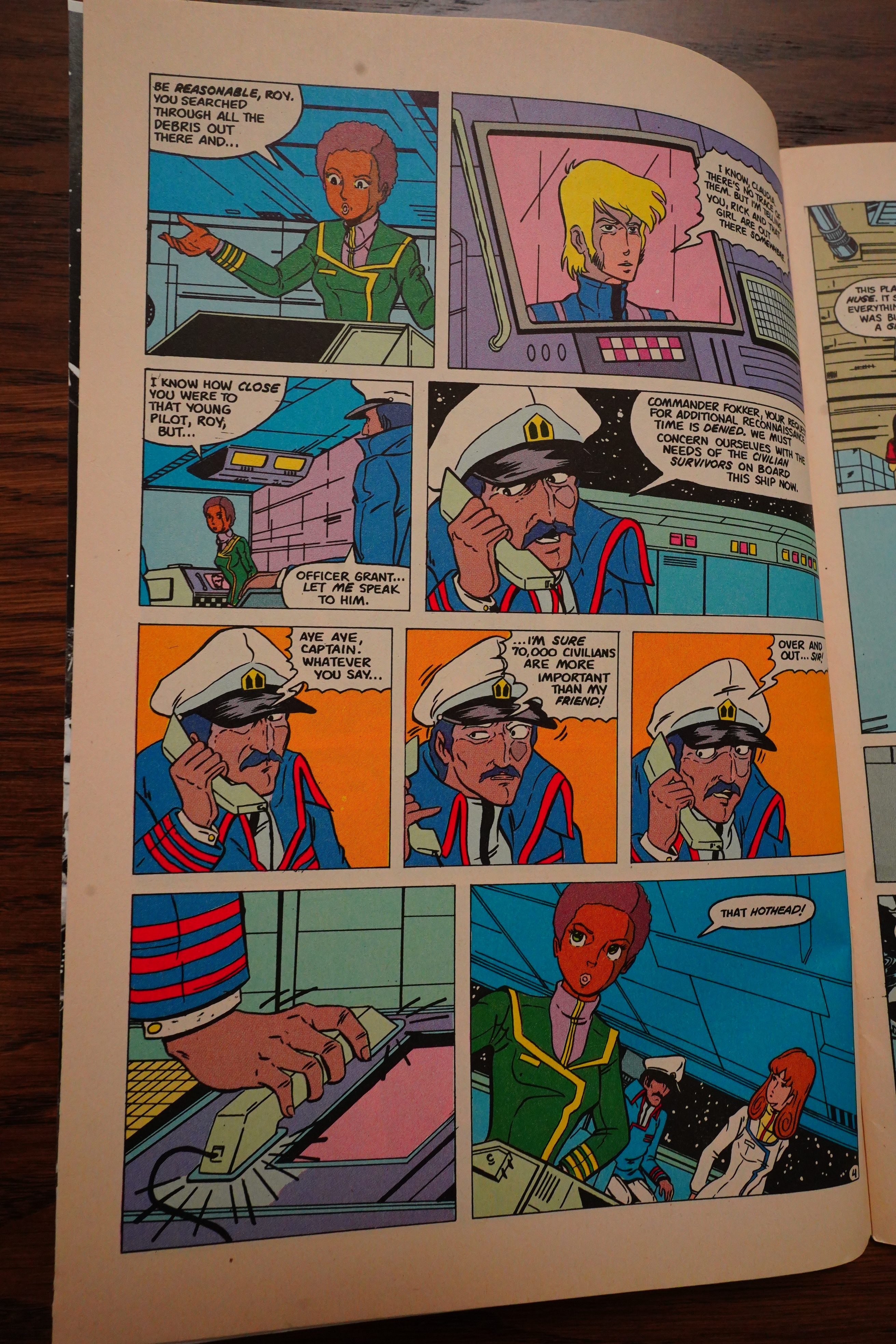
Yes… 10K people sound more important…?
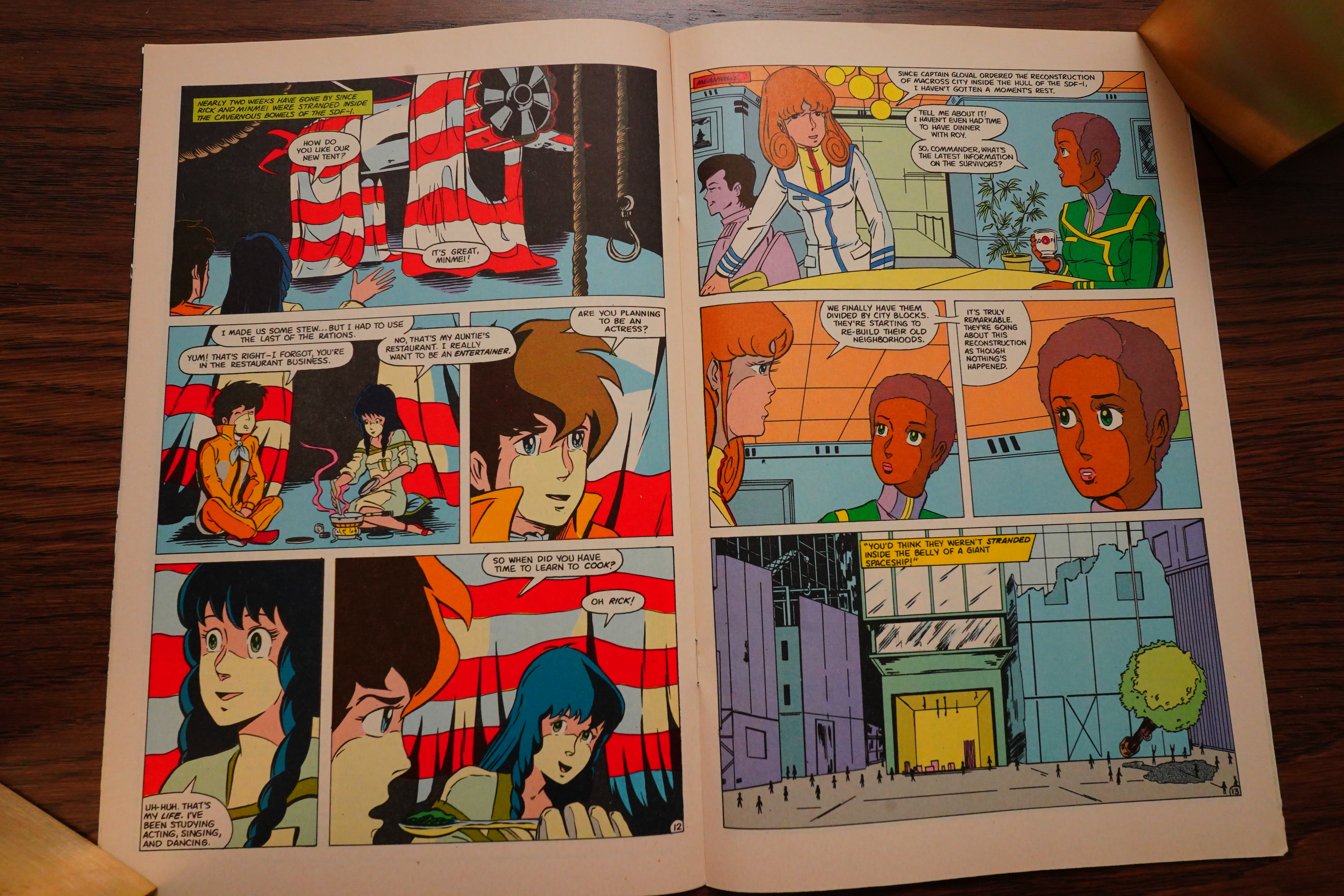
This art team does better, but it’s still not quite on model…
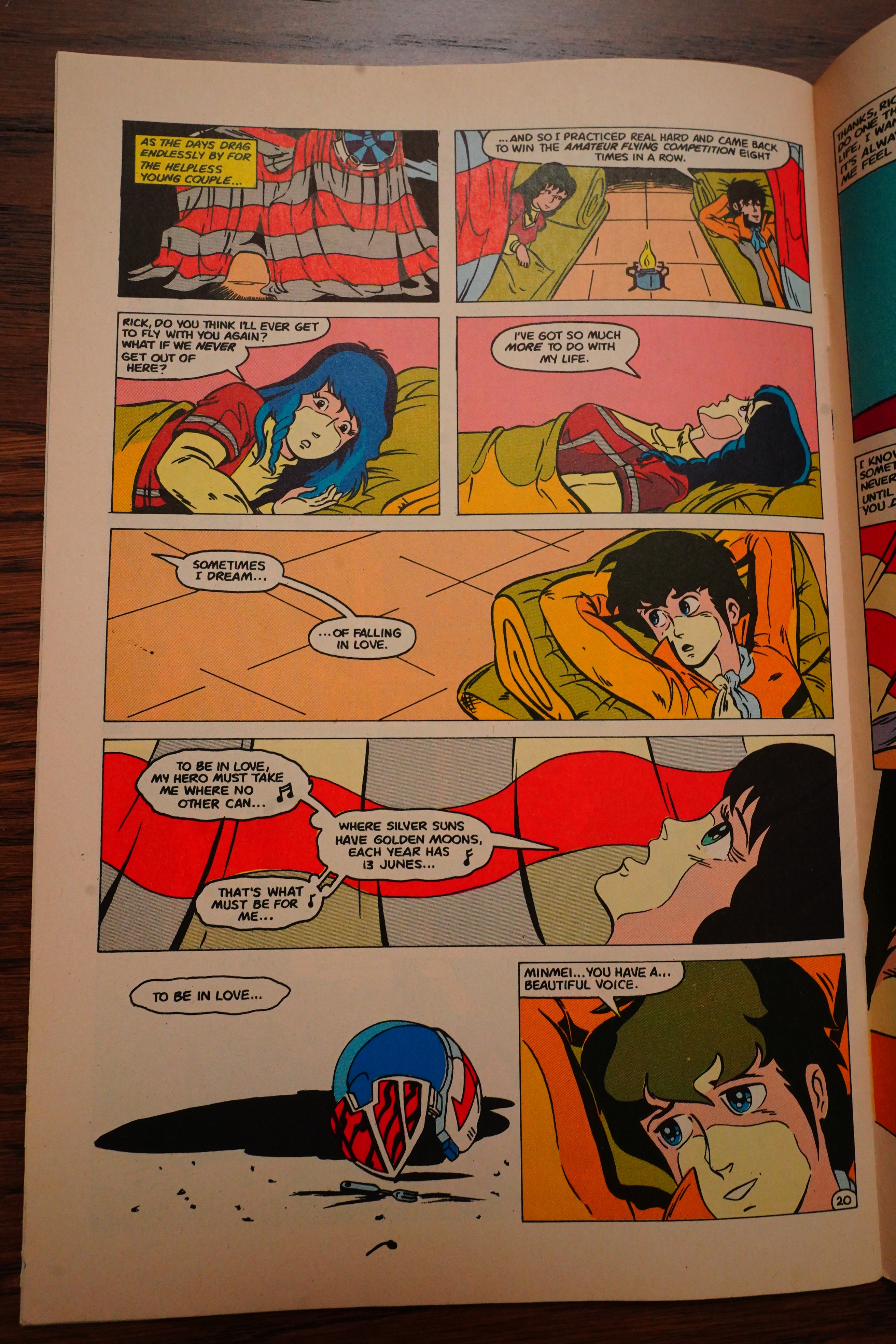
Ah, yes, I remember this bit. Oh Rick! Oh Minmei!
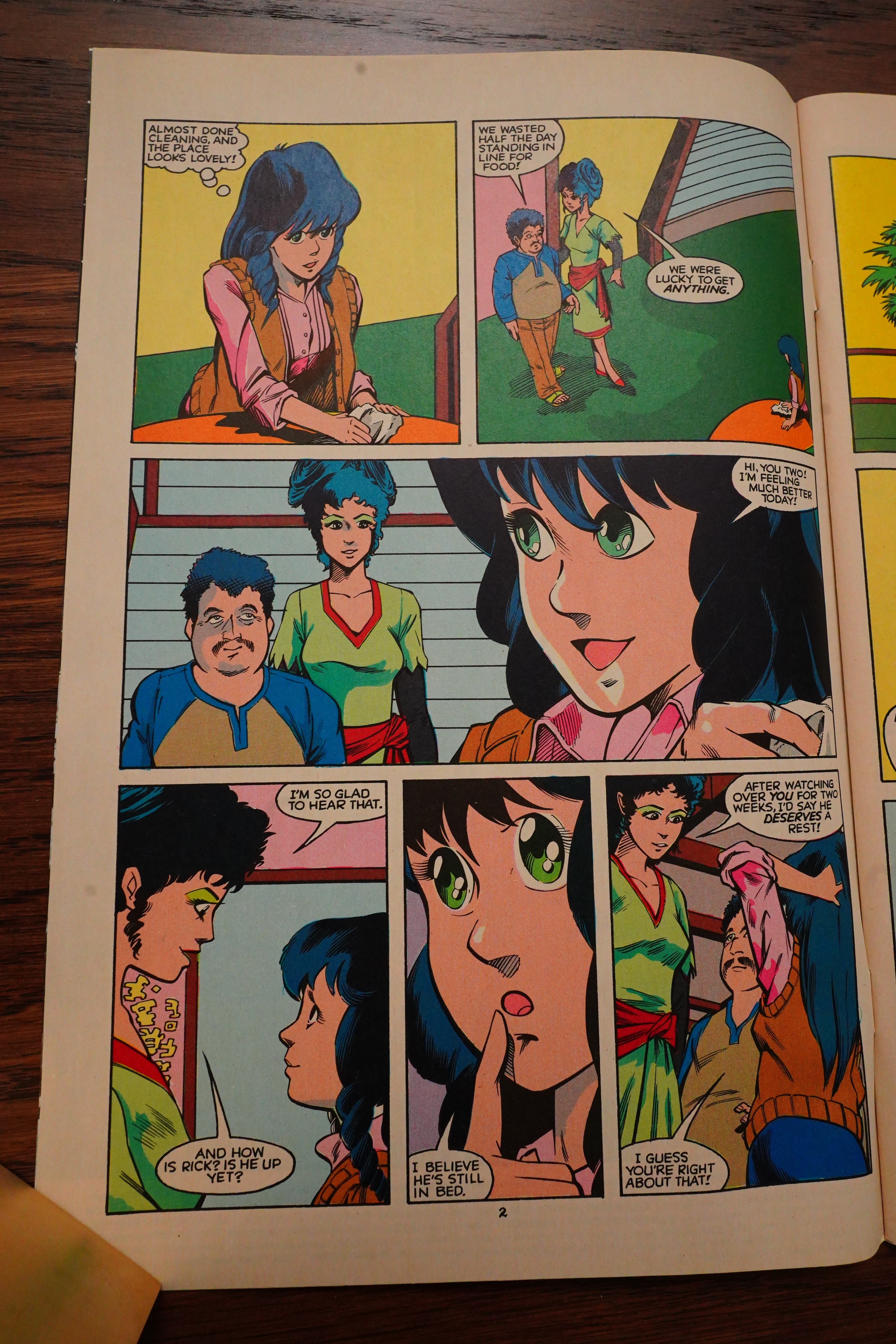
This team overshoots completely and lands somewhere in Margaret Keane land.
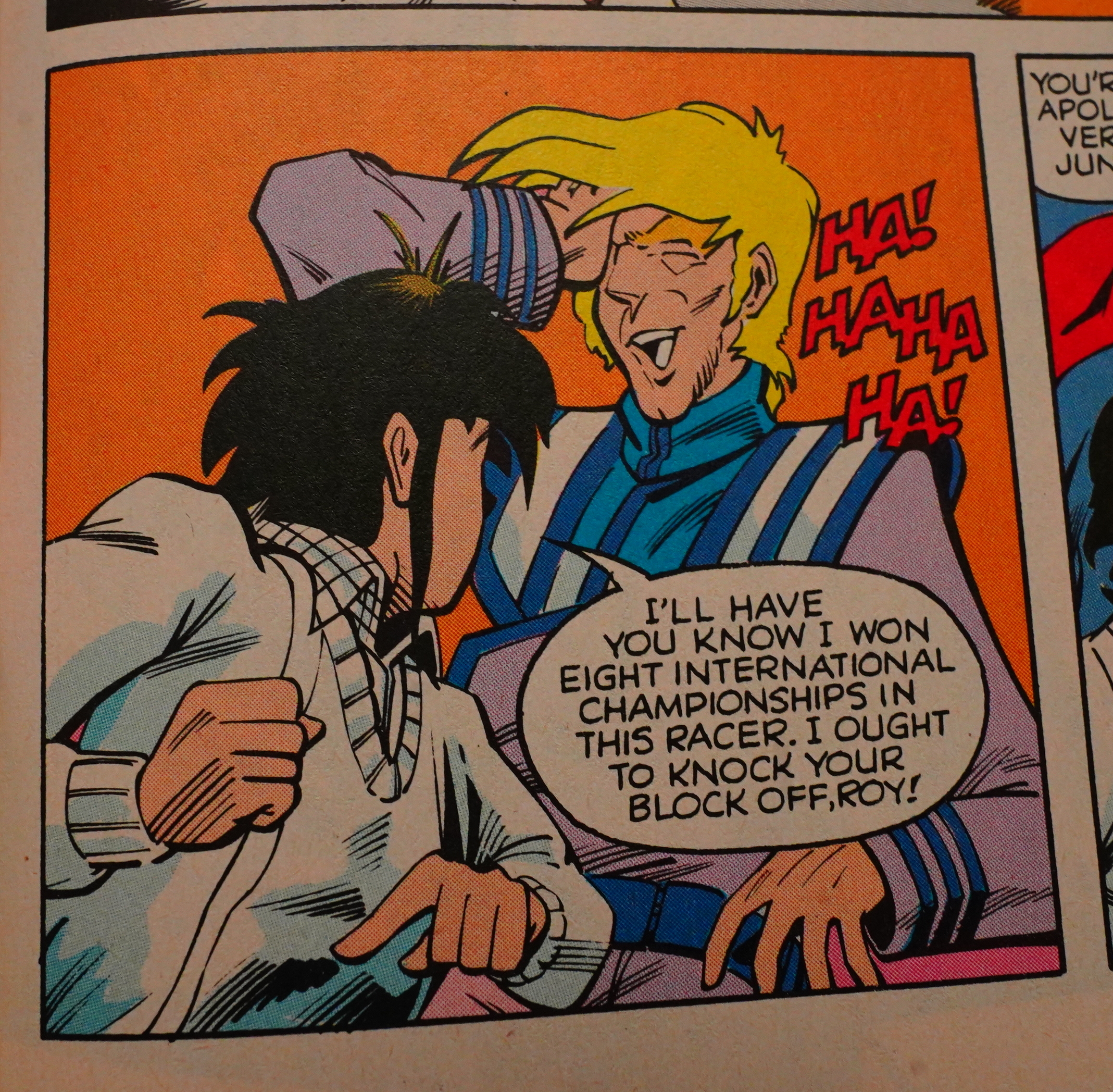
But it’s wildly inconsistent.
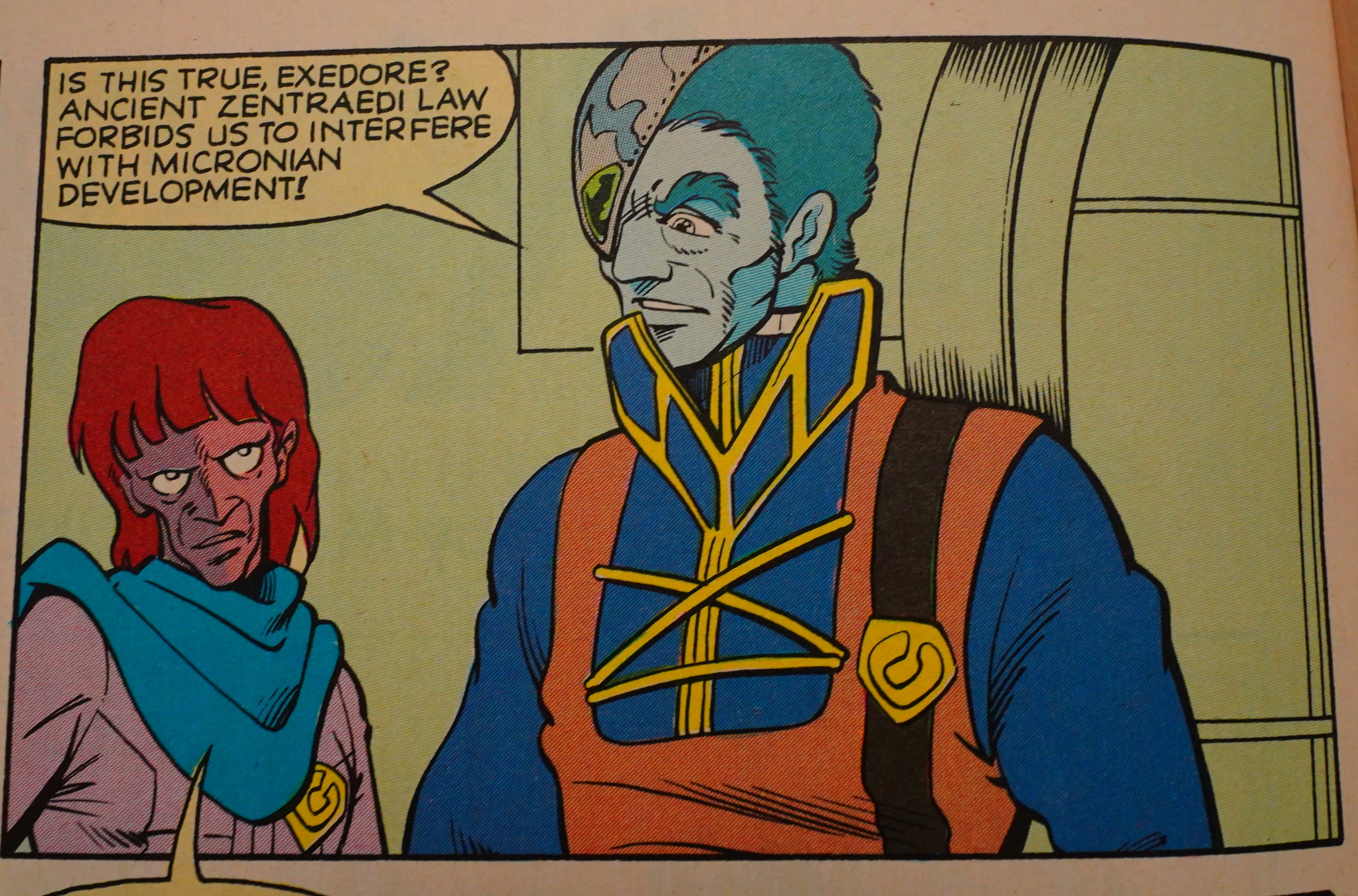
There’s been so many TV series where we’ve been told that things are building up to something more — that there’s indeed a well-developed world we’re in, and that we’re slowly learning about. And then it turns out that the showrunners had absolutely no idea, and were just making things up episode by episode. “They have a plan” my ass.
With Robotech, I don’t actually remember whether things eventually made sense, but we get a constant drip of these rather incomprehensible nudges — the aliens (who call Earthlings for “Micronesians” I mean “Micronians”) apparently have a lot of stuff going on beyond waging space war… But is it going to pay off, or is this more of that “They have a plan” stuff? We’ll see, I guess.
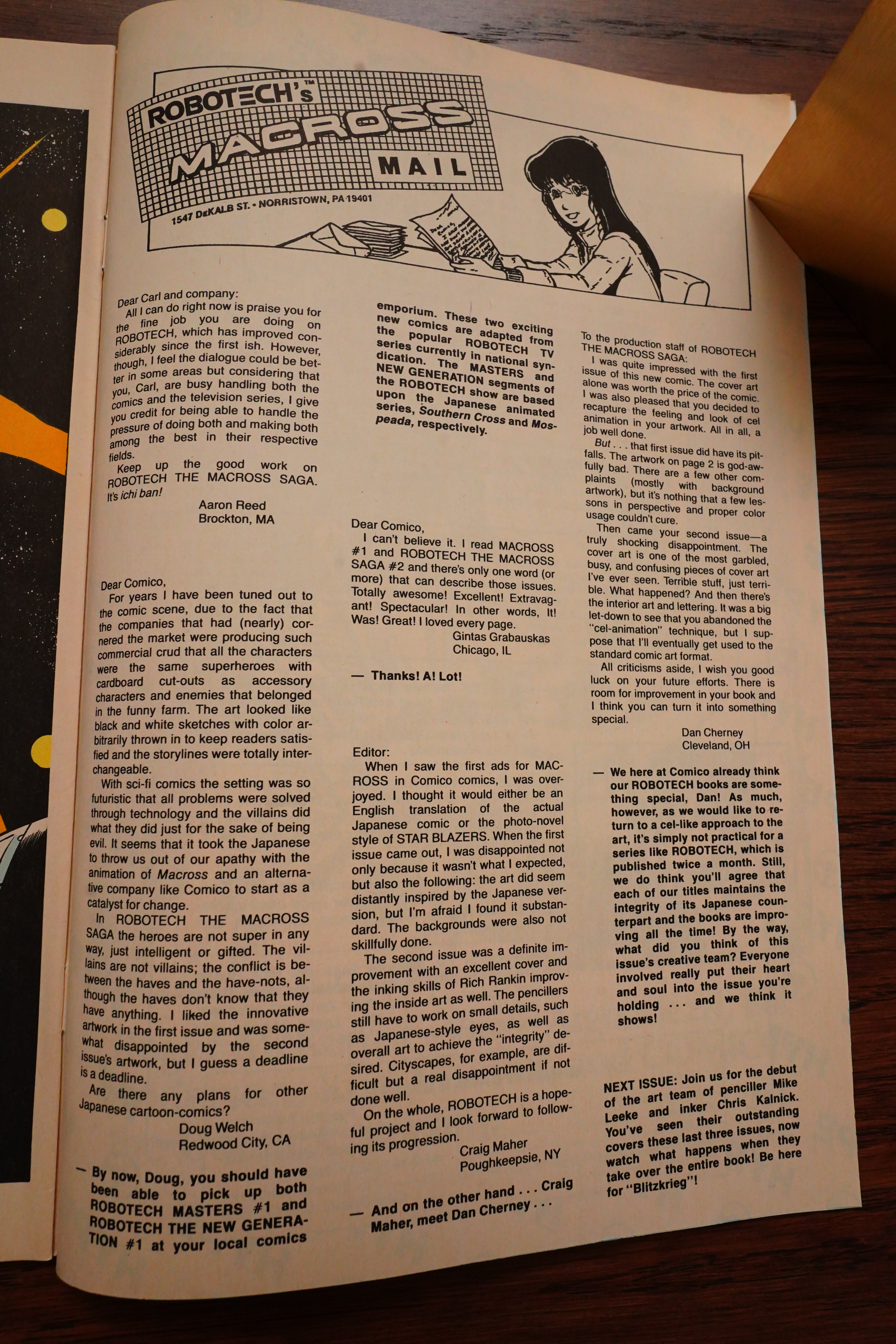
Looks like the readers like the series, and so do I, really. Each issue seems to be adapting one episode — and they were like 20 minutes long, right? So the comics don’t feel crammed with stuff, but they move along nicely. No fillers.
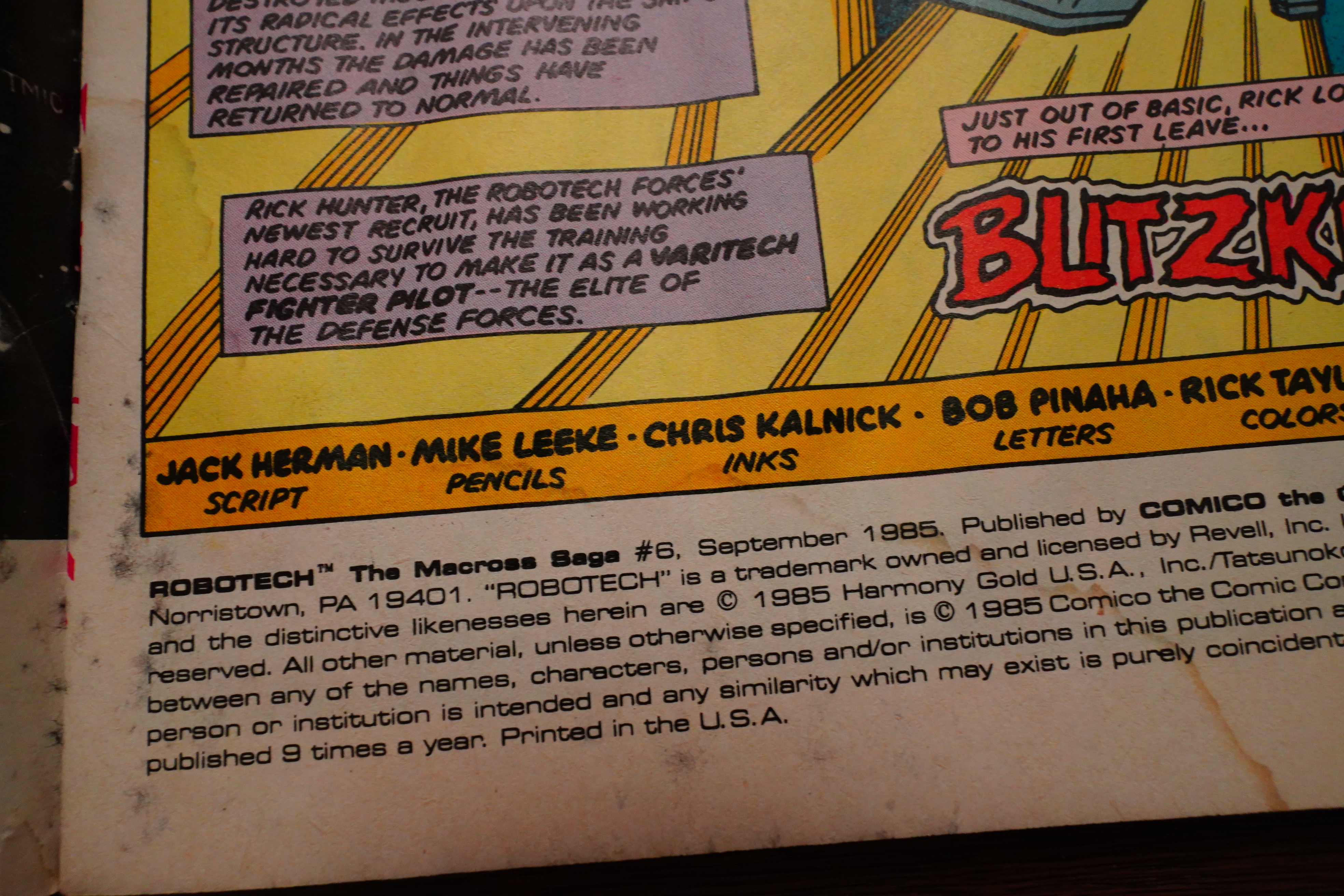
Finally the team of Mike Leeke and Chris Kalnick takes over the artwork, and things get more regular.
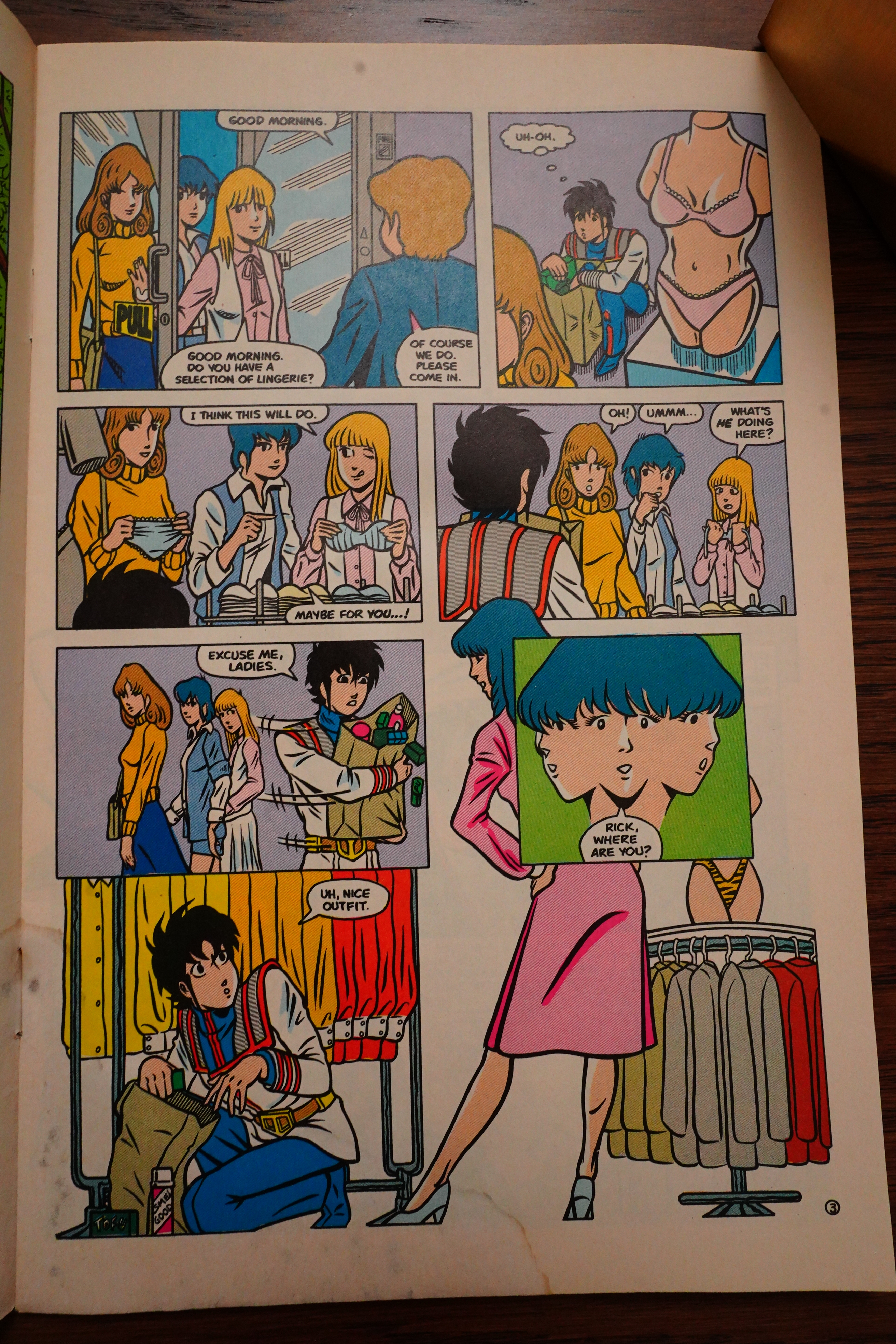
Their first issue looks pretty stark, though. Very bold lines.
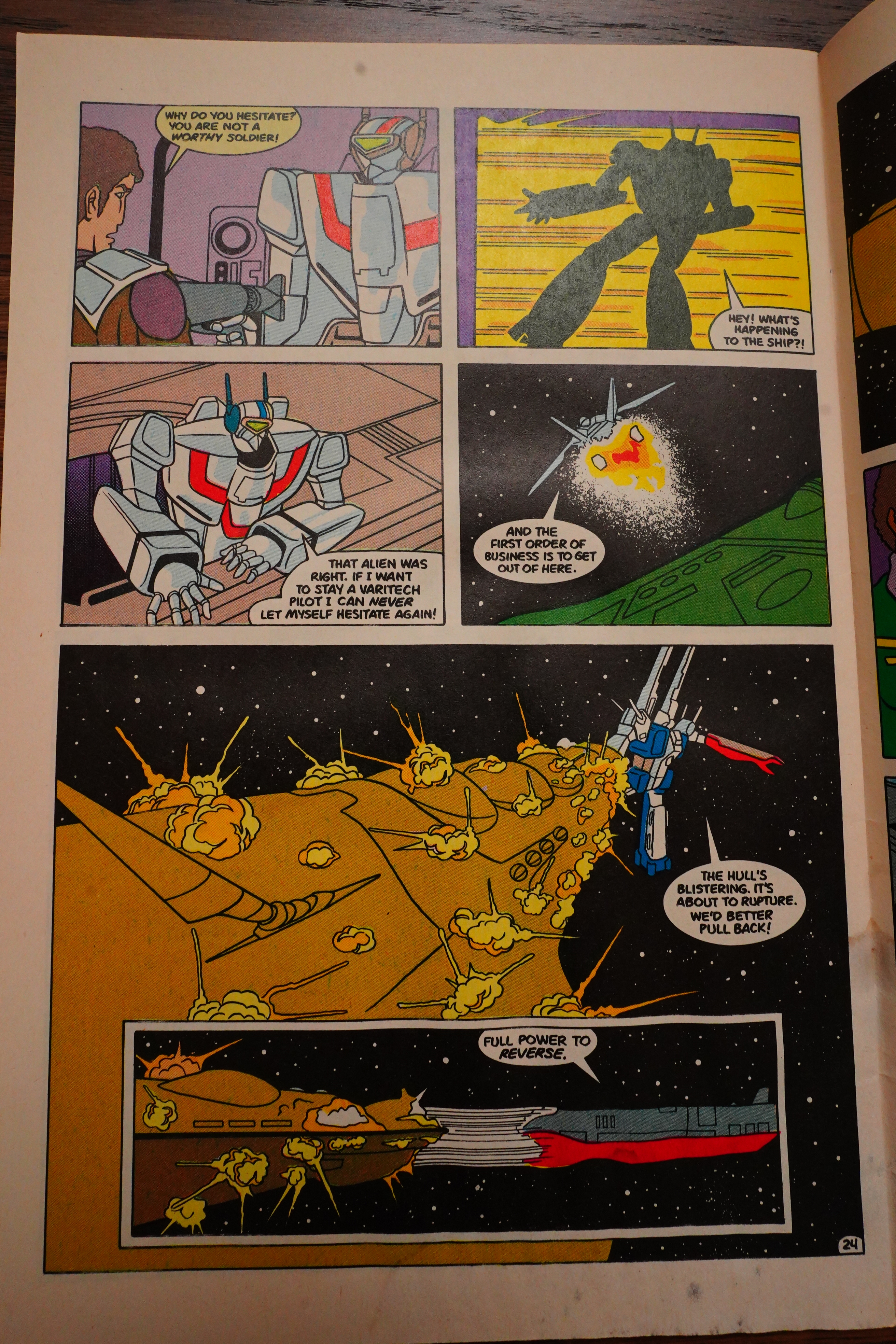
And as with earlier artists, they also have problems making the space battles look kick-ass — I think on the TV, their battles were pretty full on, right?
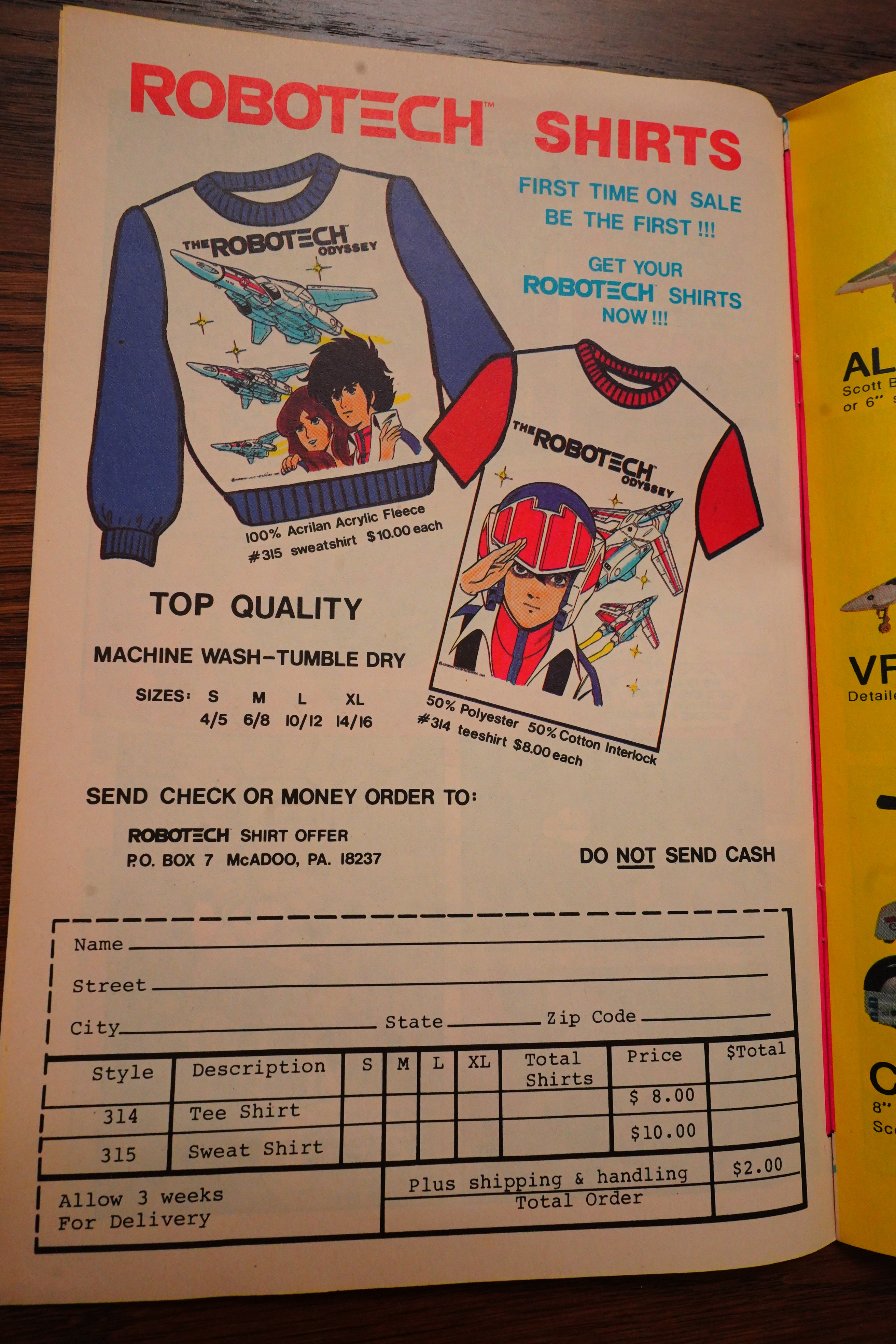
Oooh! The kids with these clothes were sure to be the most popular at school!
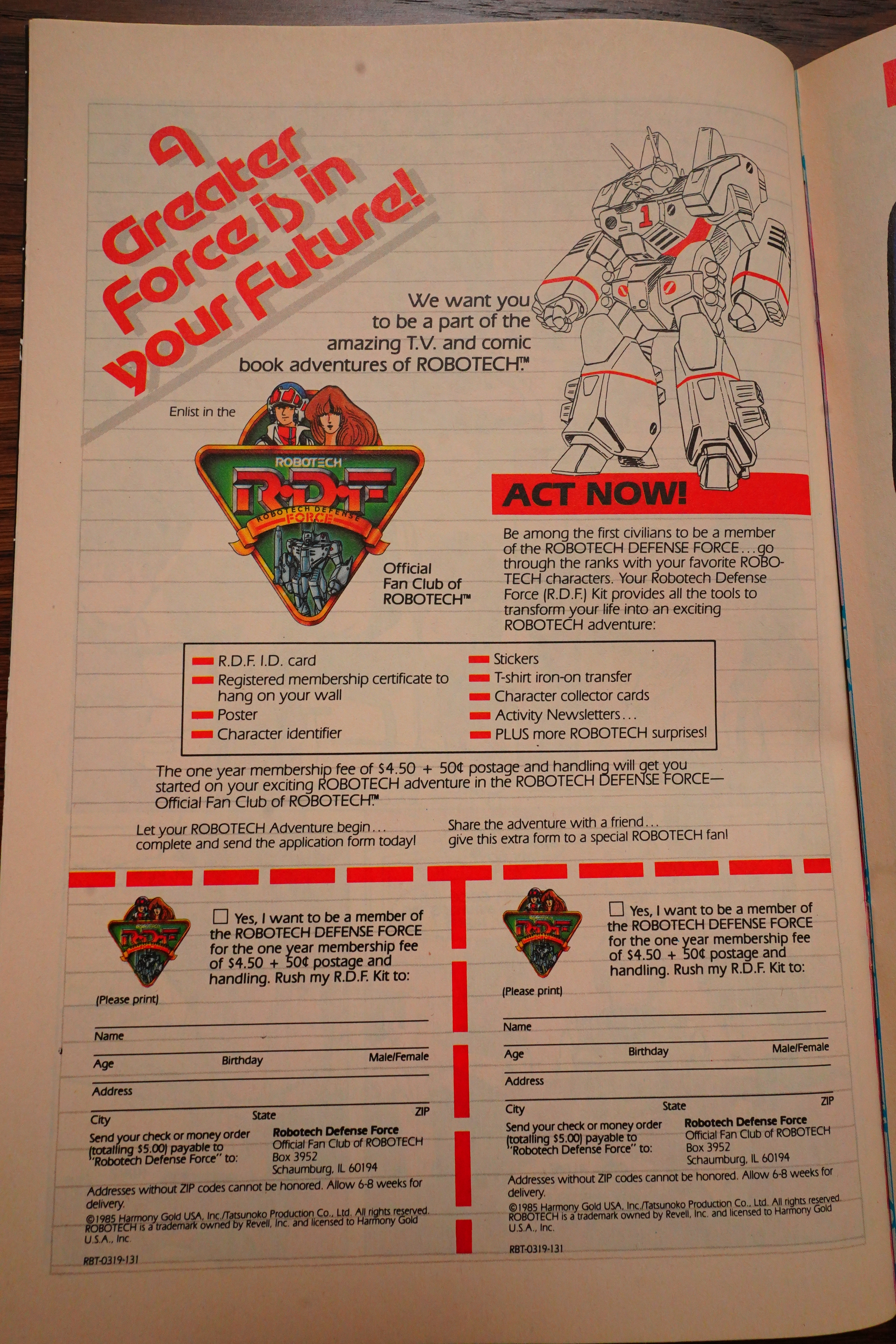
Especially combined with a real R.D.F. ID card!
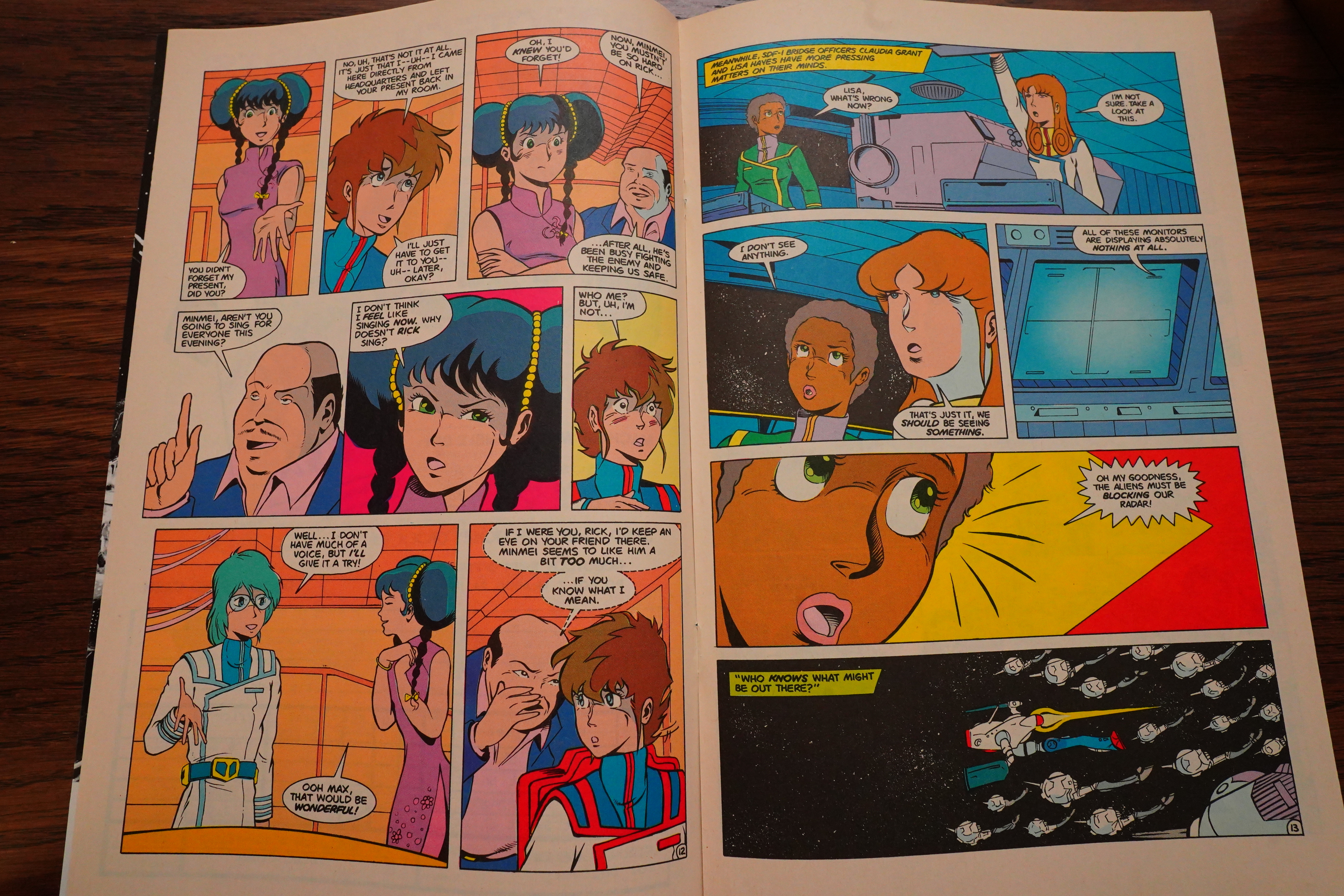
The art quickly settles down, and many of the issues also settle down into a routine: We get the soap opera stuff between Rick and Minmei for half the issue, and then space battles for the other half. It works well.
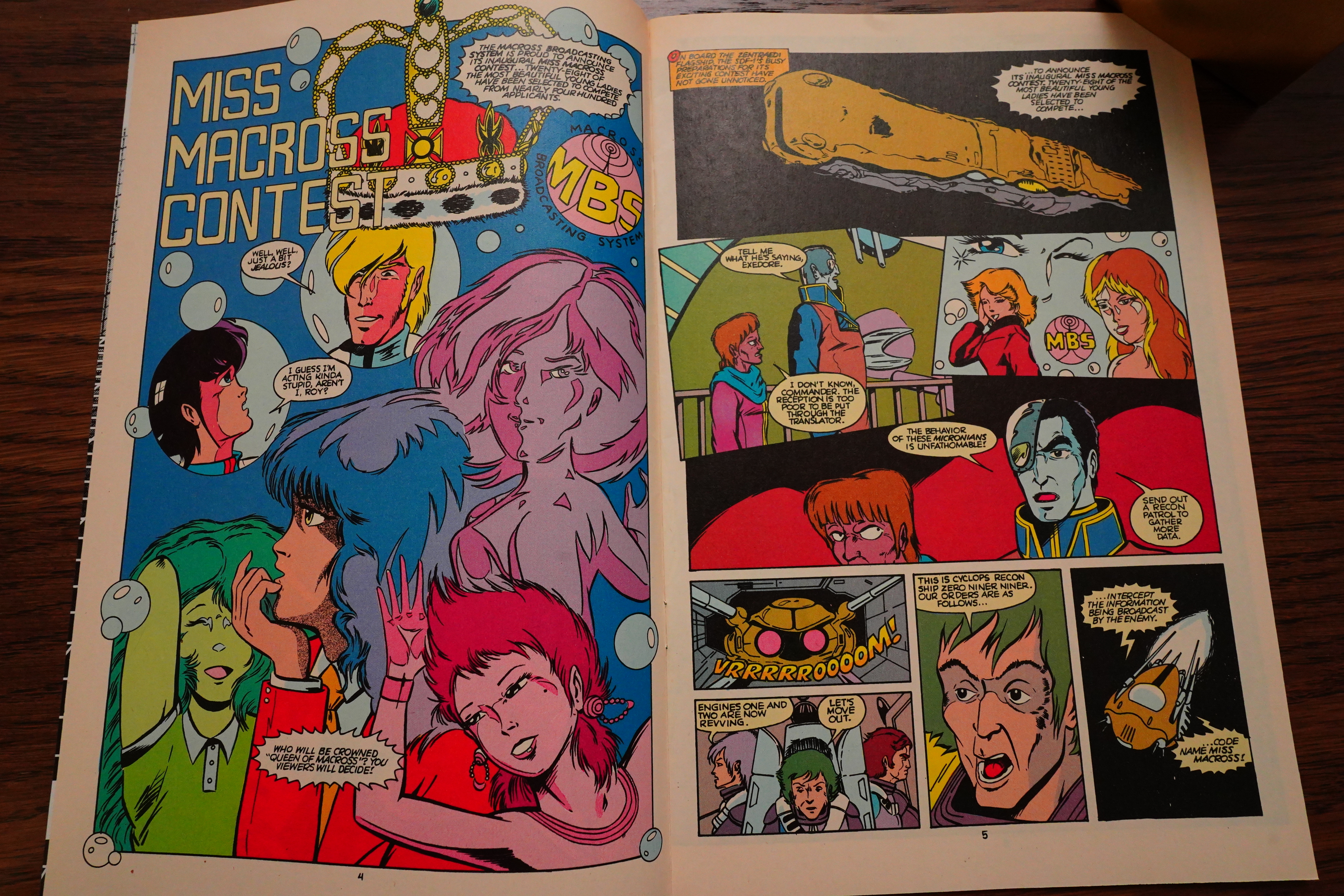
The humans’ behaviour is pretty unfathomable, though — they stage a beauty pageant on the space ship? In the middle of a war?
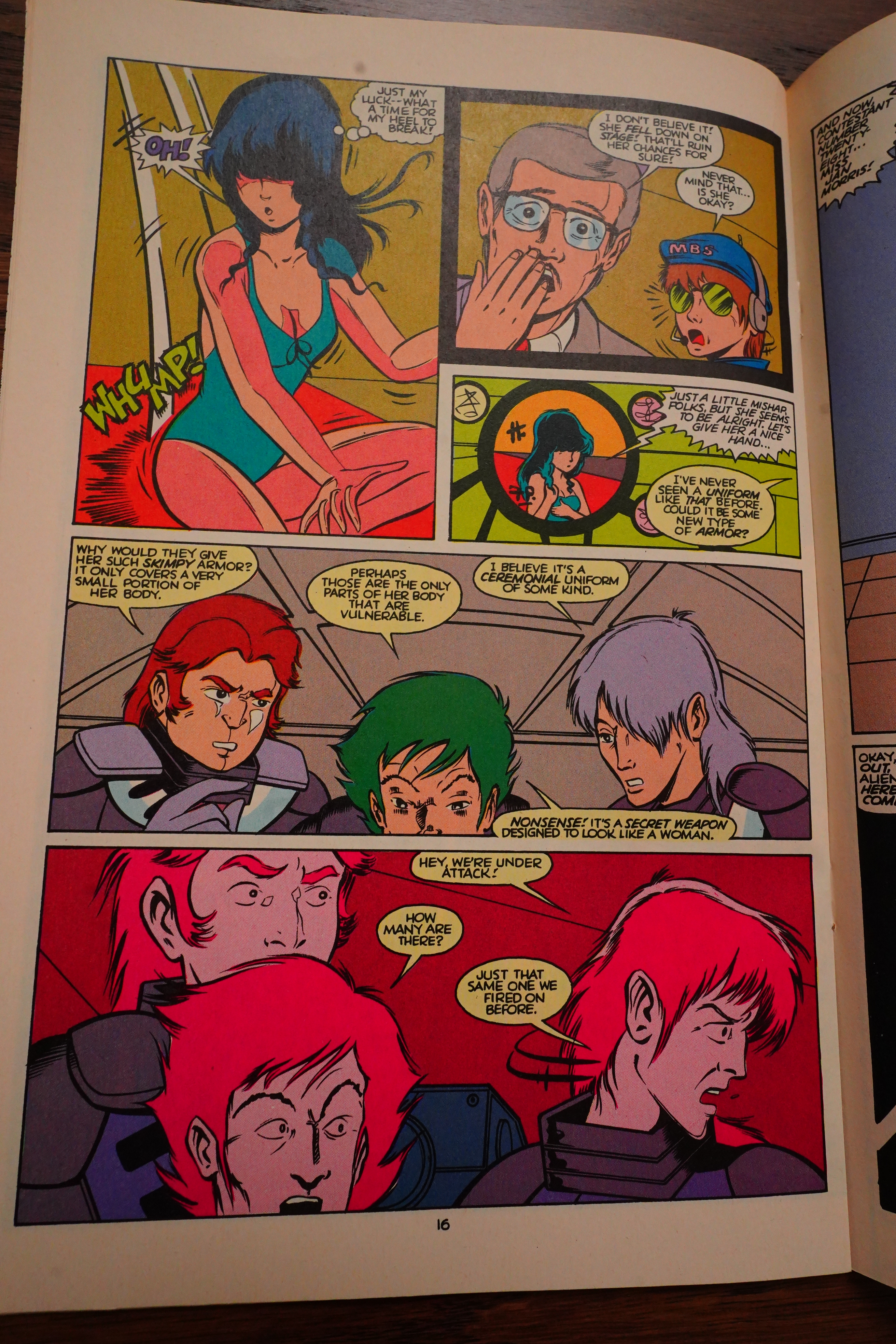
But it actually works well as a plot element — the aliens are so confused (and possibly horny) that this alters everything.
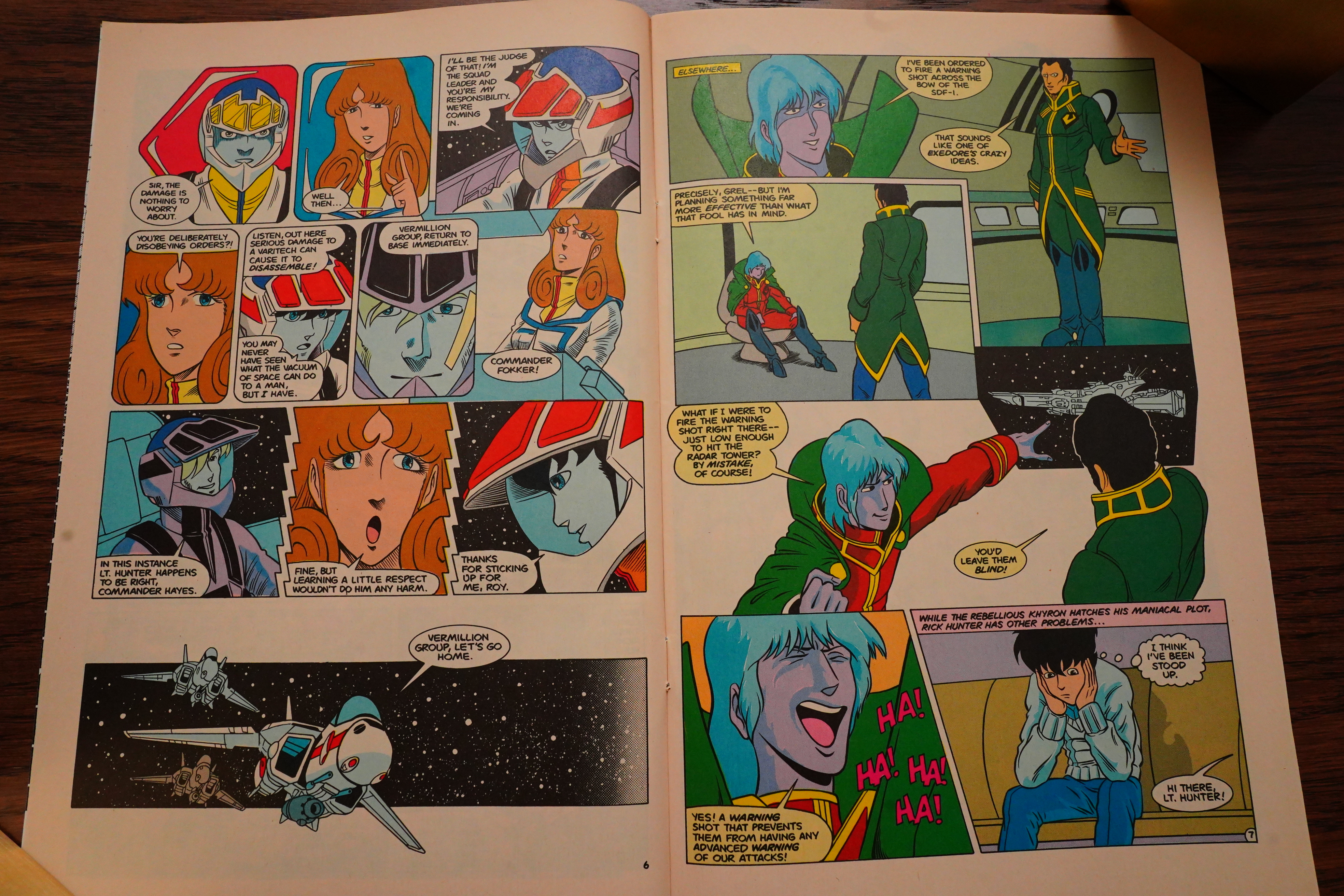
So much drama and so much plotting… I mean, this is an animated series for children, and the adaptation is too, but it’s got a pretty good flow.
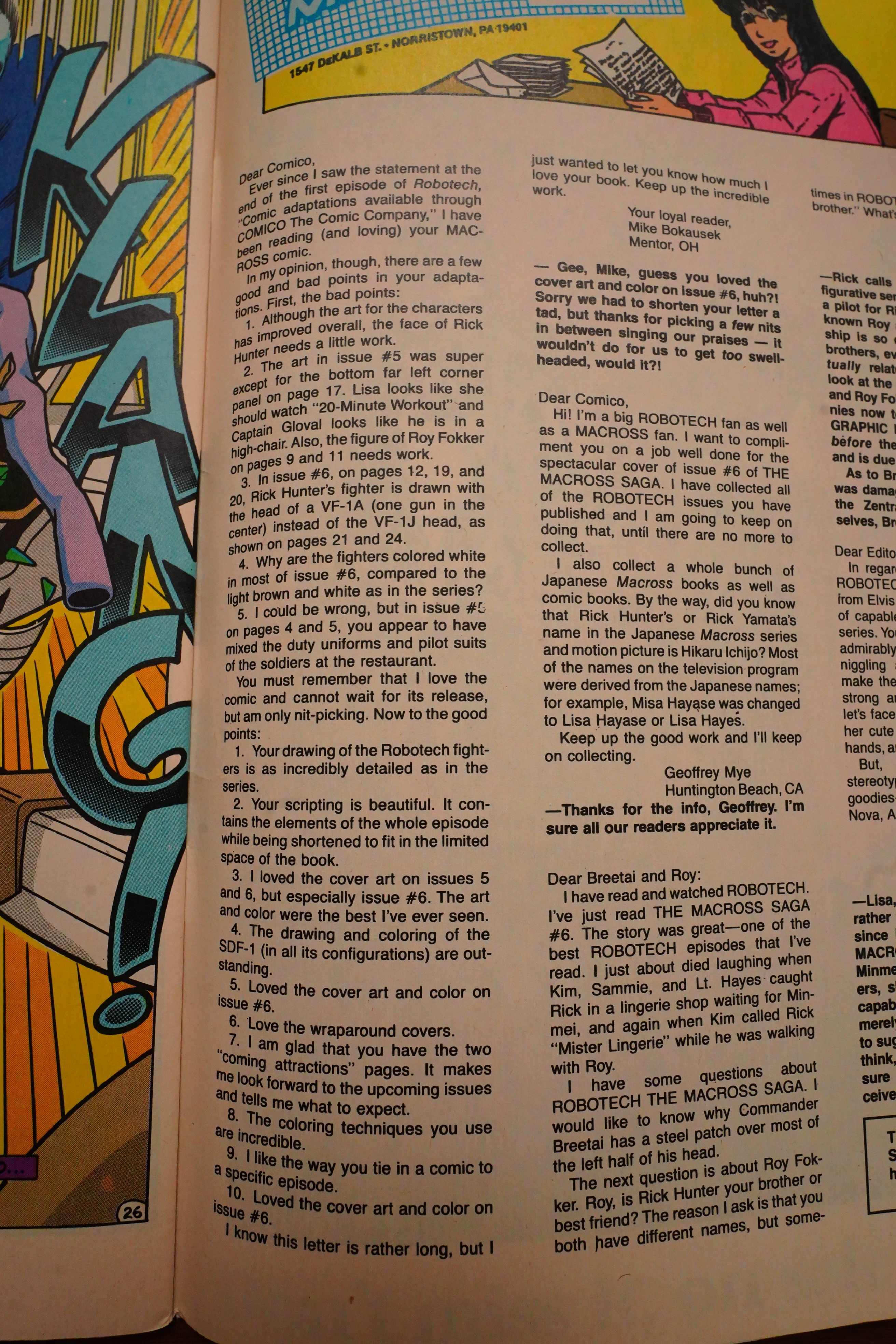
Nitpicky readers, man!
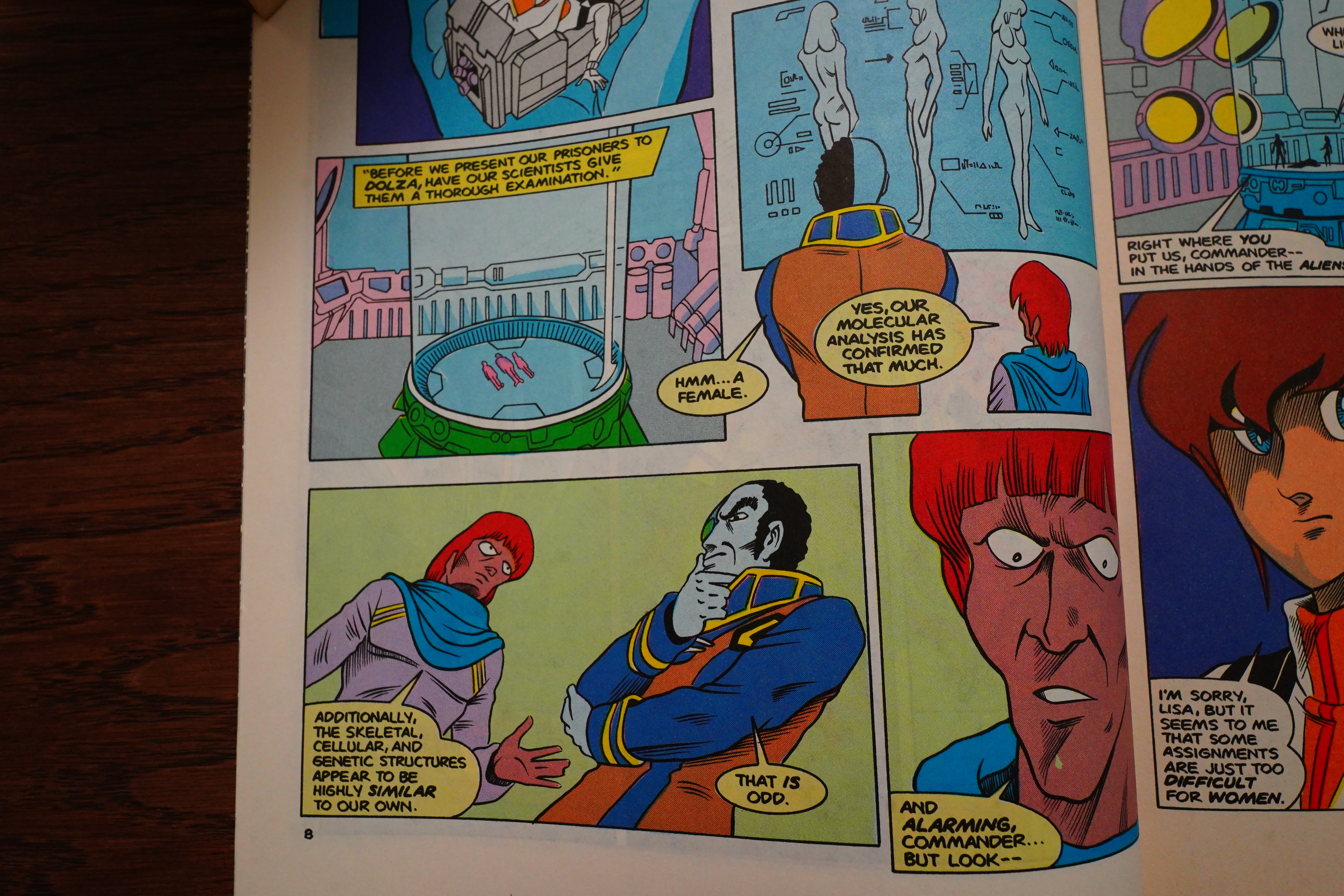
We spend quite a lot of time with the aliens, slowly getting more of What Their Deal Is. But some of it feels pretty random — like they’re so confused about women mixing with the men (tee hee! tee hee!), but a couple issues later, we see that their very best fighter pilot is a woman. Is this going to make sense in the end!?
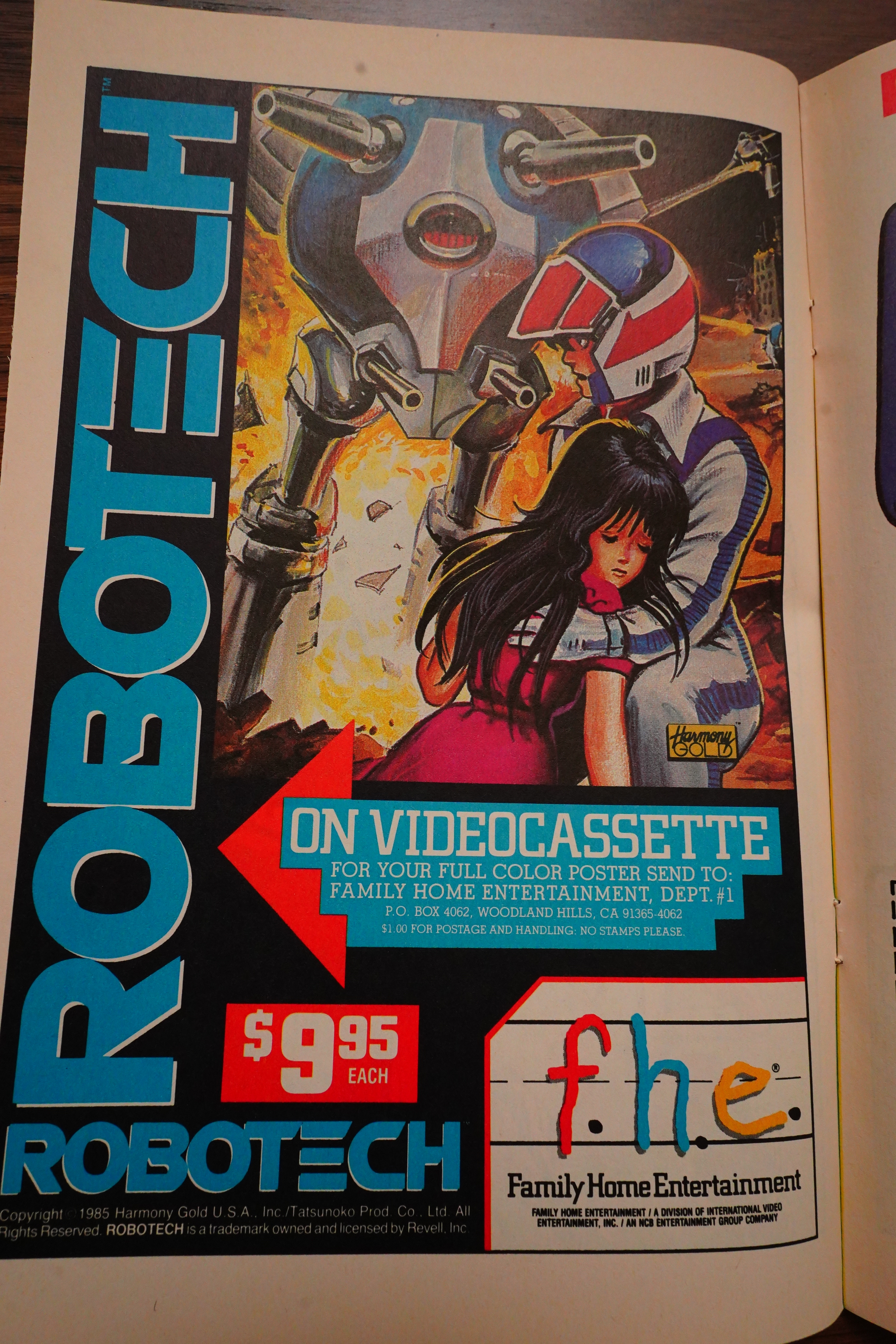
OK, you could buy VHS tapes of individual (20 minute) episodes for $10? Geez, that’s expensive.
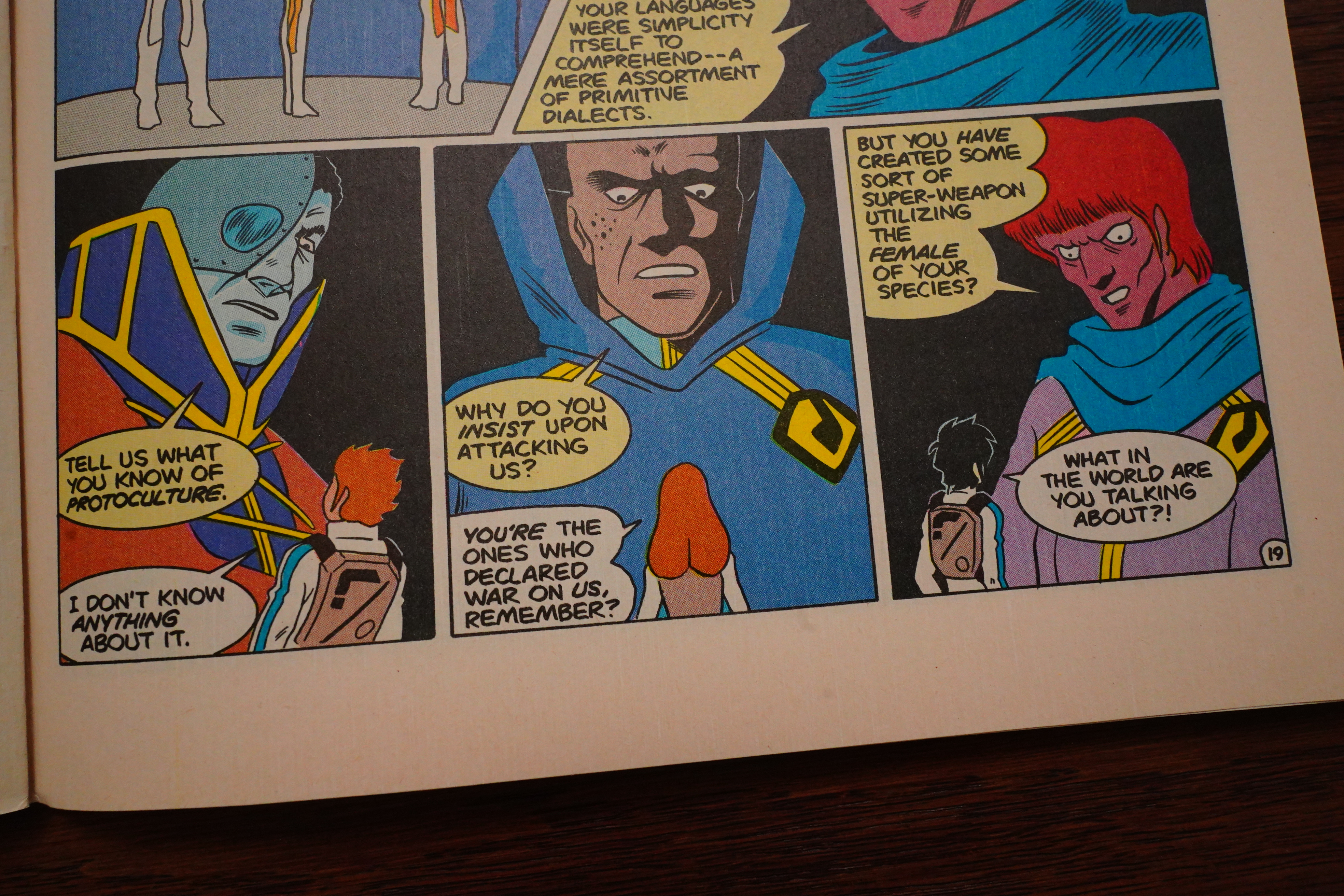
Indeed! I like this storytelling style — always hinting at bigger mysteries.
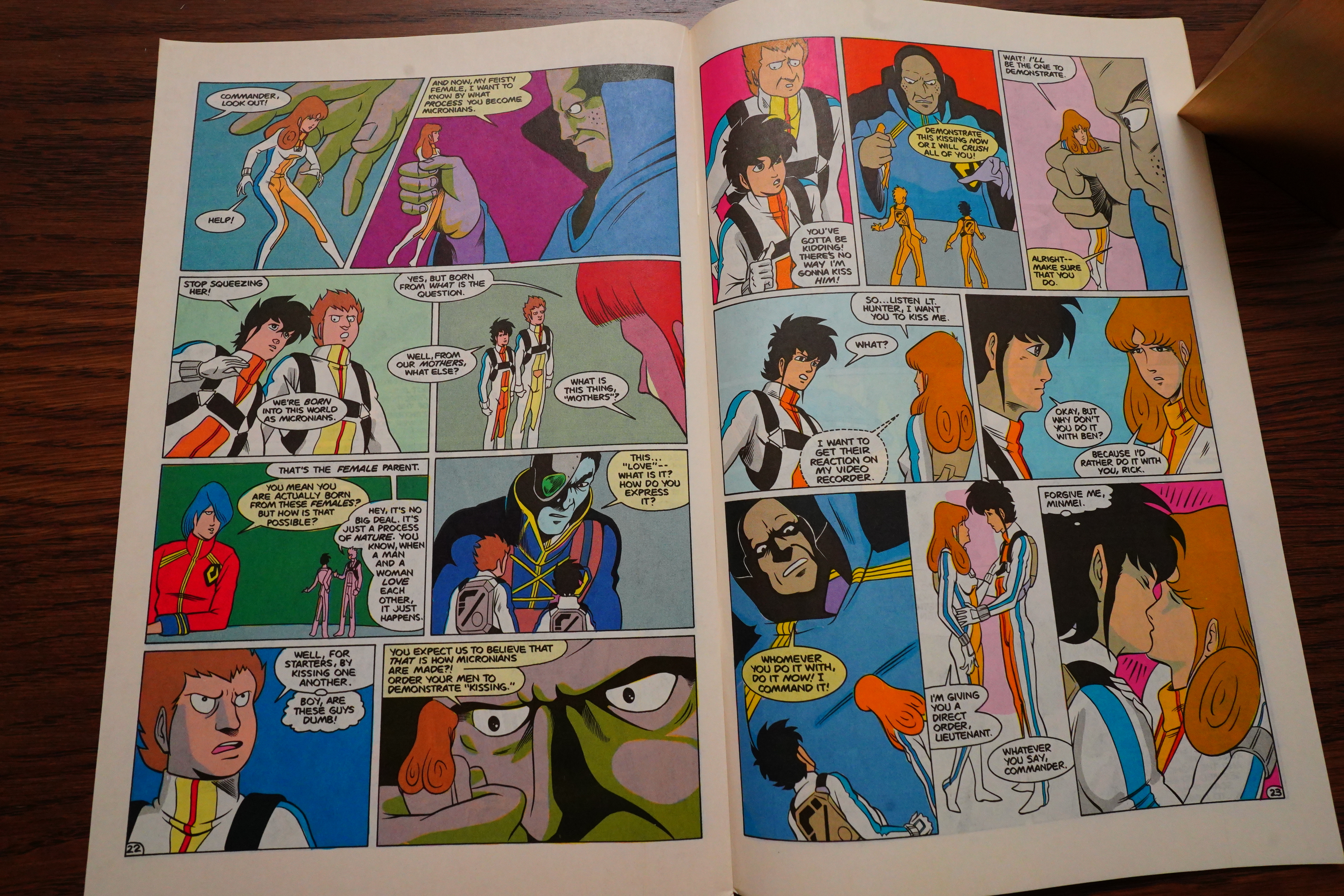
Then we get to their weakness! KISSING!!! (Tee hee; yes indeed, this is a series for children.)
Comico went bankrupt after a few more years, despite having comics (like this) that sold very well. I’ve read some post mortems, and most of them seem to point towards what the above hints at as the problem: Comico didn’t only sell comics in the direct market, but also had newsstand distribution, which is much riskier; a much bigger gamble: You never know how many books you’re getting in returns, or whether you’ve greased the correct pockets (that’s the correct expression now). (Newsstand distribution used to be controlled by criminals for many years.)
So the text up there is presumably with newsstand readers in mind.
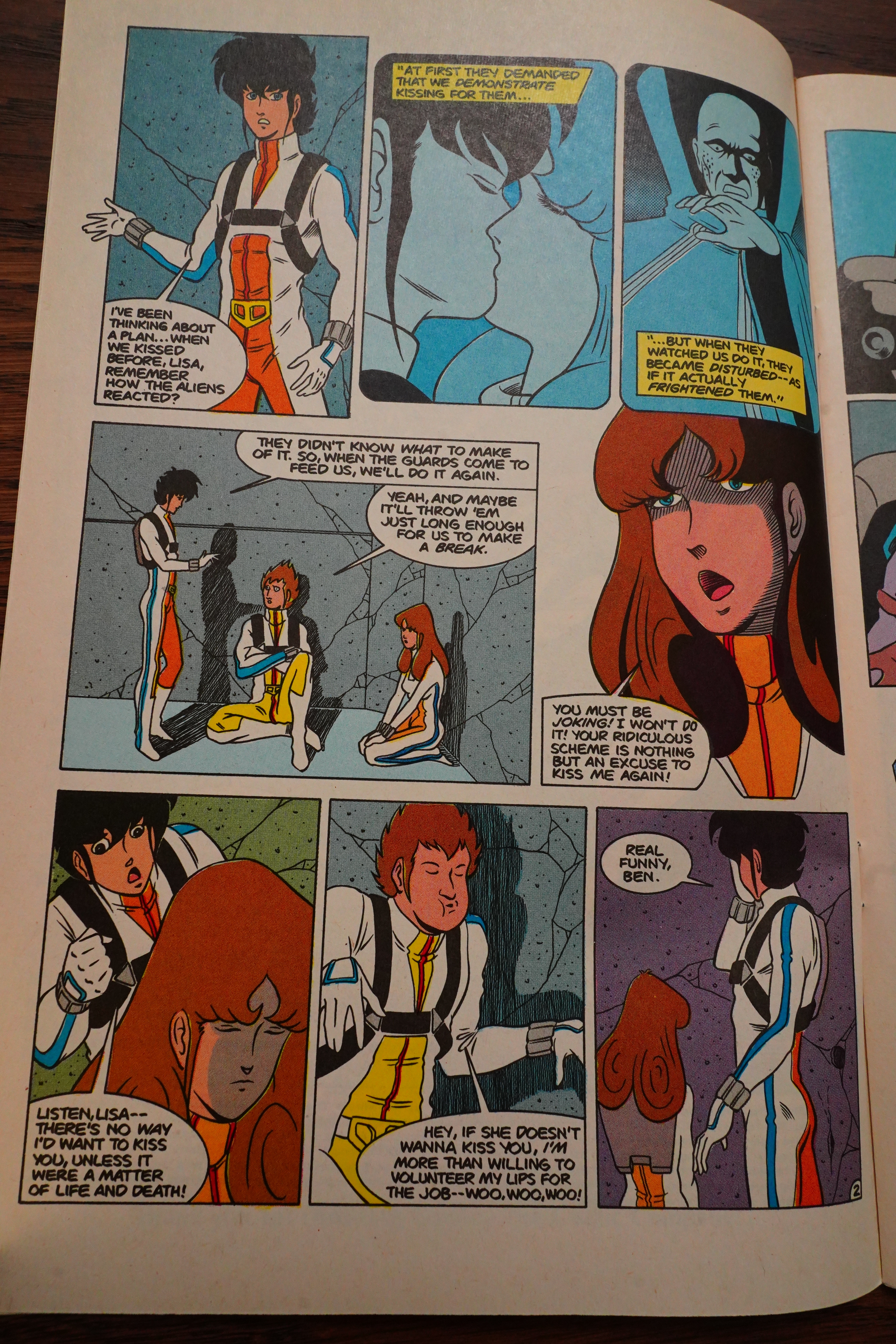
It is real funny, Ben!
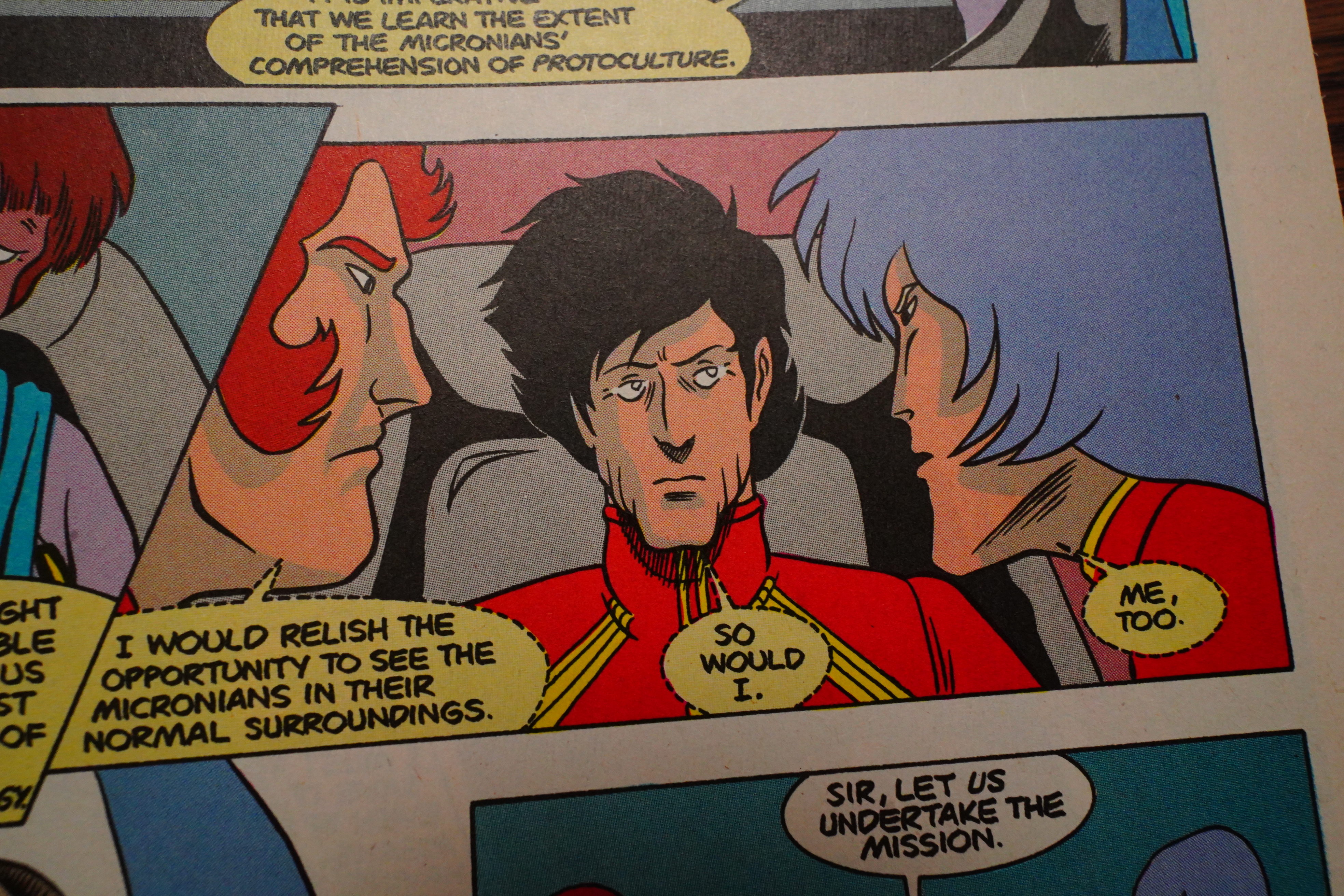
Yeah, I’m going with my initial thought — that perhaps the writers of the animated series hadn’t really thought things through: If the aliens want to observe humans in their normal surroundings, there are several billions of them on a planet nearby. They don’t have to bother with the ornery ones on that space ship.
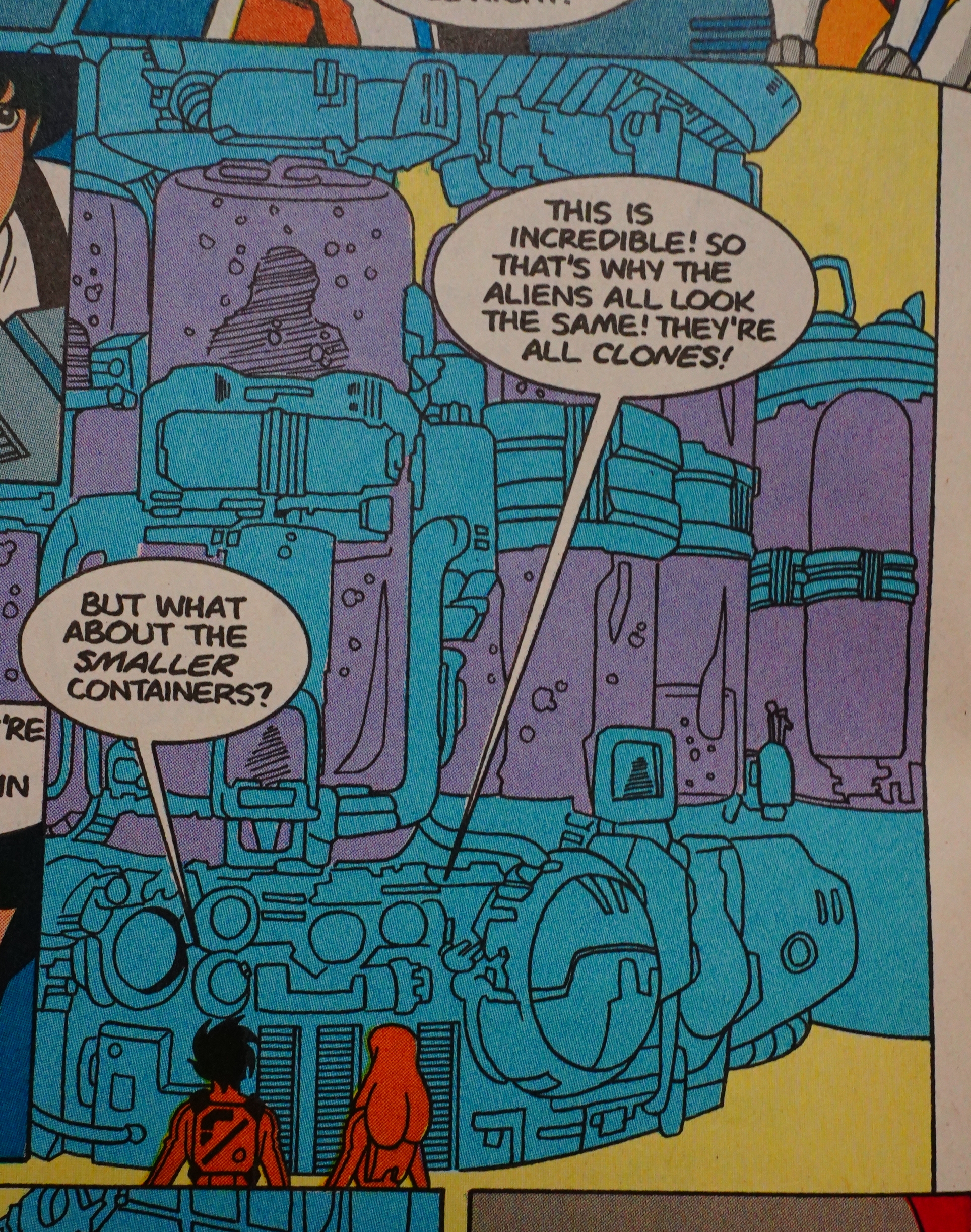
*gasp* They reproduce asexually! That’s why they all look the same! Except we’ve yet to see two aliens that look even remotely similar — there’s much more diversity in the alien characters than in the human characters, surely?
I AM CONFUSE!
But entertained — this series has turned out to be a much better read than I had anticipated.
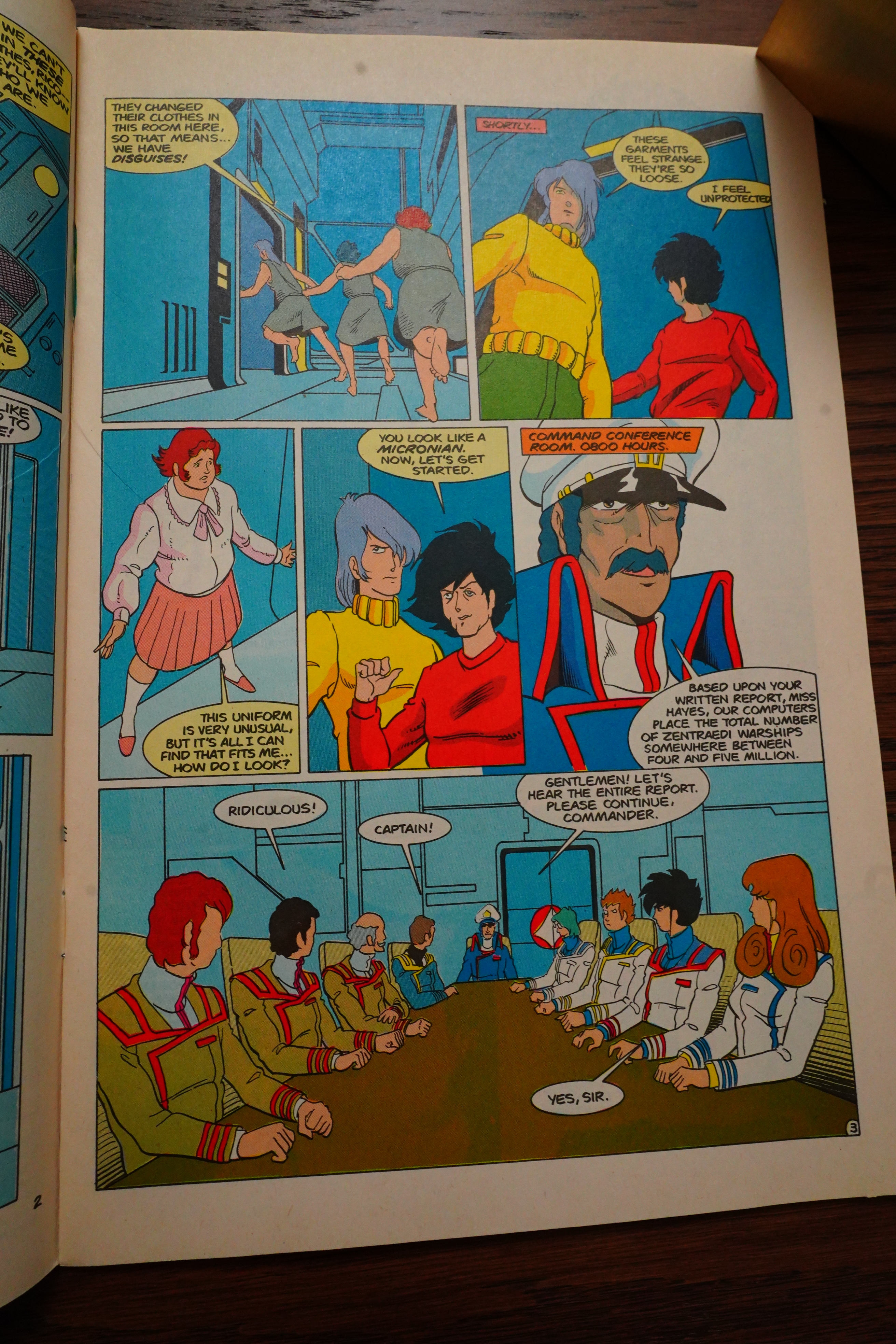
But then the plot reaches a stand-still for several issues, while the comedy relief aliens try to integrate into society, and the military rejects the only information they have, as they do.
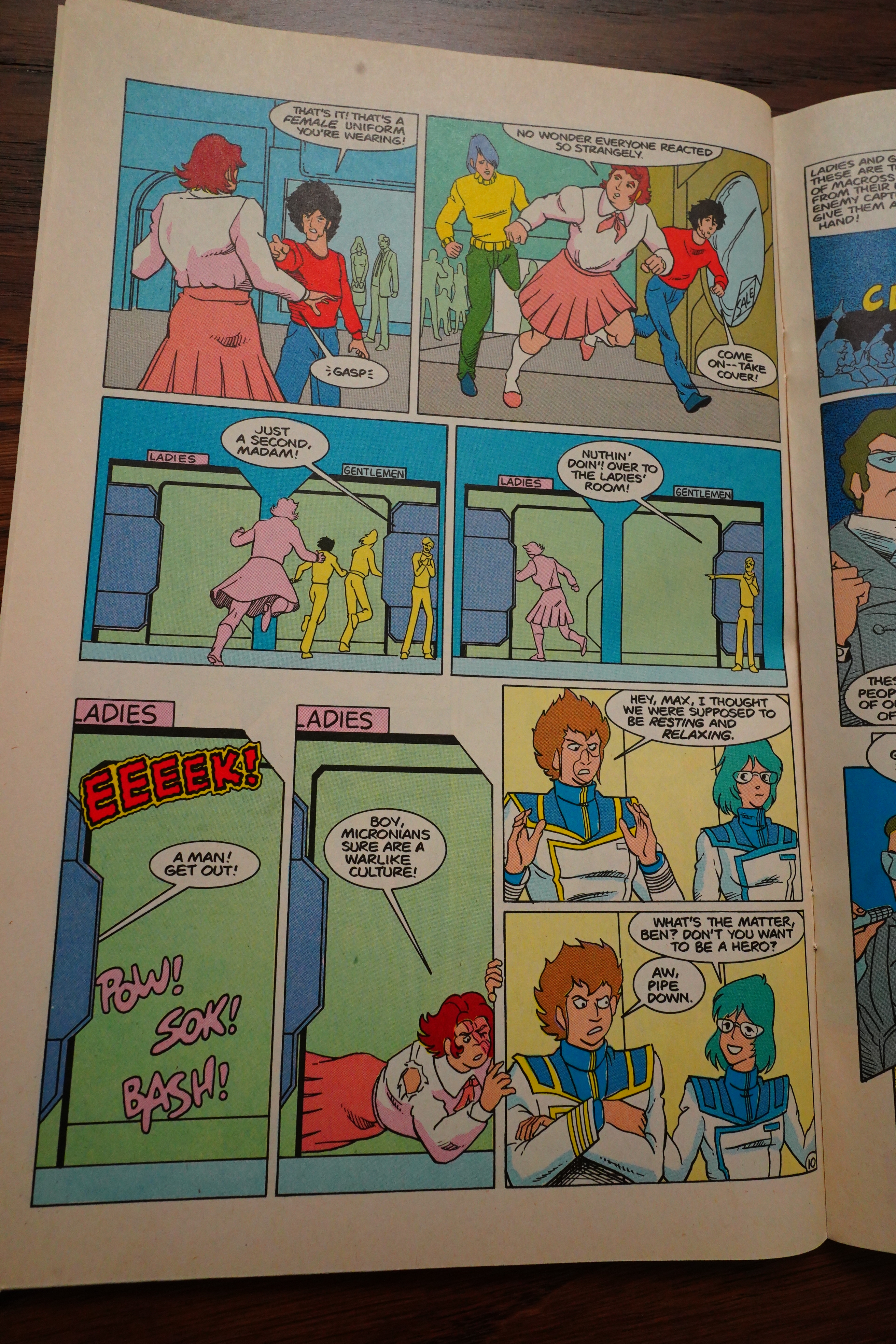
I mean, the comedy relief aliens are pretty much on point as comedy relief aliens go.
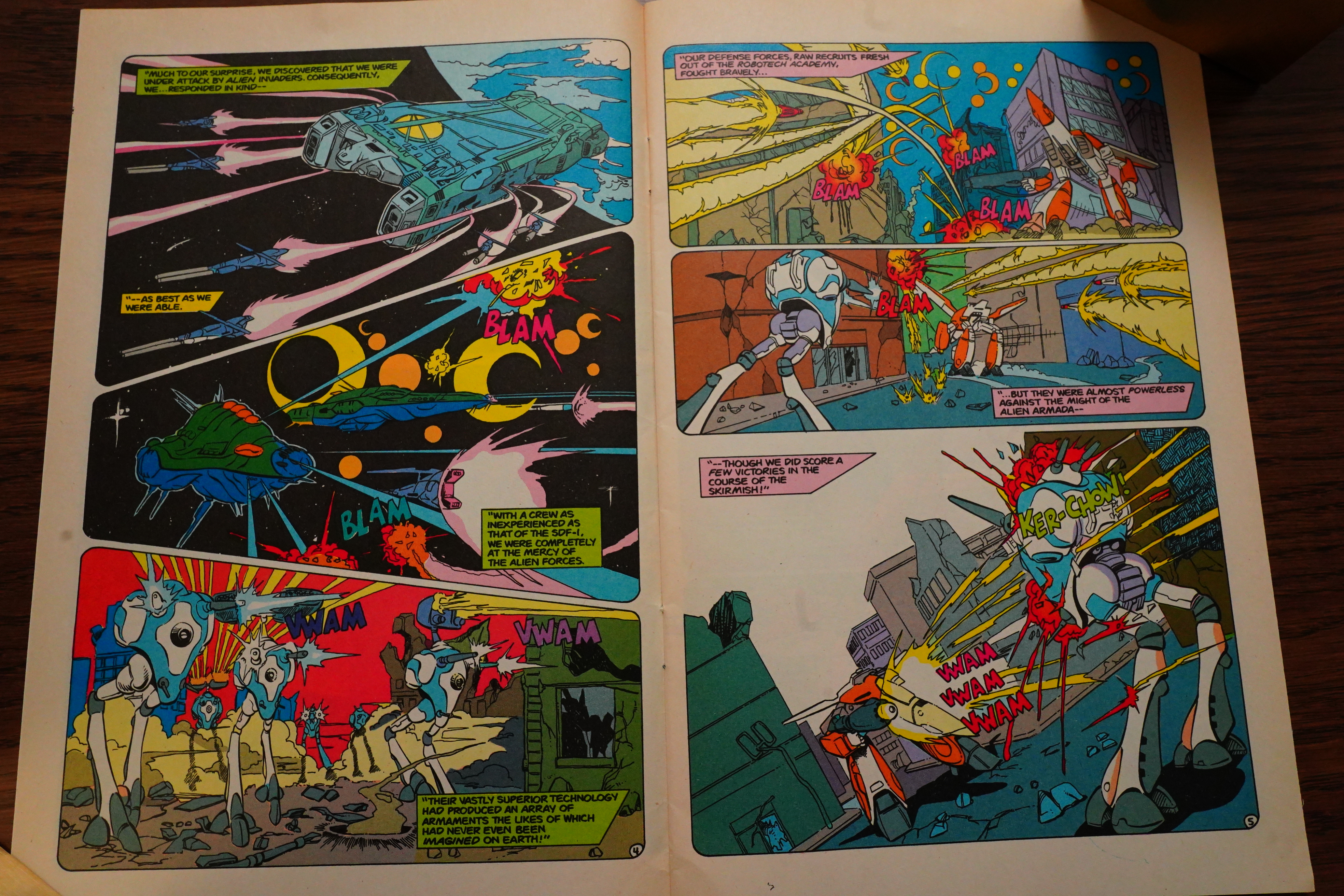
And then the inker quit, and we get a whole lot of new inkers — with varying results.
There’s one issue that’s all recap. This makes sense for an animated series, because they can just reuse previously made sequences, and add a voice-over. Voilà! Episode! Saves tons of money. But they don’t do that in the comic book, of course, so no money is saved…
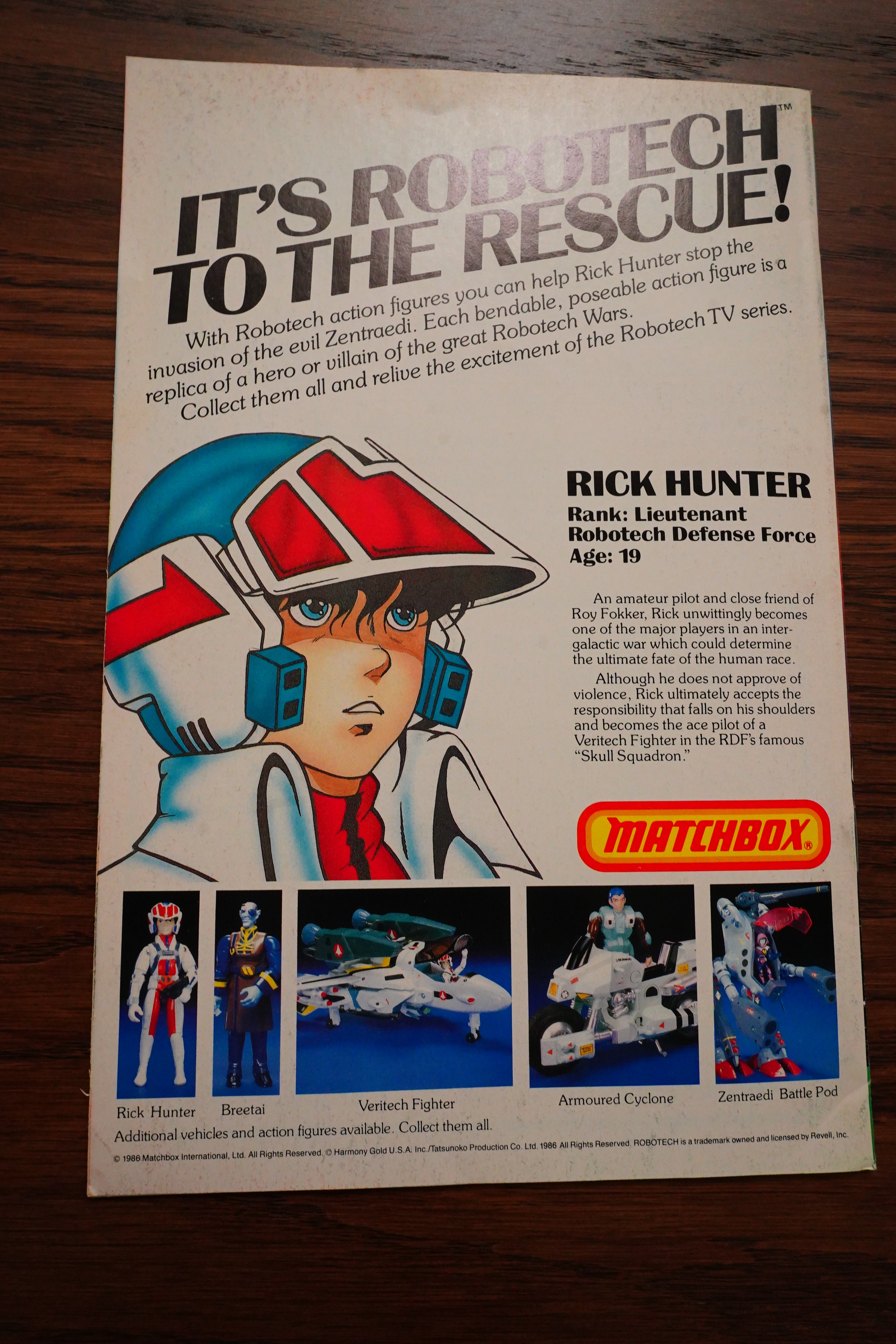
Oh yeah, I forgot to mention that they did do a different thing to save money: They got rid of the wraparound covers a few issues ago, which were a standard at Comico. And they can also sell ads at a higher price on the back cover, presumably.
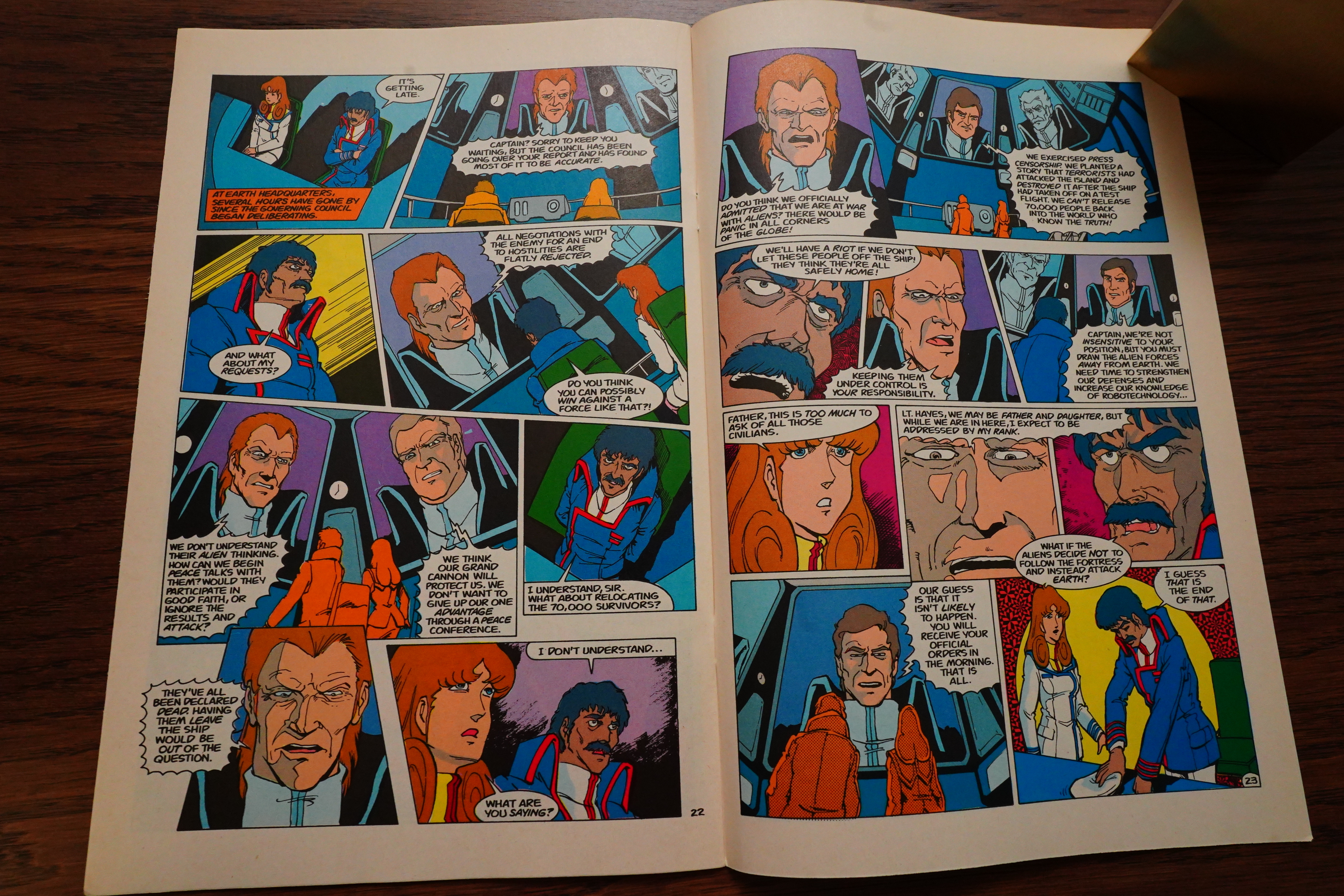
The inkers keep on changing, with radically different results between issues.
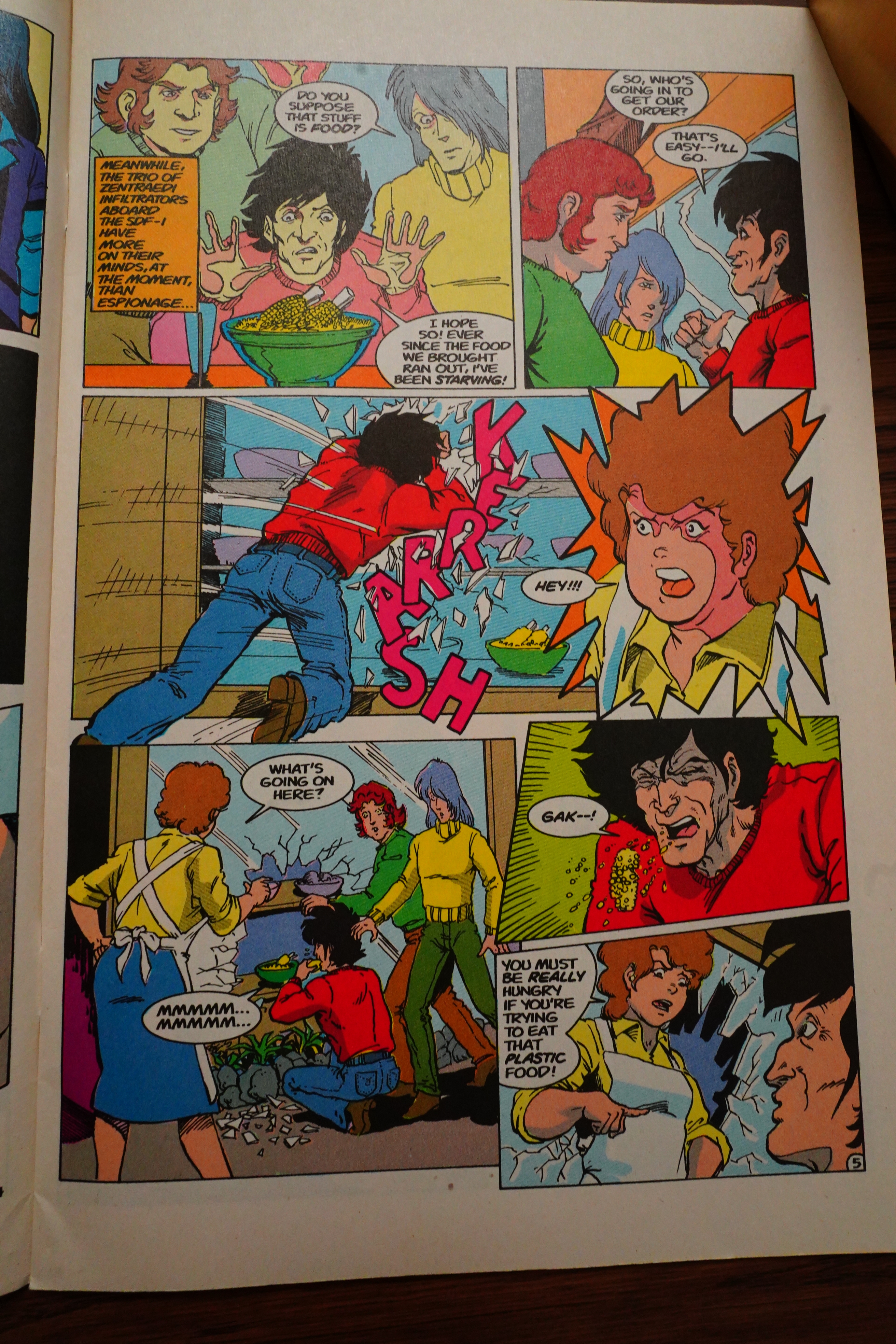
Oh, Comedy Relief Aliens. These scenes give off “what is friend?” energy.
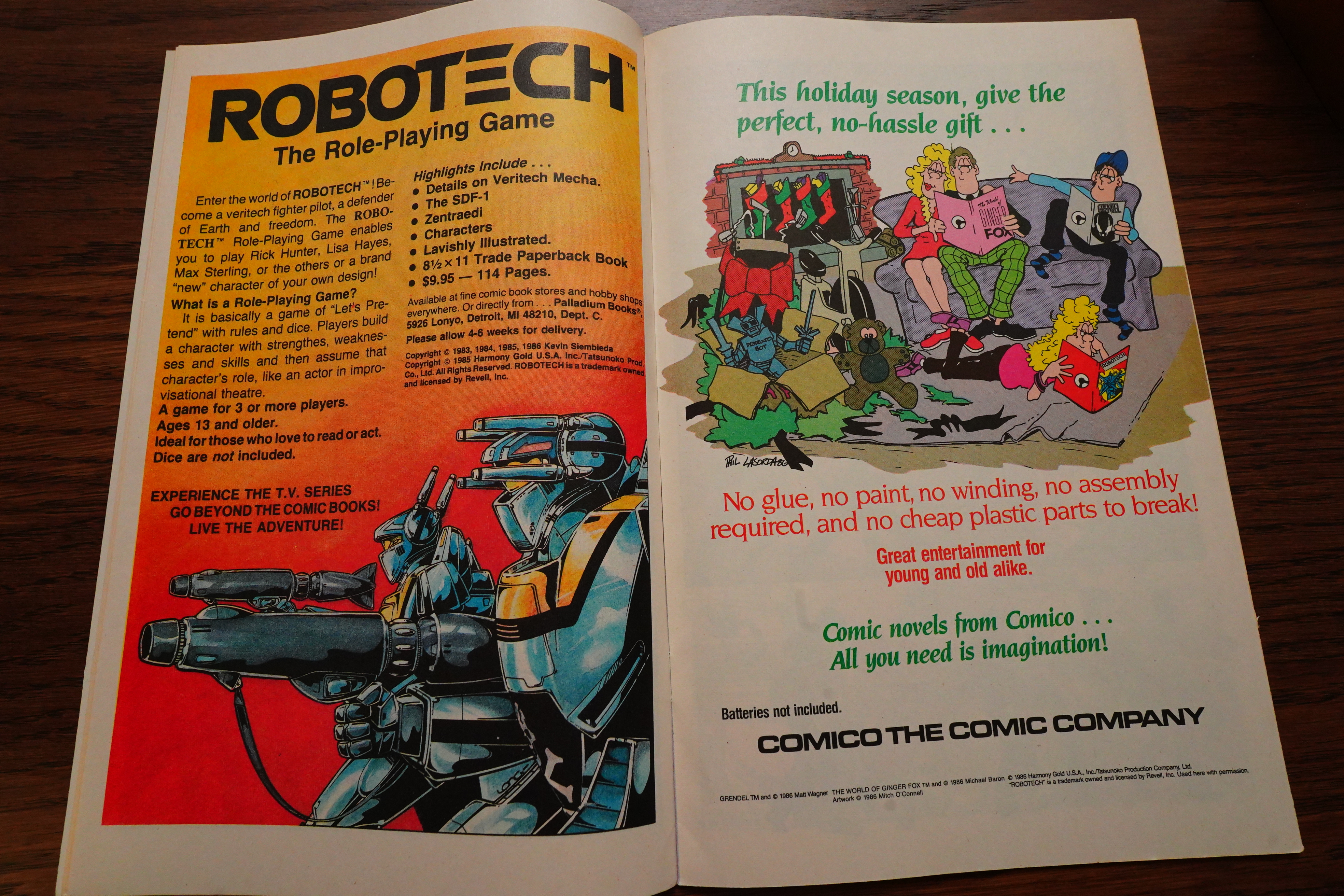
Running this ad (drawn by publisher Phil Lasorda in a Don Martinesque way) in Robotech, of all places… “No cheap plastic parts to break.” THIS IS ROBOTECH!!1!
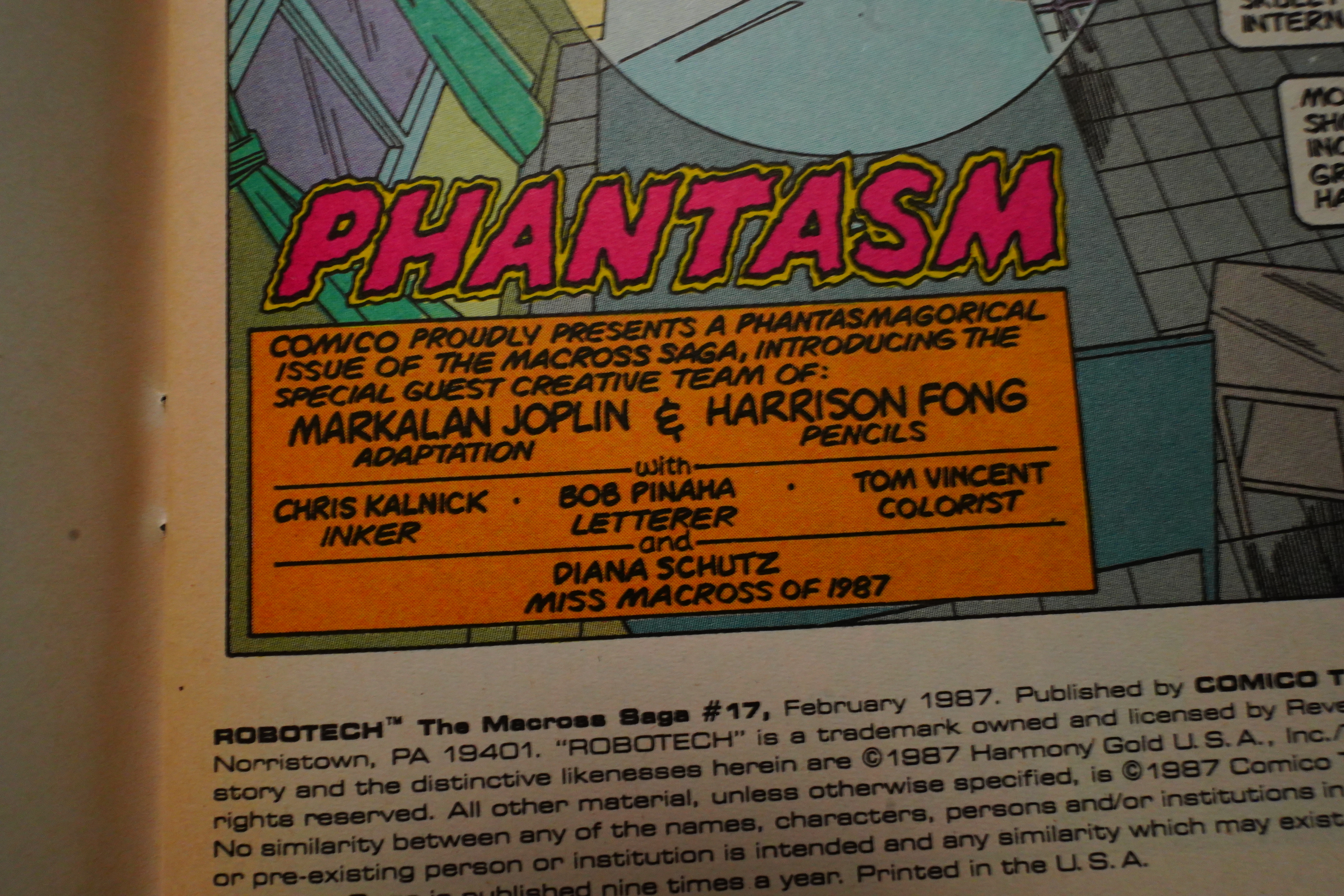
And finally both the penciller and the writer quit? But the old inker is back! What’s going on!
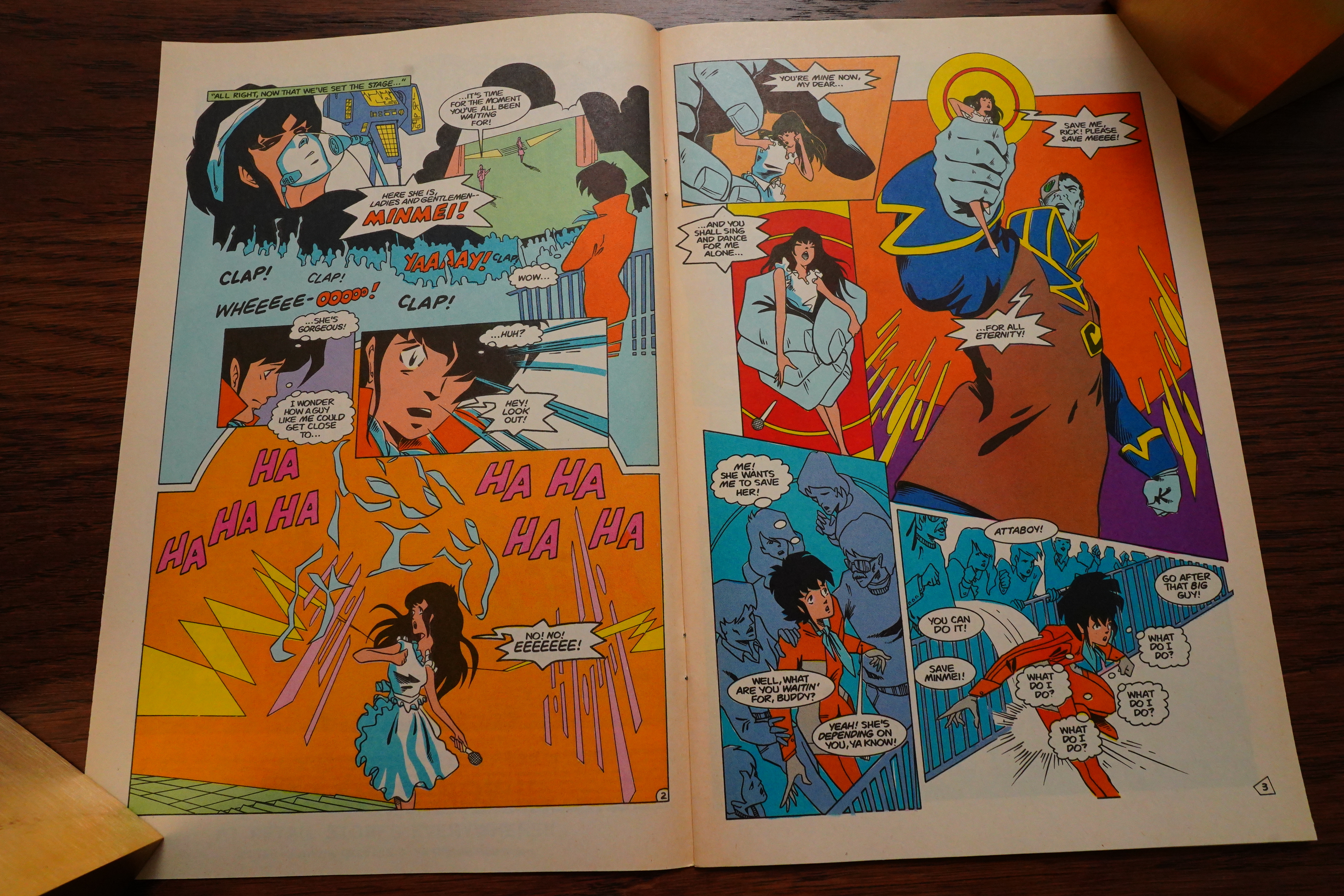
Yeah, that’s a radical change in the artwork, yet again. And it’s yet another budget saving episode: Rick is having a dream, and the entire issue is just that dream. So I would guess that the episode, once again, reused a lot of old elements? But the comic doesn’t, of course.
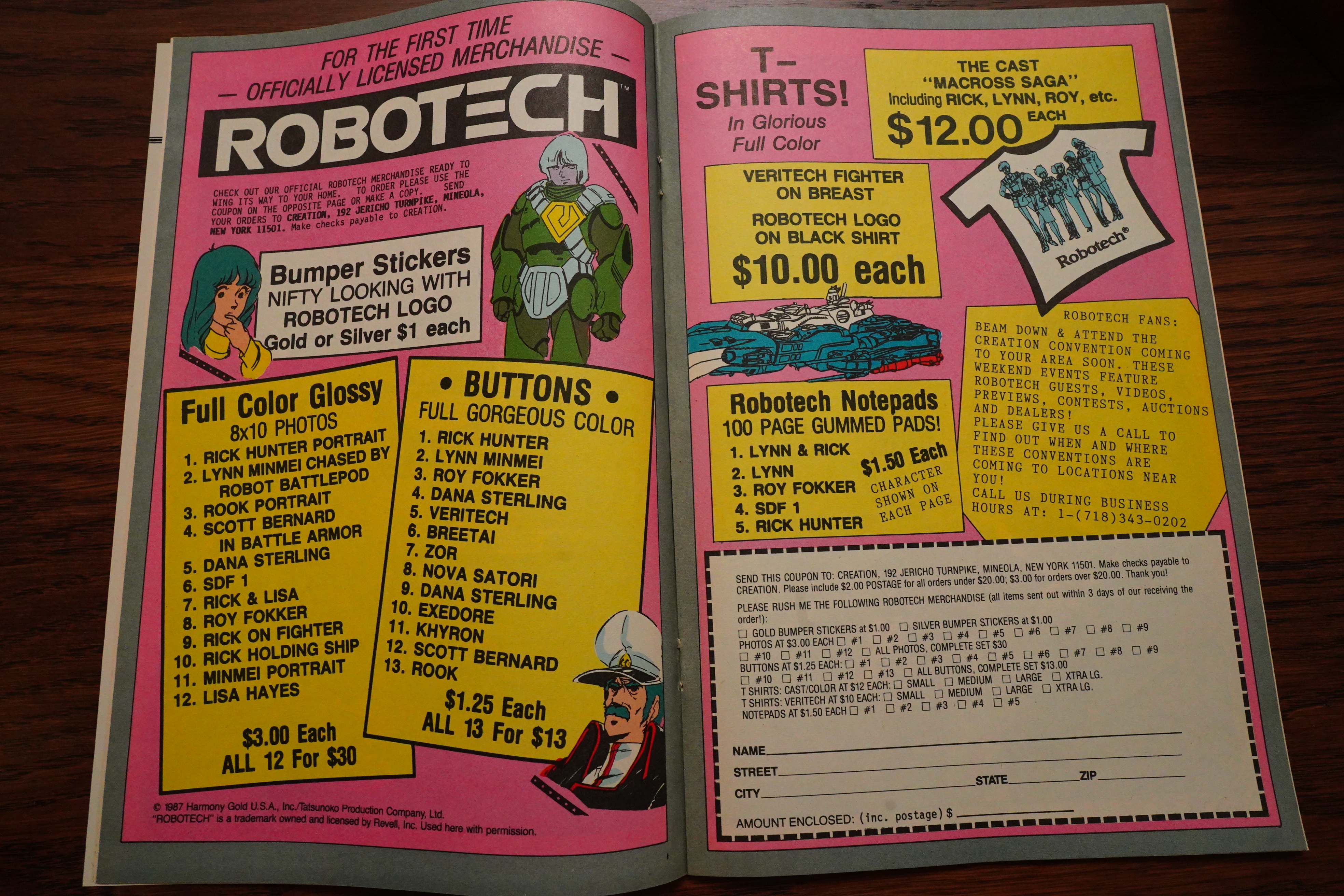
Wow, it took them this long to get “Officially Licensed Merchandise” up and running? What was all the other stuff they’d been advertising?
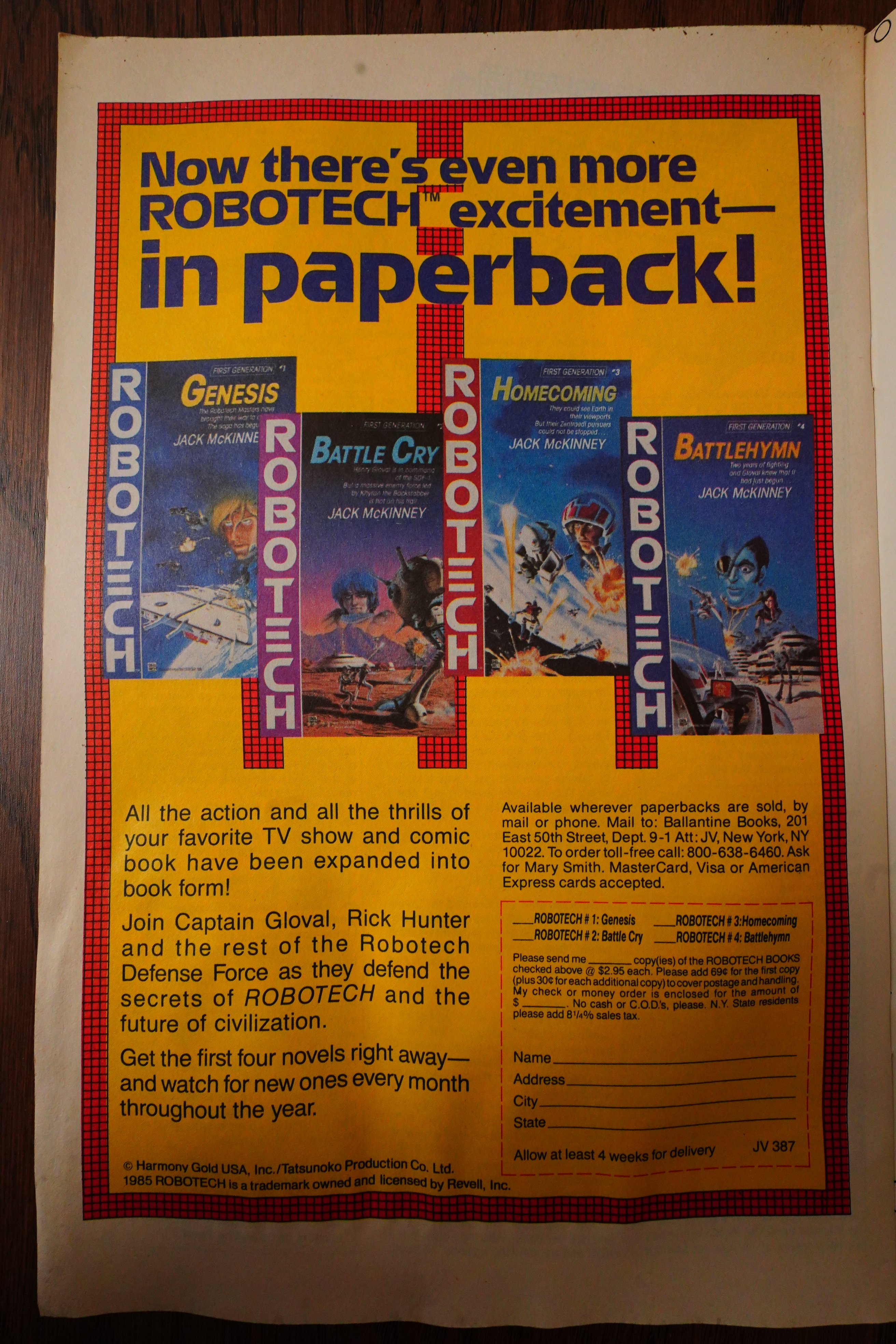
Wow, that’s some water damage on this copy… where did I buy these from?
Anyway — there was also a series of novelisations? Not written by the people who did the comics, though.
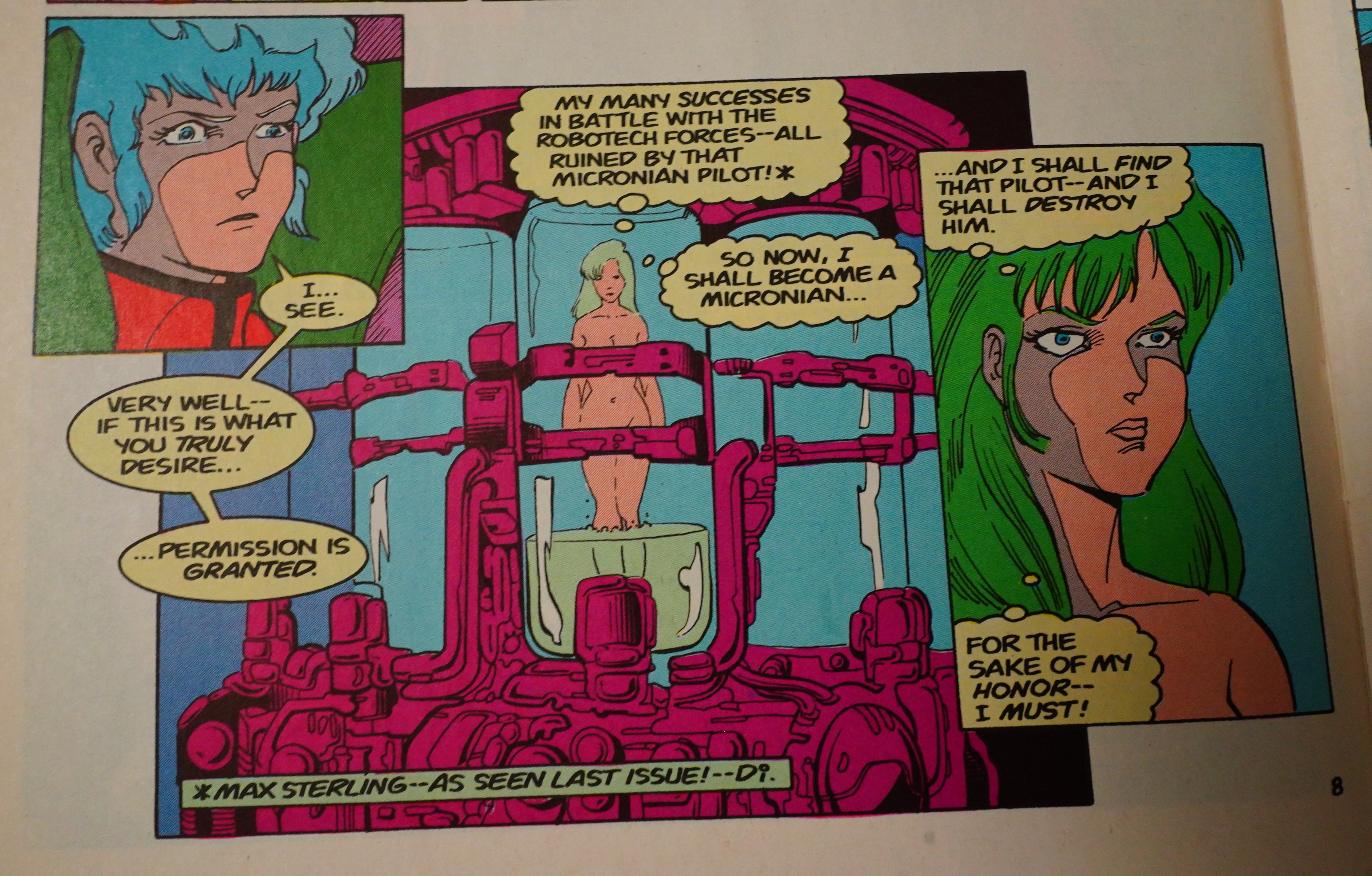
Well, that’s a motivation, I guess…
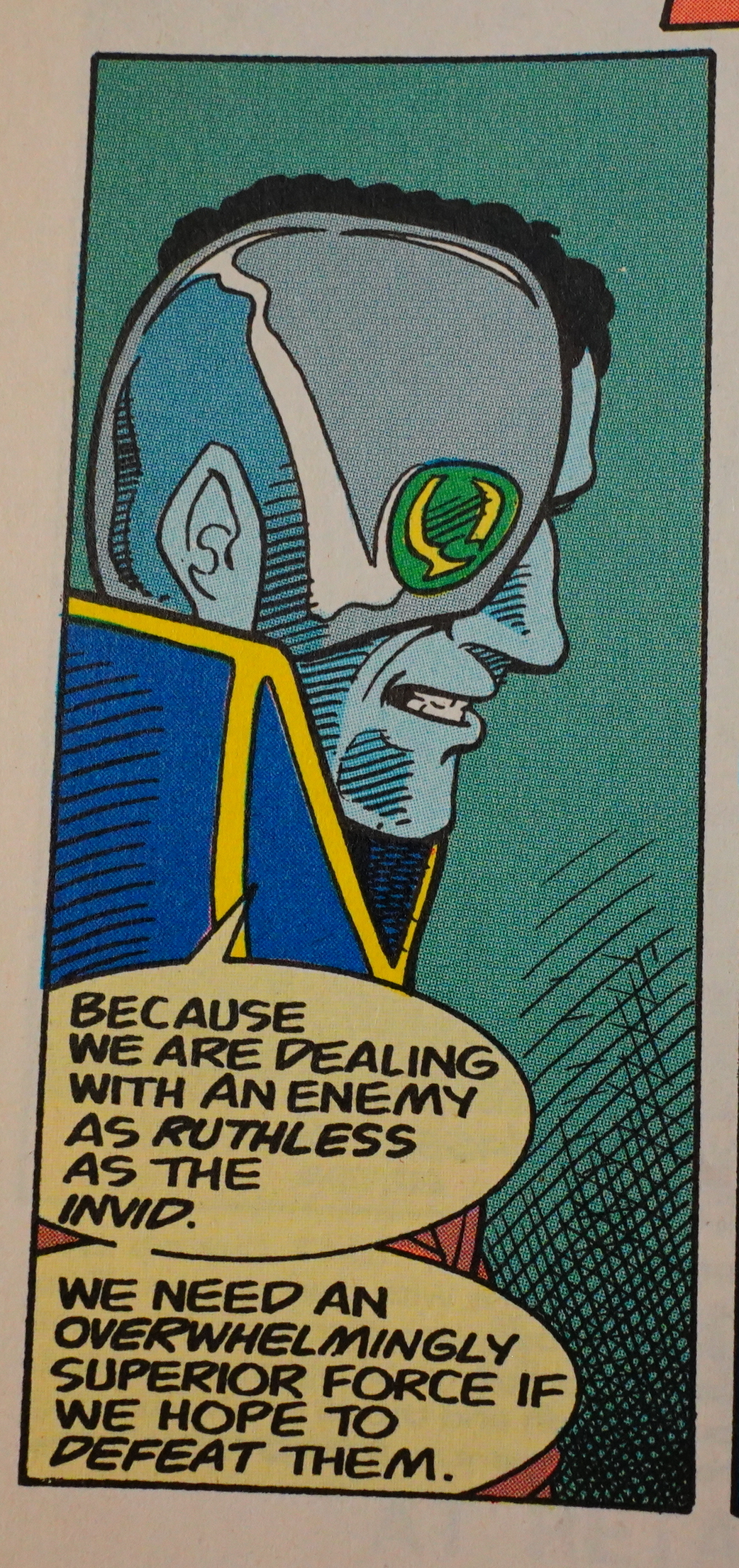
I like the way they hint at a bigger universe like this. The Invid? Sure. But it’s not like this makes any sense, anyway — they could have blasted the SDF-1 any time they wanted, but first the line was that they shouldn’t interfere in human development, and then it was that they needed Protoculture (i.e., the MacGuffin) which was on the ship. So how does a million (!) enemy fighters help with this, really?
Sure, OK, nitpicking a forty year old comic book based on an even older cartoon (I mean animated series) for children is, er, perhaps not the most productive way to use my fingers… But I’m going to, anyway!
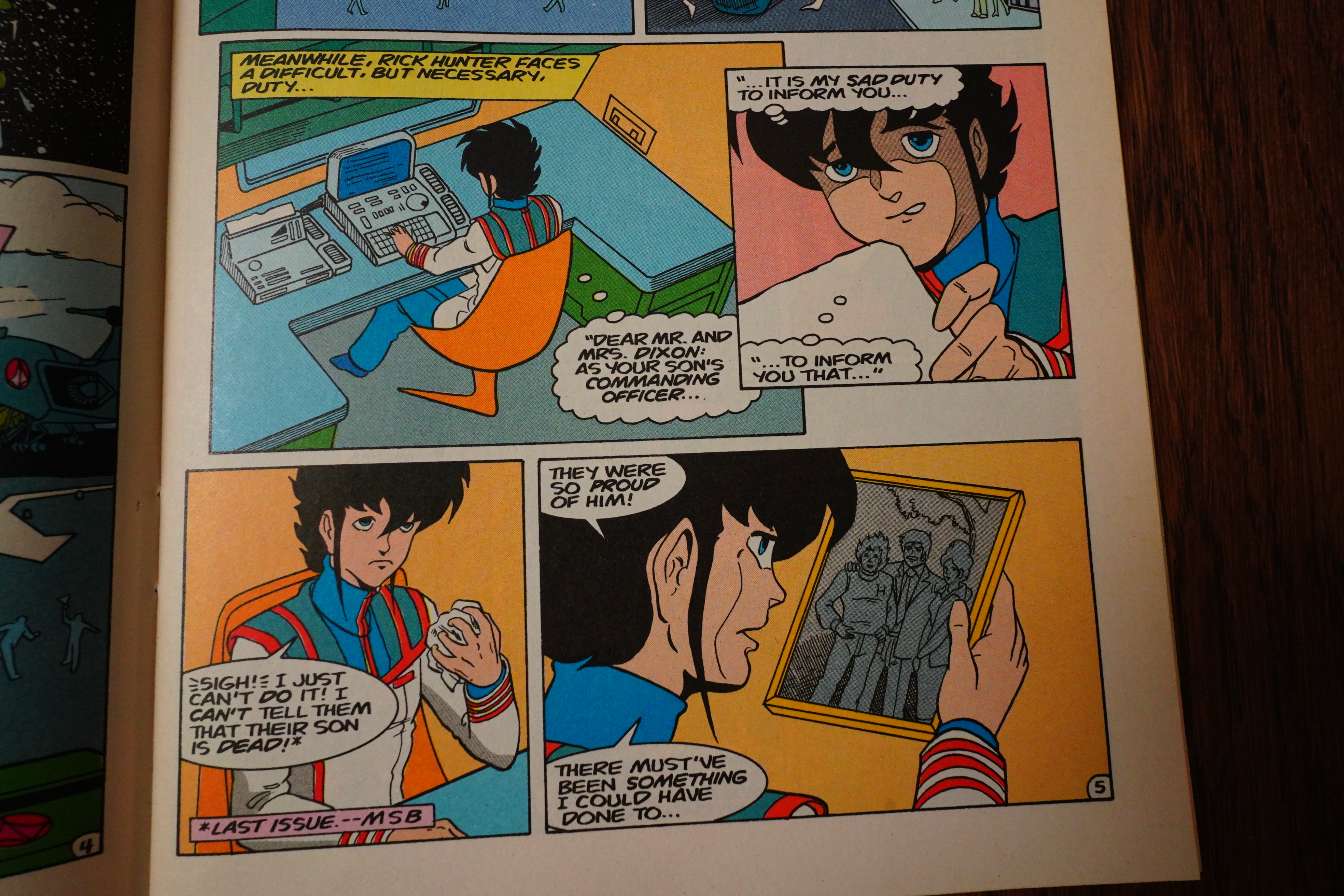
There had been so many people being blown away in the daily battles that I found it pretty odd that none of the named characters had died yet. But then they go and kill off two of them within a couple issues! Well played.
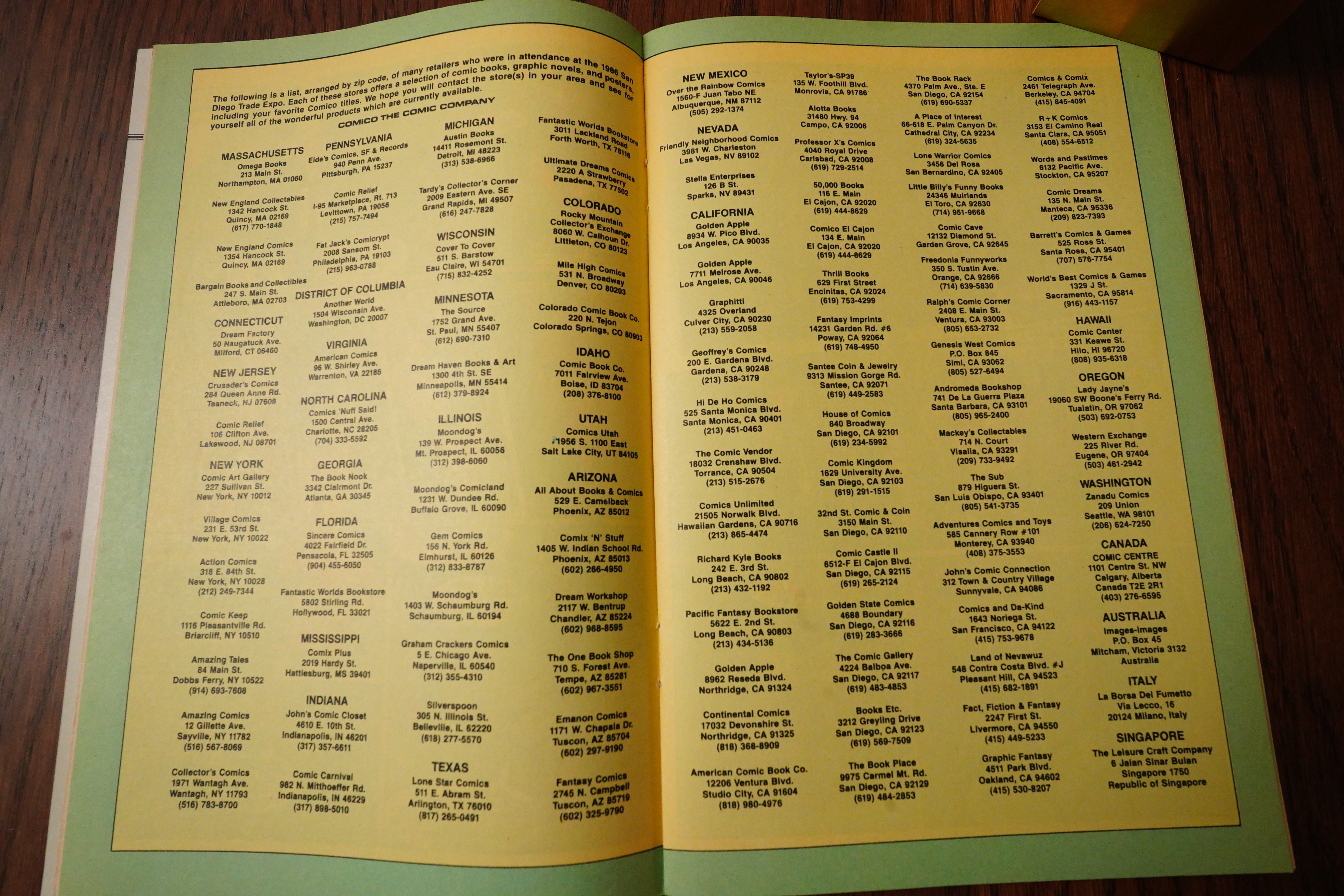
Hm… Oh, I guess this is because of the newsstand distribution? So they want people to be able to find (older) copies…
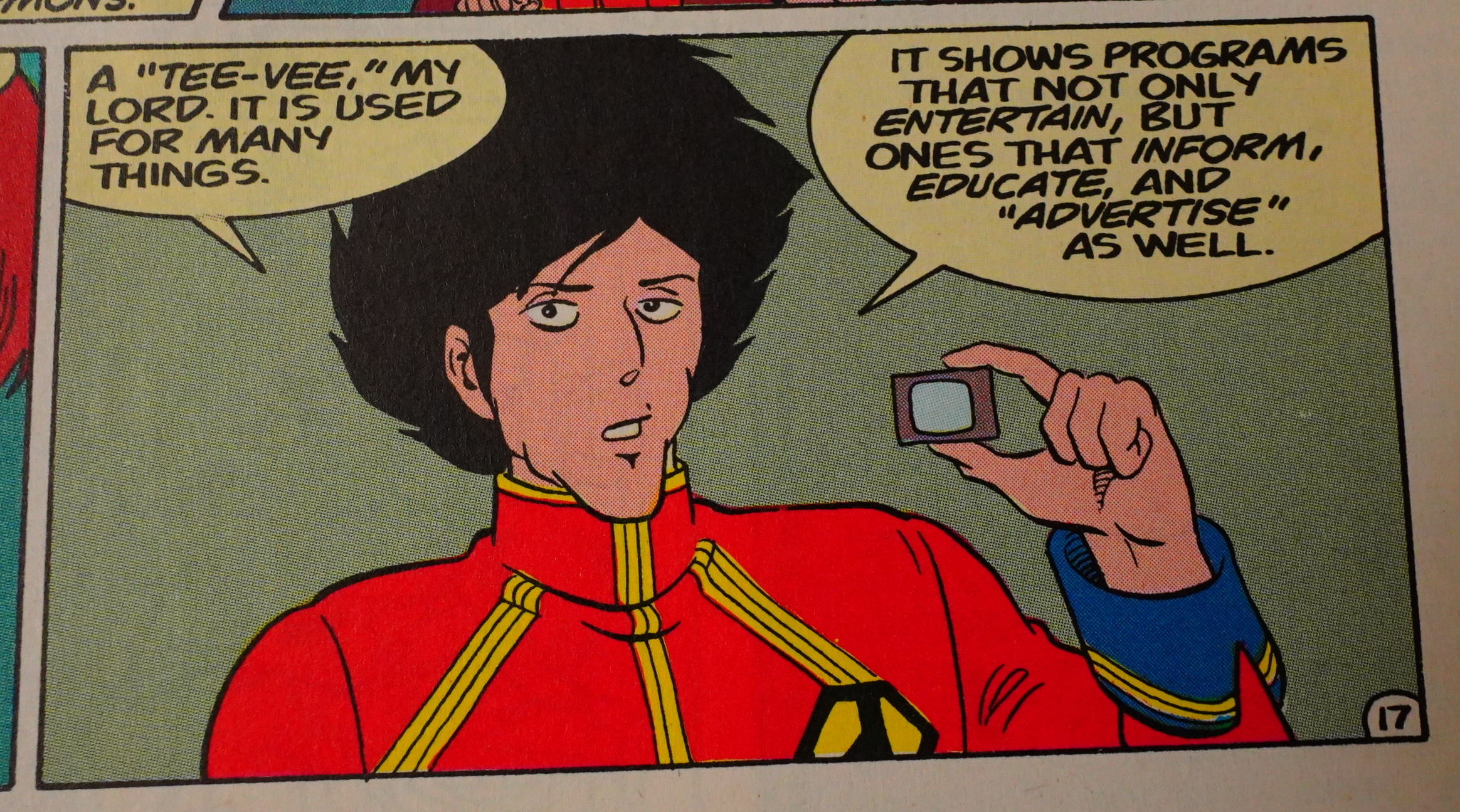
Yes, a Tee-Vee is very useful! Everybody should get one.
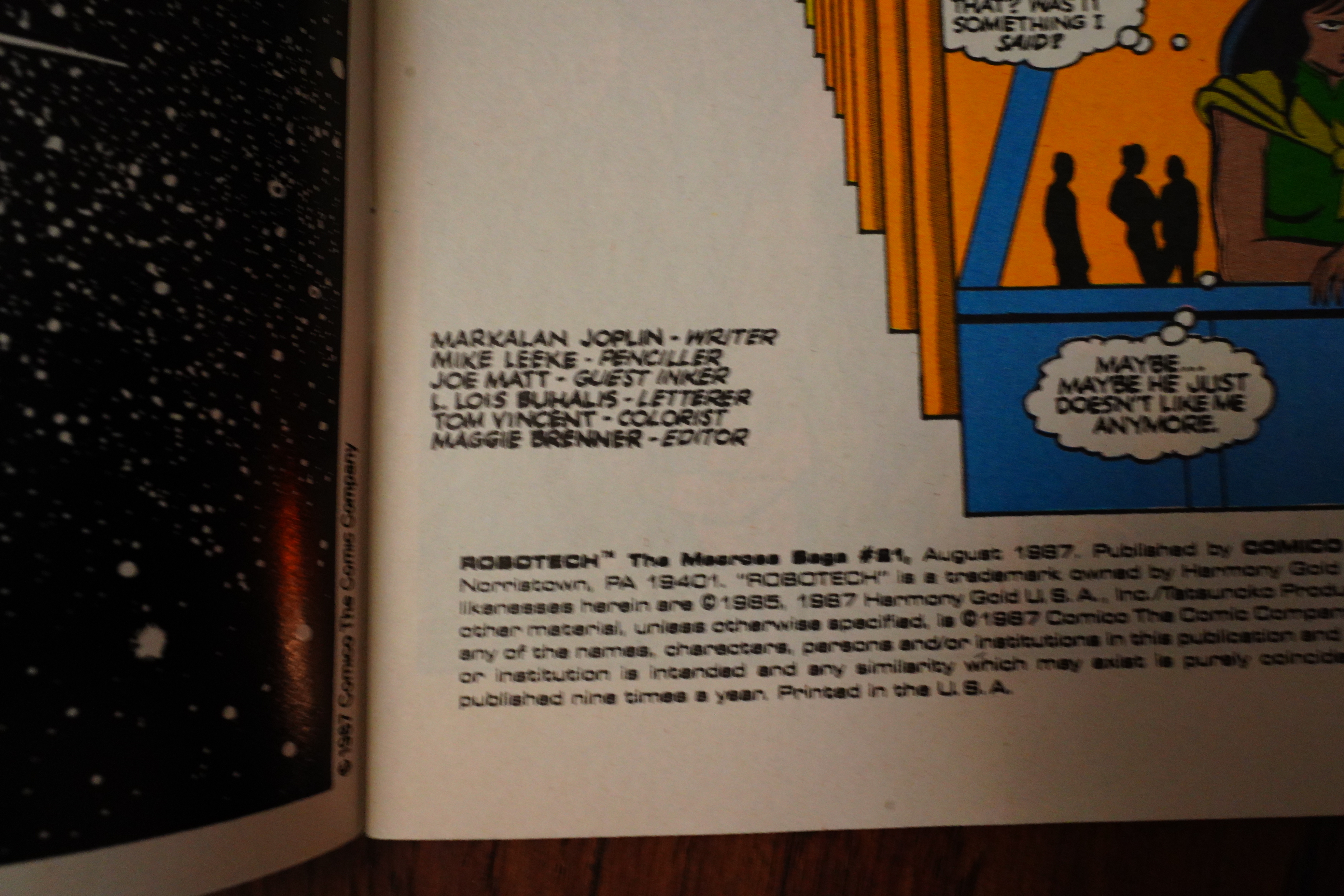
Uhm… Joe Matt? As in Joe Matt!? He was an inker on this!? (And one later issue.) For one issue? Let’s see how he does…
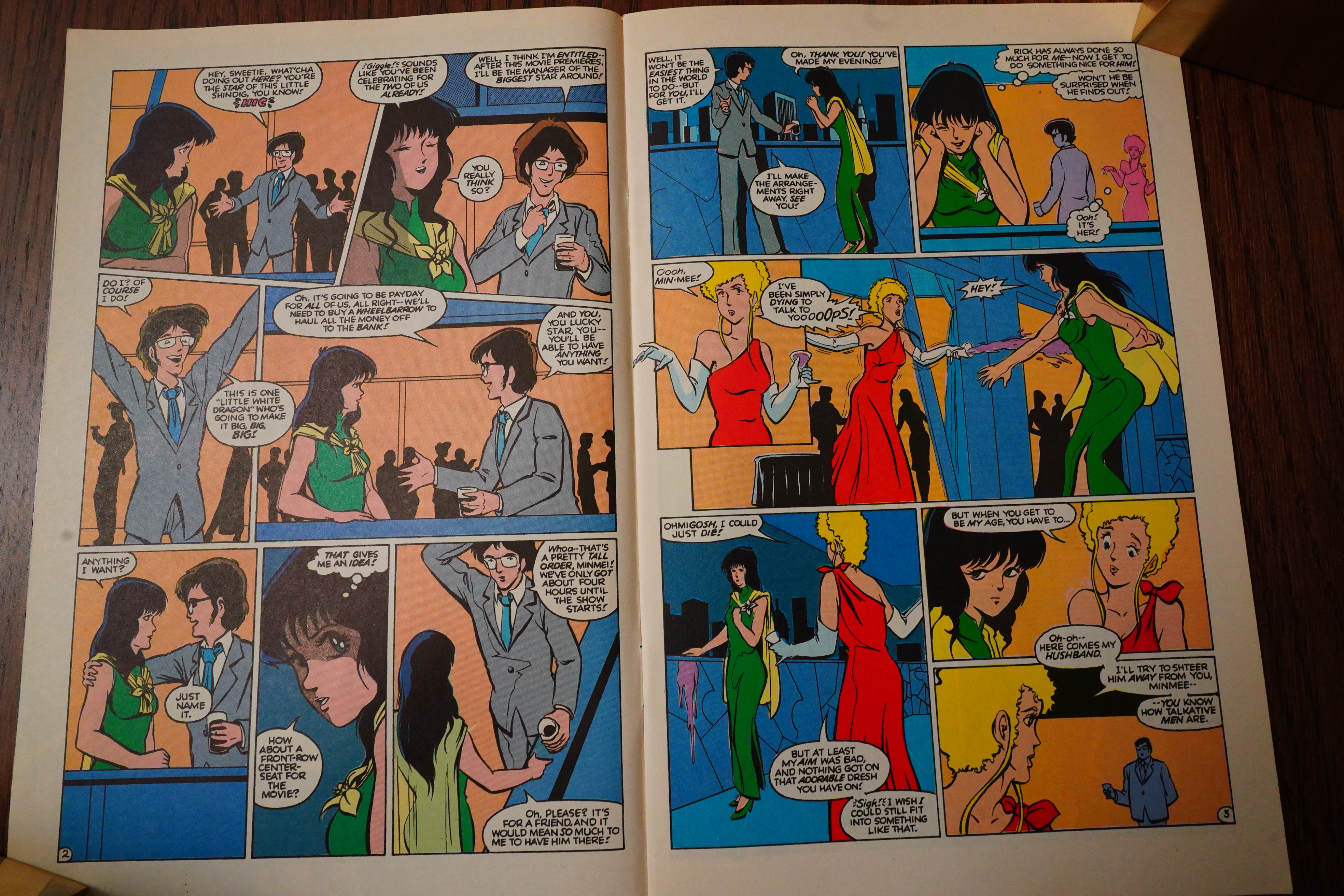
Well, that’s totally OK? His only quirk is that he seems to be using tone, which none of the others really do…
Oh, and there’s a new colourist in town, too — and he’s not very good. There’s flat colours and then there’s flaaaaat colours. He seems to be concentrating on colouring inside the lines and then adds nothing else.
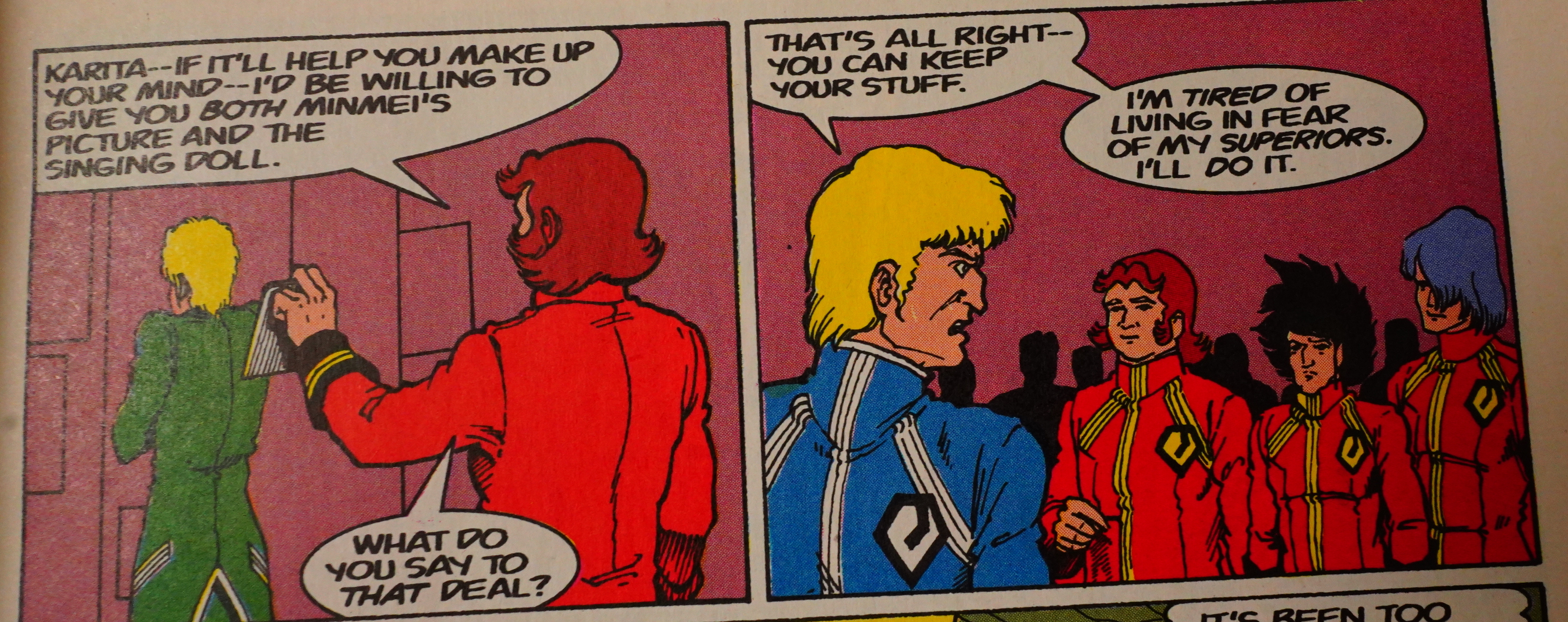
And he doesn’t really pay attention — people’s coats change colour from panel to panel (the guy in green is the same guy as the guy in blue).
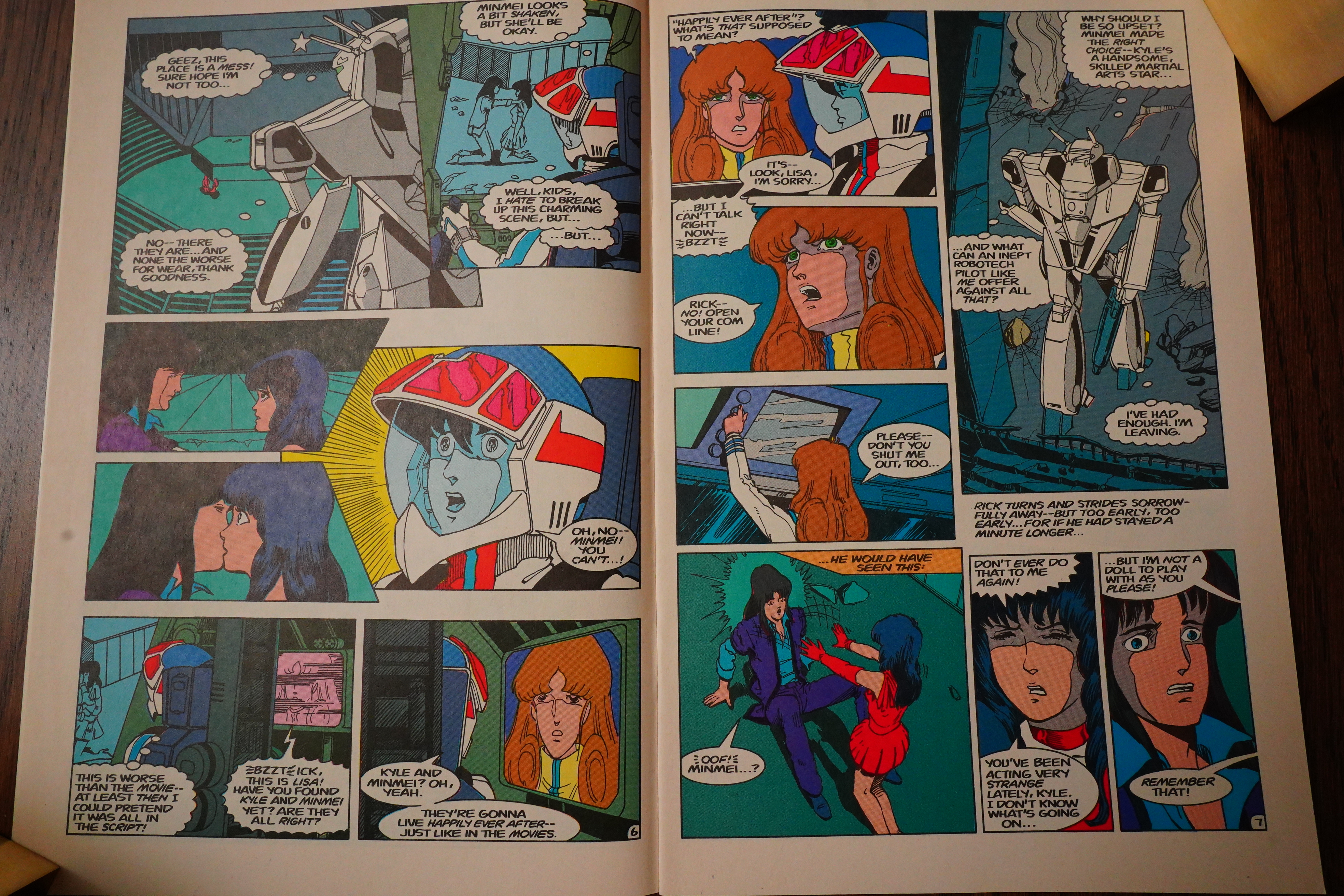
Heh, I saw a guy on Twitter the other day moan about how much they hated this trope: Somebody seeing somebody else briefly kissing (or something), and then running away before it’s revealed that there’s nothing between them really. I.e., fake drama. I agreed so much!
Then somebody pointed out that if that guy were to stop reading books/watching movies made for children, the problem would fix itself. Ouch! Touché!
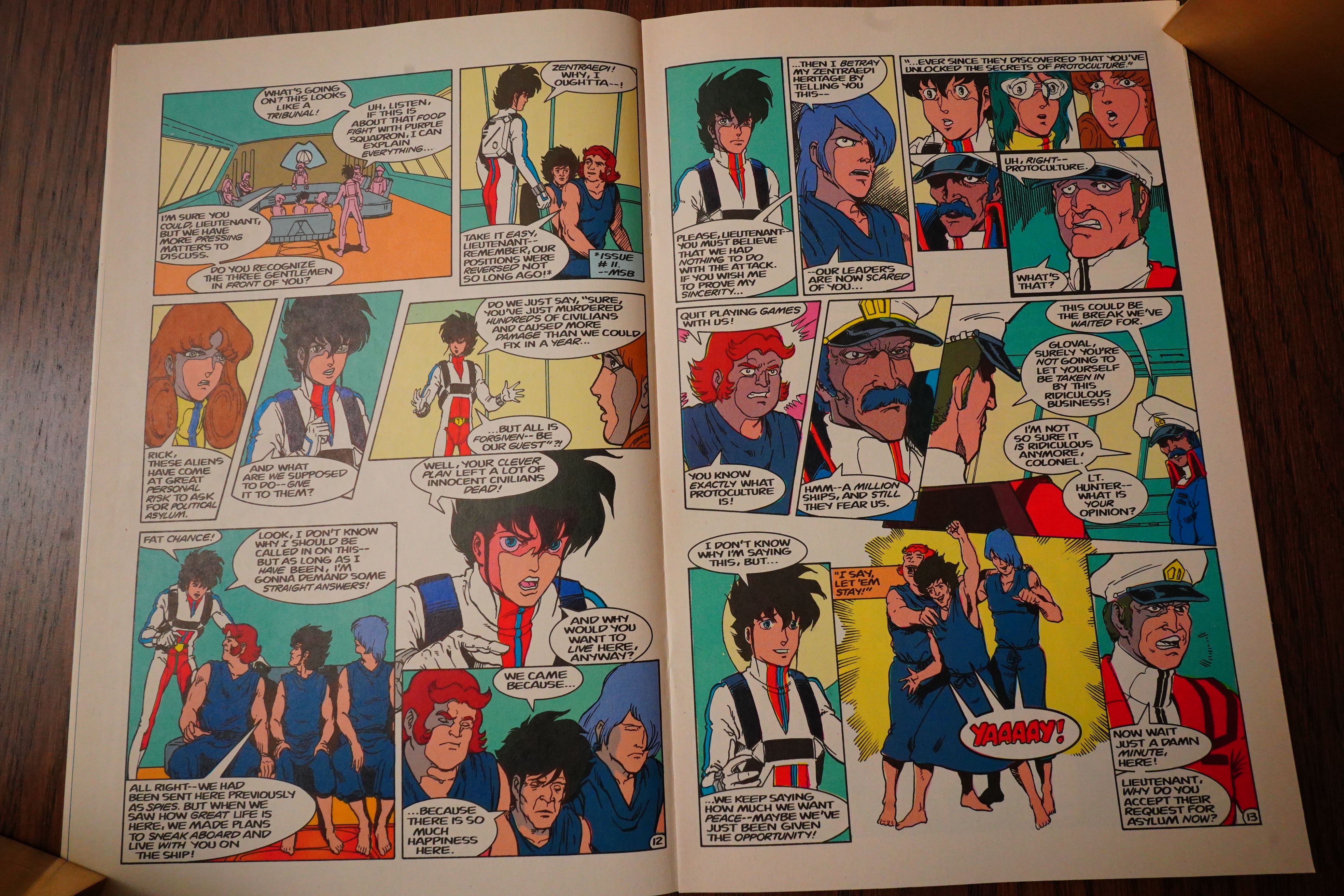
I wonder whether any of this is a reference to Japanese/US relations? Anyway, I guess it’s pretty standard for Japanese animated TV series to have an anti-war message in the middle of all the fighting, but it’s well done here.
But… Protoculture again: The aliens finally open lines of communication with the humans, and they naturally ask the humans for Protoculture (since that’s what they’re looking for). The humans just go “uuuur durr” instead of saying “well, perhaps we call it something else? Describe this Protoculture and what it’s supposed to do”, as I think anybody would have.
I guess that’s the nature of MacGuffins, though — nobody must ever probe into what it is, because the writers haven’t really decided.
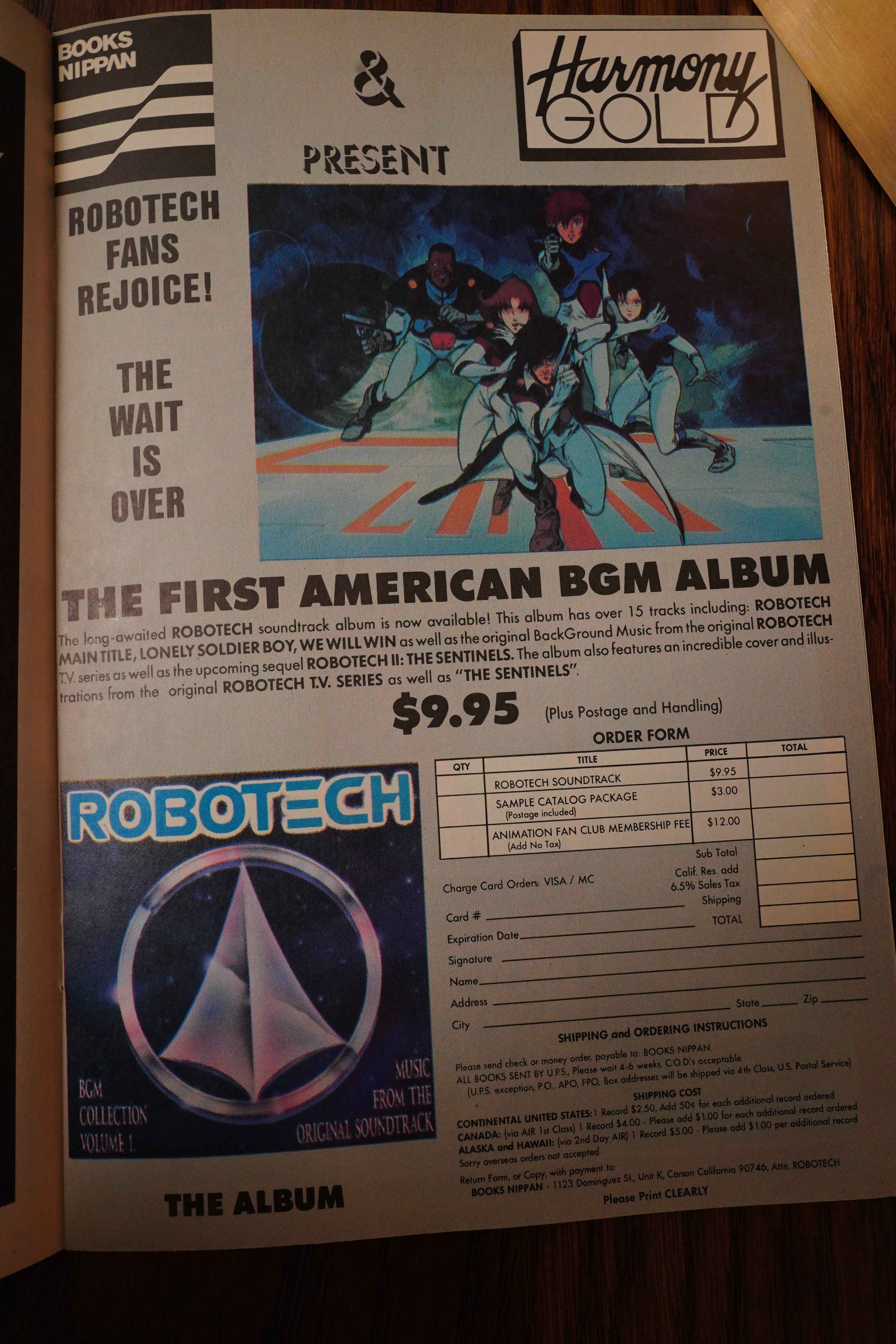
The wait is over! Robotech: The Album! Can’t find it on Youtube, but there’s a lot of individual clips:

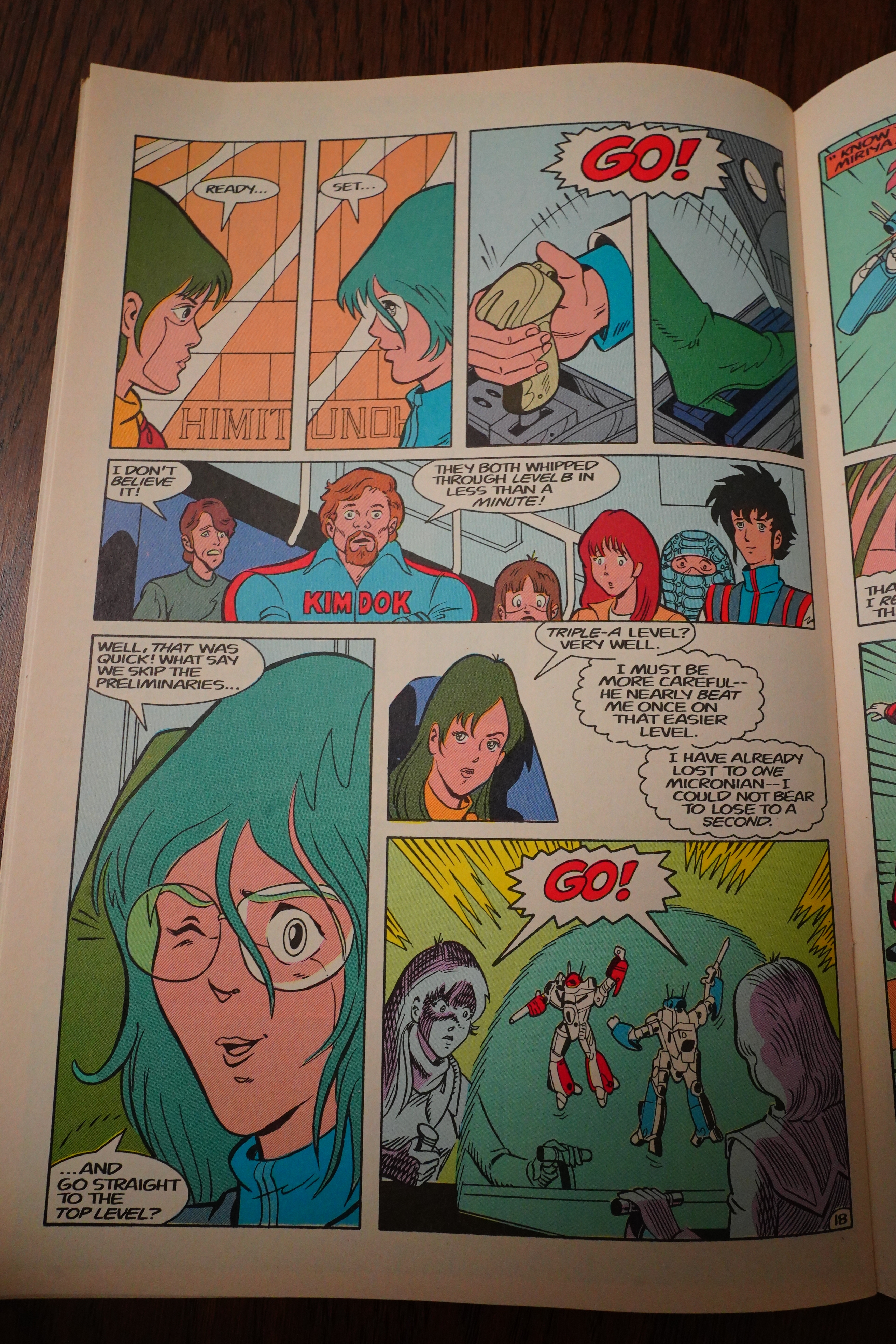
I’ve stopped mentioning it, but the penciller and inkers keep on changing, so things get quite off model between issues. Whoever drew this issue seemed to think they were doing an issue of Archie, apparently.
Is that really how the cover looked?
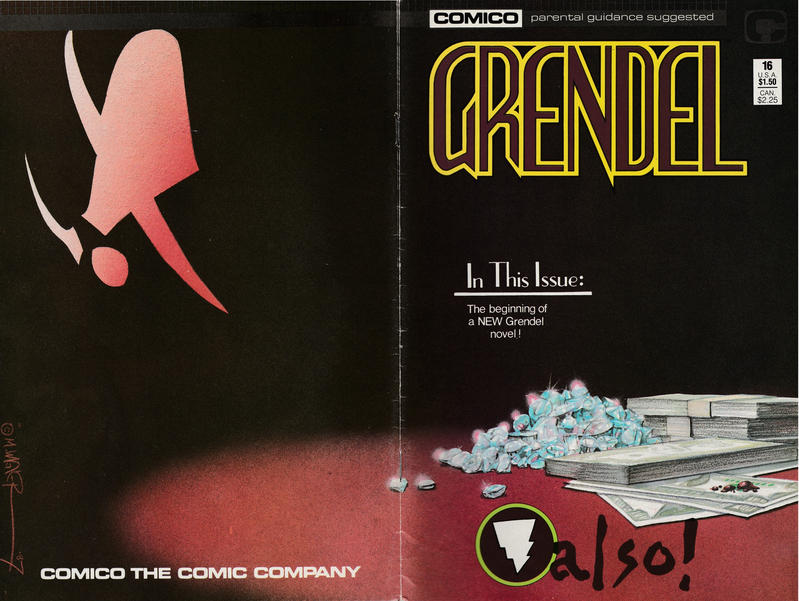
Well… sort of! It didn’t translate well to black and white…
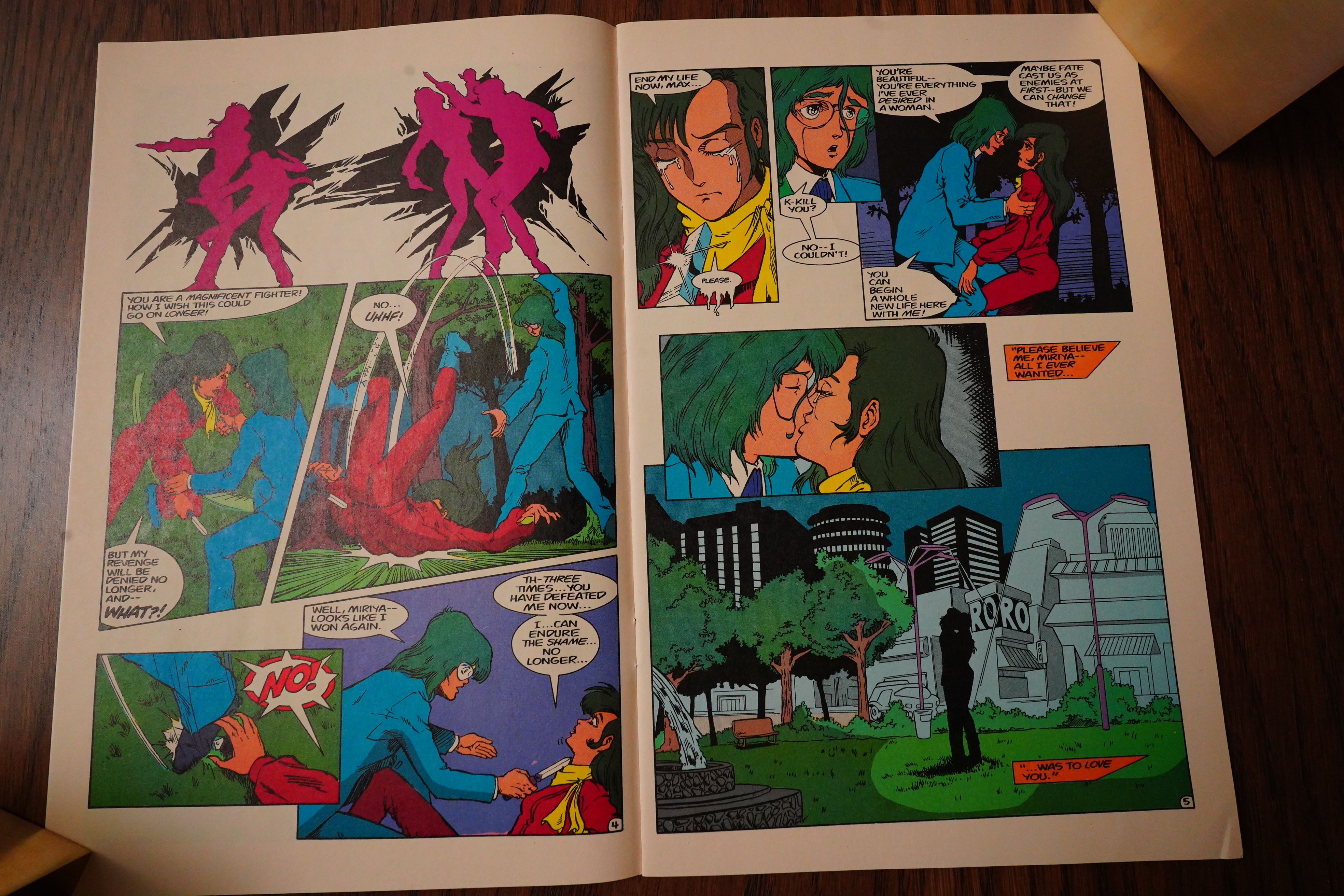
Aww! How romantic.
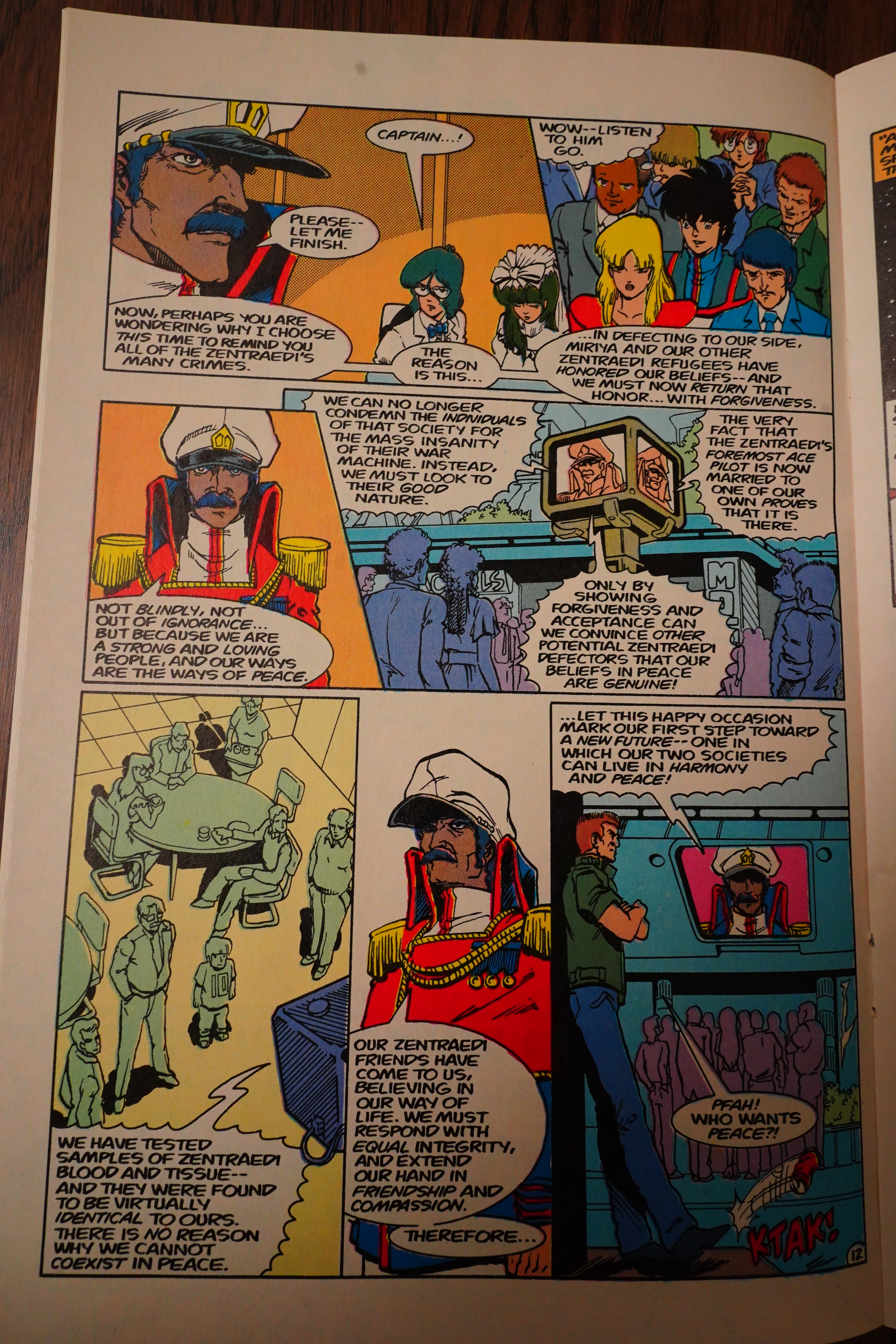
There’s also a refugee angle to the storyline…
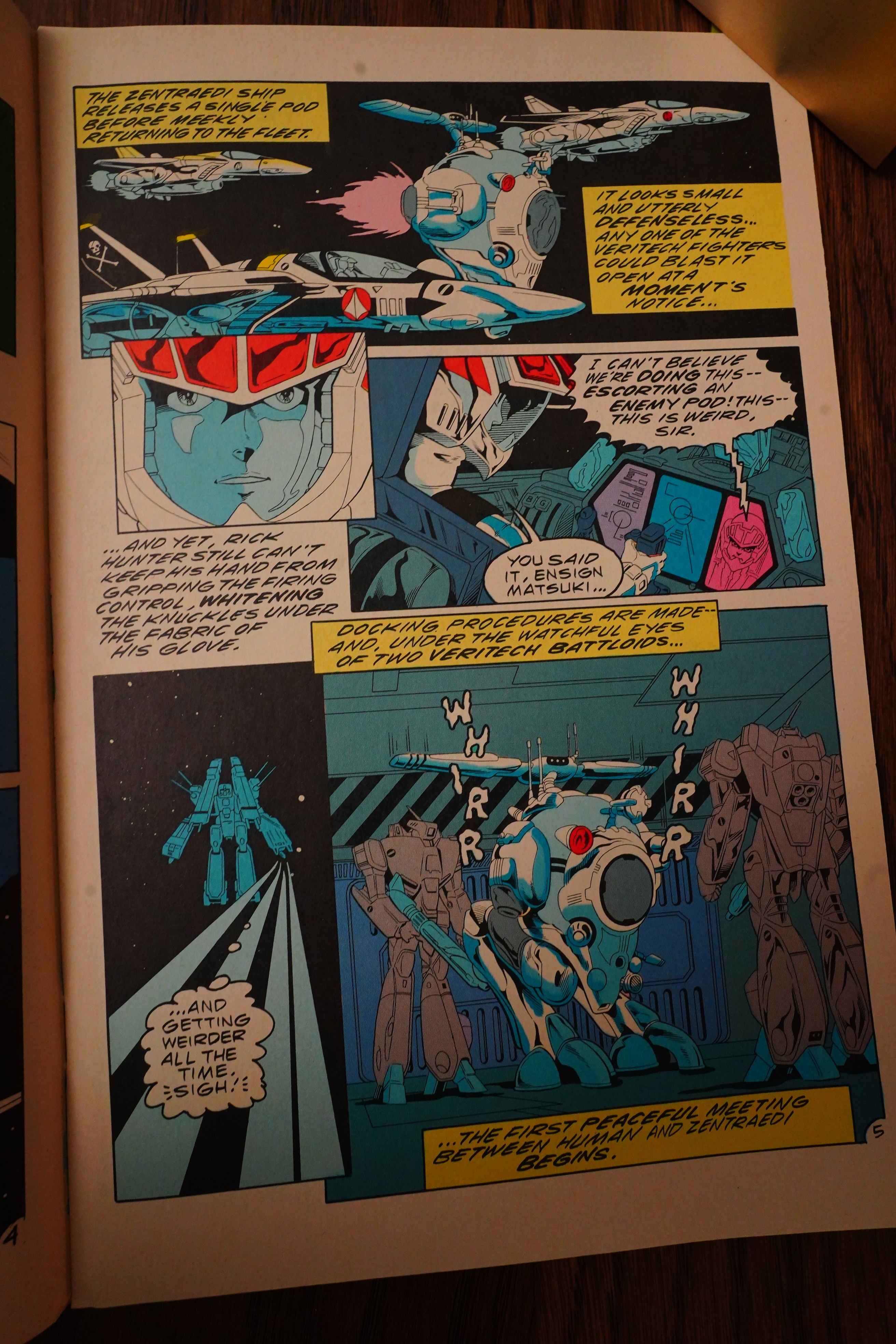
And then they get in a letterer that letters all weird! Waugh!
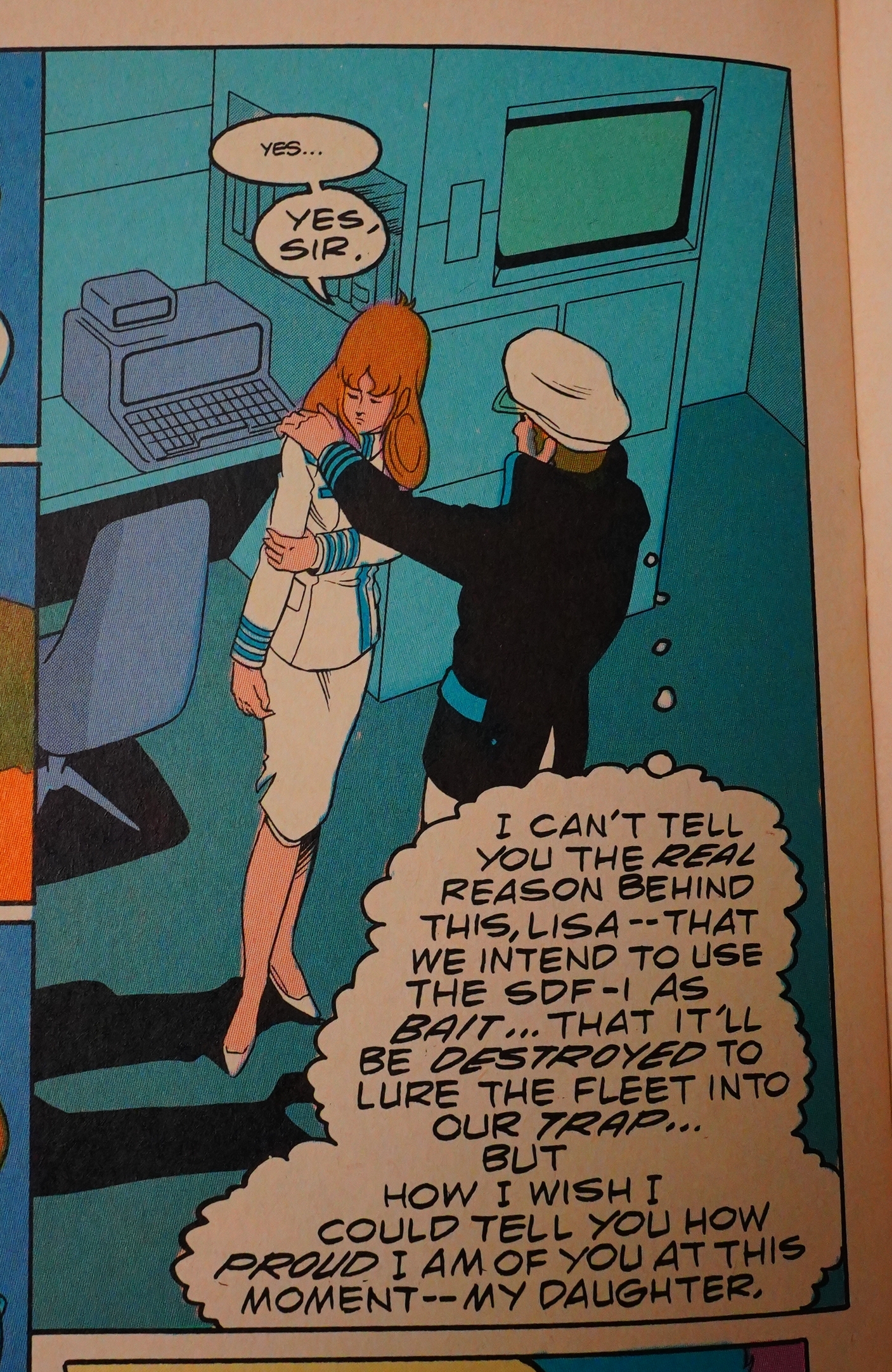
We’re mostly spared the thoughts of the characters, but once in a blue moon there’s panels like this. Was it like this in the original TV series, too, or did they just run out of room to depict it in a more natural way.
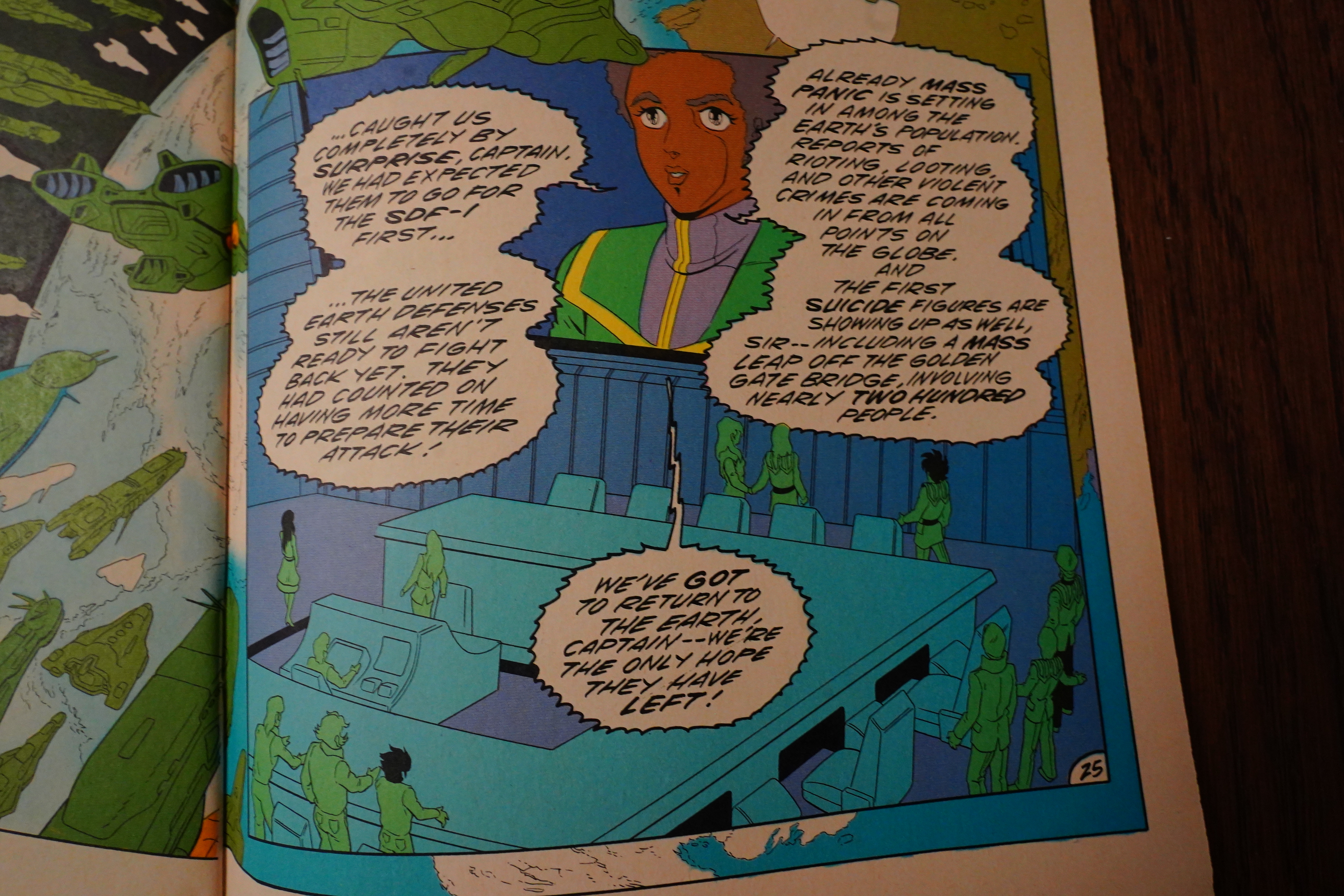
Humans are a cowardly lot!
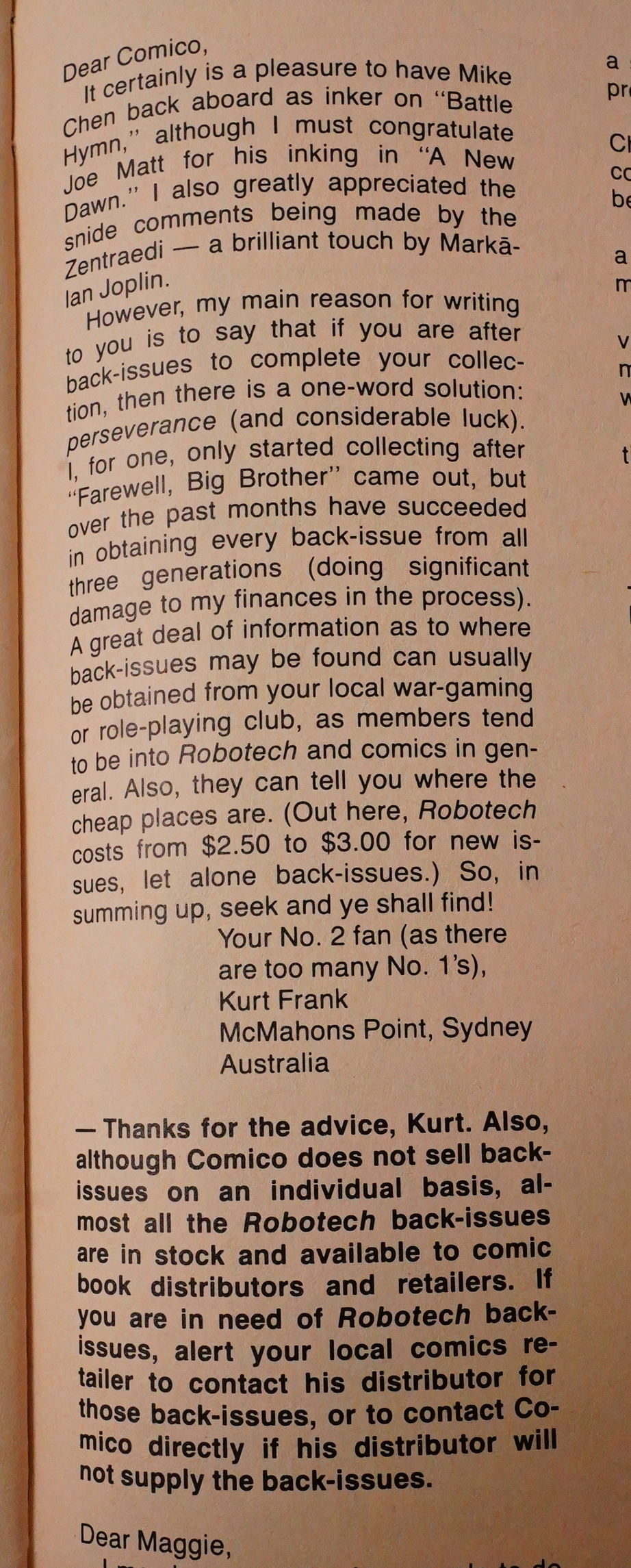
Huh. “Almost all the Robotech back-issues are in stock and available to comic book distributors and retailers.” That’s pretty impressive, but also worrying — were they printing so many extras? Or is this because they got returns from newsstand distribution?
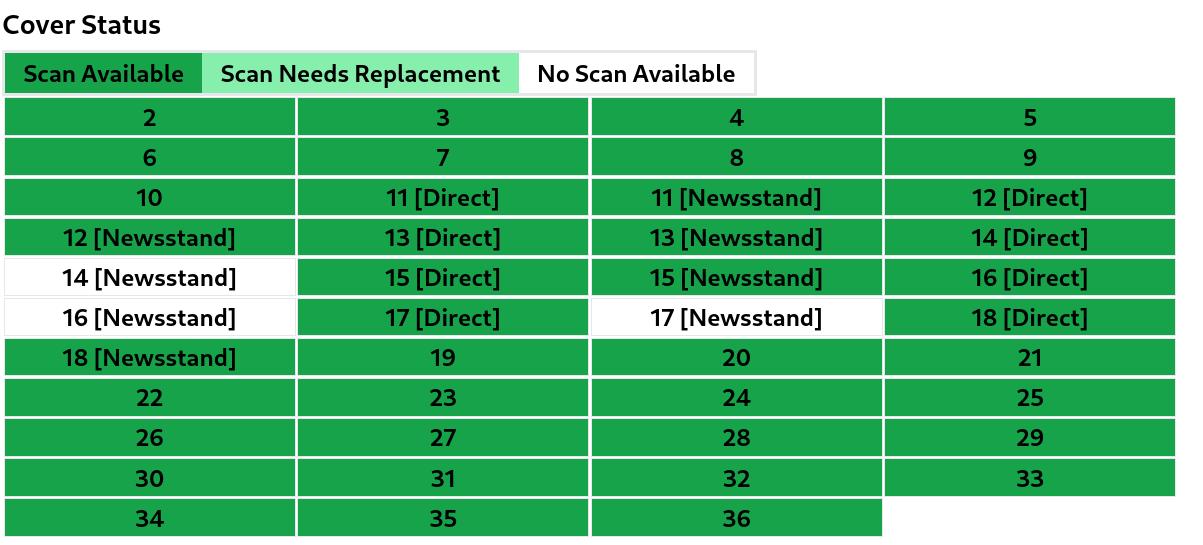
If it’s the latter, that sounds like a sound decision, but if it’s because they were over-printing, then that must have been a liquidity drain…
(Looks like the newsstand experiment only lasted a year or so…)
But this explains why Robotech issues, in general, can still be had at cover price or less (if you buy a lot of them). The only issues that were expensive were the ones toward the end of each Robotech series. I think I paid $50 for #1-33 (in total), and then $50 (each) for #34 and #36. By that point, Comico was bankruptish, so I’m guessing not a lot of copies were printed?
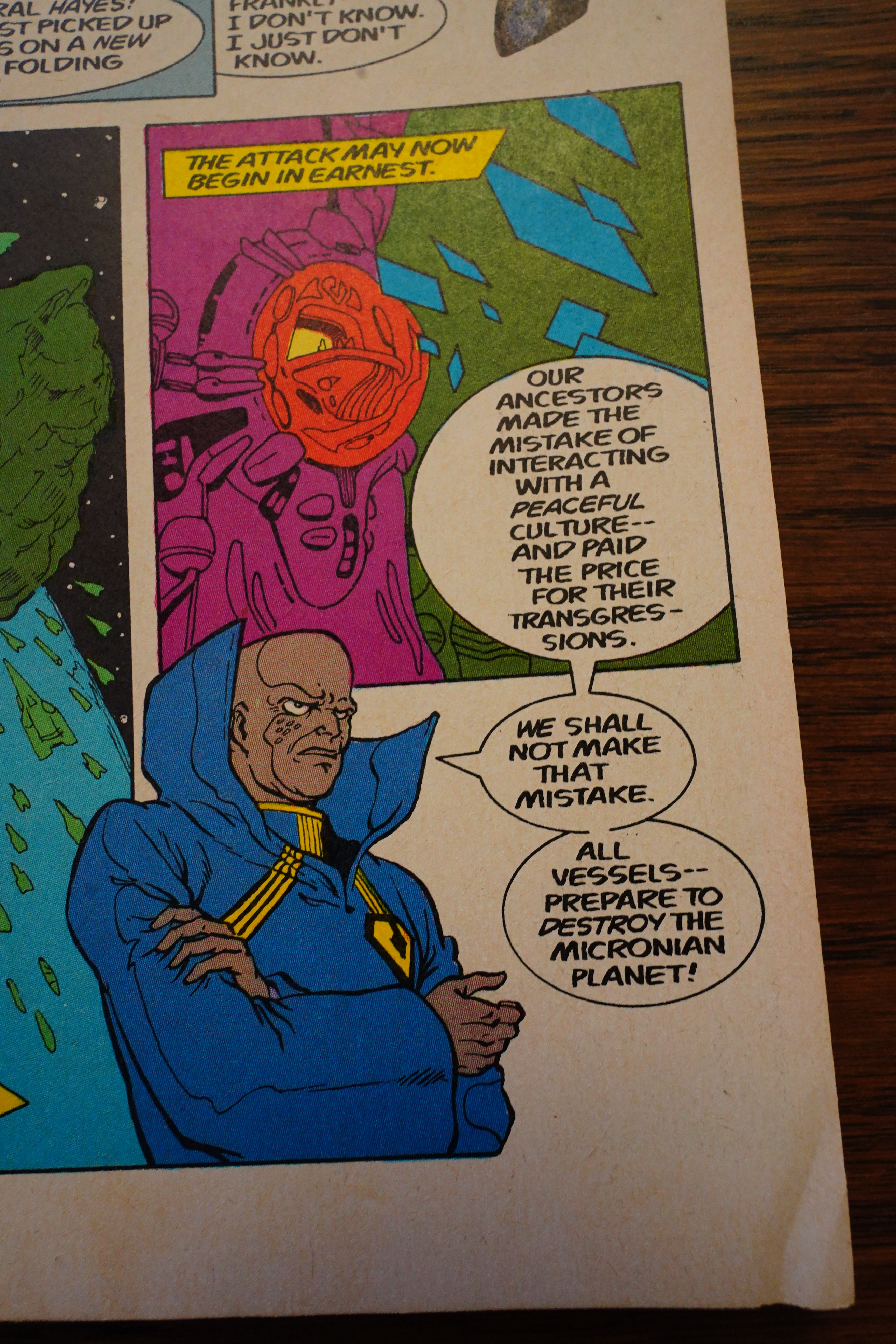
Oh, they did, now?
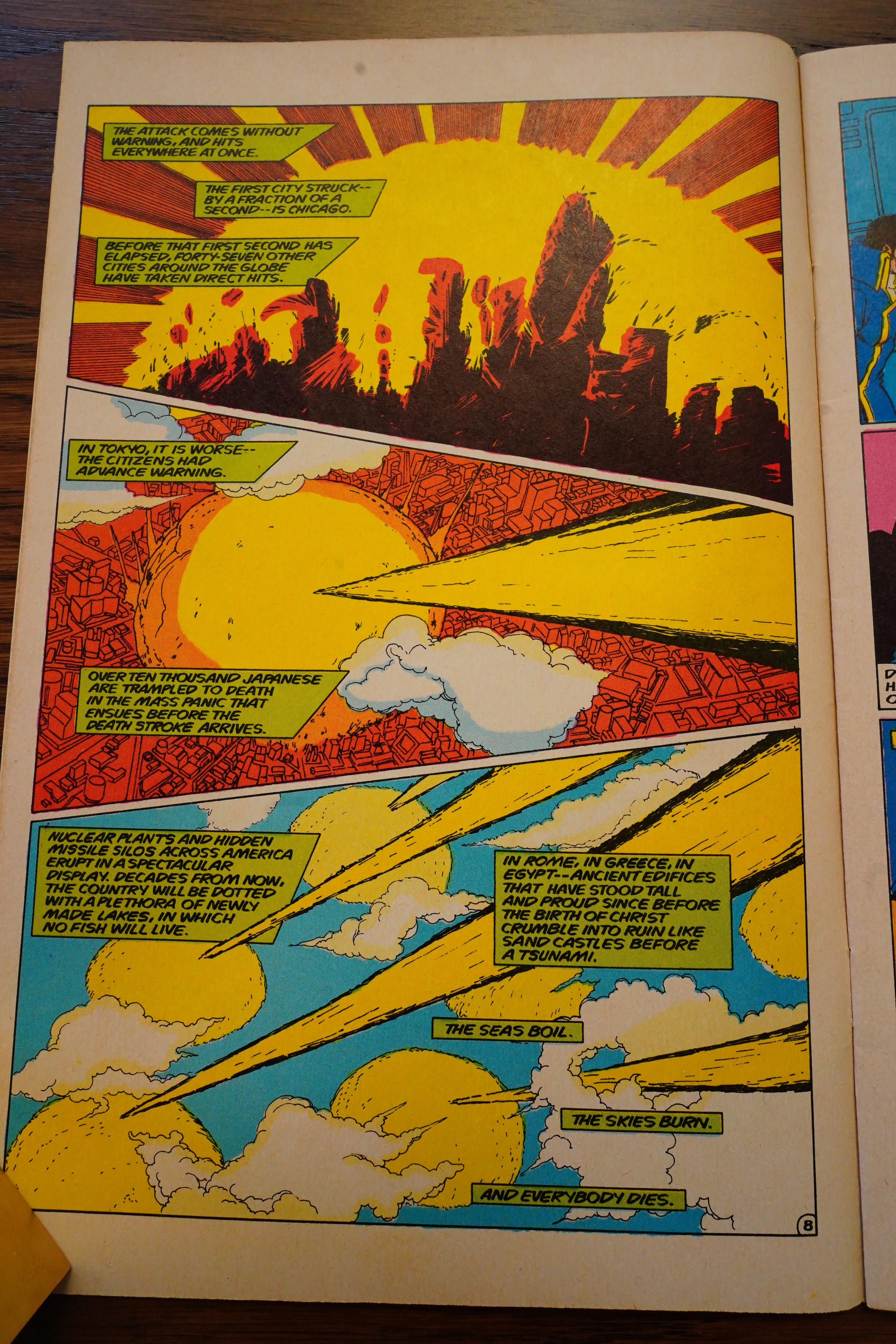
As this is a Japanese series, they then go on to destroy the Earth and kill everybody. Well, except for a few survivors. Very efficient, finally, and makes my earlier musings about the writers not actually knowing where things were going when they were dropping hints about “not being allowed to disturb the Micronians” etc etc. You’d think they’d have plotted something like this out before they started animating it, but… perhaps not? (I’m assuming here that the adaptation here is loyal to the animated series. And perhaps the Robotech animated series was changed since they edited together three unrelated series into one?)
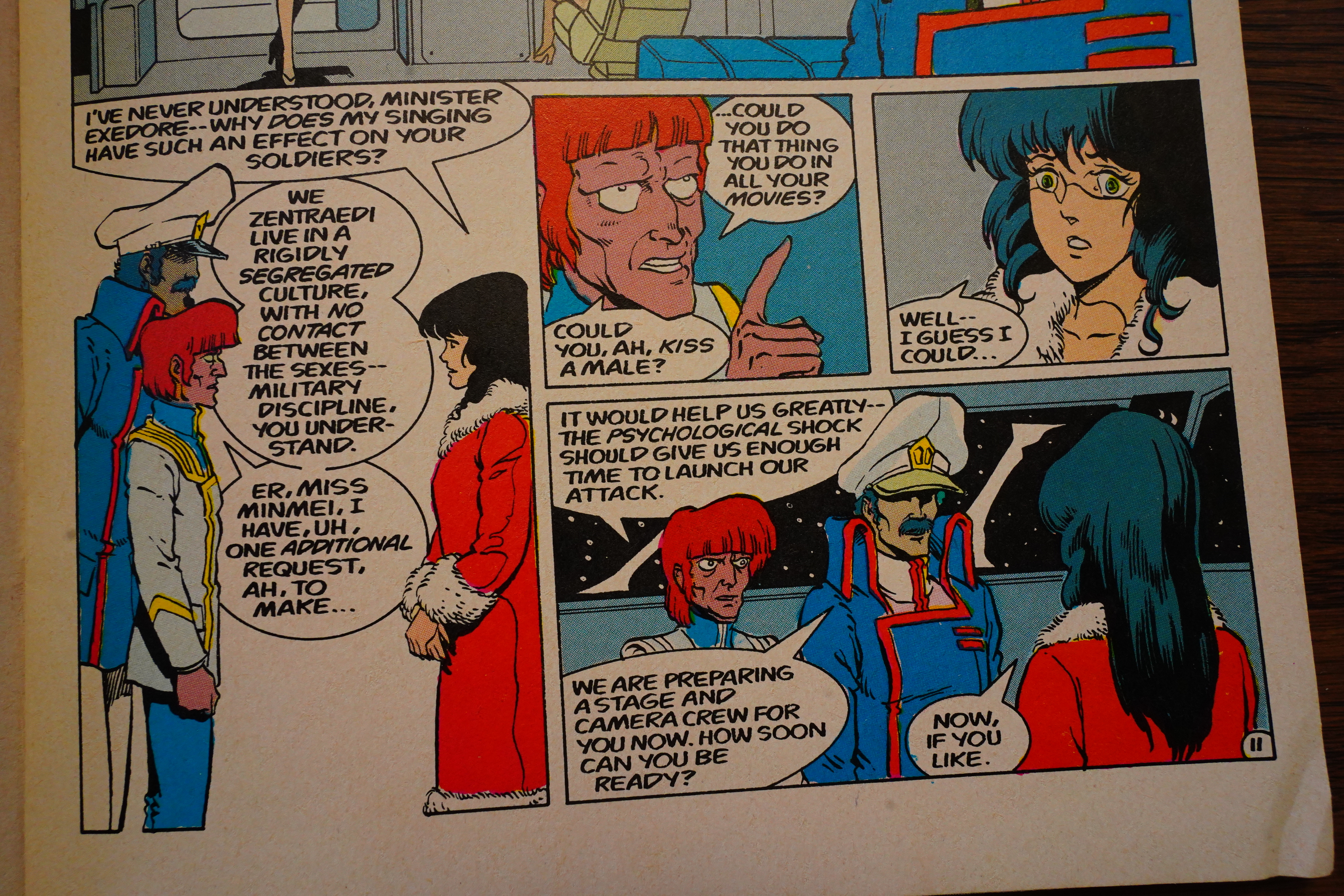
Sure, sure, why not.
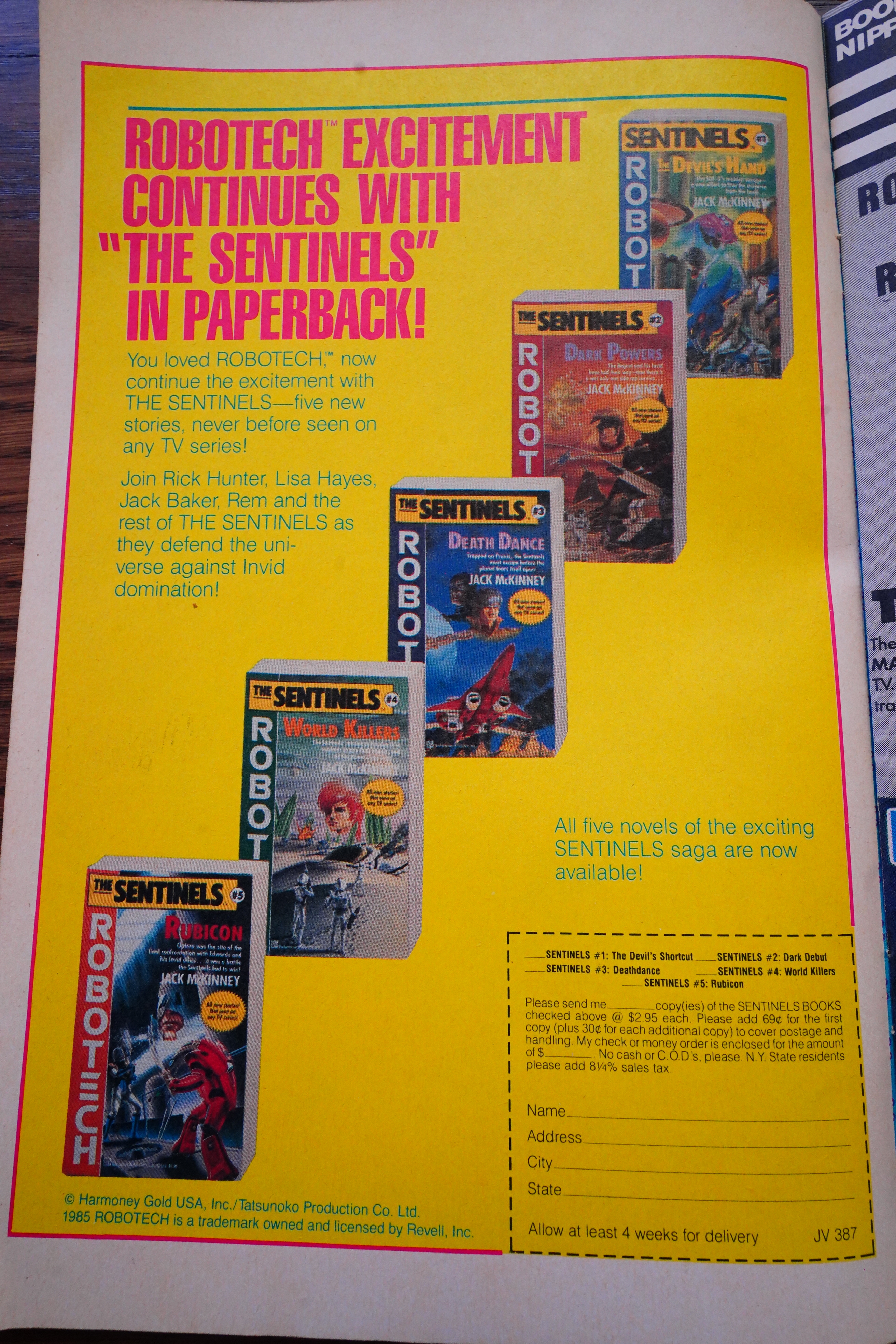
Wow, that Jack McKinney guy writes fast… he’s whipped up five (!) Robotech: The Sentinels up now? Perhaps it’s one of those collective names that have lots of different writers actually writing…
In 1987, the Robotech animated series was adapted into novel form by authors James Luceno and Brian Daley and published by Del Rey Books. Having previously collaborated on the animated series Galaxy Rangers, the pair released the Robotech novels under the unified pseudonym of “Jack McKinney”.
But there’s only two of them, so still impressive.
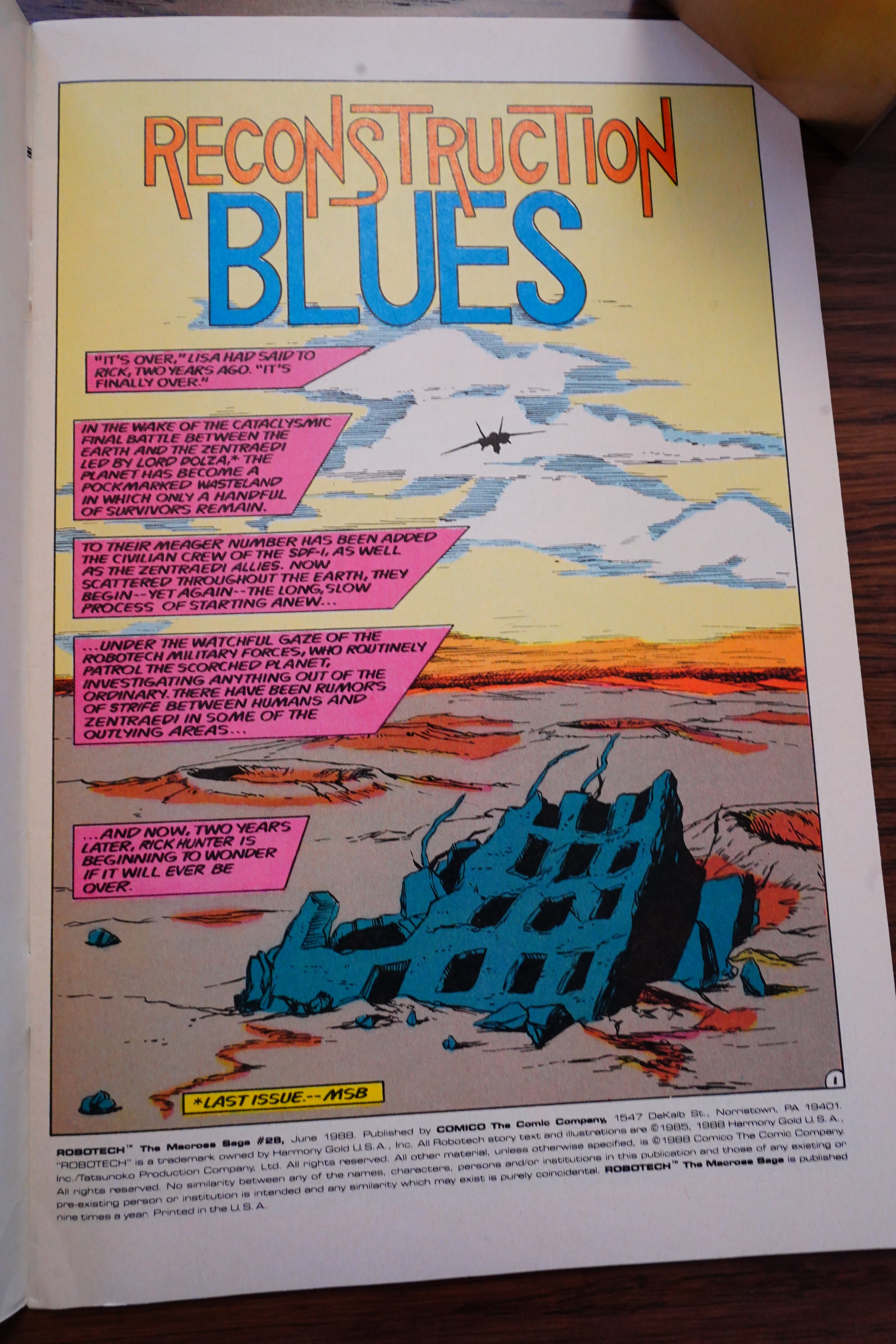
I think I said at the start that Robotech had a kind of stasis going on? Well, that’s not really true after the initial dozen episodes — things really do develop, and things change hugely.
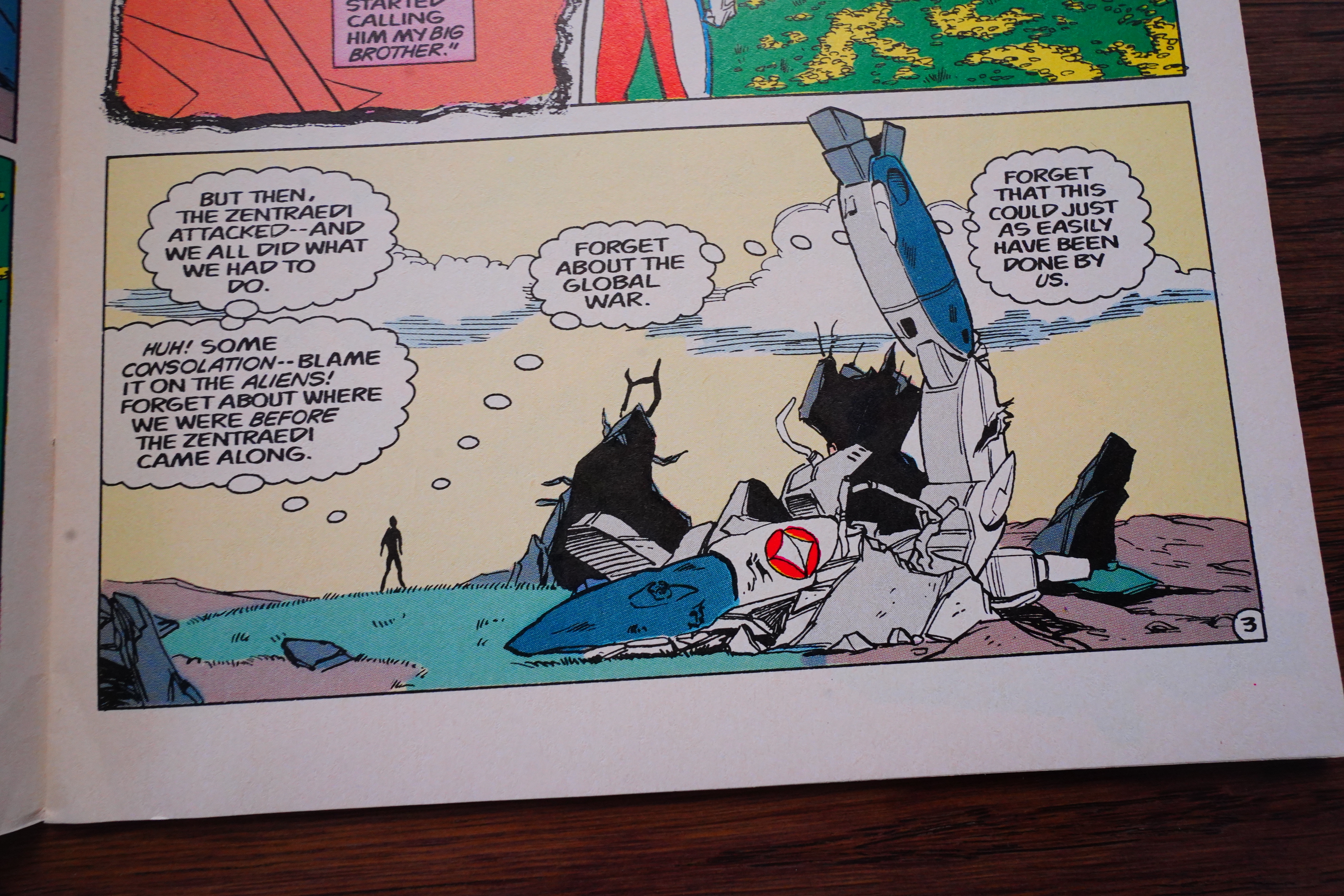
But the last stretch of the series is about life on Earth after the apocalypse.
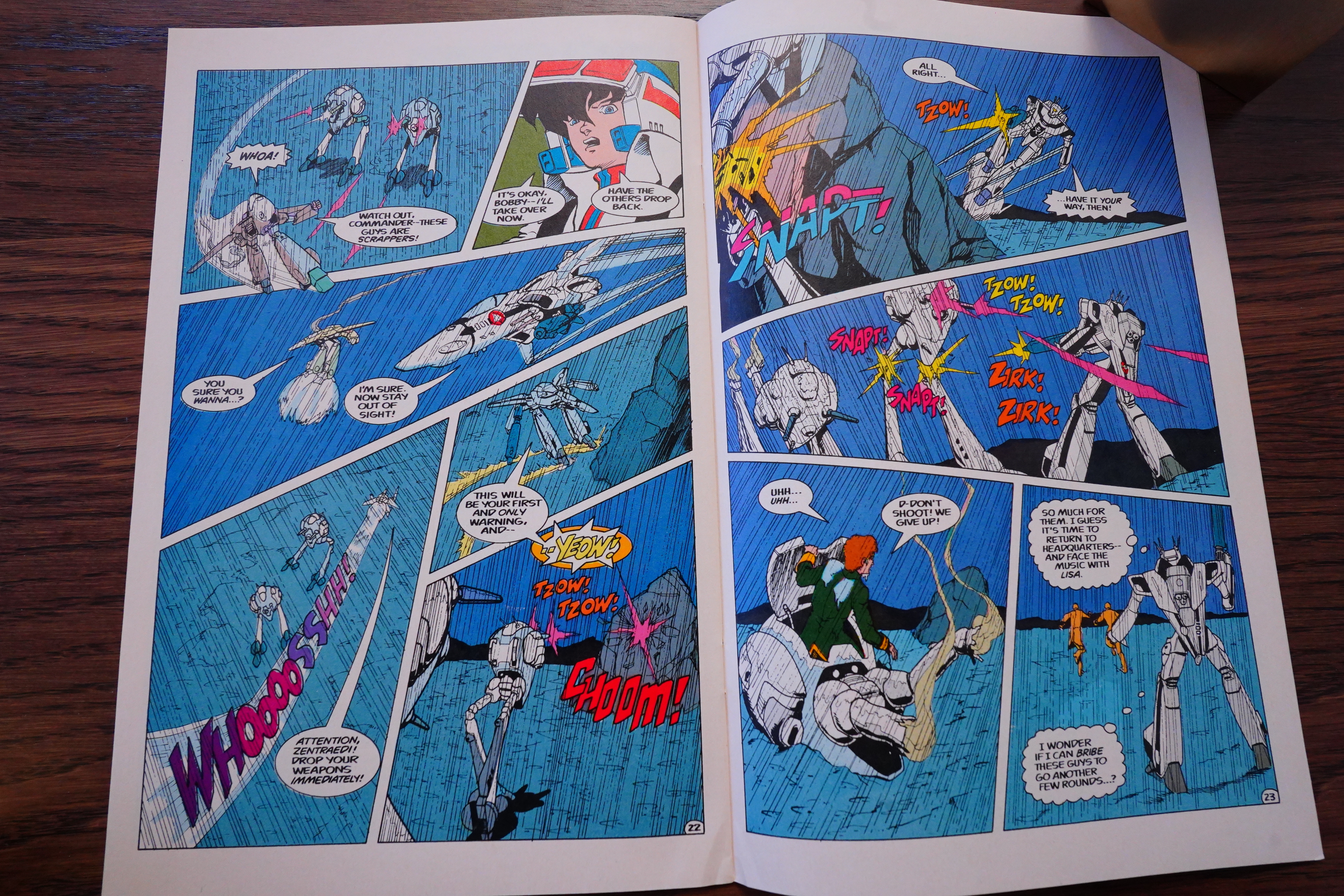
There’s some rebel aliens running around, and Rick is now basically a cop. But he doesn’t arrest anybody! He just stops them after they’ve killed a bunch of people and lets them run away?
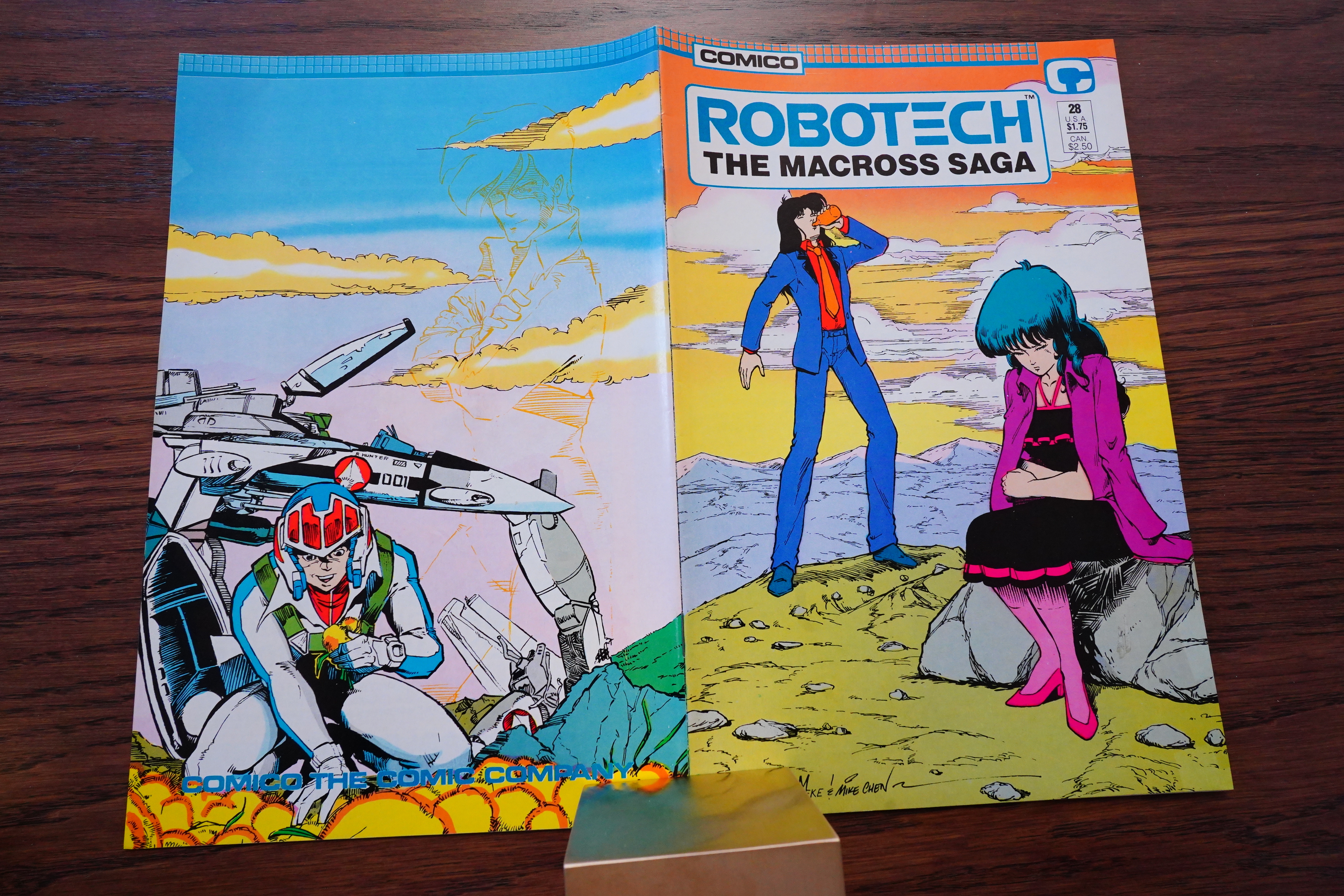
Oh yeah, I forgot to mention that they stop running ads on the back covers. But most of the back covers aren’t wraparound — there’s just separate images there. Perhaps they originally meant to have ads there, but then that stopped when newsstand distribution stopped?
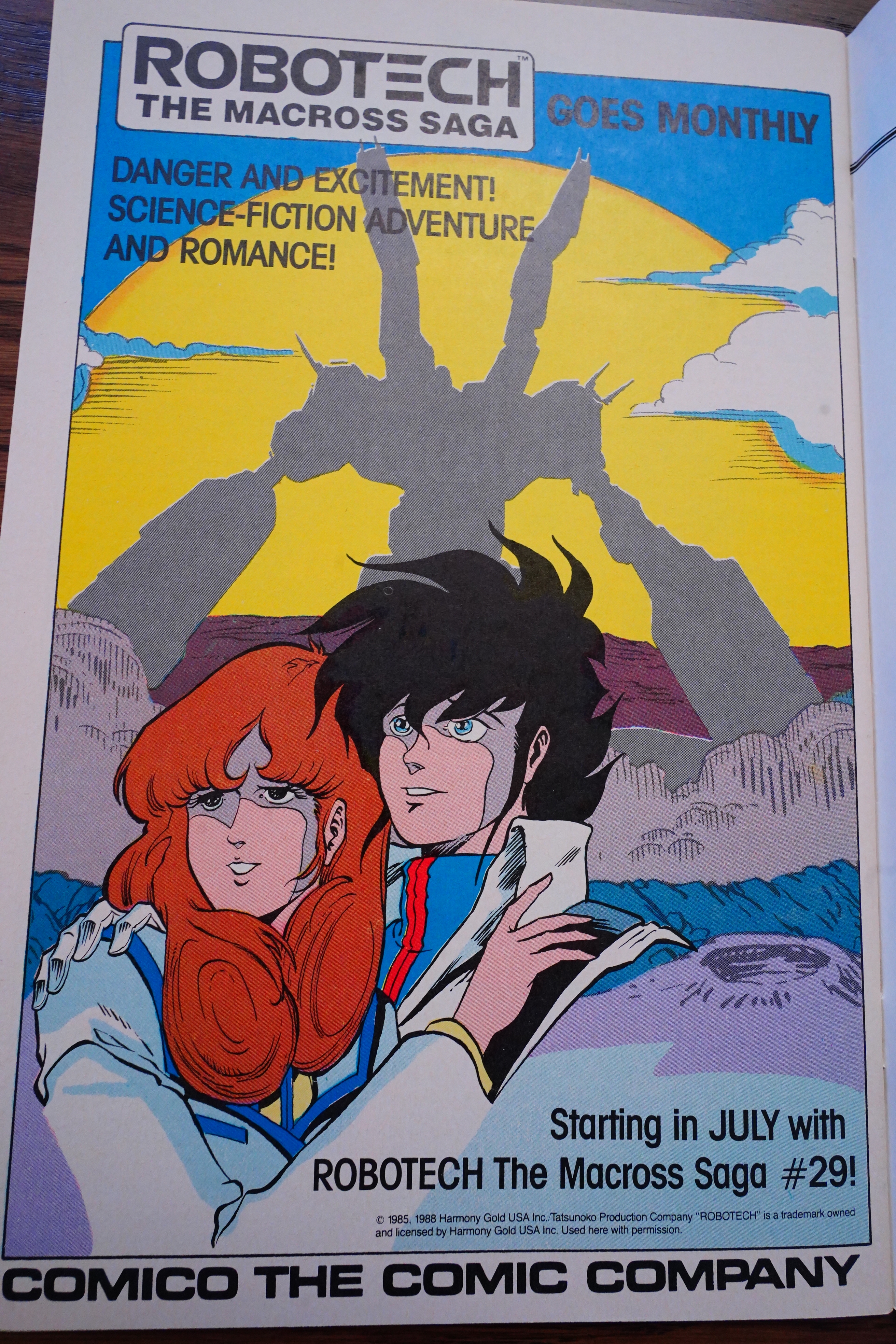
Huh — the book goes monthly? When they hadn’t really been able to keep the art team going on a 45 day schedule with any regularity? Well, OK, the other two Robotech series (being shorter, thank goodness) had ended by this point, so I guess it makes sense to step up the tempo. At least for the publisher.
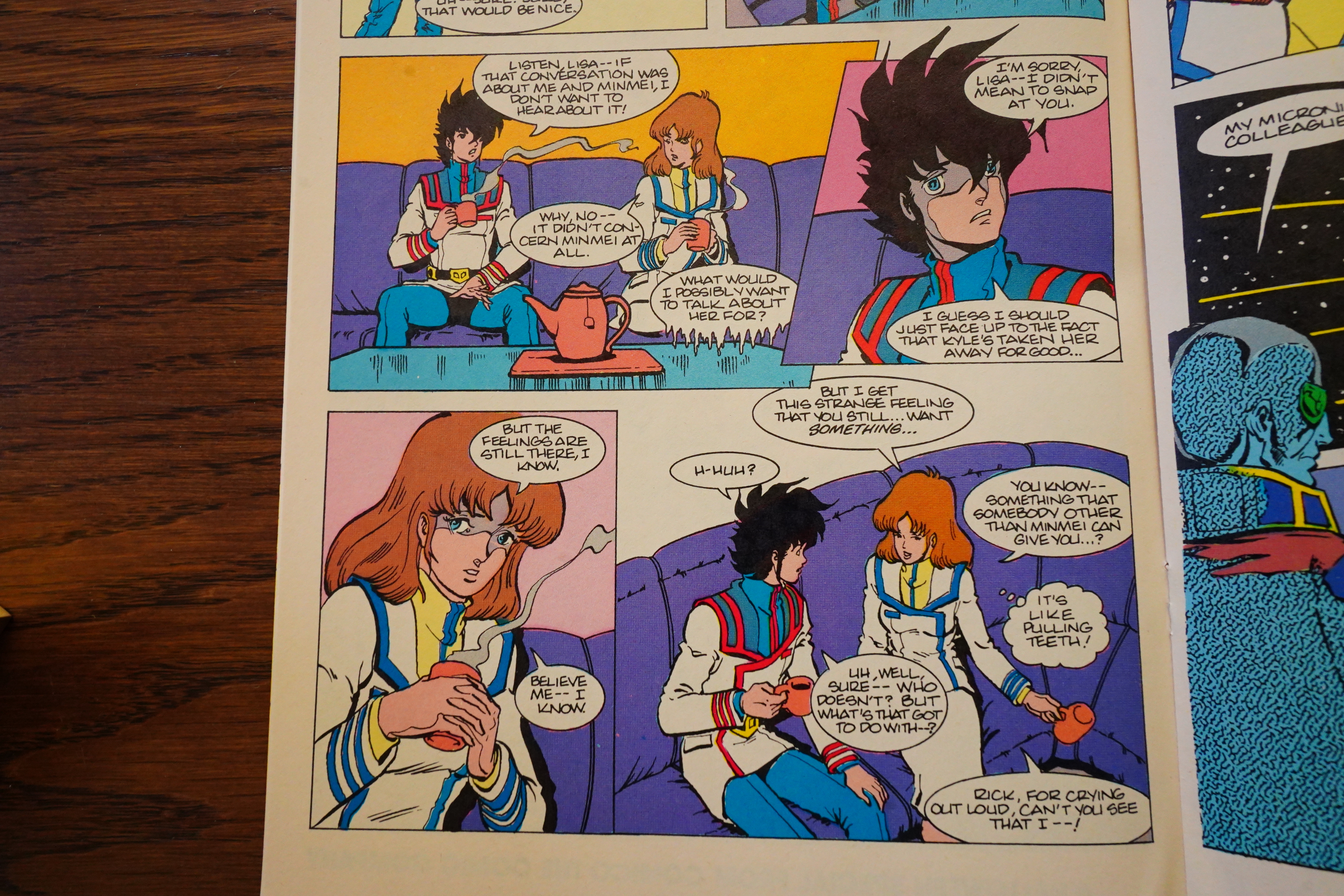
The last stretch of the book really leans into the romance bits. But it’s like pulling teeth — it all revolves around Rick being obtuse.
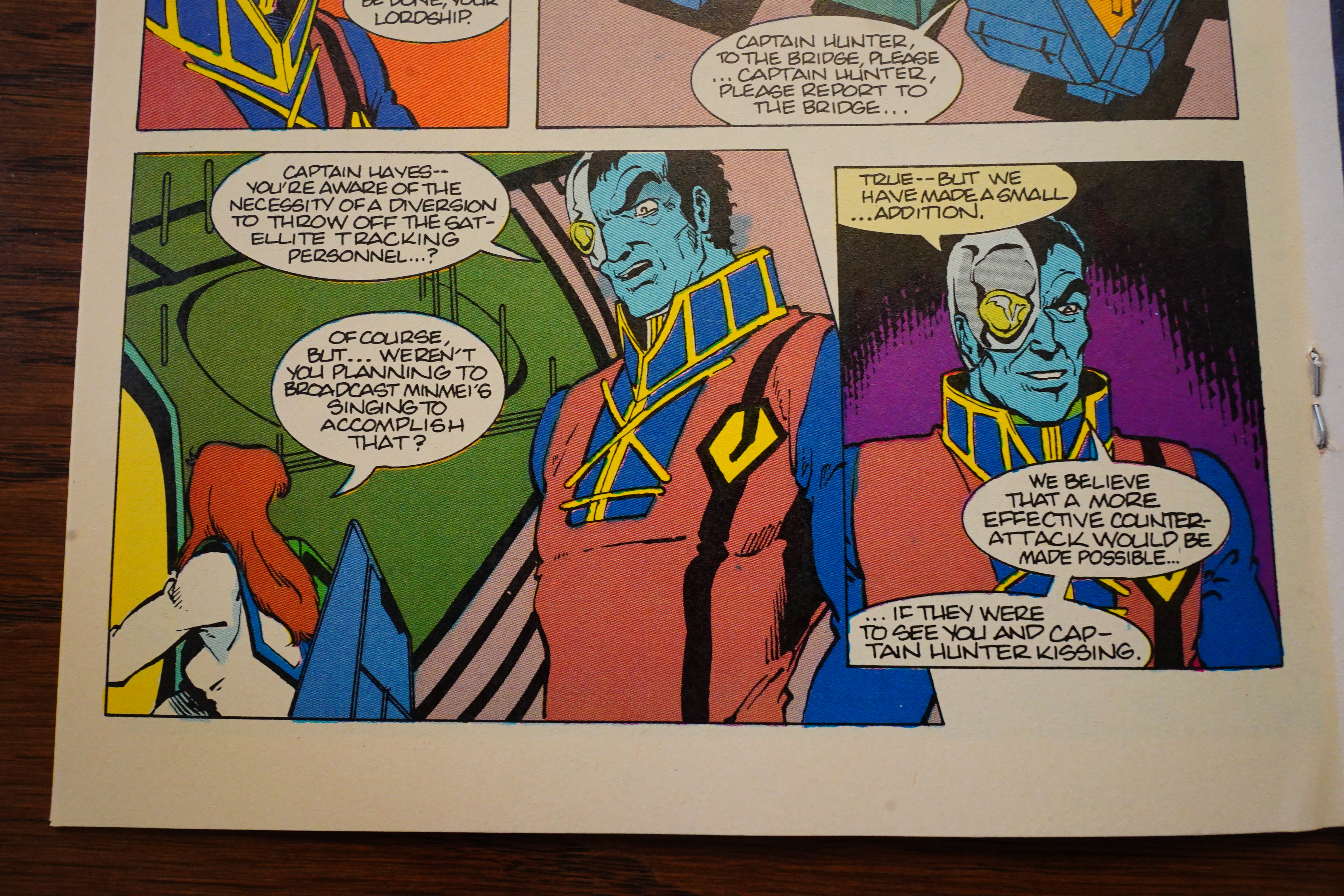
*gasp* Now that doesn’t sound like a plot contrivance at all!!
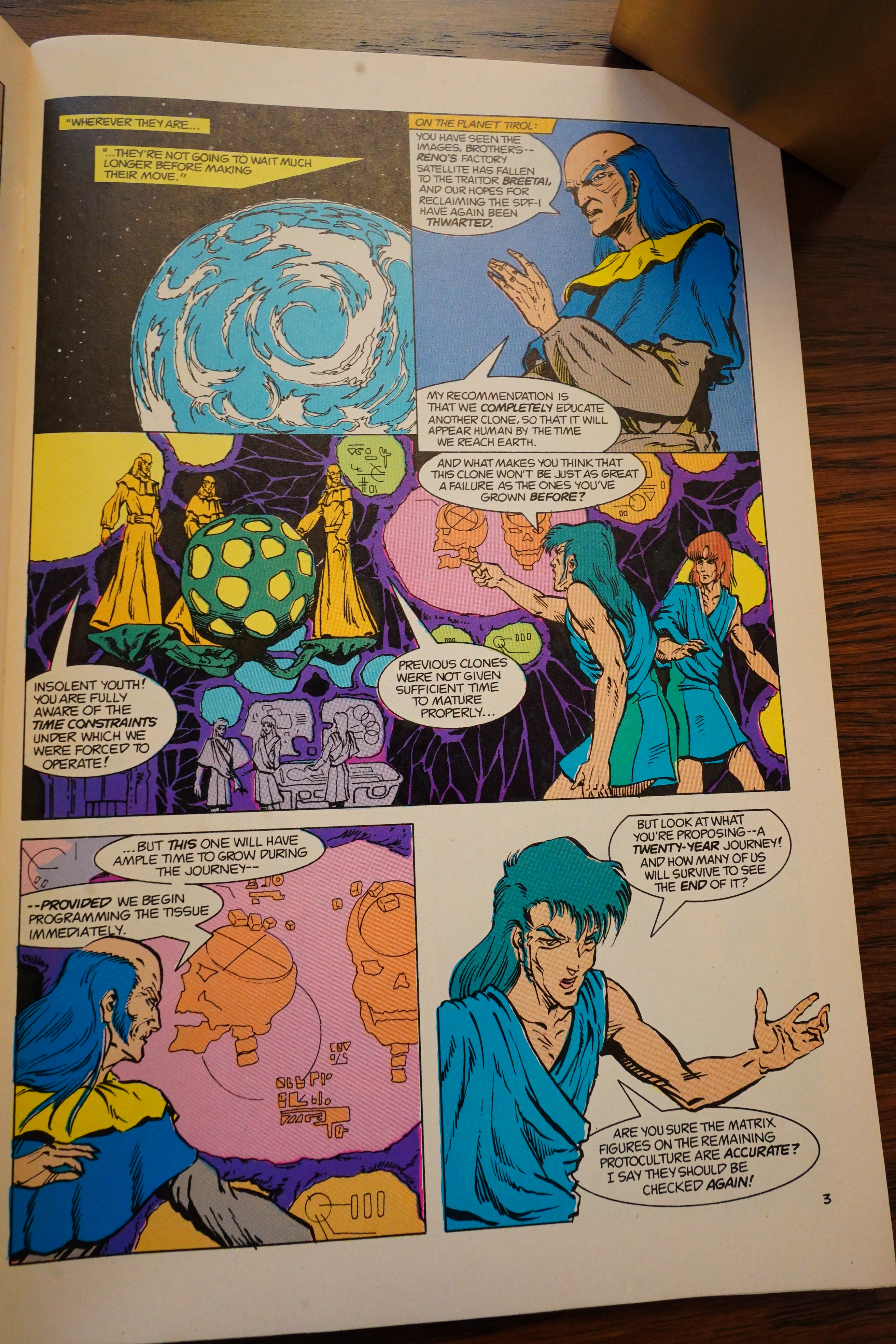
Uhm… “The Masters”? As in “Robotech: Masters”? That’s the next series, right? This presumably wasn’t in the original series, but is added as a bridge between the series?
Robotech is famously edited together from three unrelated series, but skimming the Wikipedia article, it’s hard to say whether they just appended one after another, or really mixed up scenes from the three separate series in the same episodes? The article reads like you’re already familiar with everything… a common problem with nerdy culture stuff.
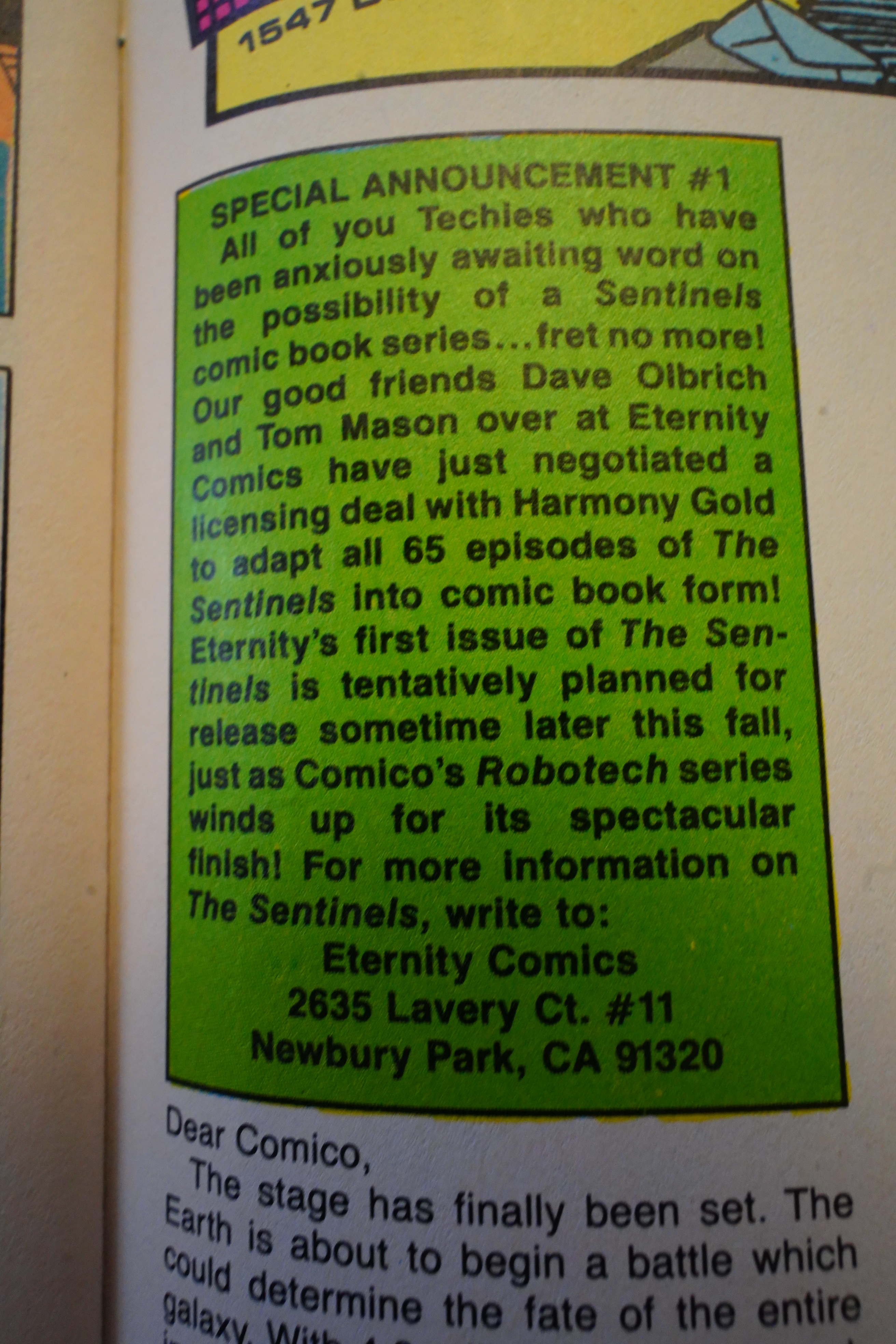
Huh. That’s one way of announcing that Comico has lost the Robotech franchise, I guess.
And… 65 episodes? Robotech II: The Sentinels was cancelled after three episodes, wasn’t it?
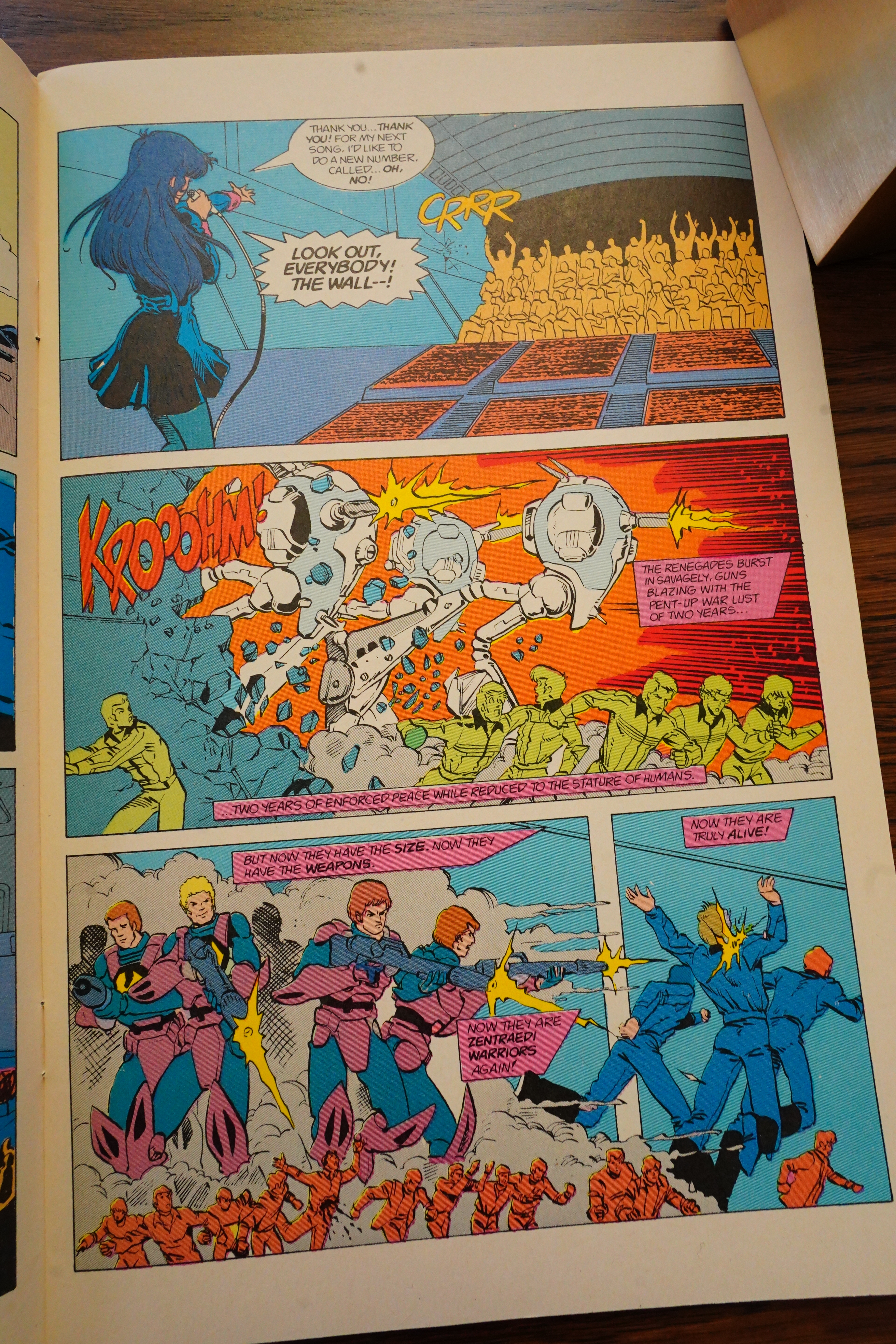
Scenes like this make me wonder whether Attack On Titan was influenced by Robotech at all — you have the obvious horror possibilities inherent in having one group of people being huge and the other small: Squish squish. But that’s not touched upon at all here — the huge people just shoot the small people instead. But I mean, this is for children, so…
On the other hand:
I know naaathing.
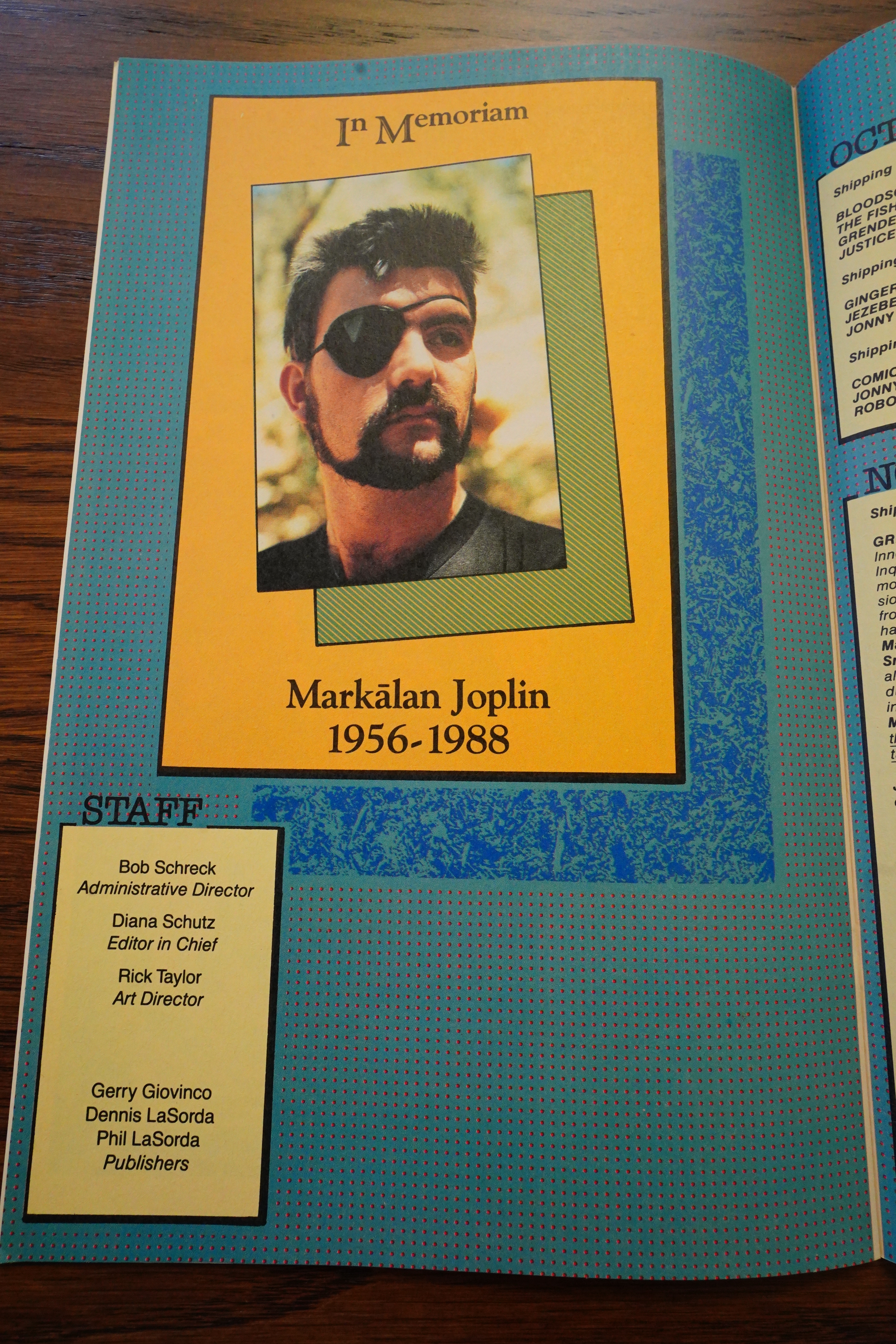
Oh. The writer died?
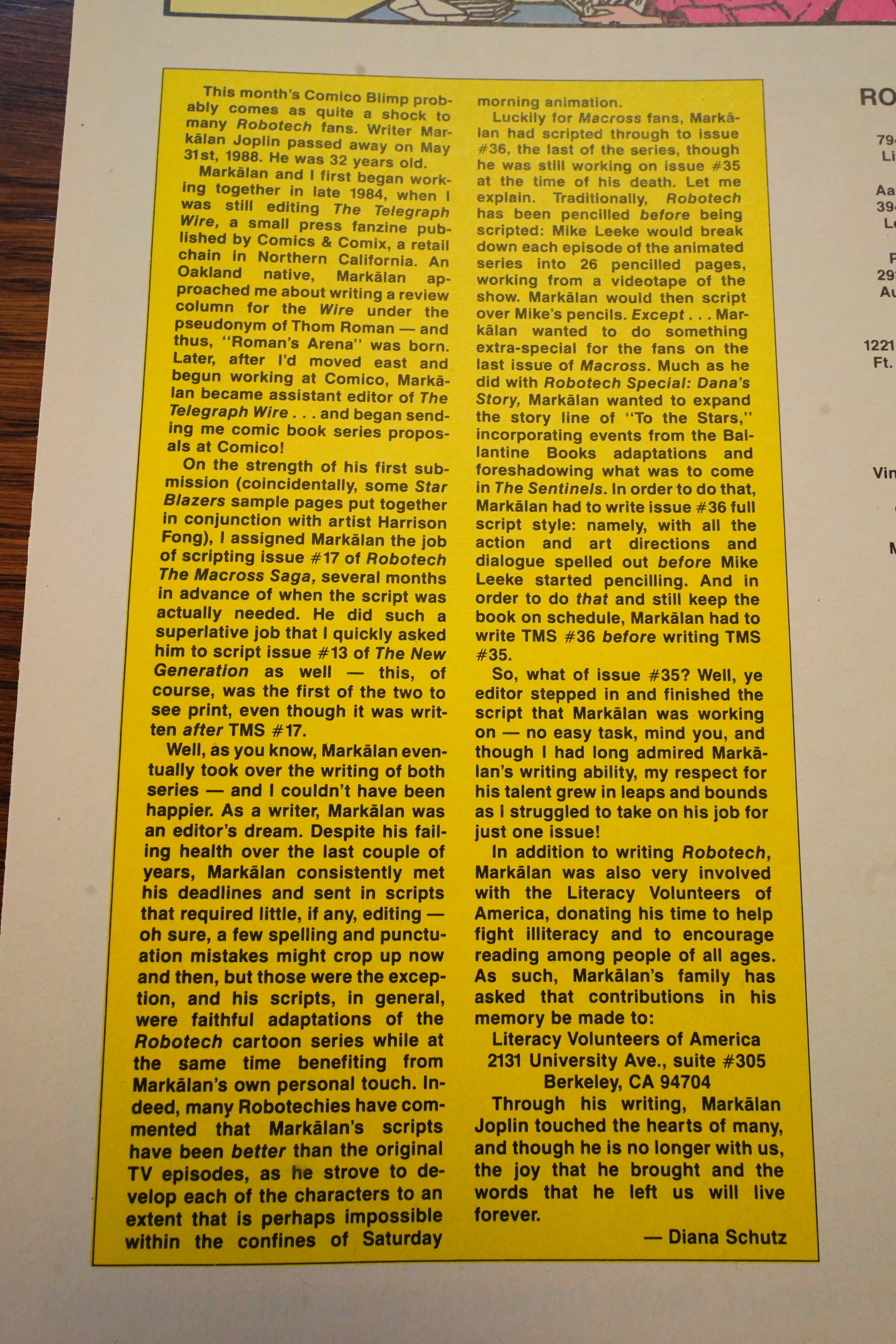
The editor explains, and also finally tells us how the adaptation has been done: The penciller looks at the video tape and breaks it down into comics form, and then the writer (billed as “scripter”, but that can mean anything) comes in at a later point (and adds the text). I had assumed that the writer did the adaptation, but that explains the wildly differing approaches from the different artists.
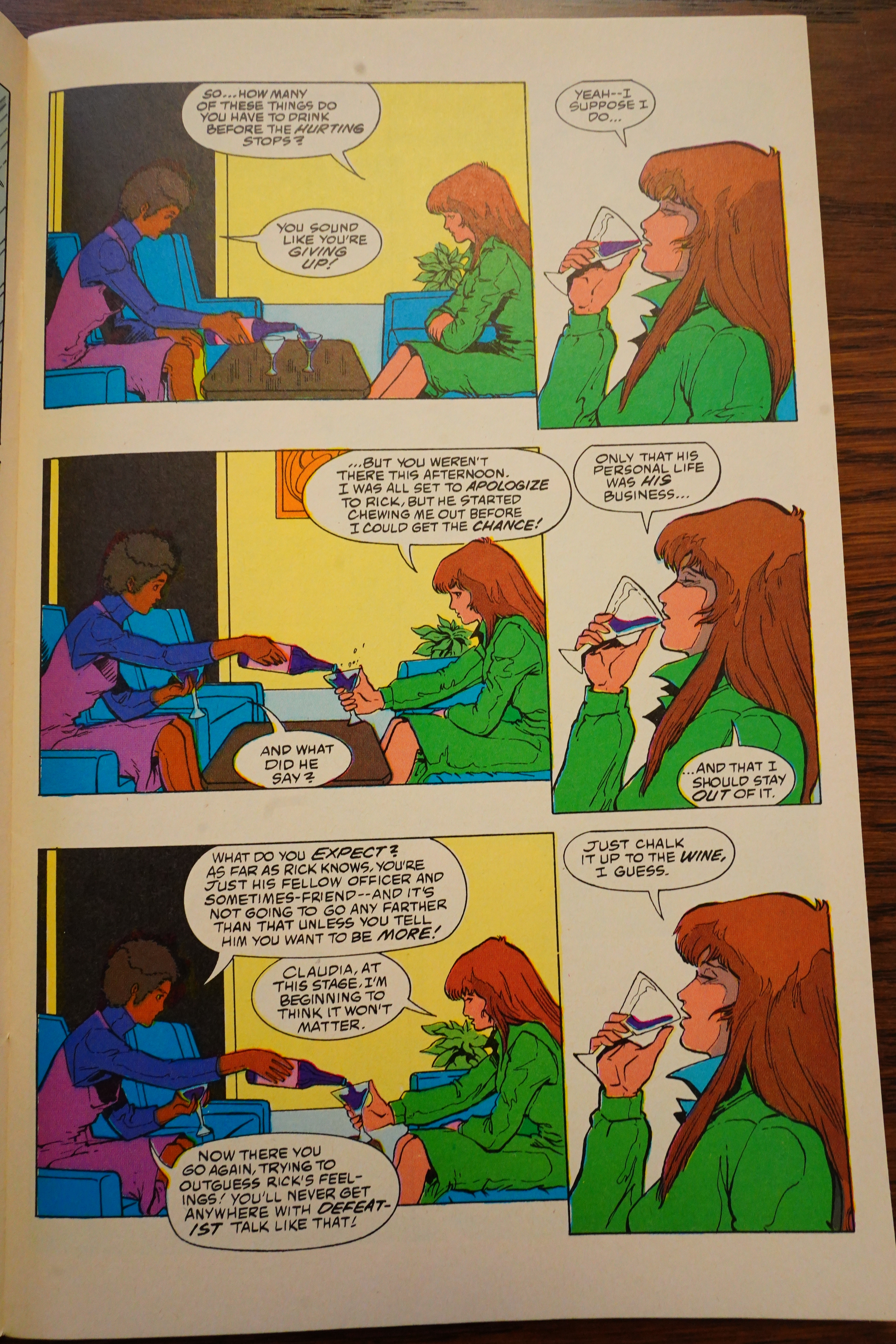
The artists discover a labour saving device.
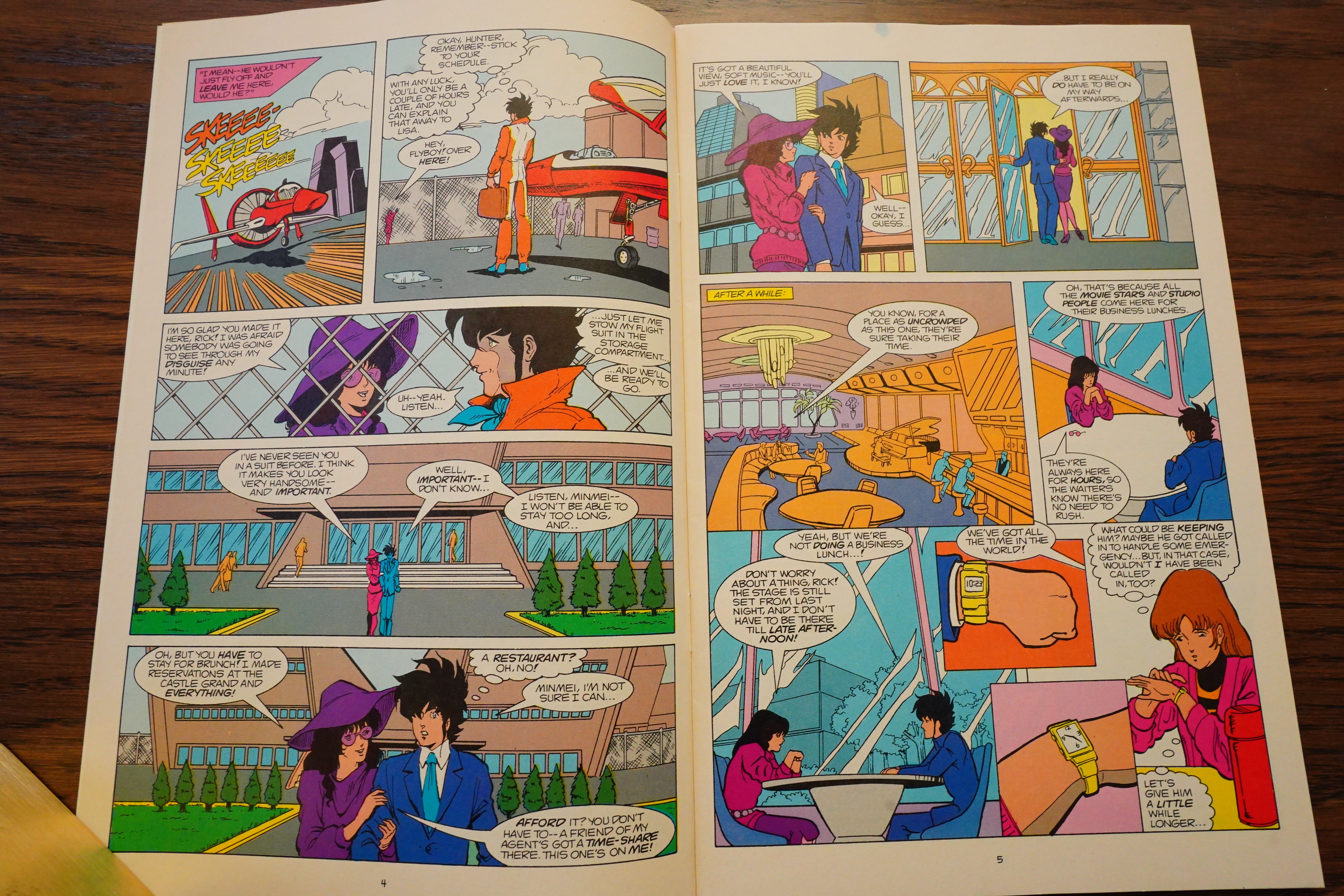
The final issues are 90% Rick/Minmei/Lisa romance.
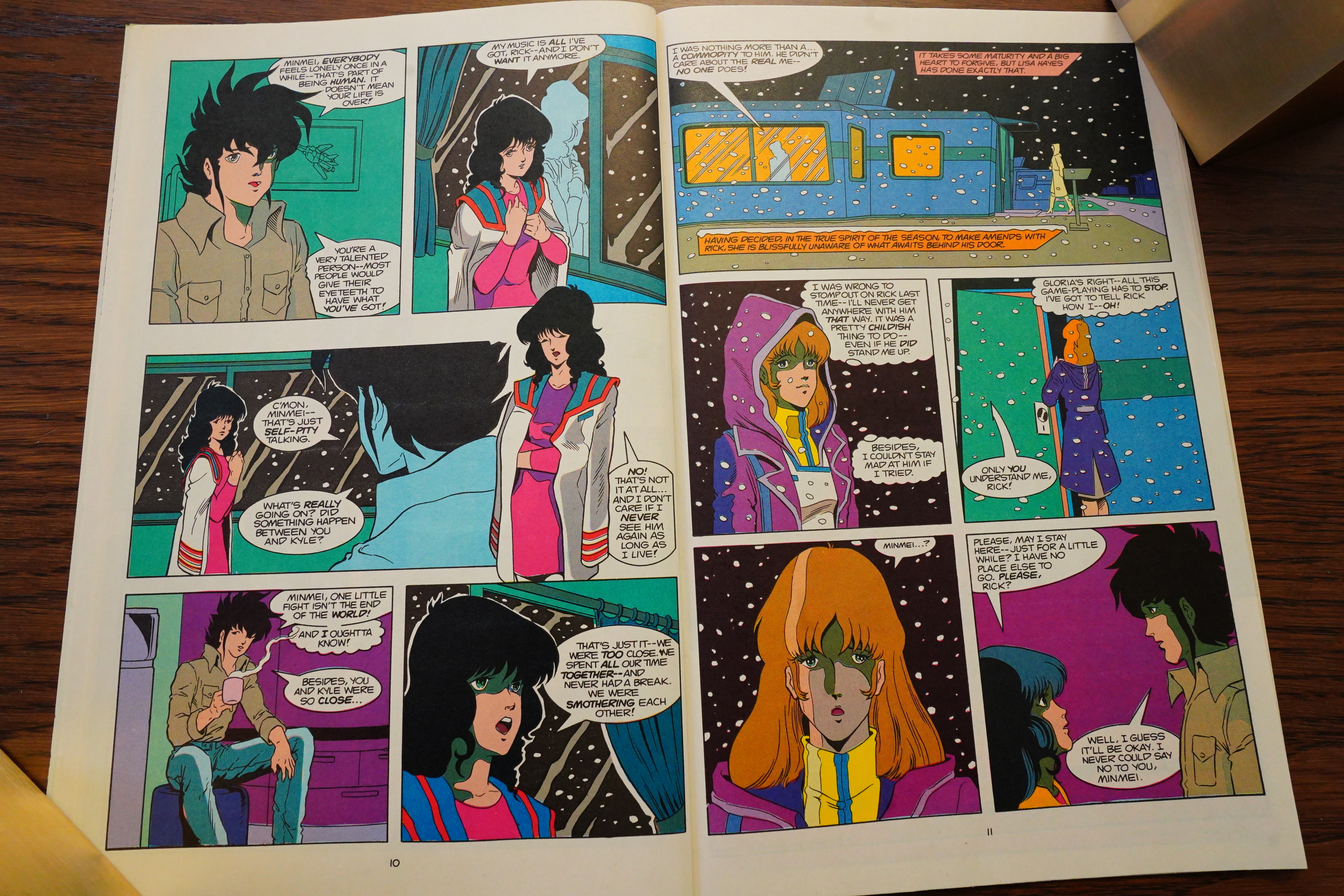
It goes on and on. Was it like this in the animated series, too?
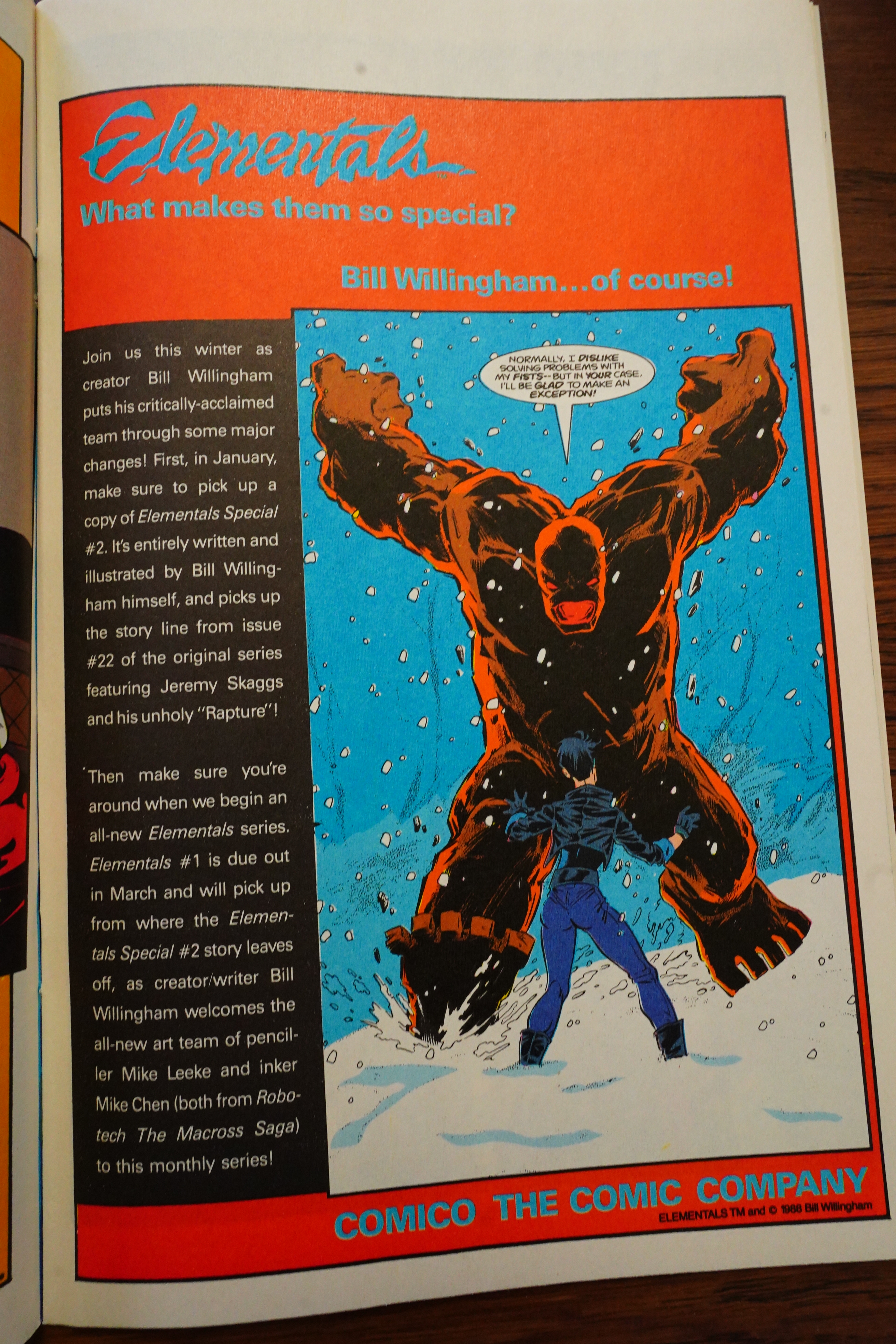
Heh. “Elementals: What makes them so special?” “Bill Willingham… of course!” That’s amusing because Willingham wasn’t involved much during the final year of Elementals v1, but he’s back now as the writer for Elementals v2.
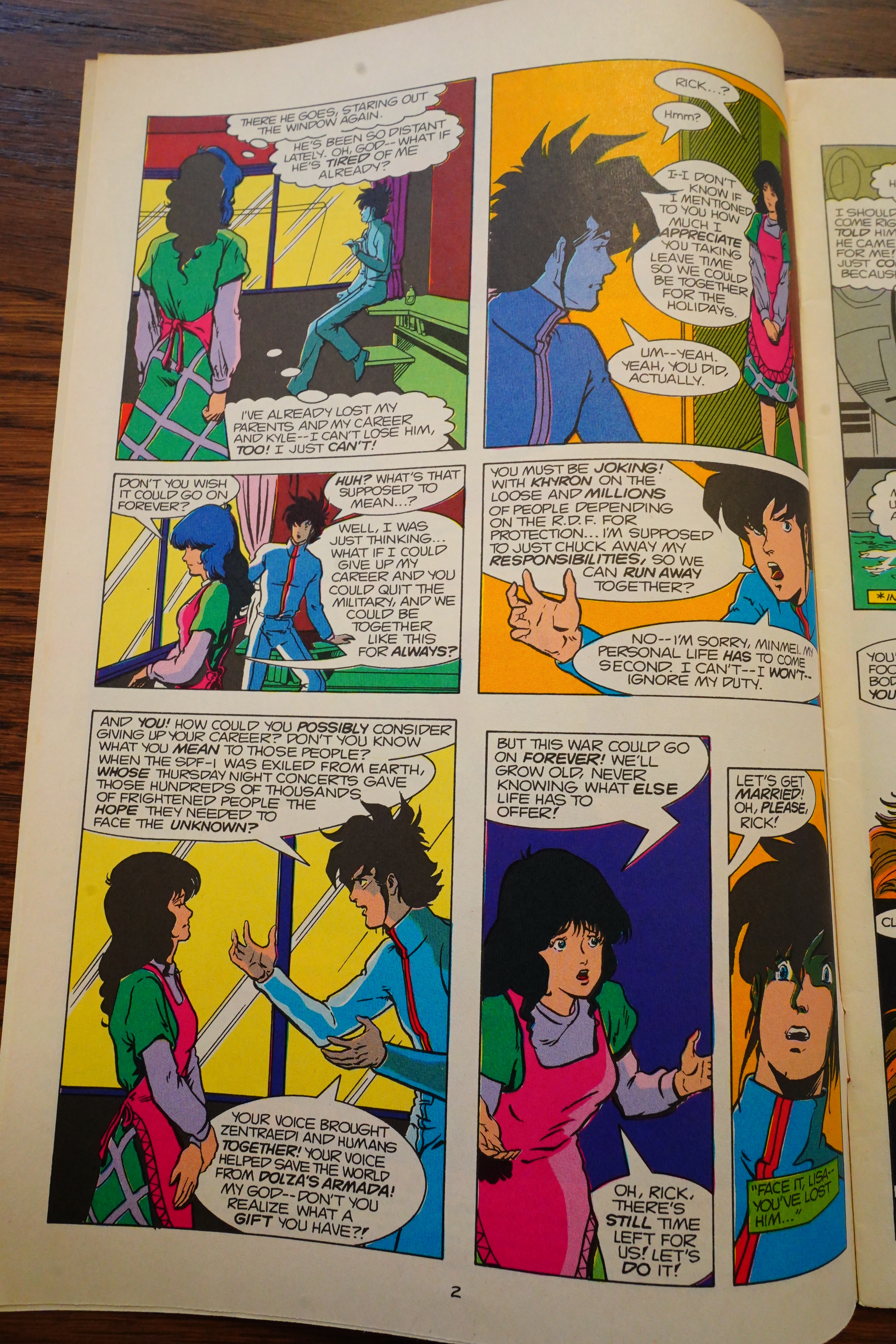
Did I mention the romance plot?
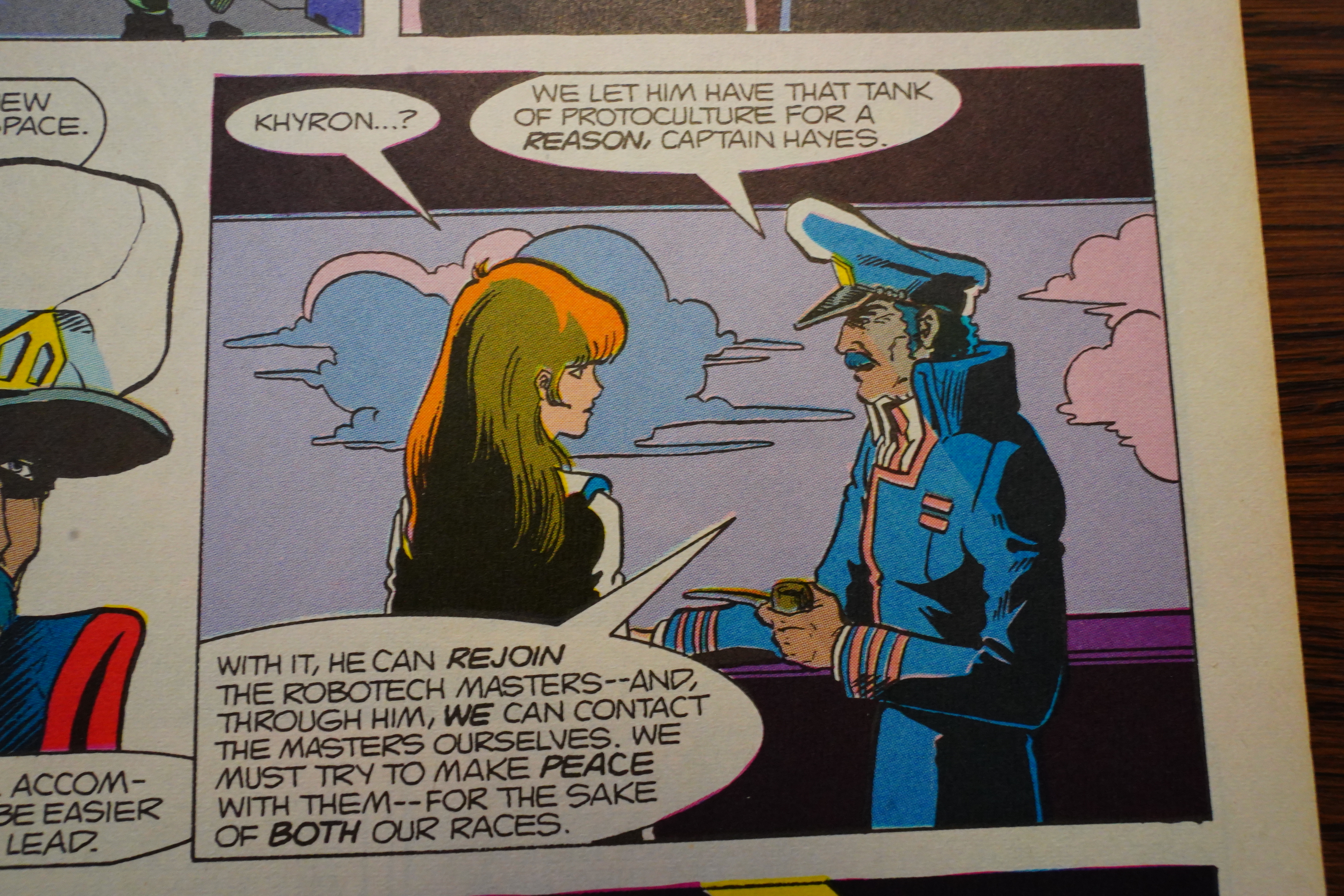
Oh, so now… the humans do know what Protoculture is? You could have told the readers, too, then.
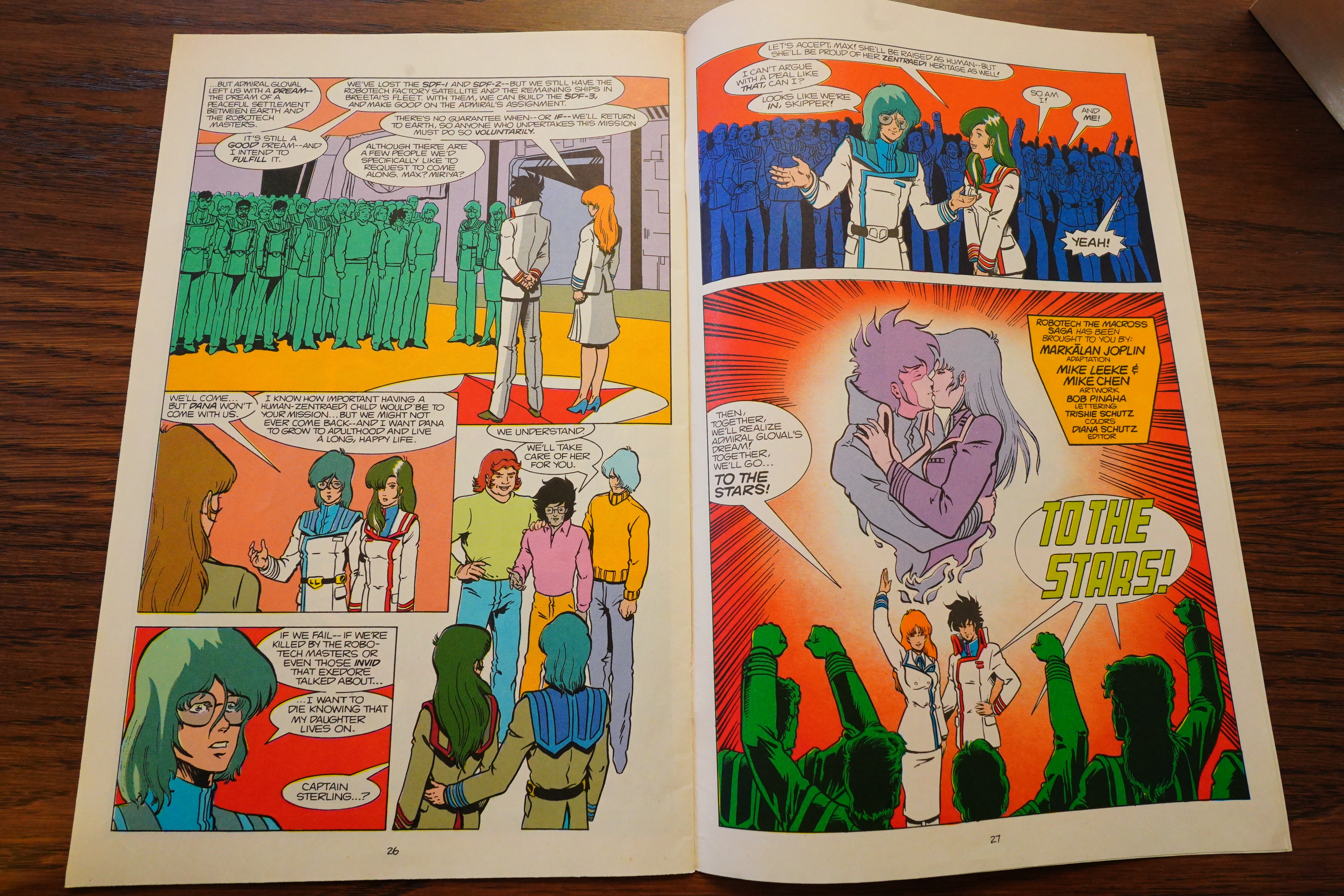
And after a bit more shooting, they’re off to the stars!!!
Man, that’s a disappointing end to a sometimes entertaining series. I was pretty entertained for the first third of the series (while Jack Herman was the scripter), but then my enjoyment rapidly diminished: The series became more wordy and didn’t zip along any more.
The rotating cast of artists didn’t help much, but even the main artists had problems with making the space battles graphically interesting or exciting.
But the main problem with the series is that the world building was revealed to be pretty thin after all. Like I said before (days earlier for me, and what probably feels like many years for whoever is so unlucky as to be reading this), it’s a good trick to throw out titbits about the fictional world to make the reader believe that there’s some depth, but it’s an even better idea to actually have that depth. I was hoping that that would prove to be the case (what with this originating as an animated series that would presumably have been plotted out well in advance), but nope — not really.
So, OK, I’m not really the ideal audience for this series in any way, and I know that there’s a gazillion fans that really like Robotech, but, man: Meh. I say meh!!
The Comics Buyer’s Guide #612, page #26:
The newest title from Comico
The Comic Company, Robotech
Masters #1, sold out its 64,000-
copy print run one day after
printing was completed, said
Sales Director Mark Hamlin.
“Robotech Masters #1 marks
the beginning of our bi-weekly
schedule,” Hamlin said, “mean-
comic released every two
weeks.” Masters will be put on
this rotating schedule along with
Robotech the Macross Saga and
Robotech the New Generation.
The creative team of writer
Mike Baron, penciller Neil
Vokes, and inker Rich Rankin-
have several issues completed to
date, Hamlin said.
“There is no re-order avail-
ability on Masters #1 from the
publisher,”. Hamlin continued,
“and anyone seeking more of
this issue should contact their
distributor or back-issue whole-
saler.”
The fourth issue of Robotech
the Macross Saga also has sold
out from the publisher, accord-
ing to Advertising and Promo-
tions Director Bob Schreck.
Comico only prints a small
percentage over its initial orders
for re-orders, Schreck said, and
in this instance the allotted re-
order quantity was bought out
from the publisher as the books
were shipping from the printer.
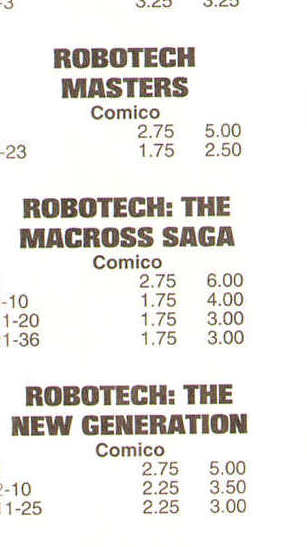
Even if they sold out, they didn’t seem to fetch a very stiff premium as back issues…
The Slings and Arrows Comic Guide #2, page #546:
Adaptation of a highly popular US animated series, itself a
combination of three Japanese animé, Space Fortress Macross,
Southern Cross and Mospeda. When a huge alien fortress
crashes on Earth during World War III it causes a cease-fire
and eventually comes under the control of a benign faction
that creates a World Government. When the giant humanoid
Zentraedi arrive, eager to retrieve their weapon and the
mysterious ‘Protoculture’ that makes Robotechnology
possible, they become foes and eventually allies in an
intergalactic conflict. It’s all told through the experiences of
three young people locked in a romantic triangle; reluctant
fighter-pilot Rick Hunter, career soldier Lisa Hayes and Lynn
Minmei, a cute and fluffy popstar whose singing causes
emotional breakdowns in the aliens. The scripts adapt and
embellish the TV episodes and the art, sadly, does likewise.
Whereas scripter Markãlan Joplin manages to work beyond
the Saturday Morning blandness of the teleplays when he
replaces Jack Herman in issue 17, creating a depth absent
from the source material, the illustration, slavishly following
the production style is unpleasantly fuzzy and lacks edge or
drama. The remaining episodes of the TV show are adapted
in Robotech Masters (Southern Cross) and Robotech The New
Generation (Mospeda).
Protoculture Addicts #4, page #16:
I will have to be brief this time with
this Comico review: there was only one series
still going and unfortunately it is now over.
I told you last time that issues #29 and #30
were less appealing than previous ones.
Fortunately I can’t say the same of #31 and
#32 which are much more in the real Leeke
style. Issue #33 is average but I must note
the effect on page 9: Lisa drowning her pain
very fast. Quite well done! Only one problem
with this ish: the mix-up of pages 4 and 5.
Hum, an overworked editor? Good work in
issues #34 and #35. The small modifications
to the original script by M. Joplin which I
found annoying in earlier issues now seem to
be quite well suited to these adaptations of
episodes 31-35. Diana Schutz has done a good
job, I cannot find the exact place where she
took relay in #35 script. Issue #36 is
brilliant; the art is very nice and clean,
pages 22-23 being gorgeous in fact; the
adaptation by M. Joplin is clever and moving.
A job very well wrapped up by Comico. Let’s
thank them for four years of hard work. Our
eyes must now be turned towards Eternity and
their Sentinels’ comic. Fortunately I’m very
happy to see that our good friends are doing
a fine job.
Alain Dubreuil
Amazing Heroes Preview Special #1, page #90:
Previously titled Macross, this book
has changed its name with its sec-
ond issue to keep in step with the TV
animated SF program, Robotech, on
which it is based. Robotech actually
consists of three similar but diffe-
rent Japanese TV cartoon SF adven-
ture serials which have been rewrit-
ten to make a single 85-episode
animated serial for the American
syndicated TV market. However,
each of the three component adven-
tures will have its own comic book.
Comico plans to issue the three
books on an overlapping six-weekly
schedule, so that a new isue will
appear every two weeks. The com-
ics will begin as straight adapta-
tions of the TV adventures but, it
they are successful enough, each
will continue past the TV saga into
original stories.
Robotech: The Macross Saga is
the first of the three Robotech
stories, comprising the first 36
episodes of the serial. A gigantic
alien spaceship, the SDF-1
(Macross), crash-lands on Earth at
the end of the 20th century. Ten
years later, a military/scientific
community has grown up around it.
The humans have just figured out
how to get the SDF-1 operational
when a fleet of Zentradi spaceships
arrives around Earth to reclaim it.
The SDF-1 unexpectedly starts fir-
ing automatically at them, the Zen-
tradi think that Earth is attacking
them and retaliate, and Earth is sud-
denly involved in a space war. The
story features many scenes of SF
battle action (gotta display those
spaceships and robots that Revell is
selling the models of). However, is is
basically a soap opera about seve-
ral of the young people caught up in
the action: Rick Hunter, a teenaged
pilot; Lisa Hayes, the lieutenant in
command of the bridge crew on the
SDF-1; Lynn Min Mei, a teen-aged
pop singer who becomes the focus
for morale among the humans; and
their friends.
Amazing Heroes #157, page #188:
January’s Robotech The Macross Saga
#35 will feature “Season’s Greetings,”
a holiday tale co-written by Markalan
issue #36 brings to a close Comico’s
popular adaptation of this celebrated
Harmony Gold animated TV series. In
“To the Stars,” Admiral Gloval com-
mands Lisa Hayes to uncover the roots
of Robotechnology, while Khyron
concocts some seedy plans for the SDF-1
and the SDF-2.
Fans of artists Mike Leeke and Mike
Chen will be happy to learn that they will
be introducing a dynamic new artistic
style on the soon-to-be relaunched
Elementals, debuting from Comico in
March; and Robotech devotees are
reminded to follow the adventures of
Rick Hunter and company in Eternity
Comics’ new Robotech II: The
Sentinels title.
Amazing Heroes #145, page #192:
ROBOTECH II:
THE SENTINELSEternity Comics, in an exclusive arrange-
ment with Harmony Gold U.S.A., Inc.,
has acquired the rights to Robotech II:
The Sentinels for a series of comic
books and related projects.
“Robotech II: The Sentinels is a
direct sequel to the original Robotech
series,” Eternity Editor-in-Chief Chris
Ulm explained. “It occurs 10 years after
Robotech (but before New Generation)
and features several of the same charac-
ters, particularly Rick Hunter and Lisa
Hayes from the first series.” According
to Ulm, the long-awaited wedding of
Rick and Lisa will finally take place in
Robotech II.
Robotech II was originally developed
as a 65-episode animated series. “Scripts
for all of the episodes were written but
production was halted after only three
were filmed,” Ulm said. Those first three
episodes will be edited together for a
feature movie to be released later in 1988.
Ballantine Books is also adapting and
expanding the Robotech story in a series
of paperbacks for mass-market release
this summer.
“Our comics should hit the stands at
the same time as the movie,” Eternity
Publisher Dave Olbrich said. The series
writer and artist will be announced
shortly.
The first Eternity Robotech II projects
are scheduled for release in September.
I guess if the series was halted after three episodes, it wasn’t very popular in Japan?
Back Issue #137, page #51:
Merrill concurs, although he’s rather blunt when
giving his opinion on where Harmony Gold’s biggest
success stands today. “Harmony Gold and Robotech are
definitely a part of Japanese animation’s success in the
US… I do think Robotech right now is a legacy property
that has failed to demonstrate any ability to move
forward in any sort of narrative fashion, in spite of
decades’ worth of attempts to do so. The brand’s
greatest value right now is as an ’80s nostalgia
property. New people are not getting into Robotech.”
While that might be true, the fact is Robotech itself
was and still counts as the first recognizable anime for
a whole generation, helping just as much as Astro Boy
did in the ’60s and Toonami and Pokemon did in the
’90s to bring about the world we have today, where
most anime airs at the same time virtually all around
the world. And that’s not nothing.
AH: What are the differences be-
tween Robotech and the original
Japanese programs?
MACEK: Very little. Macross was a
smash hit in Japan, and Tatsunoko
continued the same story trend when
it followed Macross with The
Southern Cross and Mospeada,
Genesis Climber. All three are about
space fleets of human-looking aliens
who invade futuristic human worlds.
The heroes are young members of
the human defense forces. The aliens
are looking for some secret that the
human have. It was easy to re-write
the scripts to give the aliens the same
name and turn the secrets into the
same secret. Differences in charac-
ters and costumes are explained by
making it three different attack waves
of the invaders, years apart. The on-
ly real change involved the second
story segment, The Southern Cross,
which we call The Robotech
Masters. In the Japanese programs
it’s not our Earth that’s being in-
vaded, it’s a human colony planet.
I had to go through the video tapes
carefully and edit out every scene
that shows two moons in the sky.
Geez.
Protoculture Addicts #3, page #33:
ROBOTECH: THE MACROSS SAGA
With issue 32, the Robotech comic
published by Comico is beginning to take more
liberty toward the original story, probably
under the influence of the novels published
by Ballantine Books. It is really good:
dialogues and
satisfactory. We find some winks such as on
page… (I hate non-paginated comics!) where
Khyron said “Macek’s Eyes!”. There is also an
homage to Markalan Joplin, deceased last May
before having finished issue 35 which had
been completed by the staff of Comico. By
chance, issue 36 was finished. It will be a
special issue “incorporating events from the
Ballantine Books adaptations and foreshado-
wing what was to come in The Sentinels”. The
last four issues are definitely not to
missed!
“Comic adaptations available through
Comico: the comic company,” That’s
what the closing credits of Robotech
said. And it was true. From 1985 to
1988, Comico published 86 individual
issues of Robotech comics plus a
graphic novel. With two exceptions,
these were adaptations of the actual TV
episodes, which were particularly useful
for fans who wanted a record of the
story, but did not have VCRs. They were
split into three series which ran
concurrently; Robotech: The Macross
Saga, Robotech Masters, and
Robotech: The New Generation. The
Robotech Special, titled “Dana’s Story”,
adapted the episode of the same name,
but also included additional material
from some of the Robotech novels by
Del Rey Books. It was released after the
Macross Saga books had concluded
their run, so as not to spoil the ending of
that story arc. Robotech Genesis: The
Graphic Novel, was an all new prequel
story written by Carl Macek set during
the global civil war and describing the
original landing of the SDF-1 on Earth
and its exploration by Gloval, Fokker,
Lang and Edwards. Comico also
published Robotech 3-D, a retelling of
the first episode of the Macross Saga,
complete with 3-D glasses.
AH: How closely will Comico’s
Robotech comic book follow the TV
program?
MACEK: There’ll be no story dif-
ference at all. Issue 1 of the comic
book is episode 1 of the TV show,
issue 2 is episode 2, and so on.
The only difference is that the
Robotech TV program will be told
in a single story sequence, while the
comic book will be published as
three overlapping sequences. The
first 36 episodes of the TV programs
are Macross, the saga of the first at-
tack on Earth. Then the story jumps
a generation and episodes 37
through 60 tell the adventures of the
cadets of the Robotech Military
Academy as they fight the renegade
Robotech Masters. Then the story
jumps again, and episodes 61
through 85 tell how the descendents
of the Macross cast return to Earth
to free it from the Invids, rivals of the
Robotech Masters who moved in
after the humans and the Masters
had weakened each other. Comico
is publishing this serial as three
separate comic books which will be
distributed at the same time. The first
story sequence is titled Robotech:
the Macross Saga; the second is
Robotech Masters; and the third is
Robotech: the New Generation.
Each title will be issued every six
weeks, and the three will be on an
overlapping schedule two weeks
apart, so there will be a new
Robotech comic book out every two
weeks. The first three issues of
Robotech: the Macross Saga are
already out. The first issue of
Robotech Masters is the next due
out; then the first issue of The New
Generation; issue 4 of the The
Macross Saga; issue 2 of Robotech
Masters; and so on.
AH: Does this mean that Robotech:
the Macross Saga will end after issue
36, and that the other two will end
after their 24th and 25th issues?
MACEK: Not at all. If they’re still sell-
ing successfully when they reach the
end of the TV episodes, I plan to go
on writing the continuation of the
adventures of Rick Hunter and his
friends; of Dana Sterling and her
friends, and of Scott Bernard and his
friends.
There’s really remarkably few articles about Robotech in the comics press at the time. Which is pretty odd — this was the first big adaptation of a new phenomenon — “Japanimation”, as it was called at the time — but nobody really seemed to pay attention?
Comic Shop News Special #1, page #39:
One of Comico’s most successful
titles were their Robotech books.
Comico was among the first Ameri-
can publishers to anticipate the
popularity of Japanese comics
and animation in the U.S.
Robotech was originally called
Macross: The Robotech Saga but
changed the title to Robotech with
the second issue when it was
announced that Harmony Gold
would be syndicating a half-hour
Robotech cartoon (translated to
English from the original Japanese)
to U.S. television stations. This result-
ed in quite a sales-success in areas
where the show was seen, and
precipitated a boom in reprints of
Japanese comics (called manga)
like First’s Lone Wolf & Cub, Eclipse’s
Area 88, Kanul and Mai the Psy-
chic Girl, Marvel’s Akaira, and
NOW Comics’ upcoming Speed
Racer manga reprint. It has also
made way for other successful
adaptations of popular Japanese
animated series like NOW’s Speed
Racer and Astro Boy, Comico
quickly expanded to three differ-
ent Robotech titles, issuing a new
Robotech comic every two weeks.
As the show was replaced on
many stations (a limited number
were made available for U.S. syndi-
cation) the sales softened. But
Comico continues to do a monthly
regular Robotech comic. “We really
feel a committment to the
Robotech fans who have stuck with
us from the early days,” says
Schreck, “we’ll continue the book
until the stories end, at least into
early 1989.”
Comico has been really lucky so
far to find that difficult blend of
aesthetic and critically appreciat-
ed material, while still trying, and
many times succeeding, to finding
commercially viable successes. So
when we look at new material
under consideration we have two
criteria. One, is it something we
can sell enough of to make some
profits that we can put back into
the project, and, two, is it some-
thing we can be proud of publish-
ing? Is it a quality series?”
Schreck says he feels this diversi-
ty of concepts with consistency of
quality is one of Comico’s
strengths.
Comics Interview #23, page #27:
And then, out of the blue, Comico asked
Rich and myself to come up there one day.
They were starting this whole MACROSS
comic series. MACROSS #1 was done by
Carl Macek, who is very established, and
Svea Stauch, and was inked and colored by
various members of the Comico Bullpen. It
took them a long time to do it. And I think
what they wanted to do was change the
whole process and make it more of a regu-
lar comic, flat coloring and everything, so
they wanted to do something a little simpler.
And if nothing else what Rich and I were
trying to prove was that we were reliable.
It was not necessarily that we were the best
artists that they could have hired, we were
reliable enough so that we could hopefully
get #2 done on schedule. We had about two
weeks to do the whole issue. It was good
practice, that was the way we looked at it,
we were getting paid for it, and we didn’t
have a helluva lot to complain about.
And then we were asked to do MAC-
ROSS #3 in about a week. Actually, I am
fonder of that one than I am of issue #2, even
though we had to do it a lot quicker. The
way they were plotting the book was like
page for page, word for word, and I can’t
say I was speaking from many years ex-
perience – but from reading them for as
long as I have, I just didn’t think it was
working as a comic. So, essentially, I re-
plotted it even though I had a script and
everything. I changed a lot of the premises.
I took it upon myself to change it for the
better, I thought.
DAN: I see.
NEIL: I used my own best judgement. I
used the basis of the story; following the
plotline. I just drew it my own way. I didn’t
sit in front of a video machine and watch
a scene, freeze frame it and study it, then
draw it shot-for-shot. I thought, “They
might as well put a book together that is just
frame blow-ups and print it up and just put
little word balloons on them, if they want
that. Why hire artists to draw if they don’t
want them to draw something?” So I just
went for it. The funny thing about this is
the two videos that I was given for MAC-
ROSS #2 and #3 were in Japanese. And if
you’ve ever had to plot something that was
in a foreign language and you didn’t under-
stand any of that language – it’s not very
easy. You have no idea what they are say-
ing in the dialogue…
DAN: There’s no possible way to do it.
NEIL: Well, there’s a possible way to do
it, but it doesn’t always turn out right in the
end. I was a lot happier with MACROSS
#3, because I did it with my own layouts,
my own pacing, I didn’t have to go by any-
body else’s work, and then Carl scripted
from that.
Wow. In the beginning, at least, the penciller had to adapt it using untranslated video cassettes, so he had little idea what was being said! Presumably the scripter got the translation, I guess…
Comics Interview #51, page #38:
BOB: If you really sit down and look at
ROBOTECH, particularly the MACROSS
and NEW GENERATION segments, com-
pared to Saturday morning cartoon
mindlessness, the plot lines are a lot more
intricate and interesting, even though they
have been altered for America. The nudi-
ty has been taken out, and a certain amount
of the violence has been taken out of it. A
good deal was left in, because America
loves its violence and hates its bodies!
But ROBOTECH is something we had
handed to us on a silver platter, and releas-
ing the three books on a six-week basis, we
had to get it out, we had to get it done. We
weren’t afforded what we’re doing on STAR
BLAZERS, which is full-process cel
animation-like coloring on a four-issue
limited series. So, you just do the best you
can.
The Slings and Arrows Comic Guide #2, page #405:
The original Macross was a Japanese animated series
featuring ‘mecha’ – planes and other equipment that
transformed into robots. The comic started as an adaptation
of that Japanese series (1), but then the Robotech TV series
was created as an English-language adaptation of Macross
and two other Japanese mecha series and the comic had a
change of title to Robotech: the Macross Saga, and also of style.
The story centres around the Macross battle fortress. This
was built by unknown aliens and crashed on Earth in 1998.
Humans put a lot of effort into mending it, and it repays
them by powering up its automatic defence systems when it
senses that its old enemy (the Zentraedi) are in range, and
then blasting half of the Zentraedi fleet out of the sky. This
means that the Zentraedi immediately wage war on Earth,
and the humans make no attempt to explain but simply
launch the Macross and pursue the battle out in space. This
launch drags most of the surrounding city along with the
ship, so the stories can feature a lot of domestic urban detail
(beauty contests and teenage recording stars, mostly) mixed
in with the heroic teenage fighter-pilots. This plot doubtless
seems really clever and cool when you’re about ten, and as
entertainment for children goes, it’s well crafted (apart from
1, which had ghastly artwork), though one hopes that any
girl-child who picks it up already has enough self-
confidence to shrug off the relentless undermining that’s
inflicted on the female characters. However, if your tenth
birthday is but a dim memory and you’re not in the
advanced stages of manga addiction, you can safely give this
one a miss.~FC
Ouch!
The Comics Journal #116, page #57:
The Robotech books also use
dreams a lot, but mostly as a
device to recapitulate their con-
voluted storylines. Robotech: the
New Generation #13, adapted by
Markalan Joplin, makes the best
use of “mind games,” as Harrison
Fong’s dynamic (if uneven) pencils
depict the dream-journey of one
alien-fighter (name of Rand) as he
learns the motives of Earth’s alien
invaders. Fong and Joplin also
handle the adaptation work on
Macross Saga #17, which is less
successful in that the dream is
merely the musings on previous
adventures by protagonist Rick
Hunter.
OK, that’s enough of that.
I can’t really find much chatter about the Comico Robotechs on the internet, but here’s a review:
On the other hand even Joplin’s alterations last issue and this doesn’t make this romance rather rushed. Miriya sure switches from great warrior to struggling housewife rather fast and I don’t think she’s been around them long enough to have had the personality switch we saw in the show. The comic doesn’t have time to focus on it so it’s not as jarring a change. I know some marriages happen fast. My parents did and so did my cousin and her husband but this seems a bit too fast.
Nobody reprinted Robotech: The Macross Saga until 2018, when Titan reprinted it in full.
Before starting this, jaded by many comic book disappointments, I assumed this comic version wouldn’t live up to the show or that it’d be slow and I’d just have to slog it out. Not the case at all. I found it very difficult to put down. It was just as good as the cartoon in every aspect. The fast paced variety, humor, drama, romance.
I loved every page.
The bad news is that the artwork was B-level even by 1980s anime and comic book standards, and some of the gags and story lines were old-fashioned even then. While Macek tried to keep the combinations of serious drama and offbeat humor under control, the source material just had a lot of it, and that often worked against the series.
Heh:
They’re just ok. It would help if you watched the show first though. Just mute it whenever a certain teen idol starts singing…
And now I have two more Robotech series to read… I’m not really looking forward to that now.