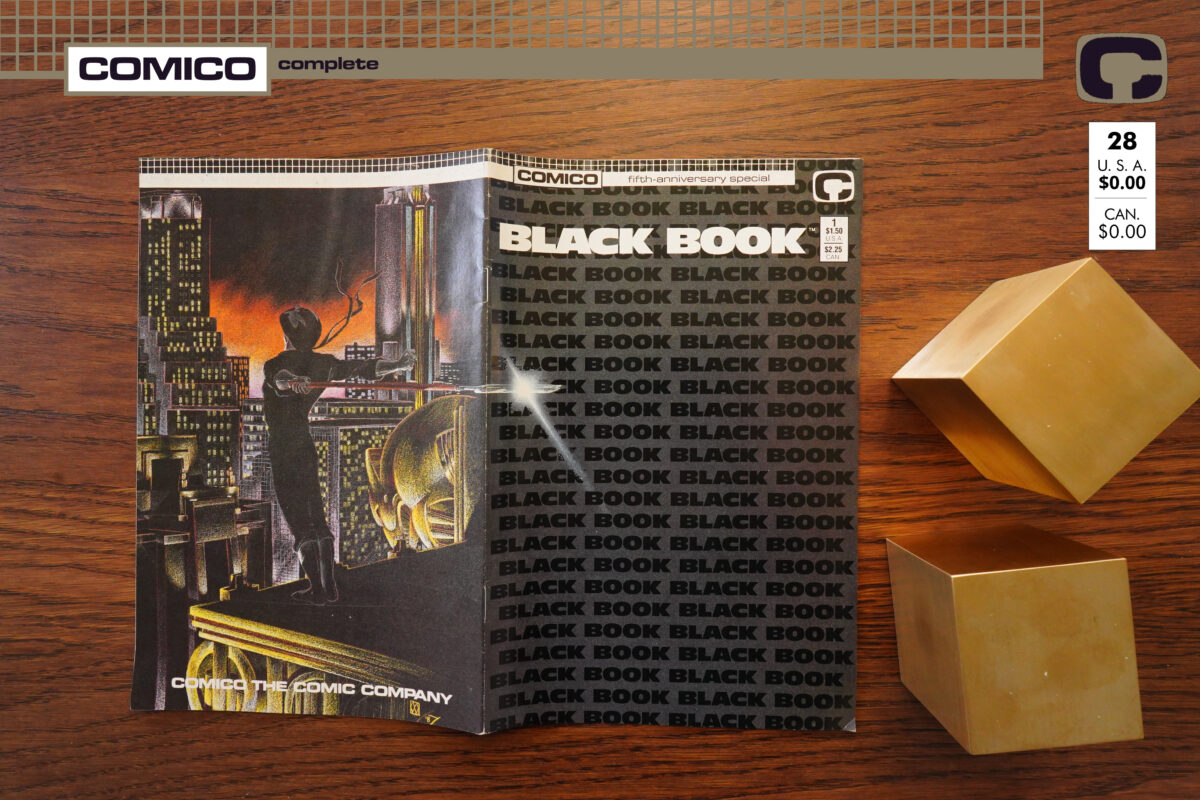
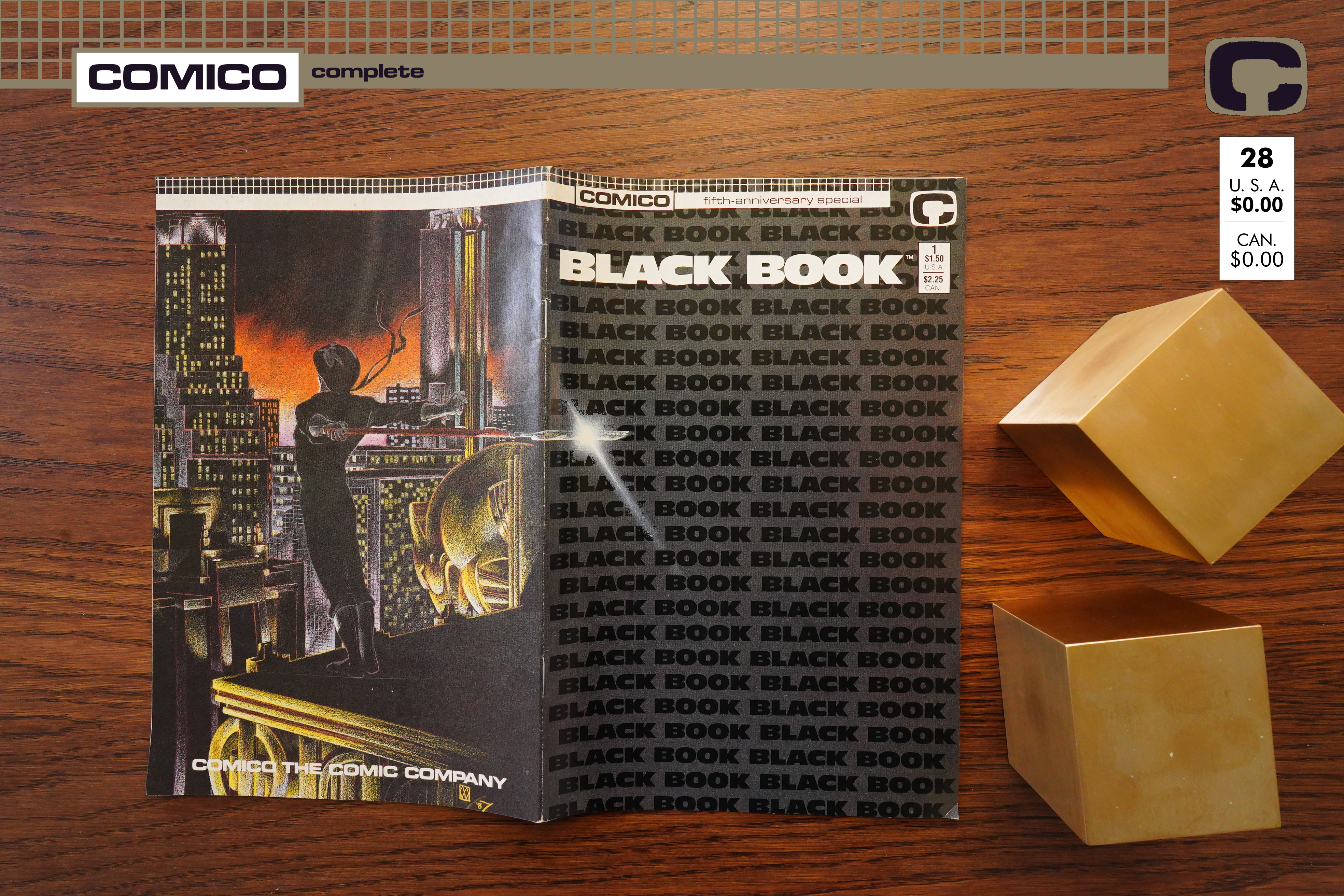
Black Book (1987)
To celebrate Comico’s fifth year anniversary, we have this book.
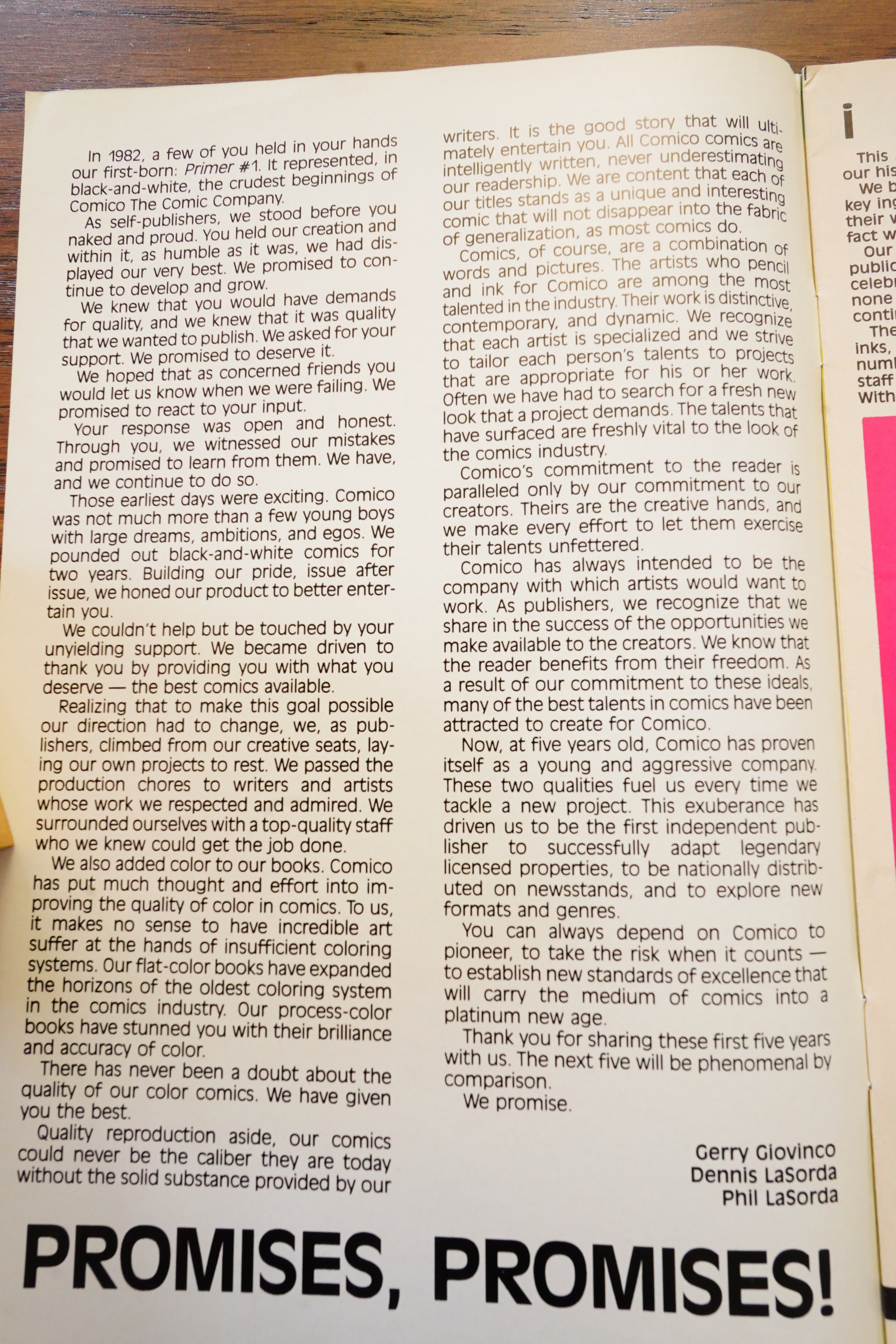
The publishers explain why, in their usual style — it’s a bit on the hectoring side, in my opinion.
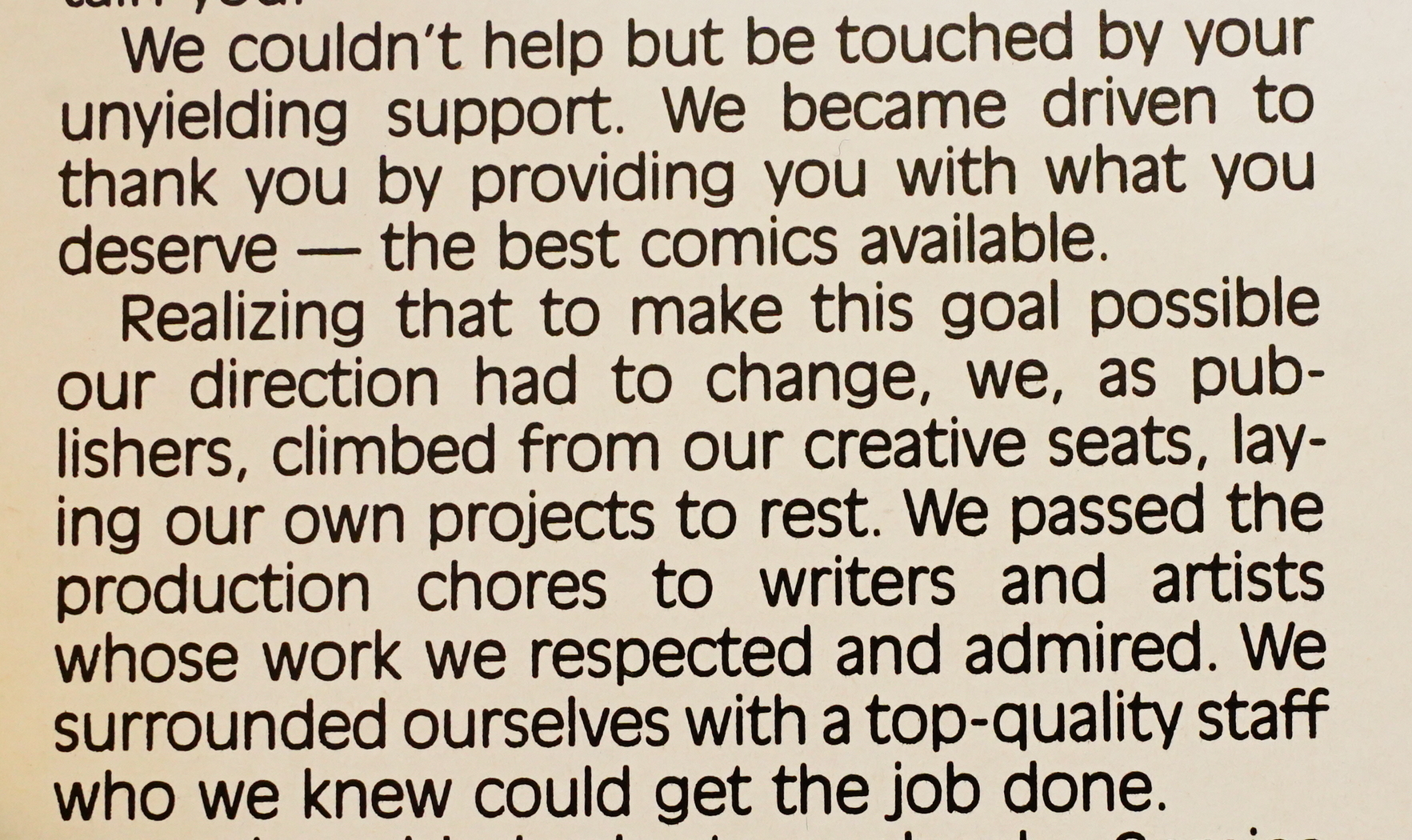
And bowdlerises the story somewhat — the initial batch of books were created by the publishers themselves, and the reaction from the retailers was (and I quote from memory) “what they hell are we going to do with these?” They were pretty bad comics, so they started publishing other people instead.
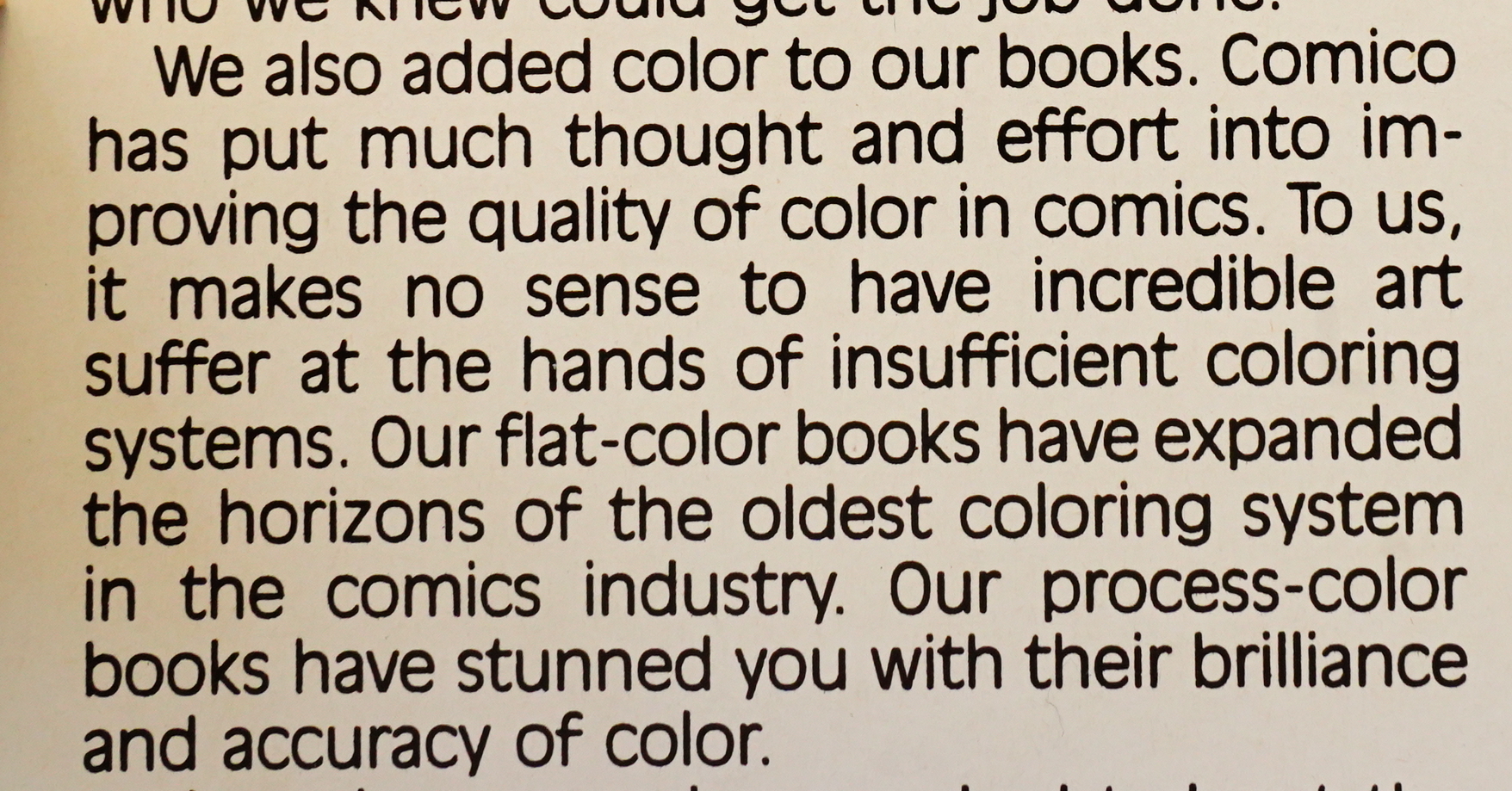
This is actually true — the colour on Comico books was much better than the rest of the field at the time. The books still looks really spiffy for the most part. You can read more about it here.
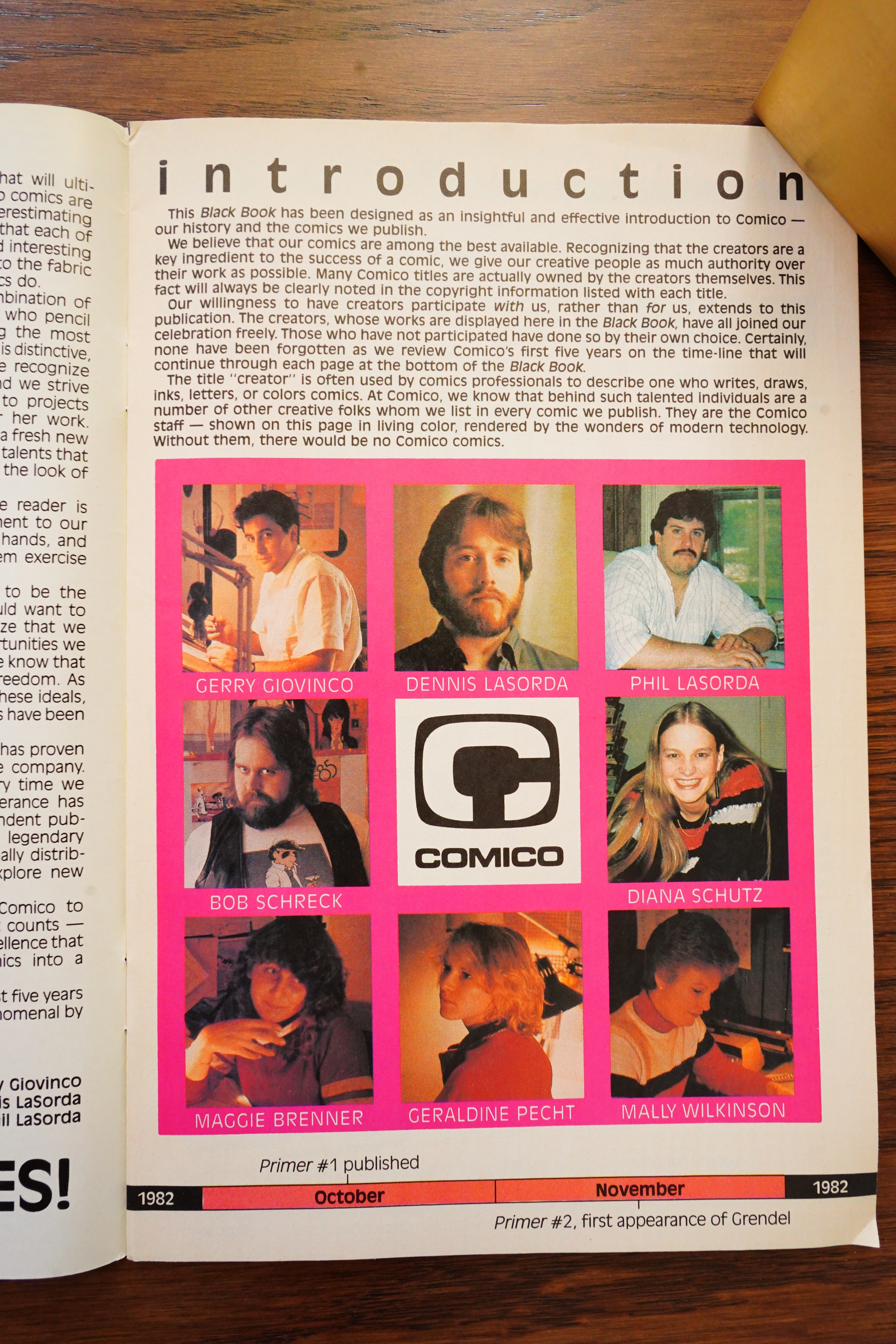
Then we get some snaps of all the people who work for Comico (the three publishers at the top).
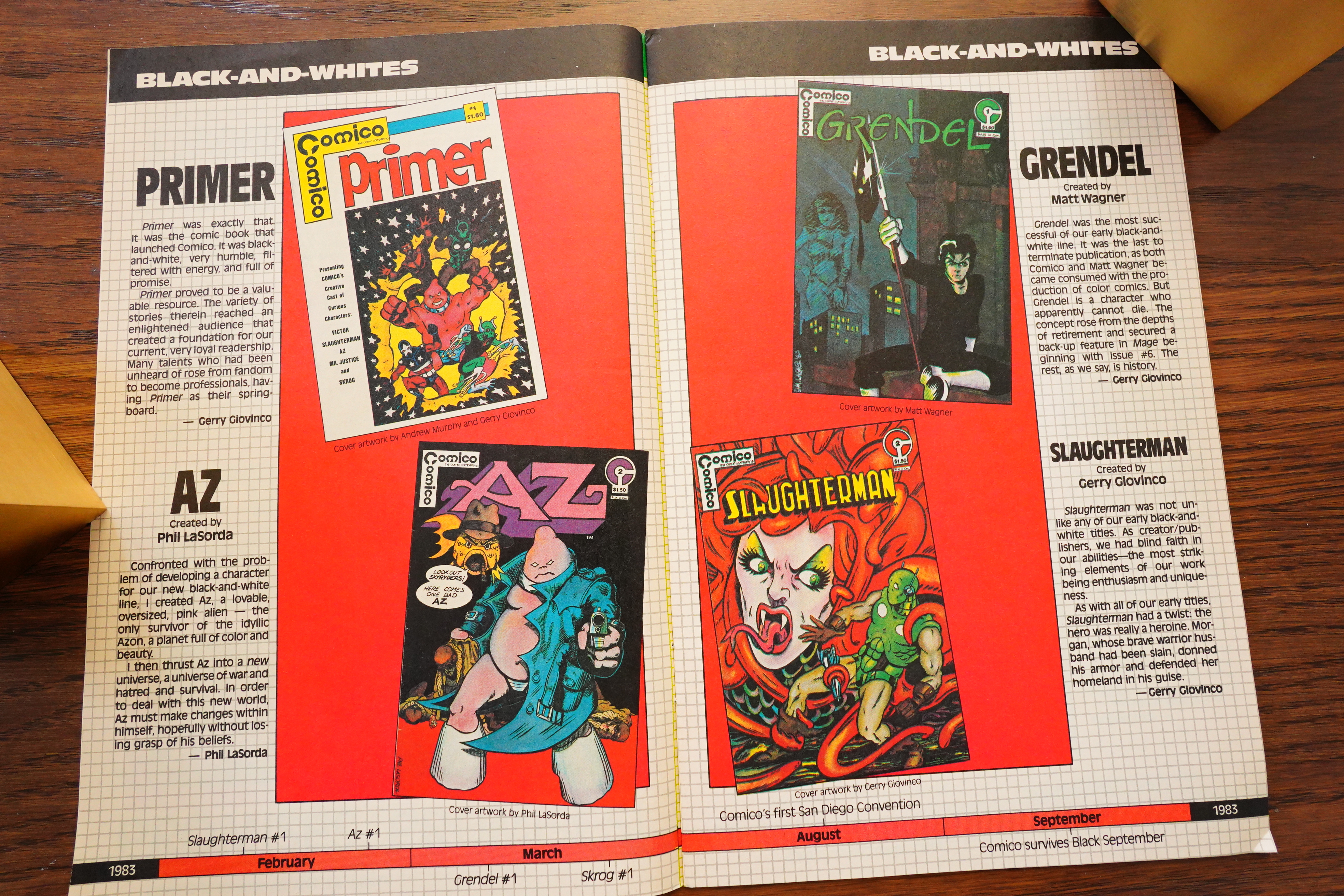
And then the rest of the book is like this — a presentation of the books Comico had published or are publishing.
But it’s not complete — for instance, Skrog is mentioned in the timeline, but is not given a blurb here.
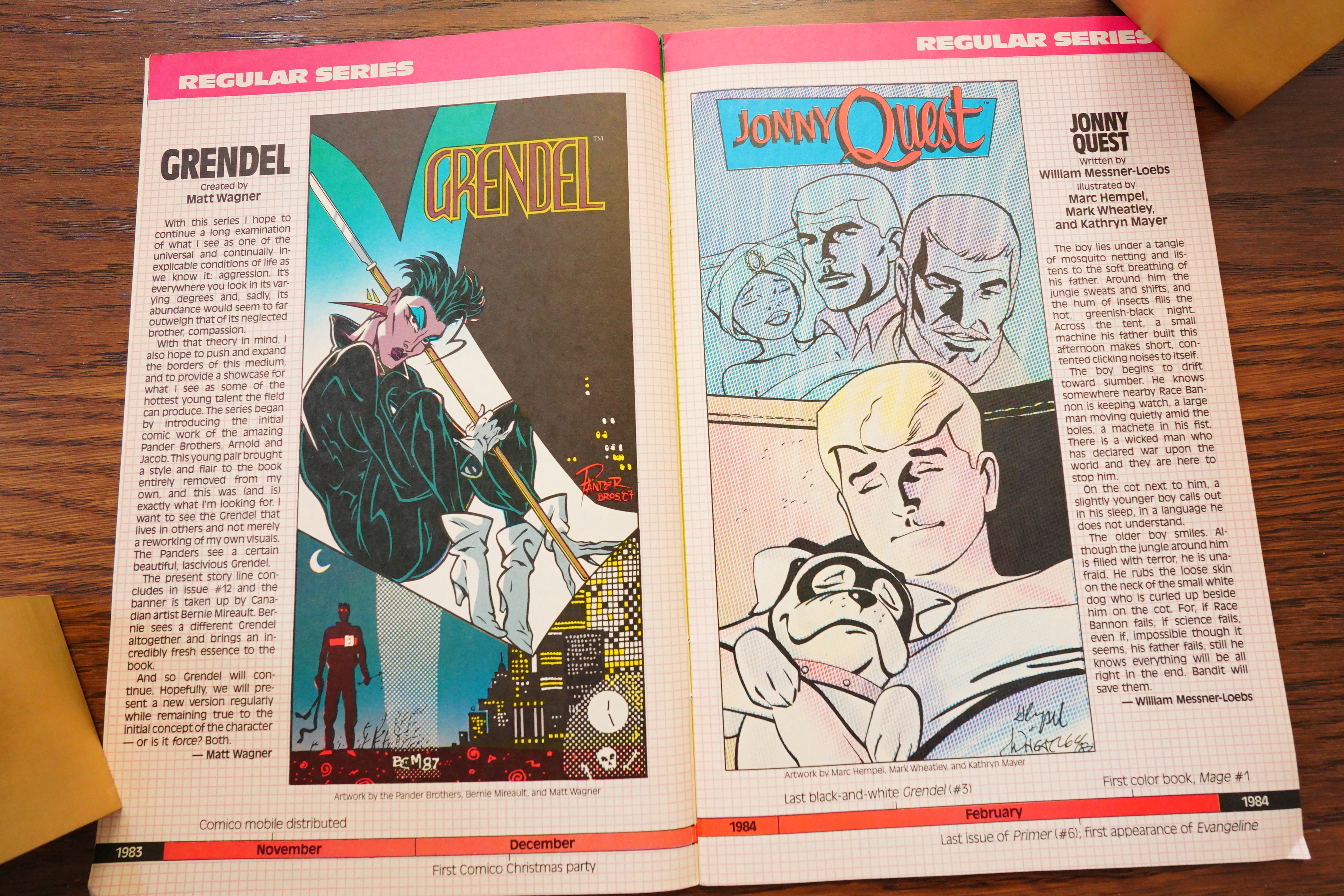
Neither are other early books like Evangeline and Next Man.
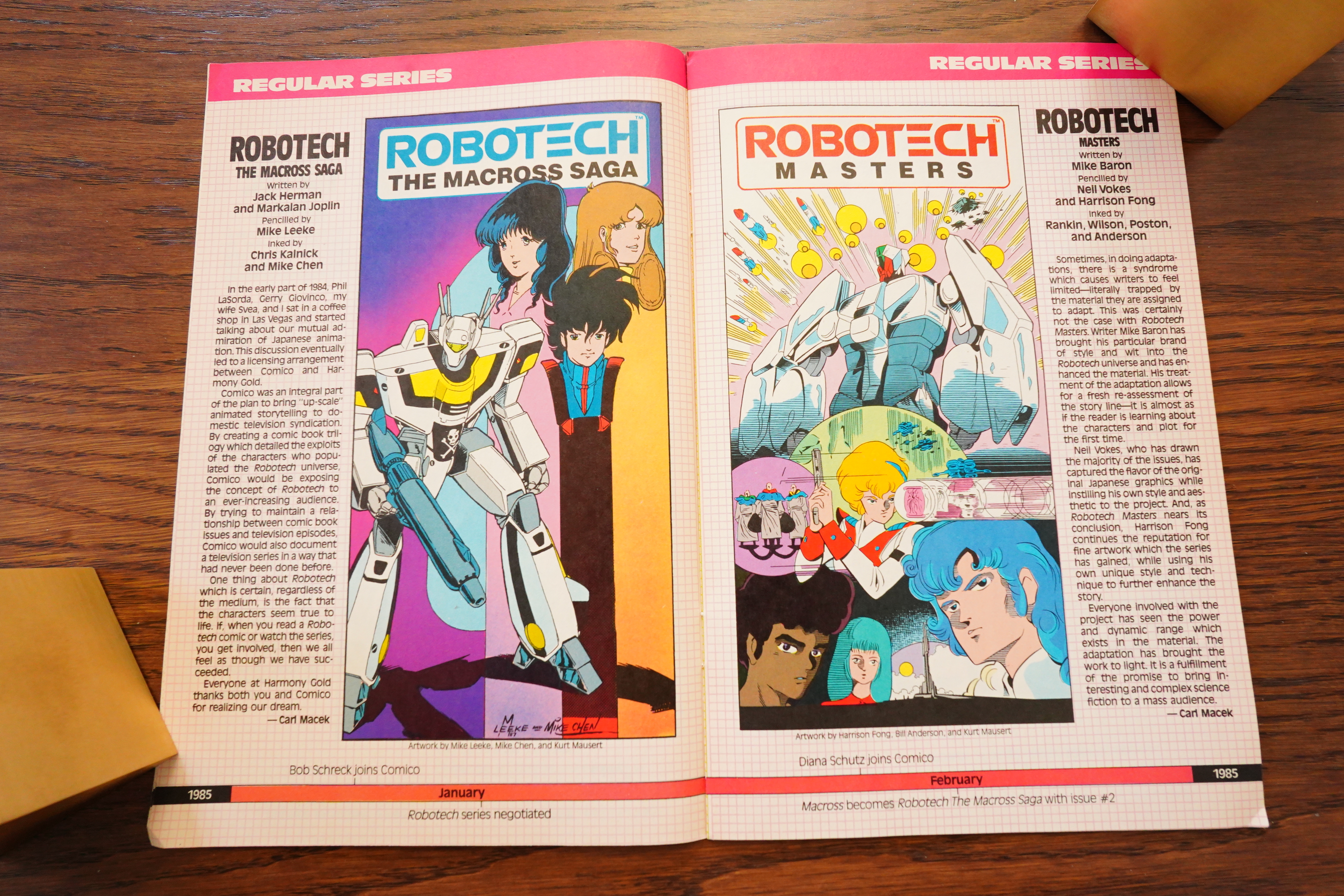
I think the artwork here is mostly done for this book? I can’t remember seeing those as covers on the actual books, at least.
And they’ve also gotten these text from the creators involved, which is nice.
So this is more than just an ad, really.
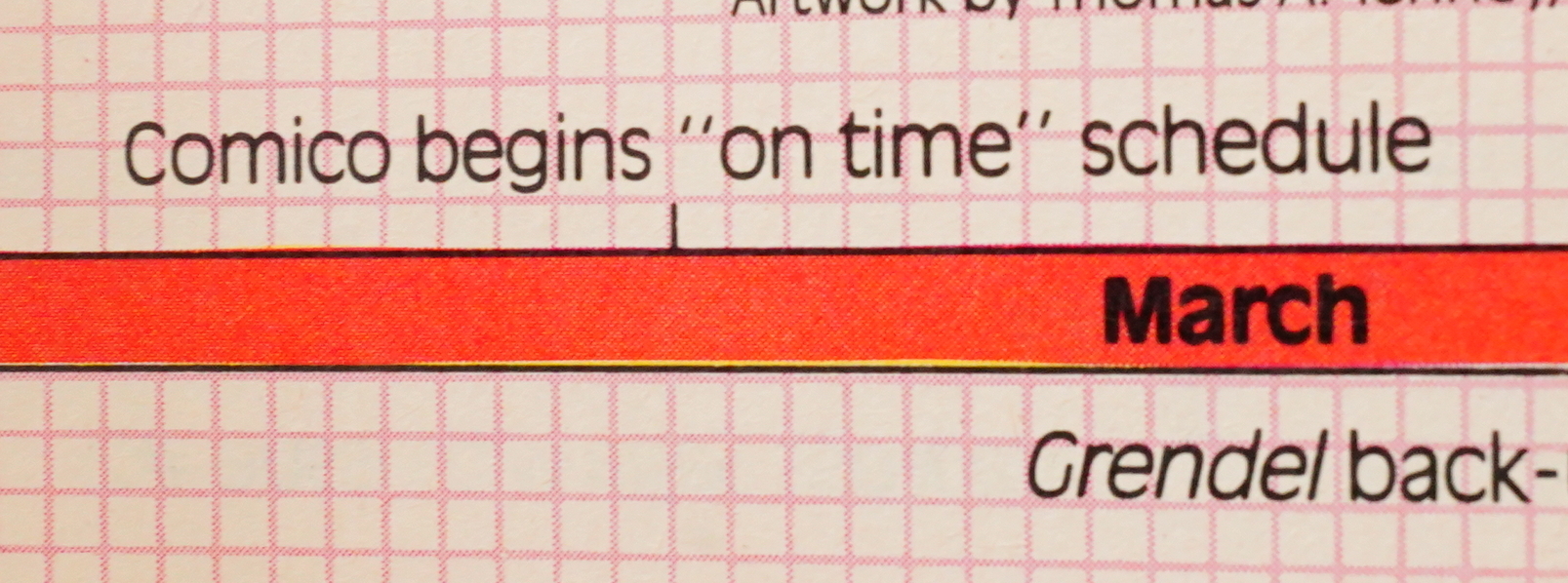
Being “on time” is apparently something that one can just choose to do.

There was a Comico costume award!?
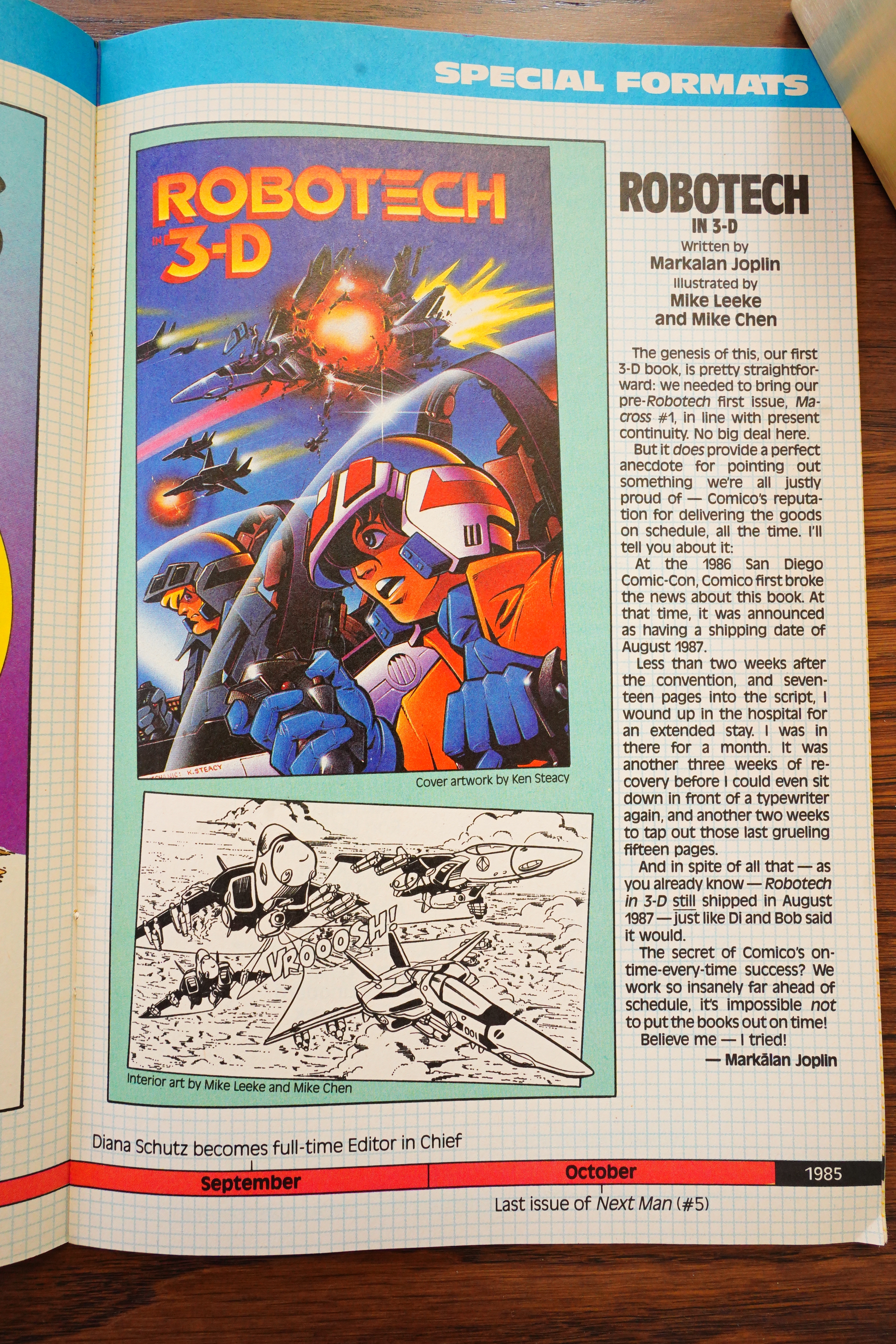
Markalan Joplin goes into more details about that “on time” thing. Making the books so far out from the schedule must either mean that Comico had deep coffers to handle the slow money flow, or they didn’t pay people until books were published, I guess.
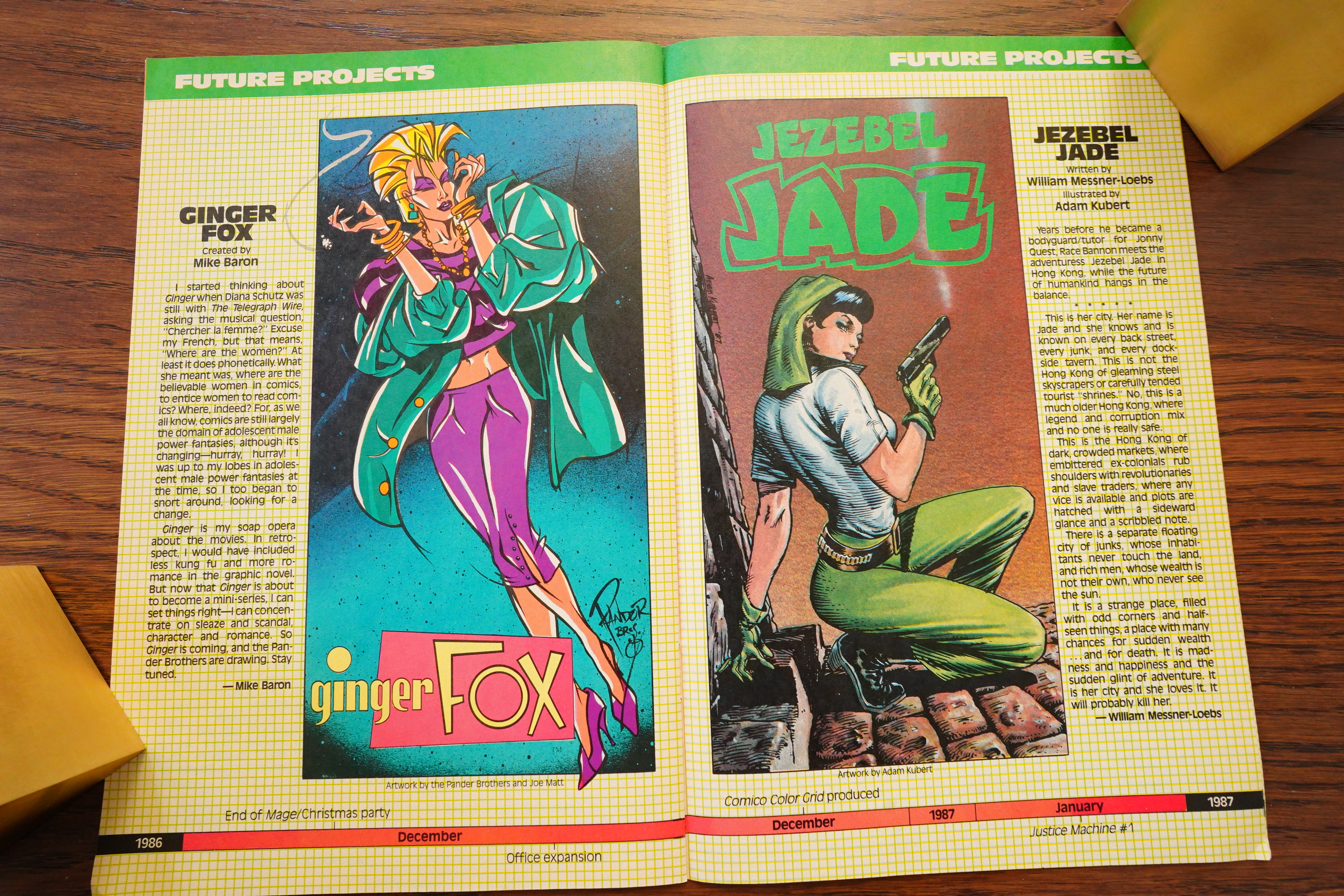
We also get a look at future books…
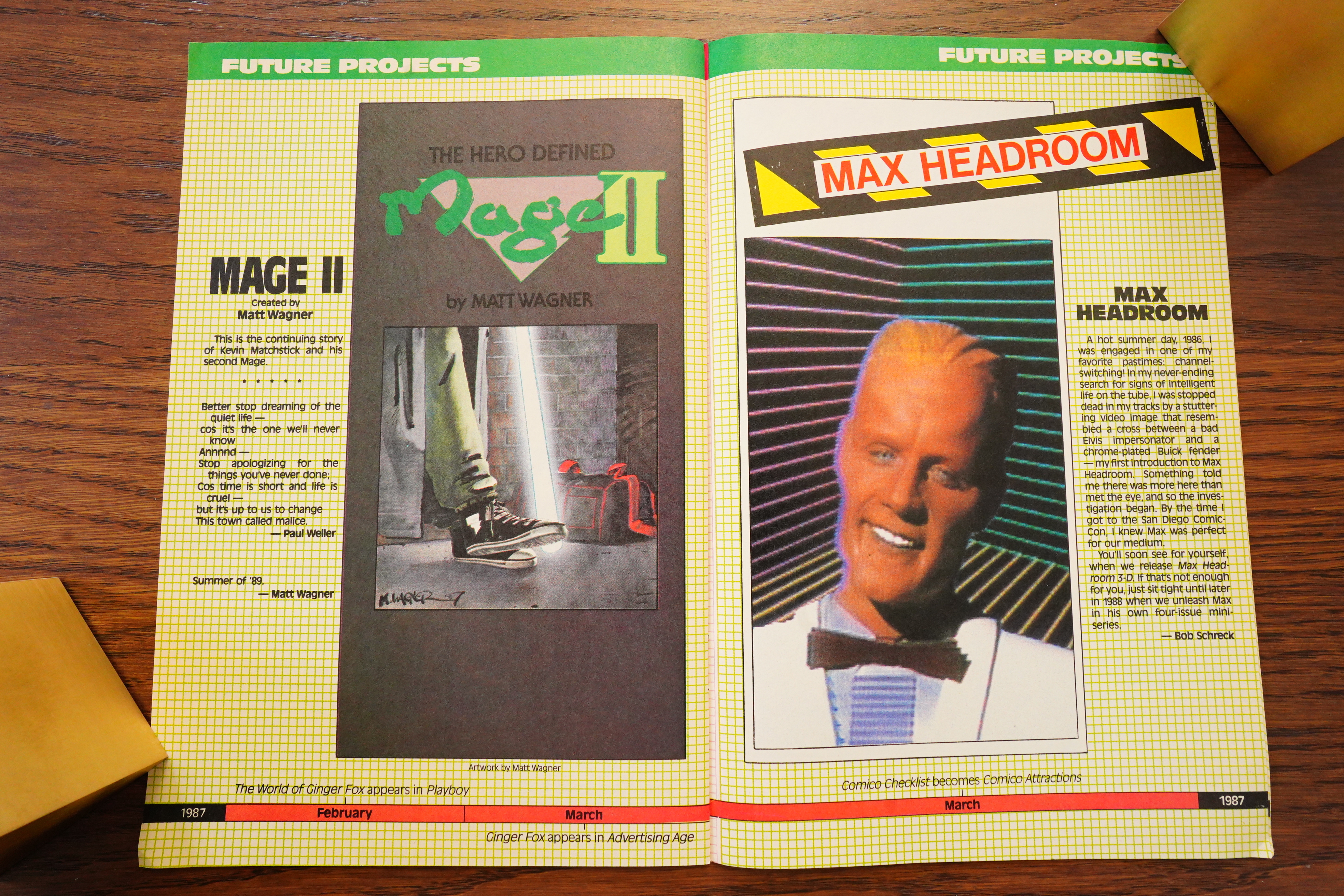
… some of which never happened.
Black Book isn’t exactly a vital item to have, but it’s better than these things usually are.
The Comico BLACK BOOK became the chronicle of my own history at Comico. Shortly after its publication it became impossible for me to continue working at Comico for personal and professional reasons. My name remained in the publishing credits but it was clearly time for me to move on.
The book also signaled a turning point. Comico began its downward spiral. It was a company that had risen from nothing to an independent powerhouse, challenging Marvel and DC all the way into the mass market only to become a bankrupt shell of itself that would be sold into obscurity.
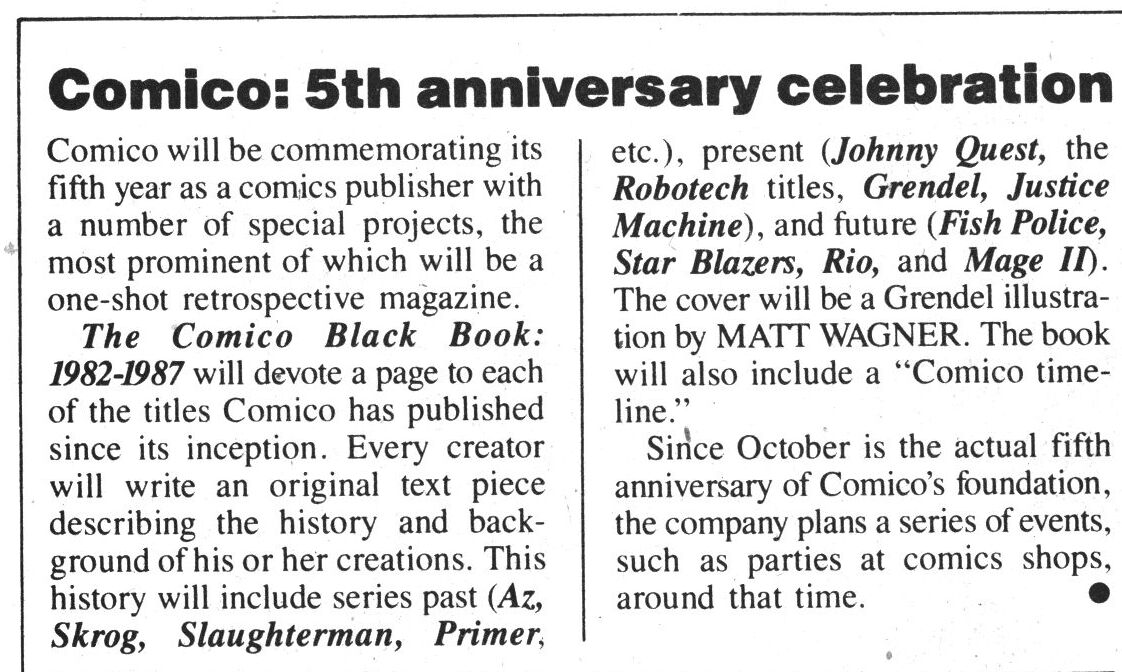
Sounds like plans changed before publication.
Comics Interview #51, page #46:
GERRY: Another thing we’re doing is
THE BLACK BOOK, which is sort of like
a five-year historical presentation of the
things that we’ve done over the years,
what we currently have in publication, and
some of our future projects. There are a
lot of people who are still strictly Marvel
and DC fans, and it’s a chance for them
to say, “Well, I’ll look in here and see”
what these guys are up to, maybe I’ll find
something that I like.” It’s got a little time-
line on the bottom with key events in our
history. Also we’re doing Comico an-
niversary parties throughout the country;
Bob Schreck is coordinating them with
the retailers. Artists will be available to
go to stores for signings, things like that.
It might not look like a big event, five
years in the comic-book industry, after
Marvel celebrated 25, DC celebrated
50 —
DARREL: Well, when you consider that
Pacific went under after –
GERRY: Pacific went down, Capital
went down, Texas – a lot of different
publishers went down.
GERALDINE: But I think we’ve had so
much growth in five years, though, that
it’s worth celebrating. I don’t think any
company in a five-year span has grown
by the leaps and bounds and produced the
volume and the quality of products that our
company has.
DARREL: Well, one thing about the
quality of the product that you put out now,
from where you started, it doesn’t seem
like you could have gotten from one end
to the other unless you were really con-
centrating on doing that.
GERRY: We’ve never compromised.
GERALDINE: We never scrimp.
GERRY: We’ve always done our best.
Even when we were doing the black-and-
white books, it was the best we could
possibly do. I think if you look back at
them and hold them against anything that’s
being printed in black-and-white these
days, outside of the level of quality of the
art, the package is as good as anything
that’s being produced today. You know,
it was the best that we could do, and we
just never stopped. We said, okay, what’s
the next one, and the books keep getting
better.