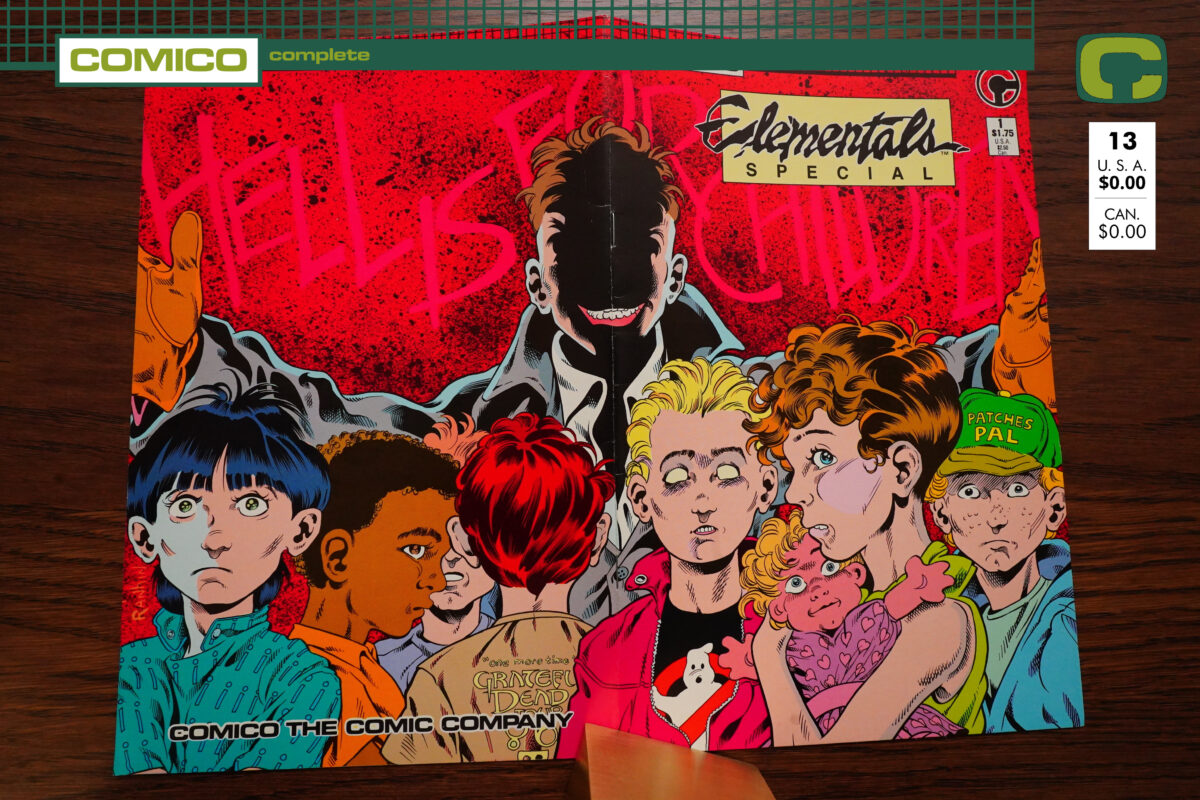
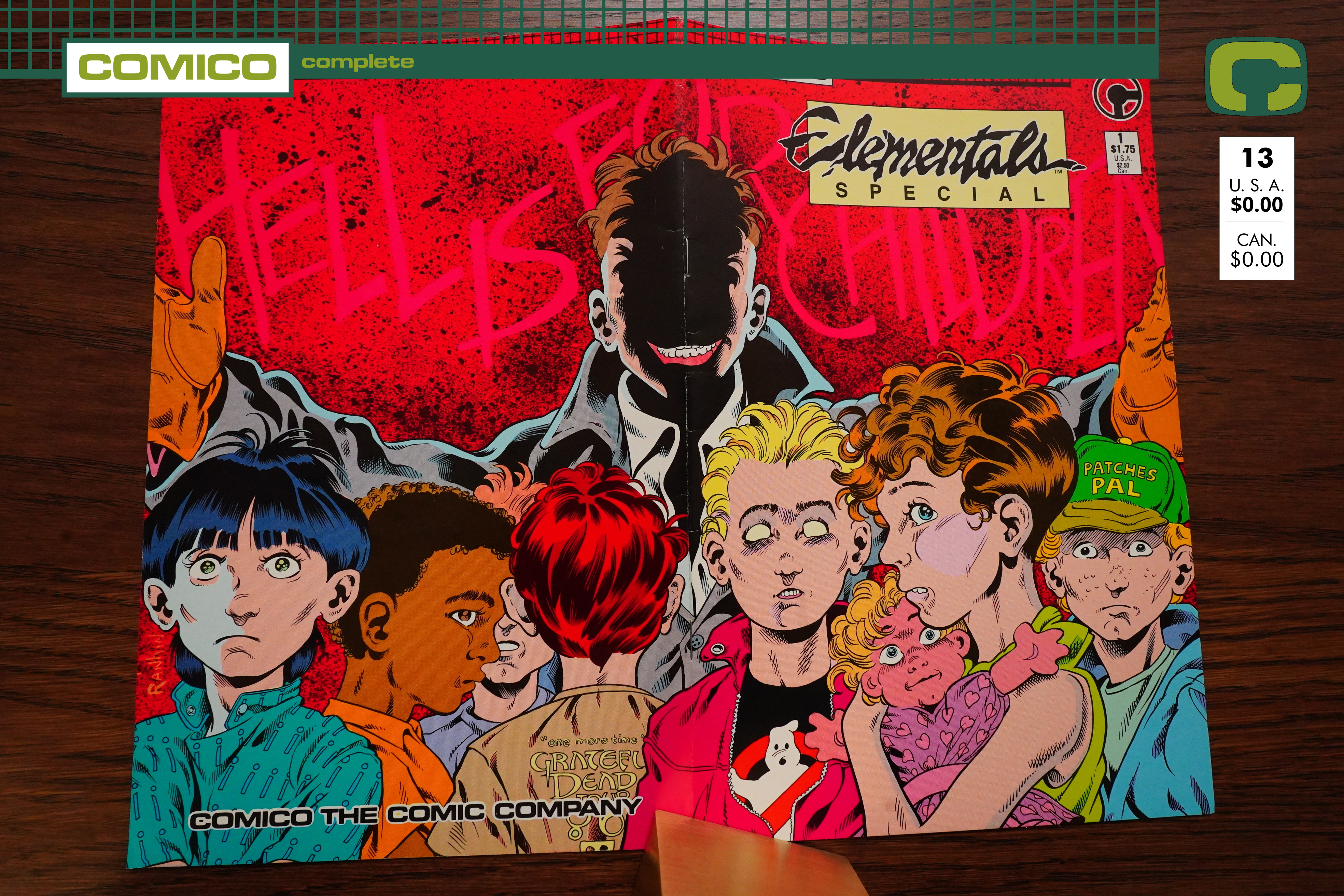
Elementals Special (1986) #1-2 by Bill Willingham et al
Hm… two issues? But I only have one issue here!!! WTF! There were so many Elements Specials that I’ve apparently missed buying the first Elementals Specials #2! Sorry! I guess I have to get it and then update this blog post…
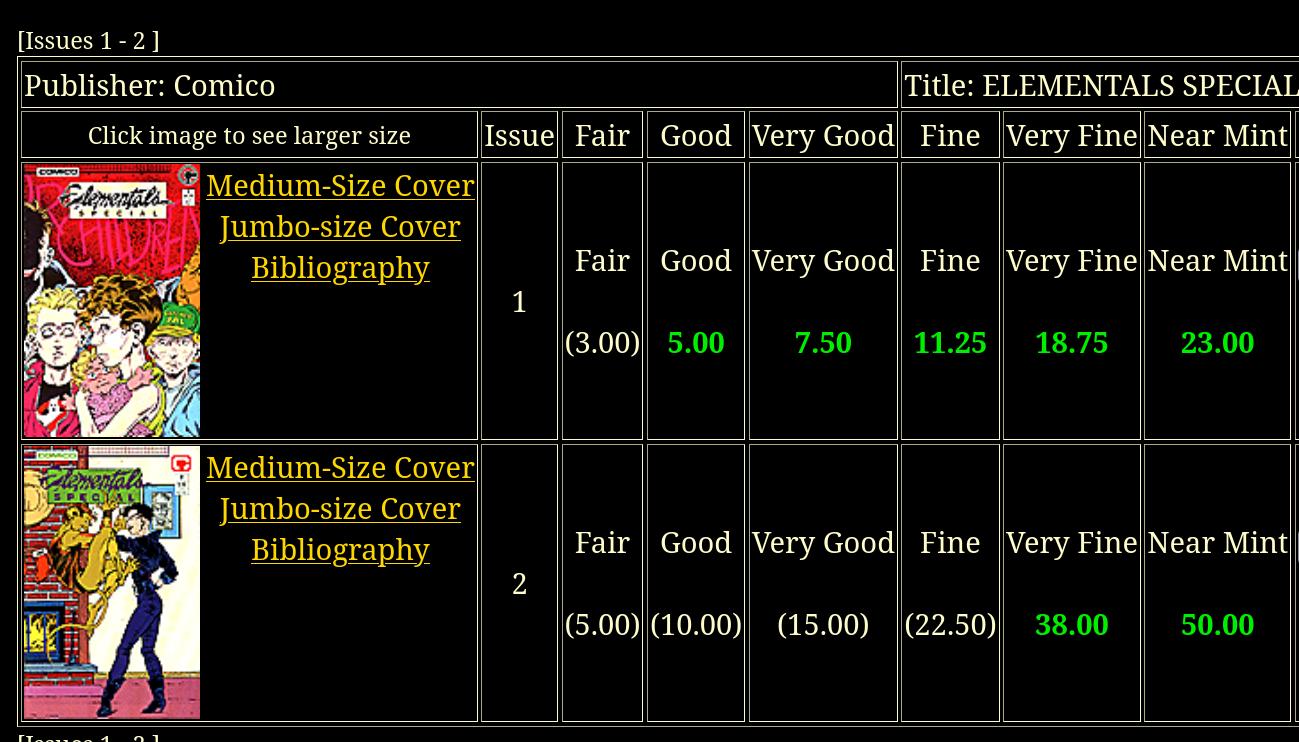
Hm… should I get the $38 copy (minus 70% off) from Mile High Comics…
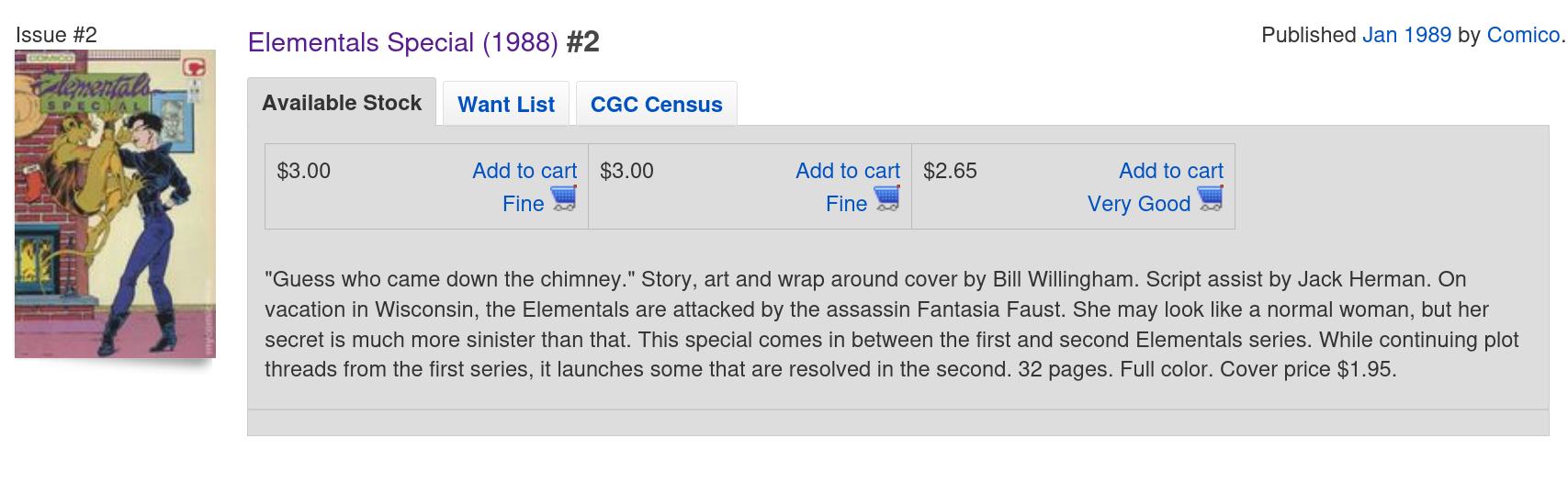
… or the $2.65 copy from Mycomicshop? Decisions, decisions.
OK, buy I can do the first issue now, anyway.
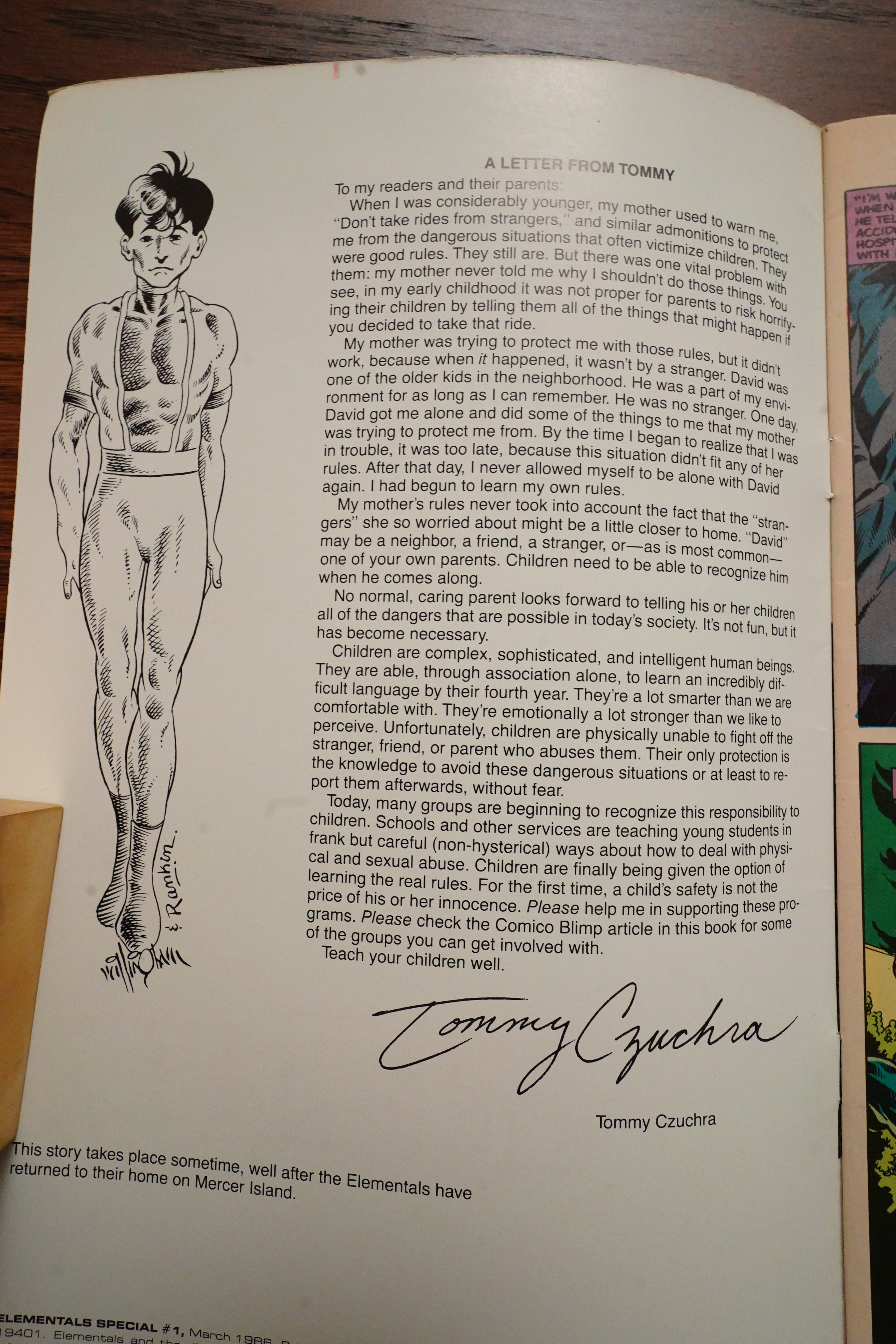
The book looks pretty stylish — I mean, physically speaking. Well, the covers are cardboard, and that’s as far as they got when classing this up, because as this introduction indicates: This Is Serious Stuff. So here we have an editorial by Tommy Czuchra about how he was sexually abused when he was a child, for instance.
Except that Tommy isn’t a real person — he’s one of the super-heroes in the Elementals troupe.
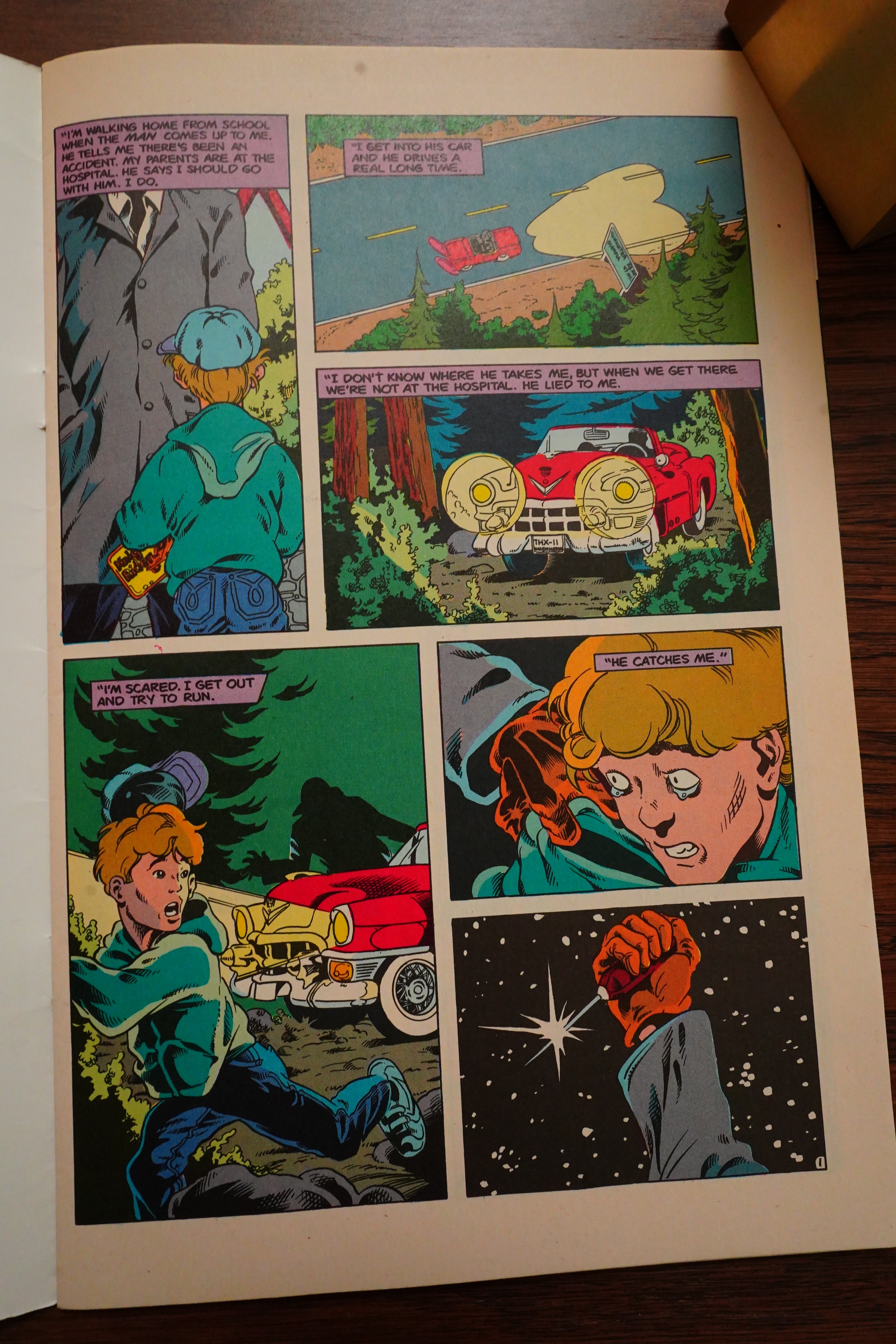
And the story isn’t about sexual abuse at all! I mean, I’m not complaining, but that’s a weird way to introduce a story about a serial killer that kills children with an awl.
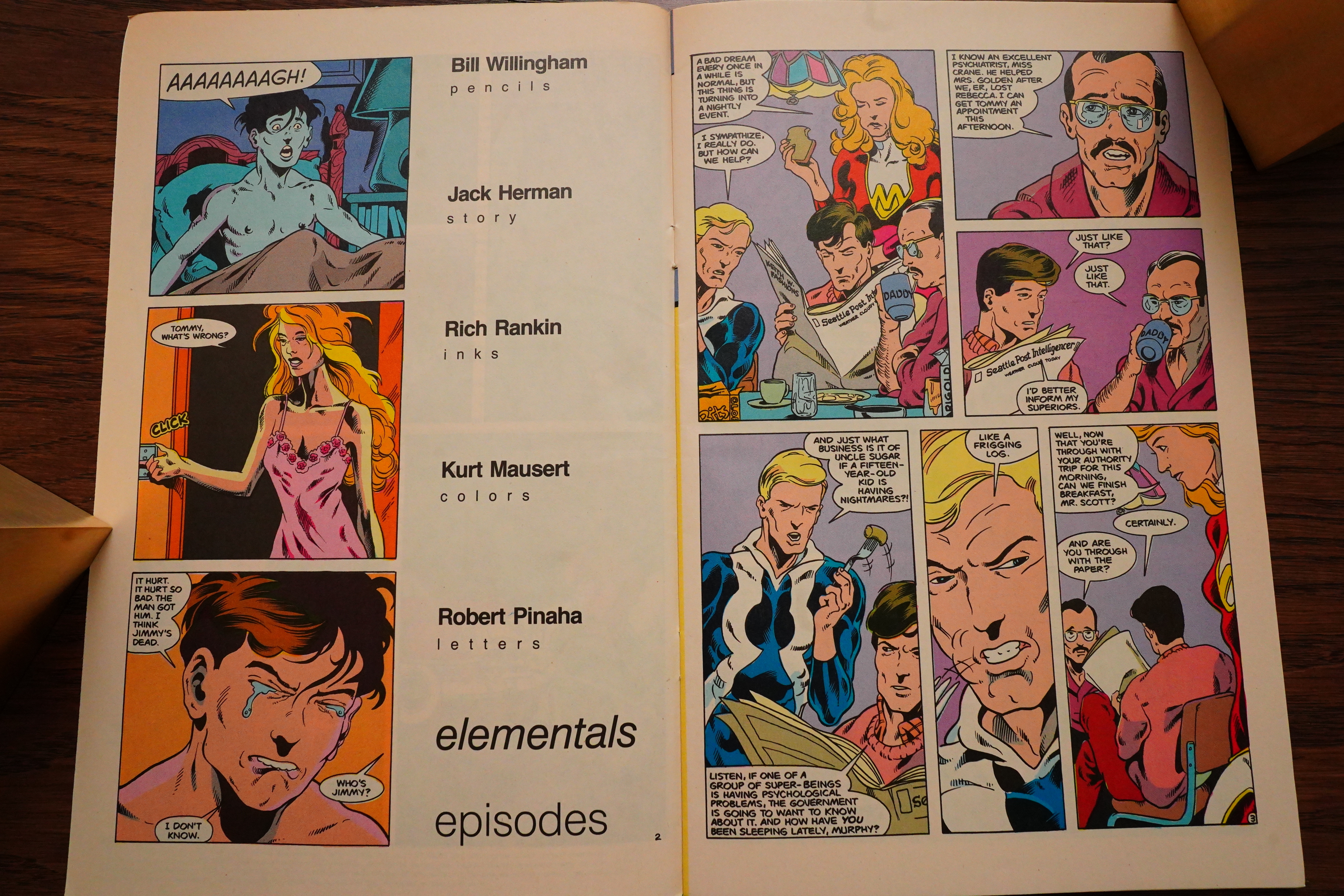
Oh, and it’s not written by Bill Willingham? The credits on Elementals were pretty… idiosyncratic… for much of its run: Willingham was often credited with “story” whether he wrote it or not, and other people were variously credited as “writer” or “dialogue”. I don’t know what “story” means here, but I guess it might mean that Herman wrote this?
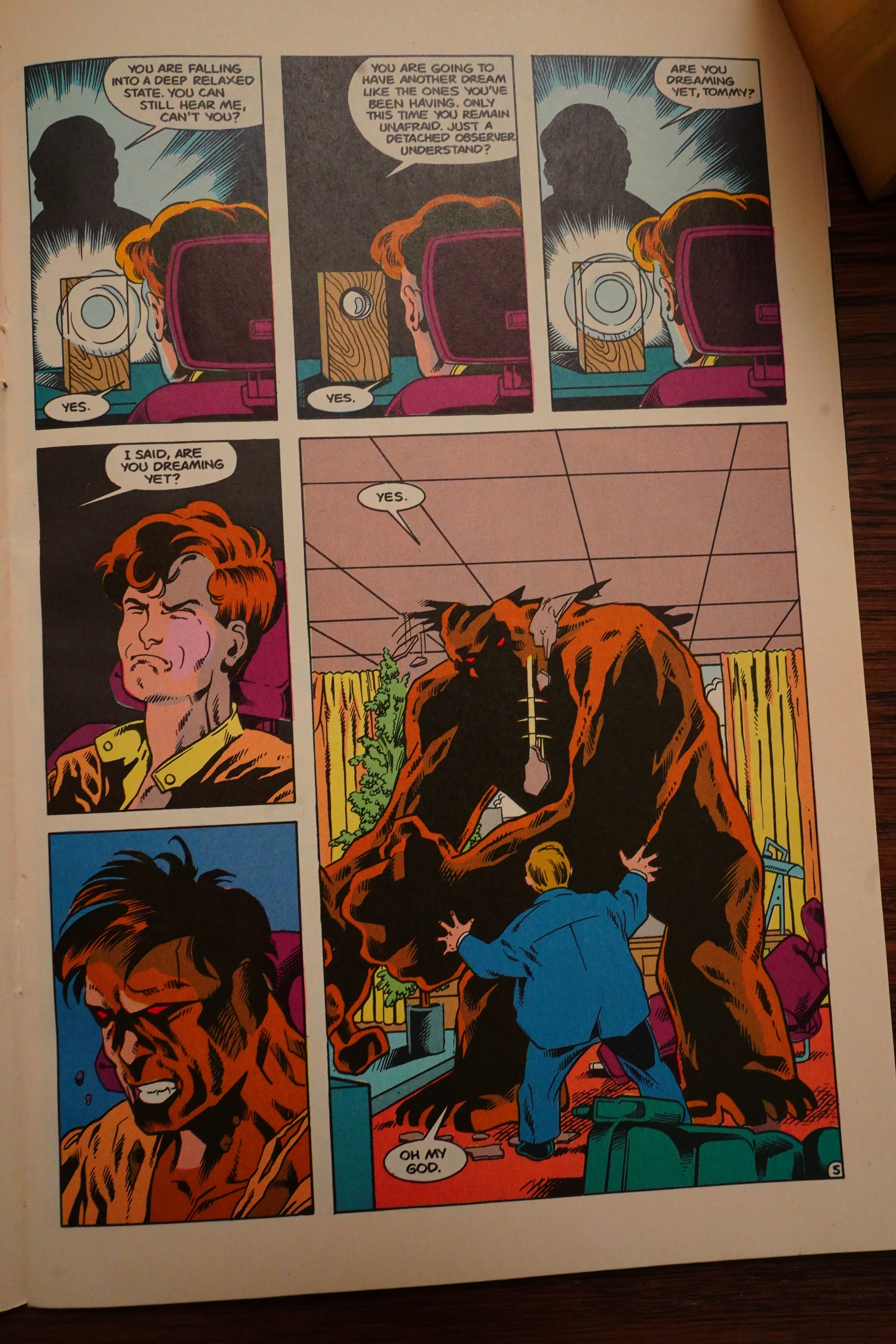
Note to all psychologists: Don’t take on super-hero patients without insurance.
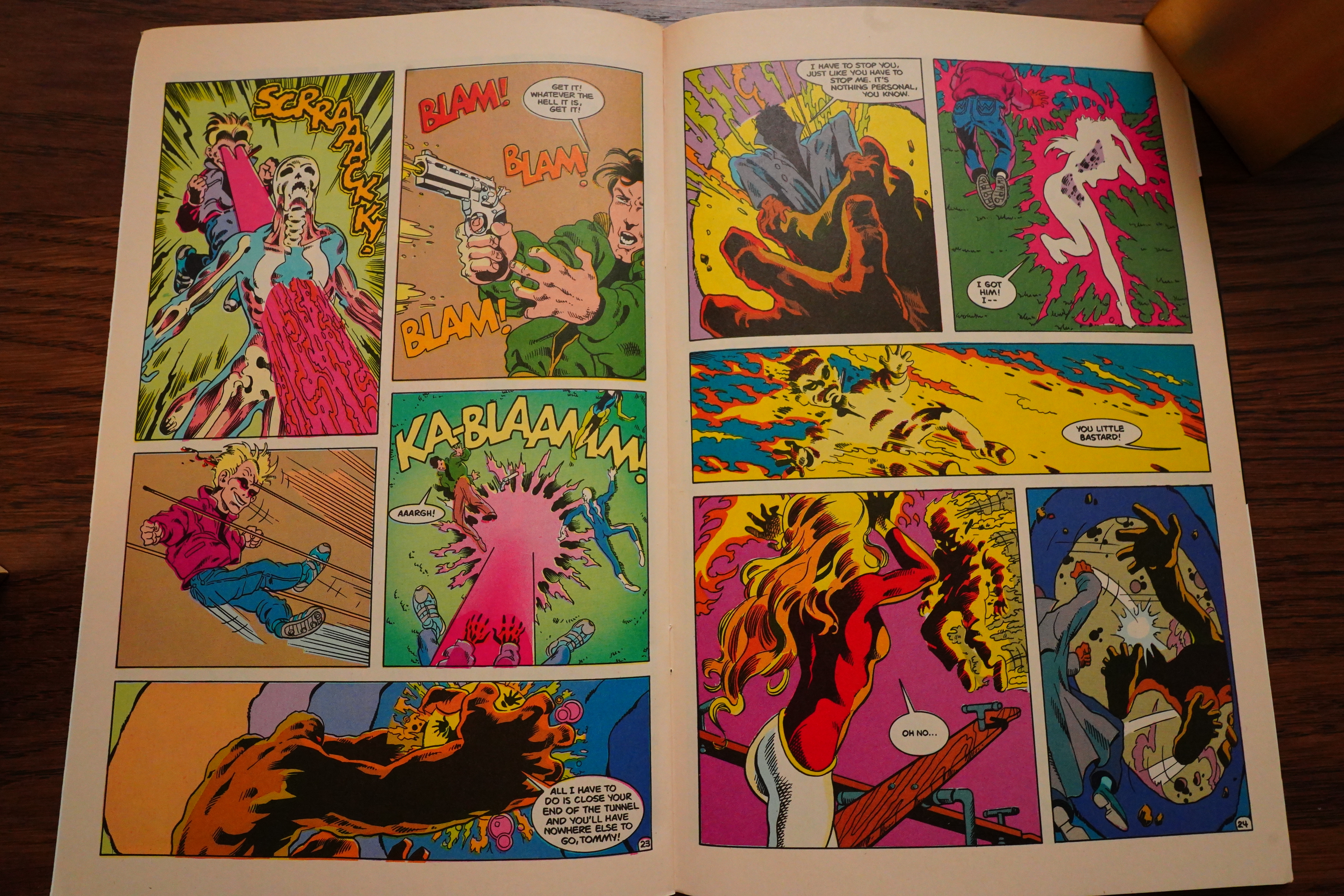
So the serial killer kills a couple more kids… and then the kid comes back to life!? And has a kick-ass fight with the heroies? And they kill the kid? I don’t know.
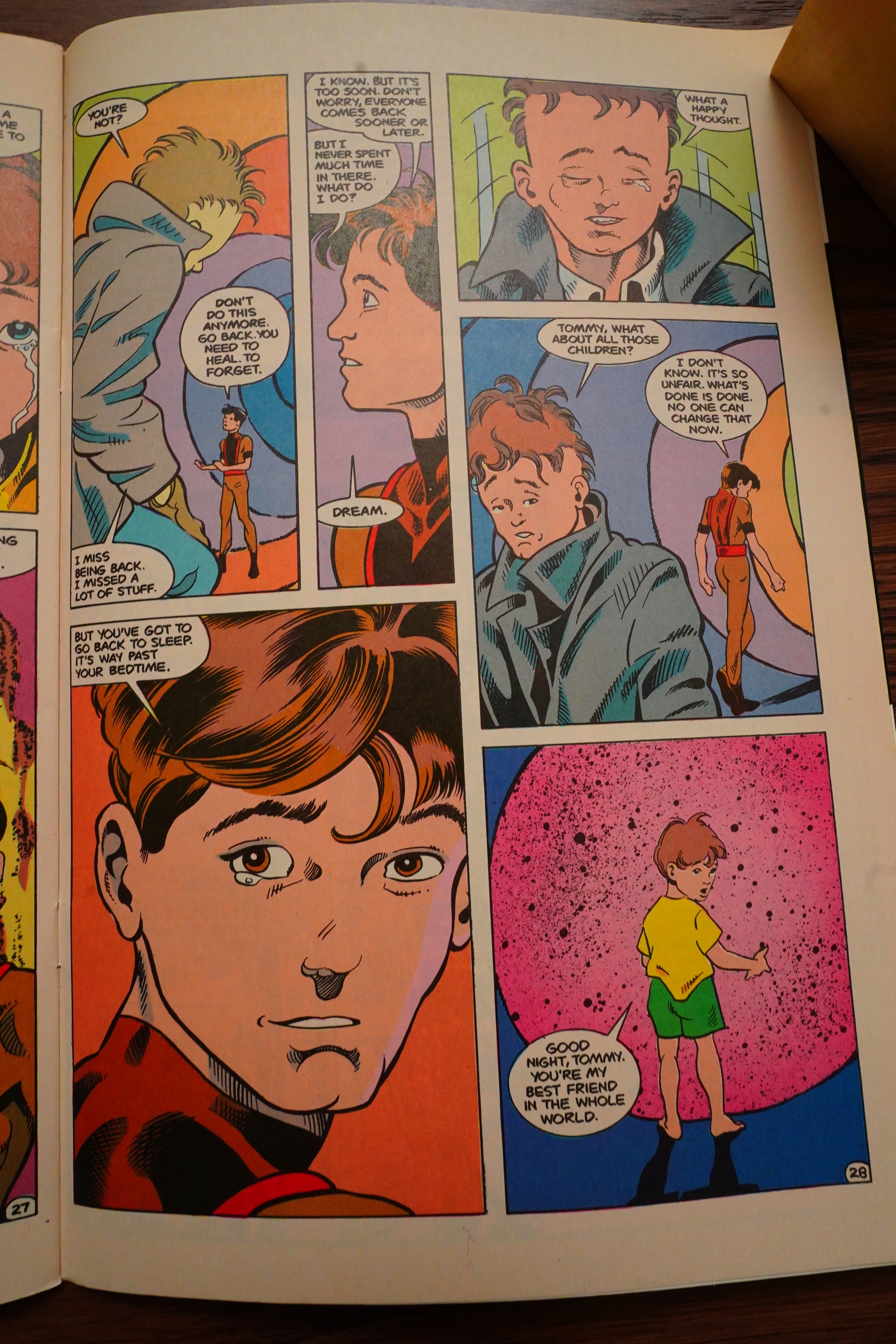
And then it turns out that the serial killer was the ghost of a kid who’d been killed! Or something! The page above is the final page, and I then spent a couple minutes trying to figure out if I missed anything, but nope: That’s the story.
What a strange book! It’s basically just a vignette, and there’s no reason why it couldn’t have been a normal Elementals issue. But perhaps this really embarassing page they published explains what on Earth Comico were thinking:
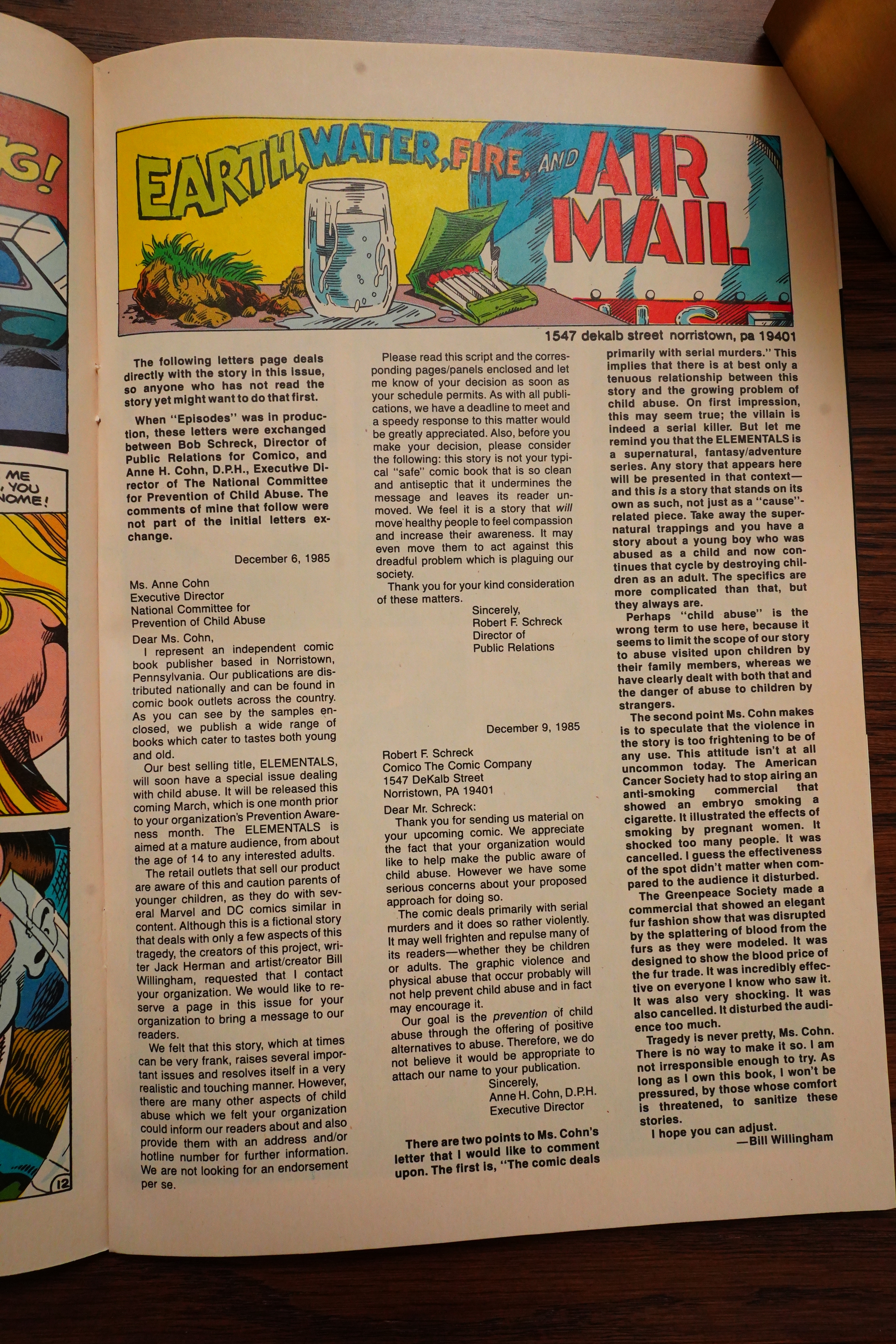
They sent the script to an organisation that deals with abused children, and the spokesperson told them to fuck right the fuck out of here with this shit. (I’m paraphrasing slightly.) And then Willingham has the nerve to answer (in the published issue, of course) with a self-righteous rant about “Tragedy is never pretty, Ms. Cohn” and so on.
It’s the most pathetic thing I’ve seen, and I’ve read Az.
So that was presumably the reason for doing this as a classy “special”: They were going to get press for doing a Serious Comic Book About Child Abuse. But then they screwed it up so badly — they just did a bog-standard stupid super-hero book instead that doesn’t really touch on the presumed subject at all — that they were told to go fuck themselves.
Man.
In March, Comico will publish the
Elementals Special #1. The book will feature
Monolith in a look at child abuse and its effect on
the victims. There will also be a page of text
integrated with art by creator/artist BILL
WILLINGHAM that will offer an address and
phone number for people who wish further
information on the subject.
Yeah, they didn’t get that phone number.
Fantasy Advertiser #98, page #15:
Elementals Special 1
“Episodes” by Jack Herman, Bill Willingham and Rich
Rankin, Comico.
Lois Lane 1
“When it Rains, God is Crying” by Mindy Newell and
Gray Morrow, DC.
These two comics both deal with the thormy and emo-
tive subject of child abuse. They serve very neatly
as text-book examples of how to and how not to tackle
delicate issues in comics.
The Elementals book is a heavy-handed, cretinously
insensitive exercise in Grand Guignol; it graphically
depicts and thus cynically exploits the very acts it
purports to deplore, reducing the horrific murders
of children to just another “funnybook plot device”.
The crowning idiocy, for my money, comes in the letter-
column; apparently Comico, hoping for some sort of
kudos for public service, sent a pre-publication copy
of this rag to America’s National Committee for the
Prevention of Child Abuse, but when Anne Cohn, an offi-
cer of that organization, responded with a polite and
reasoned letter detailing some misgivings with the
presentation of the subject, the Comico staff have
the temerity to accuse her of being reluctant to face
reality, an accusation which, for sheer borrishness,
must take some kind of prize.
The Lois Lane story, on the other hand, is one of
the best comics of 1986 – and I say that without having
seen the second and concluding issue of this ‘micro-
series’. The worrying thing is, it’s so easy for most
people to overlook this title; after all, a series
about Superman’s Girl Friend would not be at the head
of many people’s buying lists, I suspect. I personally
only picked it up because I heard Gray Morrow would
be doing the art.
But I’m so glad I bought it.
Firstly, and least importantly, Gray Morrow turns
out his finest work for a decade; he’s always, in my
opinion, drawn the most realistically beautiful women
in comics – unlike most funnybook mannequins, you can
actually believe these women could exist in the real
world – and his gritty, grim, atmospheric art does
great service to the tension and drama of the story.
And tension and drama there is plenty of. Mindy
Newell, a writer I had previously cordially disliked,
puts her heart and soul into this story. No deus ex
machina superheroes flying to the rescue here; just
very human pain and tragedy. Unlike the corpse-strewn
Elementals Special, this comic makes do with only one
child’s murder; but that one weighs heavily on the
reader’s mind.
Not only a good ‘relevant’ story, but a damn good
Lois Lane story, too; the Lois presented here isn’t
a particularly likeable or sympathetic character, but
for the first time ever I can actually believe she’s
a top reporter.
I’ve no doubt the Elementals book will sell better
of the two; it’s a special edition of a ‘hot’ book
by a ‘hot’ artist, after all. But personally, I’d urge
you all to swallow your prejudices and pick up the
Lois Lane title.
Wow, they picked up on exactly the same thing I did…
THE FATHER’S SIN
As Monolith, he is a being of im-
mense power, the power of the earth
itself. But underneath that primal
facade, he is really a 15-year-old
named Tommy Czuchra. Tommy is
being haunted by recurring night-
mares—hideous dreams of small
children being lured away by a
faceless stranger who then brutally
murders them.
The nightmares don’t end when he
awakens, however, for in each case
his dreams come true. Tommy shares
a psychic link with the killer, and he
uses that link to track down the mur-
derer. In a Seattle park, they meet
face-to-face-and the connection
between the two is frighteningly
clear.
Child abuse is a current cause
celebre with the various media. I
have little doubt that, like other prob-
lems before it, this one will be driven
into the ground and then just as
quickly be ignored, as the ever-
hungry newsmakers move on to a
subject they have not yet milked to
death. This is turn creates the illusion
that the former problem no longer
exists. (Wife-beating? Hey, we”cured”
that didn’t we? After all-I never read
about it any more).
Morever, the media often drive
home the wrong point. The focus of
many child abuse stories is that you
should not let strångers take liberties
with your body-thus ignoring the
fact that most sexual assaults on
children are perpetrated by people
they know and trust.
And what are mom and dad do-
ing? Too often, they are happily
allowing mechanical media to
assume the parental guidance they
lack the responsibiity to give of
themselves. They give their kids
teddy bears that spew out pre-
recorded warnings against fondling!
Where are the parents while little
Jimmy and Jane are learning to relate
to an inanimate object? Probably sit-
ting on their ever-broadening asses,
watching a prime time soap opera.
Morever, some psychiatrists and
psychologists are now warning that
we are creating a whole new prob-
lem. While it is prudent to teach a
child caution, we are instilling in our
young a suspicion, even a hatred, for
all who are strange to them; all who
are different. The imagined fear can
sometime be as damaging as the
actual menace.
How do the stern warnings that
children protect themselves at all
times relate to the Elementals story
at hand? To my surprise and gratitude
…not at all.
There is an obvious, and super-
ficial, difference of course, in that this
story doesn’t deal with sexual abuse
but rather with the outright murder
of children. The larger distinction is
not so easily discerned, especially
early on.
I was somewhat shocked and
horrified when I turned to page 19
and was greeted by the sight of the
faceless stranger savagely plunging
an icepick into a small boy’s throat.
I felt a sense of exploitation when,
three pages later, the child’s corpse
is animated into some sort of male-
volent, power-blasting zombie, one
able to smile as a bullet burrows
completely through his head.
“My god!” I thought, with disgust.
“There’s no way in hell a little kid
should be exposed to these sorts of
images.”
And that’s just the point. This story
isn’t meant for children; its message
is not directed at them. Its target is
me and you, as becomes evident
only when we reach the climax of
the tale.
In a floating netherworld between
life and un-life, the faceless stranger
reverts to his true form-that of a
child who was beaten to death by his
own parents. This puts the earlier
scene in a different perspective. That
child, the victim of horrible violence,
returns to mete out equal violence
to others.
This is one area in which, to a very
real degree, the sins of the father are
visited on the son. Many men who
beat their wives saw their fathers beat
their mothers. Many adults who
abuse children were themselves
abused when they were young. We
create our own monsters.
That’s the message of this story.
The danger to our children doesn’t
come from faceless strangers-it
comes from us. The solution to the
problem lies not in stronger locks on
our doors, but in a greater respect for
life; an abolition of the mindless
violence that makes humans the
beastliest creatures to ever roam this
planet.
Scripter Jack Herman, along with
series creator and artist Bill Will-
ingham, is to be commended for his
effort here. It aptly demonstrates the
power that the comic book medium
can display, even under the guise of
superheroics. We have seen scores
of costumed champions save the
world scores of times; we have
become jaded to its import. But the
salvation of a single soul, as
presented here, can still touch us to
the core; can make us understand
true heroism. It is to be recom-
mended.
And if a single mother or father
can read it and then look at their own
son or daughter with new insight and
appreciation-then it is a treasure
beyond price.
That’s from R. A. Jones, so *rolls eyes*.
I can’t find any reviews of this book on the internet, but it’s difficult to google for, so… But my guess is that it didn’t make much of an impression.
When I get #2, I’ll blather on about it here:
[…]
Next up in this blog series is Grendel, which I’m looking forward to reading. It’s forty issues, though, so it might take a few days…