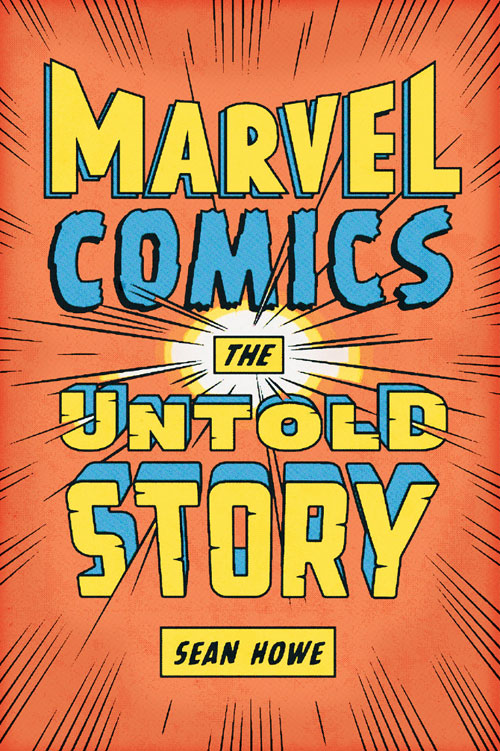
Marvel Comics: The Untold Story by Sean Howe looks like an incredible read for any fan of comics. An excerpt from it that appears on Grantland certainly leaves your mouth watering for more.
I was hooked on every word especially since it dug into the skeleton filled closets of Marvel at a time when I was an avid fan of the House of Ideas. Though there is clearly tons of riveting kiss-and-tell moments, I was most taken by an account where Stan Lee and Carmine Infantino draft an agreement to share information regarding freelance rates to maintain some type of parity between Marvel and DC. Roy Thomas, Editor-In Chief of Marvel at the time considered the agreement collusion and was unwilling to enforce it. This drove him to resign referring to the agreement as “unethical, immoral, and quite possibly illegal.”

Bravo, Roy!
I began to wonder if this word could be the key to the emancipation of character rights back to their original creators.
 The comics industry, according to Gerard Jones’ equally compelling book, Men of Tomorrow: Geeks, Gangsters, and the Birth of the Comic Book has a sordid history steeped in mob ties and unethical decisions. Many publishers including Marvel/Timely were subsidiaries of other publishing groups and were often one of many comics publishers commingling under the same umbrella.
It was not uncommon for competing publishers to have distribution agreements with each other. National Periodicals, the parent of DC Comics, for instance, distributed Marvel in the early sixties restricting them to just six regular publications.
All of the comics publishers, historically, convened to create the Comic Code Authority in an effort to save the industry from abolishment during the Kefauver, Senate subcommittee hearings motivated by Dr. Frederick Wertham’s book Seduction of the Innocent.
The point being that comics publishers did talk and were known to conspire when it came to making money and self preservation.

Julius Schwartz, Martin Goodman
Stan Lee himself admits that the creation of the Fantastic Four was motivated by a discussion that Marvel publisher Martin Goodman had while golfing with DC editor-in-chief Julius Schwartz.
After reading that Stan Lee and Carmine Infantino were willing to conspire against creators to prevent a page rate war I had to wonder.
What is the possibility that work-for-hire and the practice of creators having no ownership in the rights of their creations was a mutually agreed upon and enforced system amongst conspiring publishers that was simply considered how things were done in comics?
If someone could prove that there was collusion regarding creators rights in those early days, would that deem the practice illegal, forcing the courts to readdress the copyright ownership of characters created under those pretenses?
I’m no lawyer and may be grasping at straws, but it sure would be nice to see a practice that has proven to be, to use Roy Thomas’ words, “unethical and immoral” in the minds of fans and creators alike who feel that those who created the characters that are now generating billions of dollars for the corporations that own them should receive at least some kind of residual compensation.
If you have a perspective on this, I’d love to hear it. If you are a lawyer, or investigative journalist, I hope you would sink your teeth in this. If you are one of those creators that feel screwed, cross your fingers!
Making Comics Because We Want to,
Gerry Giovinco

Tags: and the Birth of the Comic Book, Carmine Infantino, Collusion, Comic Code Authority, DC, DC Comics, Dr. Frederick Wertham, FANTASTIC FOUR, Gangsters, Gerard Jones, Grantland, House of Ideas, Julius Schwartz, Martin Goodman, Marvel, Marvel Comics, Marvel Comics: The Untold Story, Men of Tomorrow, Men of Tomorrow: Geeks, National Periodicals, Parity, Roy Thomas, Sean Howe, Seduction of the Innocent, Stan Lee, Timely, work-for-hire
Great post, Gerry! The more people are made aware of the classless tactics used by comics companies to screw creators out of just compensation, the better the chance that future creators will regain control over their creations’ usage. I don’t believe reparations will ever be made for those that helped build the industry to the heights it now enjoys, but it would be nice if justice were finally done. At the very least, creators might finally receive the credit that’s been denied them for far too long!
Mike, I’m sure that the film productions of Micronauts and Guardians of the Galaxy will make this a much more personal and sensitive issue to you and your family because of Bill’s involvement with both. It would be nice if Marvel/Disney and Hasbro would recognize his contributions to the properties and his current unfortunate condition and realize that they have an ethical and moral responsibility to show some fairness.