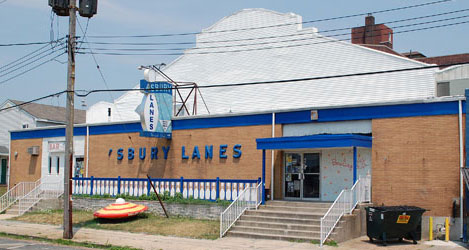
This weekend past Bill Cucinotta and I manned our booth at the second annual Asbury Park Comic Con which for this year and last was held at an unusual venue, a bowling alley. Asbury Lanes wears its retro heritage on its sleeve and and glorifies its half-century existence in vintage style throughout. A quick spin through their website shows that it is a teeming hotspot for the gathering of subculture enthusiasts. Punk Rockers, Hot Rodders, Burlesque Beauties, and Pin-up wanna-bees all make pilgrimages to the historic bowling alley that more accurately operates a a Rock club. Housing its own bar and lounge, Asbury Lanes makes for a fun, casual, and quirky environment for those who enjoy life outside of the box.
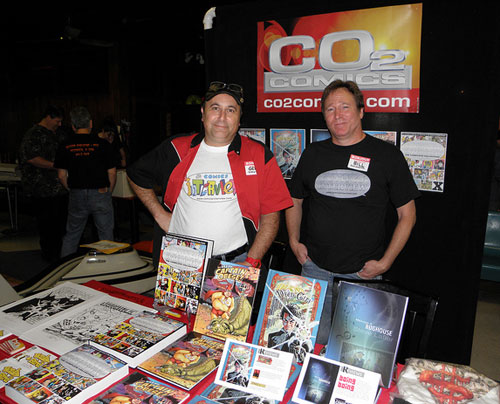
Comic fans that climbed out of the longbox on Saturday were treated to a relaxing, one day event that featured a respectable list of indie creators and G.I. Joe legend, Larry Hama. For us, the big surprise was a visit to our booth by John Workman who has done everything imaginable, production wise, in the field of comics. A tremendously talented craftsman and all around nice guy, John thrilled us with stories from his days at Marvel, DC and Star* Reach. Bill and I are big fans of comic history, our main reason for publishing David Anthony Kraft’s COMICS INTERVIEW the Complete Collection, and we were tickled to point out that Volume One of the collection did contain a wonderful interview featuring Mr. Workman.

John Workman in COMICS INTERVIEW: The Complete Collection Vol 1
Having had a chance to work my way around the convention, talking with creators, publishers and fans alike while savoring the atmosphere of the classic lanes I began to formulate a new perspective regarding the creation of comics. Something I like to refer to as “Recreational Cartooning” became evident to me.
In what we consider the comics industry, there seems to be a prevailing sentiment that there is an overabundance of material competing for a limited audience which is creating a frustration for creators who are struggling to support themselves by making comics. A discouraged creator at the convention muttered the phrase, “Everyone and their mother is making comics.” as he rationalized poor comic sales.
The is no doubt that there are more people creating comics now than ever before in history. This is an extraordinary time for a medium who’s industry leaders, in the late 1970′s, were so concerned that that there would be no successors to an aging creator pool that they instituted apprentice programs to cultivate new talent. Comic artists, at that time, were trained to create comics in a very specific way to satisfy the editorial needs of a very limited number of publishers.
Today, thanks to the internet, a wide array of independent publishers and an unimaginable number of people creating comics, there is more creative freedom and the output of comics could not come in a greater variety of styles, formats, and modes of distribution. More importantly, people are creating comics for different reasons.
Throughout the first half of the history of the industry I think it is safe to say that creating comics was specifically an end to a means. Creators made comics to make money. They cranked them out for a page rate and were not even concerned about residual income. Their original art was considered disposable once the films were made and there was no aftermarket for their art. The creators that made lifelong careers out of comics were the few that had a true affinity for the medium. Most others used the comics industry as much as it used them. To them it was a mere stepping stone to a career in creative media.
People who create comics now have a different connection to the work. I believe most of these comic creators make comics because of a strong personal attraction to the medium. They make comics, first, because they love to and secondly, hope to find financial rewards from their work. It is this paradigm shift that has many creators struggling to make sense of their place in the industry because the equation making comics = making money is no longer always true.

Dean Haspiel, Seth Kushner, George O'Conner
I had this discussion with Dean Haspiel. That creators, in order to maintain an income from creating comics, must be prepared to continually hustle to find ways to generate revenue with their work. Dean said, “the trick is to have your comics make money for you while you sleep.” This is done through royalties or what is known as residual income, something that was unheard of in the comics industry for decades but is the staple for success in other creative media and fortunately part of the current economic state of some of the current comic industry.
This is where my term Recreational Cartooning comes in.
Maybe it was because we were sitting in a bowling alley but I began to compare comic creators to bowlers.
I imagined casual bowlers who pop into the lanes occasionally to enjoy playing with their friends or bowling just because they liked to and found it relaxing.
Then there are bowlers who join leagues and play on a weekly schedule, some of them even own a ball or bowling shoes but they play more for the fun and social aspect of the sport.
Some bowlers join leagues that are highly competitive. They play to win, they take the sport seriously, but at the end of the day they go home to wake up to a real job to support their bowling interest.
Finally there are bowlers who turn pro. They dedicate every waking moment to the sport. The search for sponsors, travel and compete against the best bowlers in the world for cash prizes that will support them as professionals. They must stay on top of their game at all times or risk losing it all.
Pro bowlers are rarely intimidated by recreational bowlers. They will encourage them and inspire them even train them. They appreciate that recreational bowlers represent the large portion of the pro bowler’s fan base and are necessary for the economic survival of the sport. They also appreciate that only a rare few will rise to the pro level with the talent and commitment to the sport that is required.
The pro knows and endures the struggles to maintain a career and may often find themselves creatively using their skills or accomplishments to generate income through appearances, lectures, teaching or merchandising. They understand that success can be fleeting.
With the recreational bowler in mind, Recreational Cartooning can apply to anyone making comics because they love to but are not interested or able to support themselves making comics. Like bowling, it should be OK to enjoy making comics just because you want to.
As an industry, comics should support the recreational cartoonist as part of the complete landscape rather than be intimidated by them and their efforts. Their product may or may not not be distributed by Diamond but it is influencing trends that will impact the whole industry. Already they are driving forces behind many of the small conventions springing up across he country and they are proving to be a niche market in and of themselves. The recreational cartoonist is necessary for the survival of the industry and the medium.
I will always make a point to encourage anyone interested in making comics to jump in ad give it a try. There are so many options to be able to create and publish comics. Budding comic artists don’t ever have to be the next greatest master of comic art but if creating a comic gives them a feeling of joy or accomplishment then I applaud them for trying. Who knows, they may someday be the next genius of the industry and I sure don’t want to be known as the guy who said they were wasting their time.
Making Comics Because We Want to,
Gerry Giovinco
