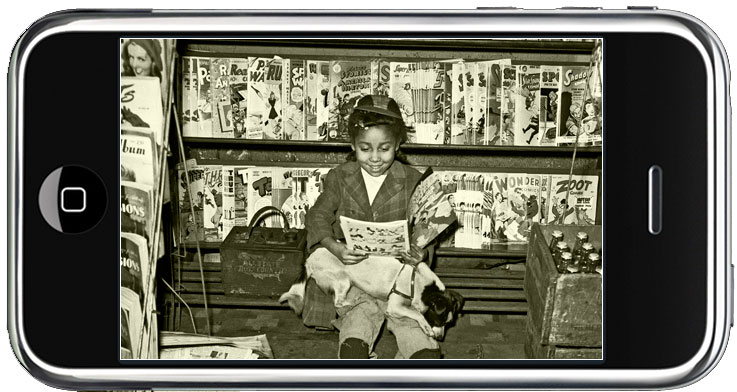
I have said many times that I do not regard a comic complete until it is in the hands of the reader. I say his because I believe that the presentation of the material is itself a critical element that impacts the readers appreciation of the work. Most of my career in comics has been on the side of producing the final package wether it be in print or digital format. Bill Cucinotta and I take as much pride here at CO2 Comics in packaging other creator’s comics for final presentation as we do writing and drawing our own material. This was also true when we were partners publishing comics under the Comico label back in the 1980′s.
Last week I wrote about accessibility, primarily focusing on characters remaining accessible to their audience after decades of continuity that might obscure their fundamental characteristics that make them unique and even iconic. To many, however the concept of accessibility as it relates to comics refers more to the availability of product or more precisely, the delivery of the product.
Ever since the rise of the Direct Market, beginning in the late 1970′s, it seems that the accessibility of the comic book to the general public, or more accurately the casual comic book reader, has diminished with the relative extinction of traditional mass market outlets that drove the sales in the Golden and Silver Ages of comics.
Overlooked however is the fact that comics do exist outside of both of these markets and are thriving. Comics may be more accessible to readers now than ever before. Comics are offered in such a tremendous array of packaging and subject matter that surely there is something for everybody and comics as a medium is poised to be recognized for its ability to have universal appeal.
I am going to attempt a breakdown of venues through which comics are currently being enjoyed. some are traditional formats others are new and still others are vehicles of marketing or use of comics as a form of communication. This includes strips, panels, short form and long form presentations. Please, if I miss any don’t hesitate to to send along your suggestions.
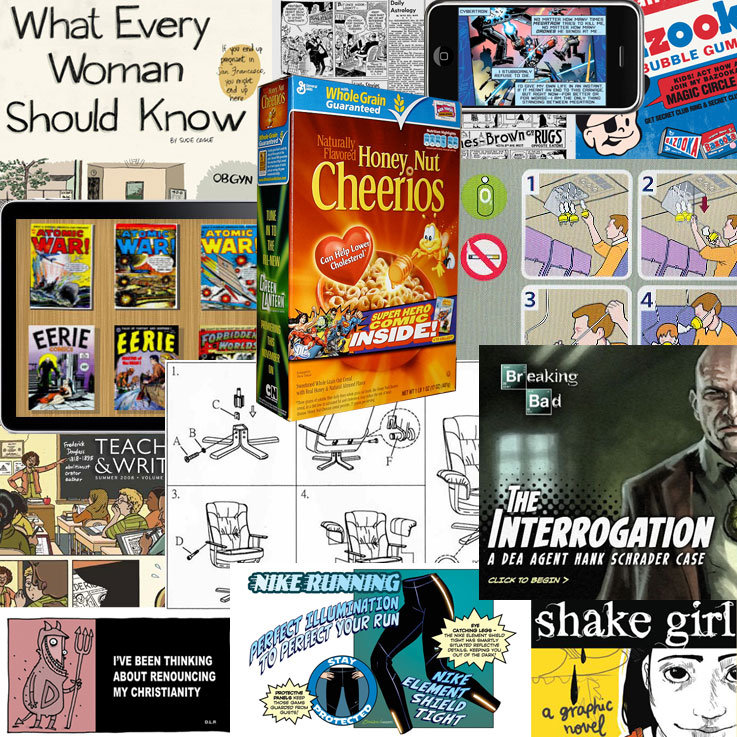
Newspapers – strips and panels – newstand distribution, subscription
Magazines - strips and panels – newstand and mass market distribution, subscription, internet sales
Comic Books – long format – Direct Market, Bookstores, subscription, internet sales
Graphic Novels – long format – Direct Market, Bookstores, internet sales
Small Press – Boutique format – Direct Market, internet sales, conventions
Web comics- Any format goes including infinite canvas – usually free on internet, some by subscription, some get collected into print packages.
Digital – comics collections on disc or via subscription on web sites.
Cell phone apps- comics downloaded to cell phone
e-reader apps – comics downloaded to e-readers like i-Pad, Kindle Fire, BN Nook
Print on Demand- Comics available as books printed to order from POD producers like LULU.
Zines – usually produced as fan publications, printed at home and mailed or distributed as PDFs via e-mail
Tracts – small religious pamphlets done as comics usually handed out freely by true believers.
Educational -comics used to illustrate a point, often seen in textbooks or educational magazines. The military uses comics to educate.
Institutional- I’ve seen comics used to describe museums and historic landmarks to name a few.
Premium - This includes everything from free comics in Bazooka Joe Bubble Gum to comics in cereal boxes.
Instructional- Comics are used all the time to show instructions from everything to setting up a computer to flight safety on airplanes.
Promotional-comics used to advertise a product in ad form or catalogue form. I’ve seen promotional comics on comics on place mats in restaurants.
Journalistic- comics journalism has come a long way and can be found as panels or strips in newspapers to magazines and on the web.
I know that there is plenty more out there, I’d love to see samples of comics used in unusual formats, it always fascinates me so please share links or upload pictures to our facebook page.
Comics are everywhere. They are so ingrained in our culture that idioms like word balloons, panels, page layouts, effect splashes, production techniques and genre references are so common place they are easily taken for granted.
It is time for comic creators to lose the sensibility that they are purveyors of a fringe medium whose target audience is a focus group of geek culture and recognize that comics as a medium is one of power through its ability to communicate effectively to the masses in a simple, cost efficient manner. This cultural repositioning of the medium will be necessary for creators to establish their value to a market that will witness an ever increasing demand for this wonderfully versatile medium.
Making Comics Because I Want To
Gerry Giovinco

Tags: Cell Phone Apps, CO2 Comics, comic books, comico, comico the comic company, Comics, Digital Comics, Direct Market, E-Reader Apps, Educational Comics, Golden Age, graphic novels, Institutional Comics, Instructional Comics, Journalistic Comics, Magazines, newspapers, Premium Comics, Print on Demand, Promotional Comics, Silver Age, Small Press, Tracts, Web Comics, Zines