Steve Jobs’ passing was no surprise. His failed health had been quite public and his recent resignation as CEO of Apple was a clear sign. The dignity with which he handled his final days in public is as much an inspiration as his life and the impact his vision has had on the world.
It is hard, now, to imagine a day without some technological influence that Steve Jobs and the company he stewarded did not have some impact on. As a comic creator, I can tell you that the course of the entire comics medium has been redirected, in large part due to innovations derived from Apple.
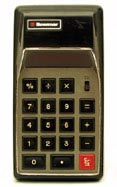
There certainly were computers before Steve Jobs and Apple came on the scene. In 1974, when I was in 8th grade at Saint Titus in East Norriton, Pennsylvania, I had access to an already obsolete computer that had been used for actual Apollo moon missions. It was a clunky machine that had to be programmed with binary punch cards and its output seemed no more sophisticated to me than that of the newly released Mini Bomar that launched a frenzy of low cost handheld calculators on the world.
Learning to program that two digit dinosaur was a real trial and to this day the words of my Math teacher, Rev. Joseph Oechsle, ring in my ears, “Trash in, trash out!” The lesson was that computer was only as good as the person programming it.
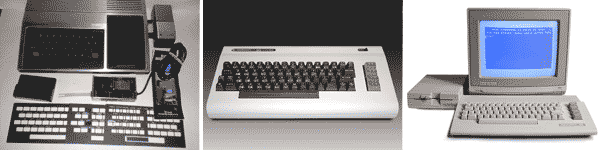
Vintage home computing
A few years later I would sell computers meant for the home as part of my job working in the electronic appliance department at K-Mart where I tried making some extra cash while we struggled to build our fledgling comic company, Comico. I sold machines like the Texas Instrument TI-99/4A, the Commodore VIC-20 and the Commodore 64. These computers saved data on audio cassette tapes and sophisticated gaming was PONG.
By that point in my life I had no interest in computers. I was totally focused on comics and the ugly pixelated images and type that these computers could barely generate were of no use to me and my aspirations to be a comic artist and publisher. I was blind to their potential.
This all seemed to change in 1984 when the hammer was launched into a giant screen during Apple’s first and most memorable Super Bowl commercial. Not only did it change the impact that Super Bowl commercials had–it changed the way the world would look at personal computers. It also introduced Graphic User Interface (GUI) which put icons on our desktop suddenly making computers much more intuitive and useable to the general public.
We had one of those Macs at Comico when it first came out and immediately we used it to generate all of the type that we used for our letters pages, graphics and editorial columns. Between the Mac and our photocopier we had practically eliminated our dependancy on our local typesetter and the graphics house where we had most of our photostats done. This transition to a variation of desktop publishing ended up saving us us a ton of money.

In 1985 First Comics published Shatter by Peter B. Gillis and Mike Saenz. This was the first all-digital comic commercially published. It was created on a Mac exactly like the one that sat in our office at Comico.
Digital comics have come a long way since Shatter. Where Shatter’s pixelated digital imagery made it obvious that it was generated on a computer and was in fact a badge of honor for its accomplishment, today it is nearly impossible to tell which comics are drawn by hand on paper and which are generated completely digitally.
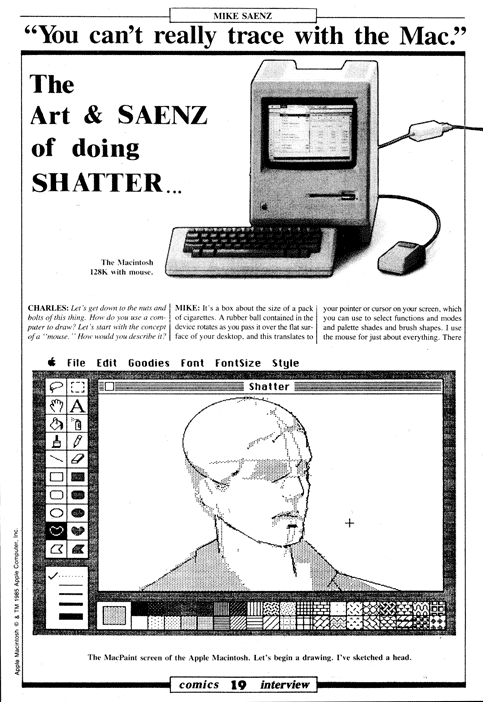
Michael Saenz interview from Comics Interview #21, © Fictioneer Books
Steve Jobs recognized the power of digital art which was evident when he bought Pixar from Lucasfilm in 1986. Under his guidance Pixar changed how animation was created and delighted the world with Toy Story in 1995 followed by a long list of incredible 3D CGI films that set new standards not for just animation but entertainment in general

3D CGI has had its affect on comics. Many creators use it to create their comics entirely, others use it as a form of reference for everything from anatomy to architecture.
The biggest impact that Steve Jobs has had on comics in my opinion, however, has been in the area of web comics which would not have ever been possible without the advent of the personal computer. Since the turn of the century (boy that sounds weird!) digital comics have been proliferating on the internet at a rapid pace. Almost anyone with a computer, a scanner, and internet service can now publish comics on the web.
Thanks to the personal computer there has never been more diversified work available in the comics medium. We take full advantage of that here at CO2 Comics. The computer and the internet have given Bill Cucinotta and me a chance to publish comics again and to reach an audience that before was never possible.
 Distribution of comics is also changing thanks to Mr. Jobs and company. Just as Apple redefined how music was heard around the world with the 2001 introduction of the iPod and iTunes, the iPhone and the iPad are quickly becoming the place where people read their comics with apps purchased through the App Store. These of course are not the only options for digital comic distribution, but as with the introduction of GUI and the Macintosh personal computer, Apple seems to always be the innovator of record.
Maybe I’m biased. This blog is spat out of my dependable iMac every week and Bill does all the designing on his. We’ve both done our fair share of work on other PC’s but it is our Macs that have always been the faithful workhorse. This is a certain to me as the notion that the future of comics is brighter and more diverse now than ever dreamed possible thanks in large part to innovations set forth by Steve Jobs and Apple.
Rest in peace, Steve Jobs but expect your legacy to survive for a long, long time. You made a difference in the world and it will always be remembered. Thank you for making a difference in the world of comics, wether you intended to or not. The art of making comics is far richer thanks to your innovation and inspiration.
Making Comics Because I Want To
Gerry Giovinco

Tags: 3D CGI, Apollo, Apple, audio cassette tapes, CO2 Comics, comico, comico the comic book company, comico the comic company, Commodore 64, Commodore VIC-20, First Comics, Graphic User Interface, GUI, iMac, K-Mart, Lucasfilm, Mac, Mike Saenz, Mini Bomar, personal computer, Peter B. Gillis, Pixar, PONG, Saint Titus, Shatter, Steve Jobs, Super Bowl, Texas Instrument TI-99/4A, Toy Story, typesetter, Web Comics, Webcomics