
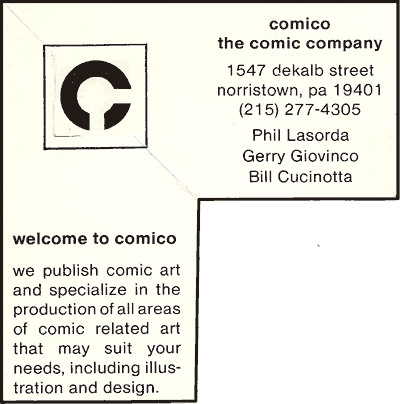
Business Card Side 1
When we finally became serious about publishing comic books under the Comico imprint we realized that we were going to have to actually sell our comics and generate substantial revenue.
Business card Side 2
We had always sold our handmade, photocopied comics directly to the customer and were never really in a situation where we actually had to profit from the comics we made.
The issues of DUCKWORK that were produced were distributed freely on campus at PCA, supported by student council and meager funds generated by advertisements that we solicited.
Comico, however, was a real business and we had to get our comics sold to as many readers as possible in order to stay alive.
In the old days that meant Newsstand Distribution and its dreaded return policy, but in the early 1980’s the Direct Comic Market was young and growing. It offered an opportunity for an upstart company like Comico to solicit to retailers through several distributors.
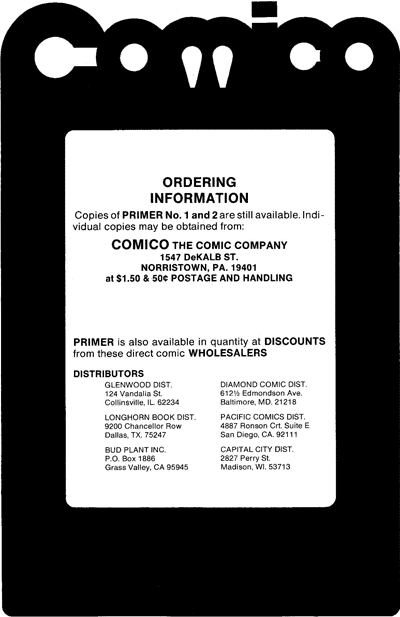
Product was solicited three months in advance. The orders gave publishers a solid idea of what their print run needed to be and there were no returns to fret about. This made it easy to borrow money since you could show actual sales ahead of time. It also let you know if you should pack your bags and quit before you absorbed the expenses of production and printing.
Publishers just had to convince the distributors that their product was worth the time to solicit. This generally meant that if one distributor would take a chance on your product the others had to as well so they would not have to explain to their retailers why the guy down the street has a particular title and they don’t.
Our first comic book was a black and white comic titled Primer #1. Historically the reviews on the comic have sucked but it was our first product and at the time we were very proud of our work.
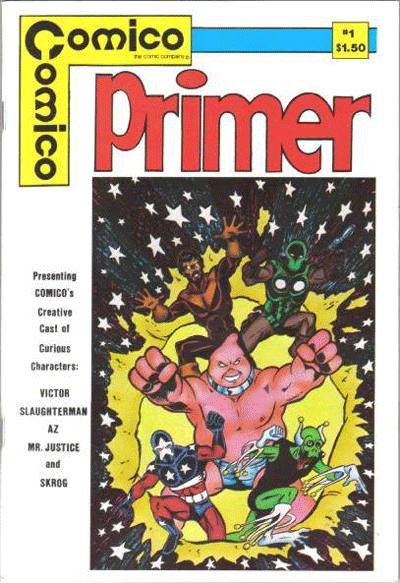
PRIMER #1
Today, I believe that it is highly underrated as a collectible since so few were made and it is significant for having launched a company that discovered many great talents, produced great product and established a business model that other great Independent publishers would follow.
Back in 1982 we had to find someone to solicit Primer #1 before it was even complete. We had very little to show except photocopies of of pencils and a proposed cover.
We wanted to make a great first impression so we put our efforts into a nice presentation package and focused on our business card because we thought it would be the one thing the distributers might keep in their rolodex (who still has one of those dinosaurs?)
The original Comico logo was designed by Phil LaSorda and was as unique as it was cumbersome but it lent itself well to the unusual business card that I would design around it.
 The logo was designed to bracket the corner of the covers of our comics and it only survived the black and white comics that we originally published. It repeated the name Comico twice, hinged by a shared letter “C” that would eventually provide the basis for several other designs that would represent the future color line.
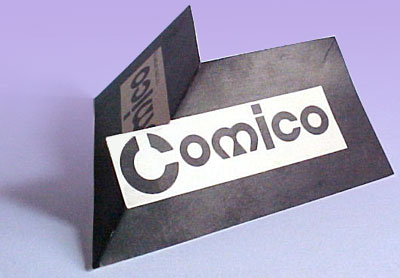
The card I designed was also hinged, die cut and folded so the Comico logo would read on both sides. When it opened our information was displayed inside. It was black and white, innovative and elegant, just the impression we wanted to create for our line.
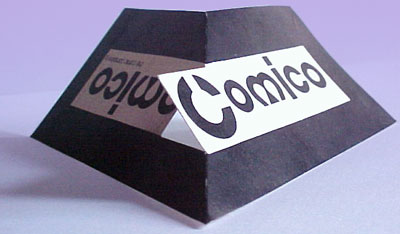
The card could stand on a desk where others could only lay and it encouraged the holder to manipulate and study it. Let’s just say it was hard not to notice and easy to remember.
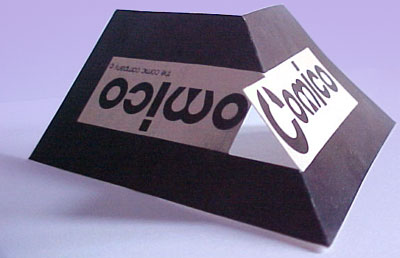
Above all, it was a conversation piece which came in handy when we did follow-up calls to the distributors. In those days, when you made the call, you spoke to the head guy, himself: Steve Geppi, Bud Plant, Milton Griepp, Walter Wang, and so on.
All of these guys were friendly, and were more than happy to offer advice and honest criticisms of the product. There was a lot of criticism and we listened and learned.
Just when it looked like we were going to have to go back to the drawing board with Primer #1 we got our first order. I’ll never forget the moment. I was away from the studio for a rare weekend trip when Phil called to tell me that Bud Plant had ordered one hundred books. You would have thought that I won the lottery!
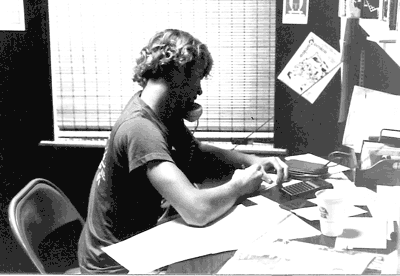
Bill Cucinotta taking initial PRIMER 1 orders
That week Phil, Bill Cucinotta and I worked the phones to let every distributor know that Bud Plant had given us an order. As we expected they all followed suit, not to be outdone.
We sold less than two thousand books but it was enough to cover the printing costs and generate enough interest for Primer #2 which enjoys it’s place in comics history for the first appearance of Matt Wagner’s Grendel.
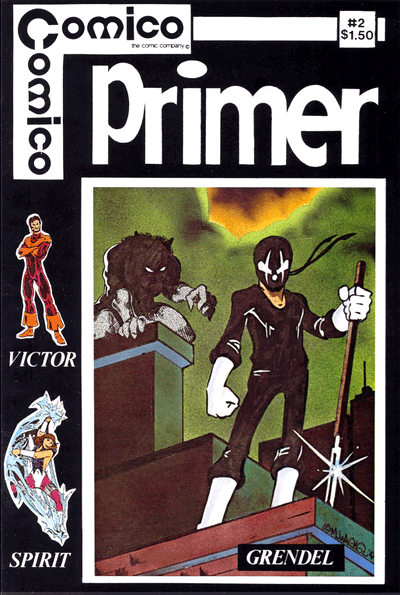
PRIMER #2
Today the card of CO2 Comics is simple. It bears our logo and a lone piece of contact information, co2comics.com. Follow that link and everything you need to know about CO2 Comics is at your fingertips!
We hope we still know how to make a great first impression.
Making comics because I want to,
Gerry Giovinco
Tags: Bill Cucinotta, Bud Plant, Business Card, CO2 Comics, Comic Distributors, Comic Publishers, comico, Comico Logo, Comico Primer, Comico Primer #1, Comico Primer #2, comico the comic book company, comico the comic company, Direct Comic Market, duckwork, Gerry Giovinco, Grendel, matt wagner, Milton Griepp, Newsstand Distribution, PCA, phil lasorda, Rolodex, Steve Geppi, Walter Wang
I still have that business card, AND a golden “C” pin for my Army Jacket! I was very impressed with that card. I had never seen a die-cut, or a card that took on its own 3-D space…. I may have been sheltered, but it was, and is a memorable business card – Kudos!
z
Where was that first issue printed? Did you go on a press check?
I remember Gerry’s friend took me on a tour back in 1984 or so. Watching everyone working (or not so hard -a bunch of them were sitting around watching ‘Funhouse’ with artboards on their laps, but not getting much sketched) the atmosphere was just too cool for this little nerdling… there was some great energy in that place. I spent the next 20 years of my life trying to find ‘my’ comico – a place that felt the same. Our little lost nirvana of comicdom.
[...] This post was mentioned on Twitter by Chris Pitzer, CO2 Comics. CO2 Comics said: CO2 Comics, The Comic Company: First Impressions http://www.co2comics.com/blog/2010/08/17/the-comic-companyfirst-impressions/ [...]
Paul, I was wondering if anyone hung on to that card! What color is the lapel pin? I have one black on gold one. I always loved those things. Send me a photo if you can and I’ll try to include it in the blog. Thanks for the kind words.
Joe, Richard and Wendi Pini had directed us to their printer which I believe was in NY state, I can’t remember the name anymore and no I did not go on a press check. I went when we started printing the color books, however, and that is a story in itself.
Hey Chuck, yes those were the days! That was a special time which probably can never be recreated by us now. It was a magical time when young people discovered themselves and the power of their creativity. It’s was like “Neverland” for comic artists. Once you get too, old you lose your ability to travel back there. (unless you’re Robin Williams)
Well, as requested, my Comico stuff… of what I’ve found in the back reaches of my studio drawers… Plenty of comics, not much “swag”. http://zillustration.blogspot.com/2010/08/comico-stuff.html
z